Artwork
Ruins of the Abbey of Jumièges
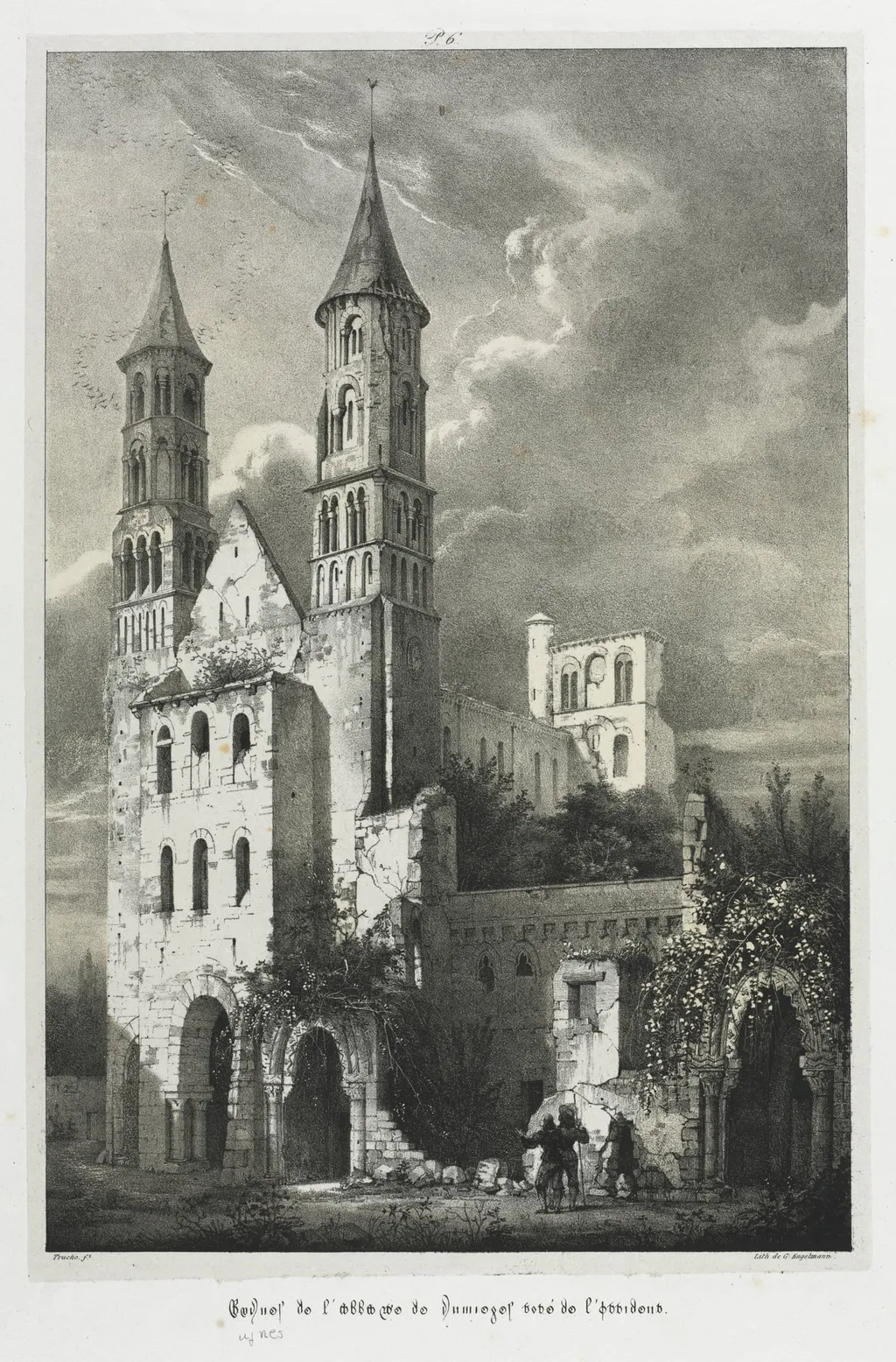
Ruins of the Abbey of Jumièges is a print by the Romanticist artist Jean Truchot. It dates from 1820 and is held in the collection of the Cleveland Museum of Art.
- Accession no.
- 1941.249
About this work
Overview
Figures near the entrance suggest human presence amid desolation, grounding the scene in quiet observation rather than dramatic spectacle.
Created around 1820 by Jean Truchot, this print captures the abandoned ruins of the Abbey of Jumièges in Normandy. Rendered in monochrome tones, the work emphasizes architectural decay through subtle gradations of light and shadow. The composition centers on two surviving towers linked by a crumbling wall, framed by wild vegetation.
Figures near the entrance suggest human presence amid desolation, grounding the scene in quiet observation rather than dramatic spectacle.
Subject & Meaning
The abbey, once a center of religious life, stands as a silent witness to time’s erosion. Its fragmented structure, overgrown with foliage and stripped of function, evokes themes of impermanence and the quiet passage of history. The inclusion of small human figures does not imply activity but rather contemplation, reinforcing the site’s transition from sacred space to relic. The image invites reflection on the fate of institutions left behind by changing eras.
Technique & Style
Truchot employs chiaroscuro to model the stone surfaces, using sharp contrasts between light and deep gray to suggest volume and texture. The absence of color focuses attention on form and atmosphere, while fine linework defines architectural details like arches and window tracery. The tonal range mimics the effect of atmospheric perspective, deepening the sense of spatial recession and enhancing the mood of melancholy solitude.
History & Provenance
The Abbey of Jumièges, founded in the 7th century, was largely destroyed during the French Revolution. By the early 19th century, its ruins had become a subject of antiquarian interest. Truchot’s print, likely made during a wave of romanticized documentation of medieval sites, was acquired by The Cleveland Museum of Art as part of its 19th-century European graphic collection, preserving a visual record of the ruins as they appeared in the post-revolutionary period.
Context
In the decades following the Revolution, France saw a surge in interest in its medieval past, fueled by Romanticism and early preservation efforts. Artists and printmakers like Truchot documented crumbling abbeys not as religious sites but as evocative landscapes of loss. This print aligns with broader cultural movements that valued ruins as symbols of historical continuity and the sublime power of nature reclaiming human endeavor.
Legacy
Truchot’s print contributes to a visual archive of France’s ruined monasteries, offering a restrained yet poignant record of architectural decline. It remains a reference for historians studying 19th-century attitudes toward heritage and memory. While not widely known outside specialized circles, it exemplifies how printmaking served as a tool for quiet historical documentation, preserving the visual character of sites before modern conservation practices took hold.
Own this work as a print
Artist & collection

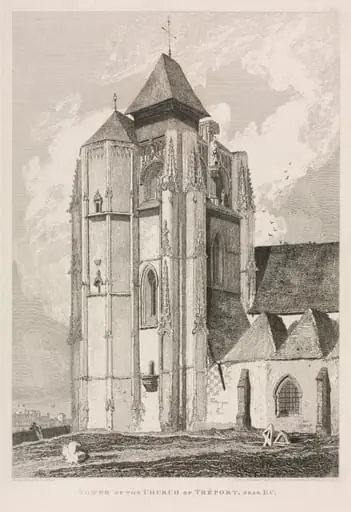 Architectural Antiquities of Normandy (Vol. II), Pl. 66: Tower of the Church of Tréport, near Eu
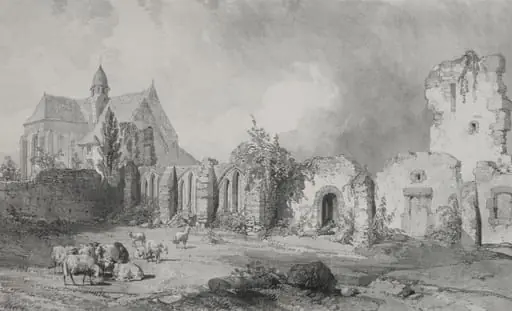 Voyages pittoresques et romantiques dans l'ancienne France. Bretagne: Abbaye de Relec
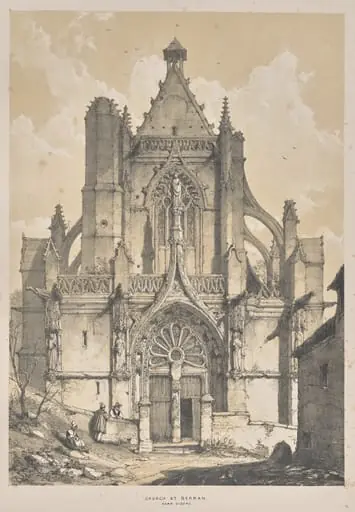 Architecture of the Middle Ages: Church at Serran, near Gisore
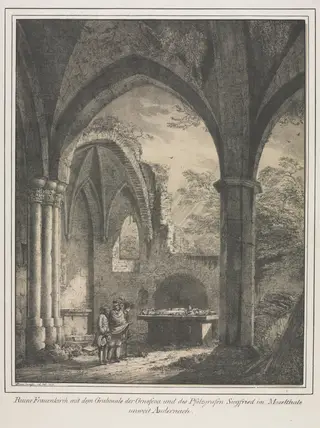 Notable Buildings of the Middle Ages in Germany: Ruins of the Church of the Virgin with the Tomb of Genevieve and Siegfried, Count Palatine of the Rhine, in the Moselle Valley near Andernack
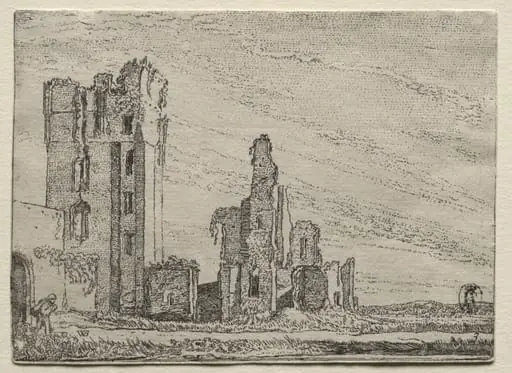 Ruins of the Castle Huys Te Kleef near Haarlem
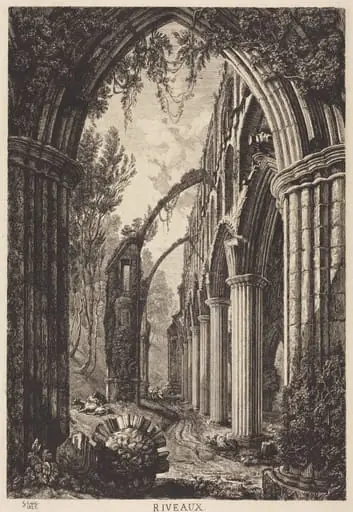 Riveaux
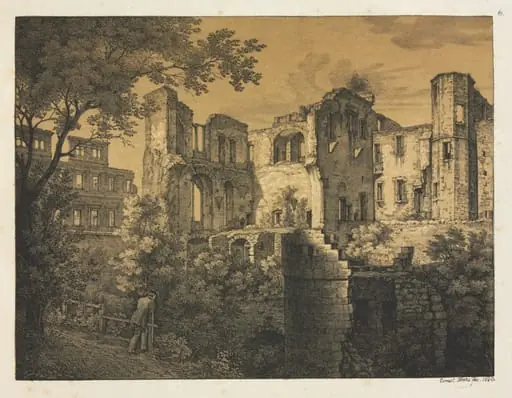 Six Views of Heidelberg Castle: Western Part
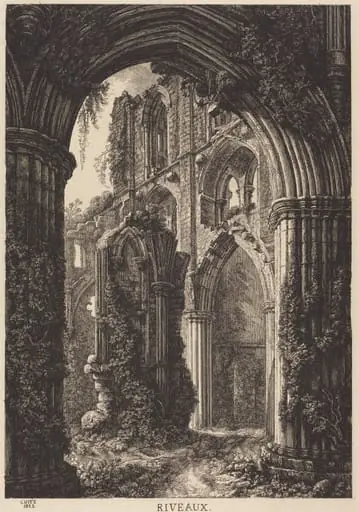 Riveaux
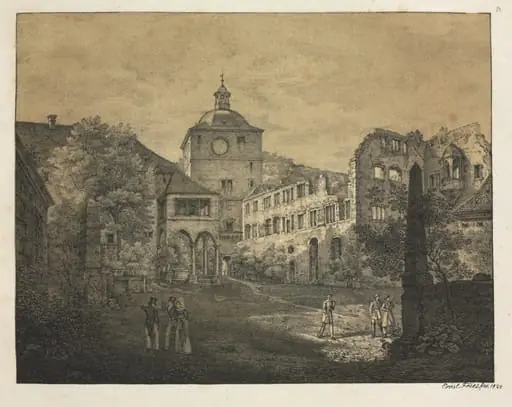 Six Views of Heidelberg Castle: Castle Terrace
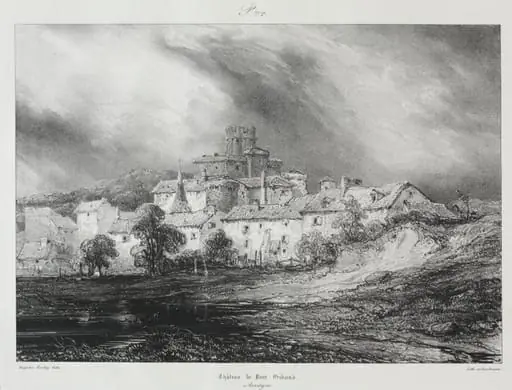 Voyages pittoresques et romantiques dans l'ancienne France, Auvergne: Château de Pont-Gibaud