Artwork
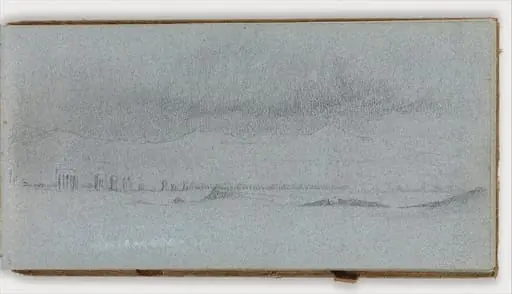
Village, Mountains, and Lake [Maggiore?] (recto, from sketchbook)
![Village, Mountains, and Lake [Maggiore?] (recto, from sketchbook), by Jervis McEntee, watercolor, 1869](https://artifactworldgallery.com/img/jervis-mcentee--village-mountains-and-lake-maggiore-recto-from-sketchbook--3cfb09e258099ce7-w1024.webp)
Village, Mountains, and Lake [Maggiore?] (recto, from sketchbook) is a watercolor work on paper by the Hudson River School artist Jervis McEntee. It dates from 1869 and is held in the collection of the Metropolitan Museum of Art.
About this work
Subject & Meaning
The work portrays a quiet lakeside village nestled amid rolling mountains, a setting that evokes the pastoral tranquility associated with the Hudson River School's idealized American landscapes. The surrounding lake and peaks function symbolically as emblematic references to the natural grandeur of the American wilderness, reflecting mid‑19th‑century notions of national identity and spiritual renewal through nature. Executed in graphite, white gouache, and watercolor on blue paper, the drawing combines delicate tonal modeling with luminous highlights that suggest atmospheric distance and a contemplative mood.
Its date of 1869 situates it within the later phase of McEntee's career, when his focus shifted toward more intimate, lyrical scenes rather than grand historical compositions.
The subject thus embodies themes of serenity and reverence for the natural environment, resonating with contemporary Romantic ideals that celebrated the American landscape as both a physical and moral refuge.
Technique & Style
The drawing was executed on blue paper using graphite and white gouache with watercolor washes, creating a delicate layered surface characteristic of McEntee's plein-air studies. The handling reveals careful draftsmanship with subtle tonal modeling of the mountain forms and precise delineation of the lakeside village, while the overall composition balances atmospheric perspective with crisp linear contours. Formal elements include a muted palette punctuated by highlights of white gouache that suggest reflected light, and a compositional rhythm that guides the eye from foreground foliage to distant peaks.
History & Provenance
The work was produced during McEntee's time in Europe, reflecting his interest in Italian landscapes inspired by Lake Maggiore.
Jervis McEntee created Village, Mountains, and Lake [Maggiore?] as a graphite, white gouache, and watercolor work on blue paper in 1869. The drawing originates from his sketchbook and portrays a lakeside village framed by mountains. It is held in The American Wing collection at the Metropolitan Museum of Art, where it has remained since its creation.
The work was produced during McEntee's time in Europe, reflecting his interest in Italian landscapes inspired by Lake Maggiore. Its date aligns with his broader European sketch tours documented in 1869.
Provenance is limited to its acquisition by the Metropolitan Museum of Art, where it has been part of the permanent collection without documented changes in ownership.
Legacy
Jervis McEntee's 1869 graphite, white gouache, and watercolor on blue paper titled Village, Mountains, and Lake [Maggiore?] has been cited by scholars as an early example of American plein air landscape sketching that prefigured the tonal and atmospheric concerns later developed by artists such as Winslow Homer and the Hudson River School painters. The work's compositional focus on a quiet village nestled among mountains and a reflective lake has been referenced in studies of McEntee's influence on subsequent American watercolorists, particularly in discussions of his subtle handling of light and mood. The Metropolitan Museum of Art's holdings of the sketchbook have been highlighted in exhibition catalogues that trace the evolution of 19th-century American landscape drawing, positioning this piece as a precursor to the more finished works McEntee produced in the 1870s and 1880s.
Overview
Created in 1869, this drawing by Jervis McEntee combines graphite, white gouache and watercolor on a blue sheet of paper. The composition presents a tranquil lakeside scene where a modest village nestles beneath dark, rising mountains, its rooftops highlighted by the bright white pigment.
![Cloud Study; Lake [Maggiore?] and Village (verso, from sketchbook)](https://artifactworldgallery.com/img/jervis-mcentee--cloud-study-lake-maggiore-and-village-verso-from-sketchbook--1f3f39c3005c9a2a-w320.webp)
Artist & collection

Artist
Jervis McEntee (July 14, 1828 – January 27, 1891) was an American painter of the Hudson River School.

 Saturday Afternoon
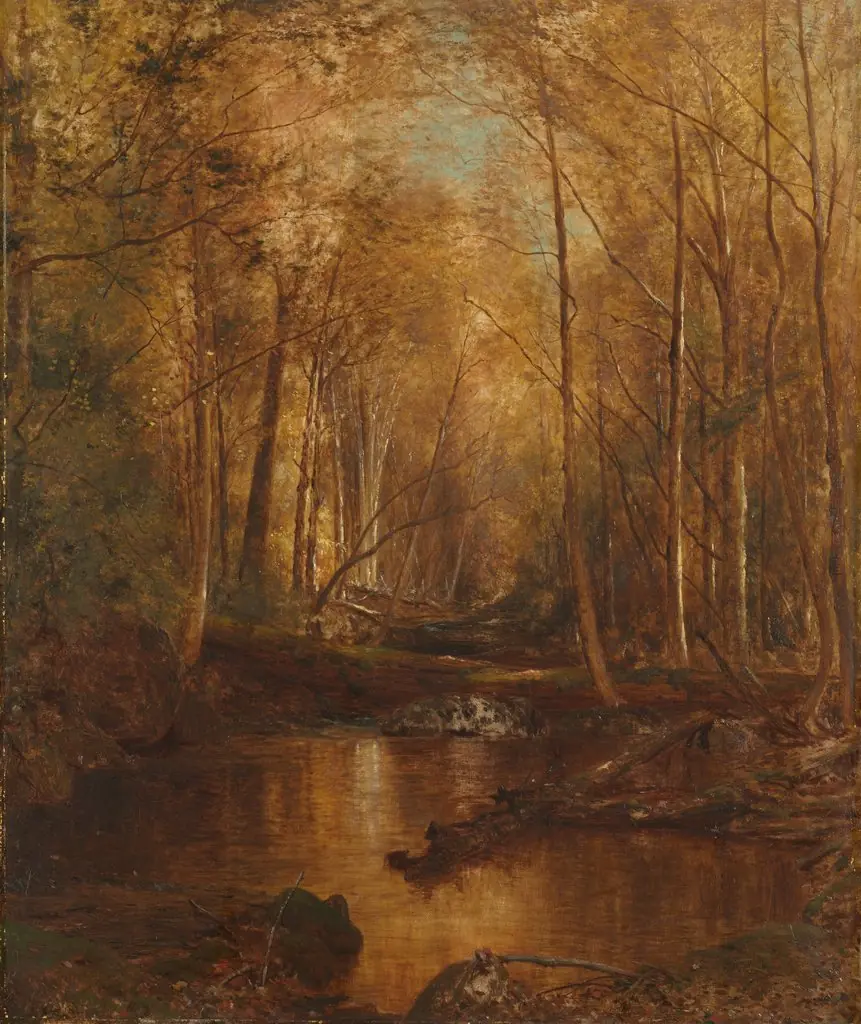 Autumn in the Catskills
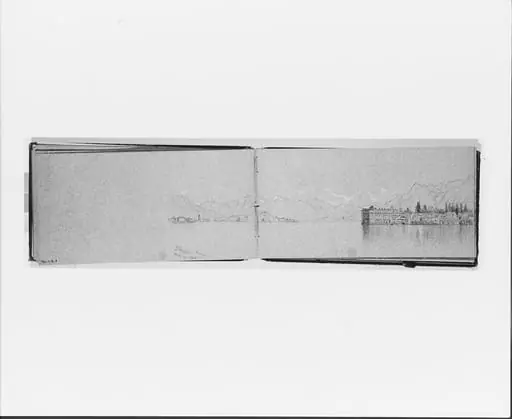 Lake Maggiore May 12 1869 (recto, from sketchbook)
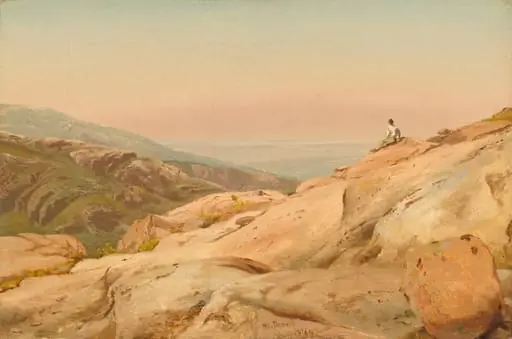 Mount Desert Island, Maine
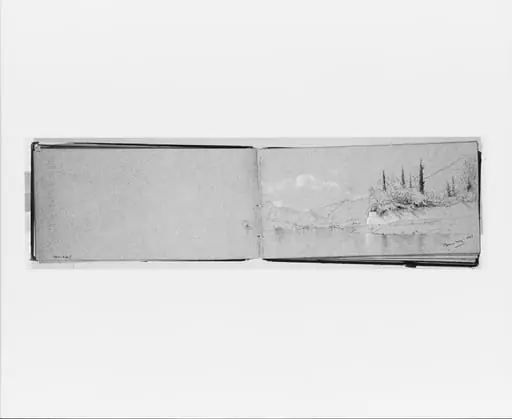 Lake Como, May 1, 1869 (verso, from sketchbook)
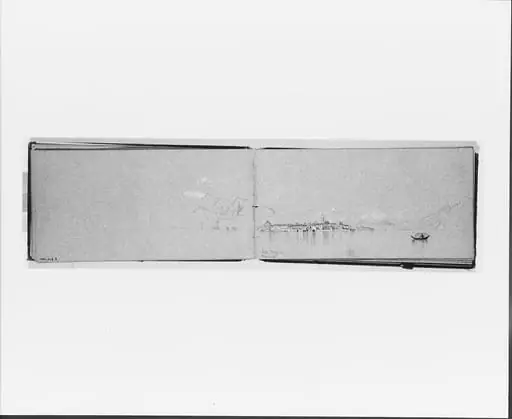 Lake Maggiore, May 11,1869: Village and Landscape (recto, from Sketchbook)
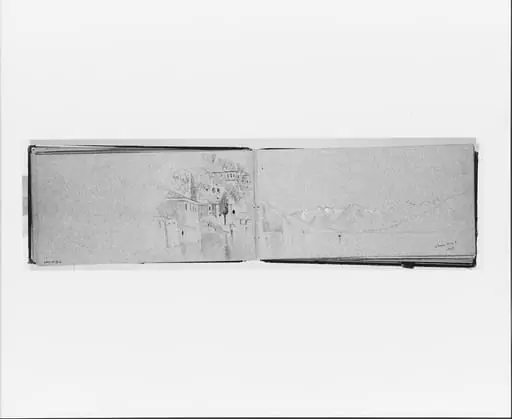 Village on Lake Como: May 1, 1869 (verso, from sketchbook)
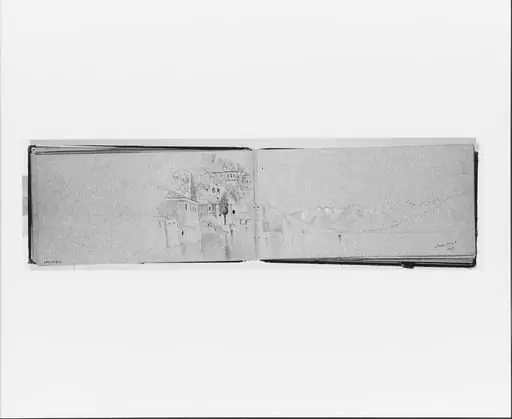 Lake Como, May 1, 1869 (recto, from sketchbook)