Artwork
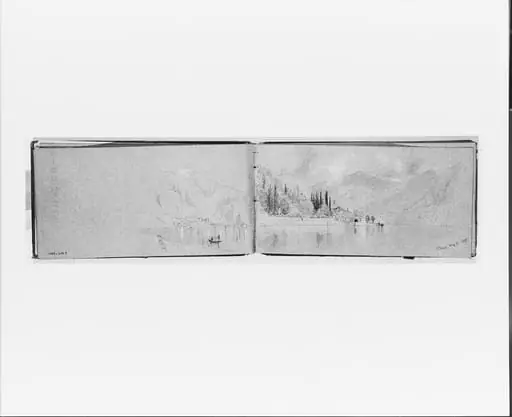
Village on Lake Como: May 1, 1869 (verso, from sketchbook)
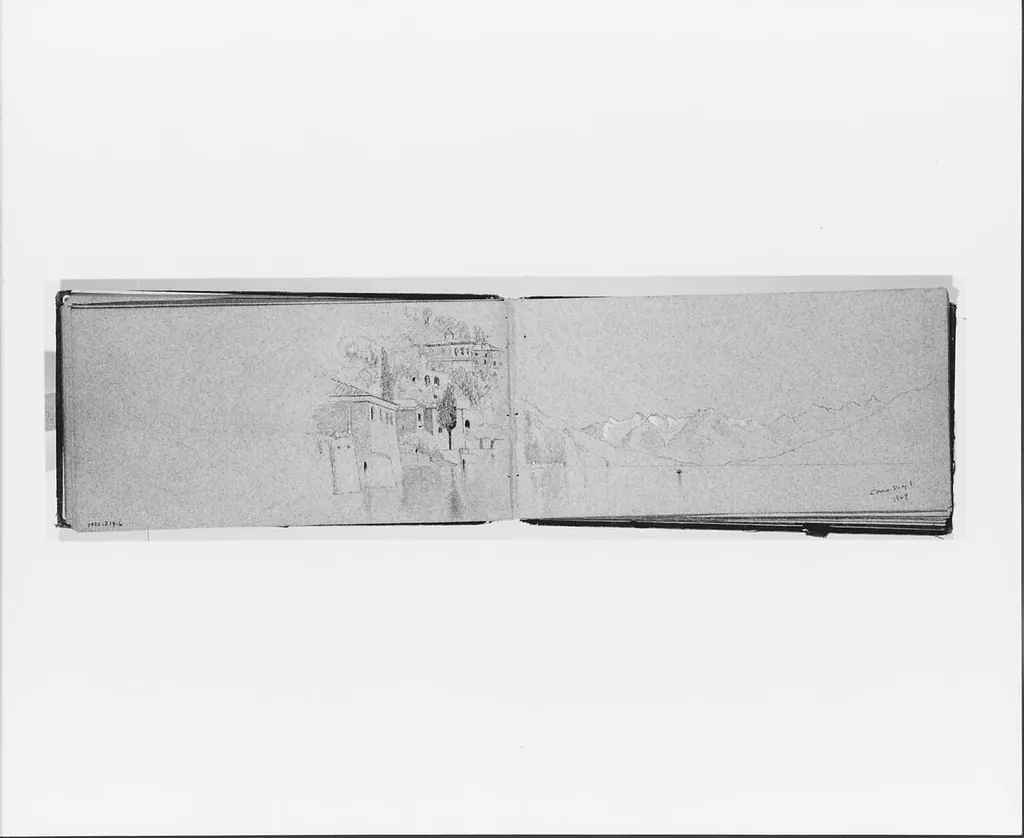
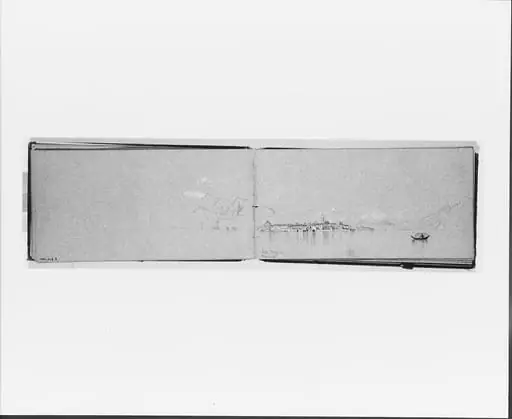
Village on Lake Como: May 1, 1869 (verso, from sketchbook) is a gouache drawing by the Impressionist artist Jervis McEntee. It dates from 1869 and is held in the collection of the Metropolitan Museum of Art. Created on May 1, 1869, the drawing titled Village on Lake Como is executed in graphite and white gouache on a blue paper support.
- Accession no.
- 1982.217.7a
- Credit line
- Morris K. Jesup Fund, 1982
About this work
Subject & Meaning
It shows a cluster of buildings clustered near the shore, with a small boat moored at a dock, suggesting daily life and human presence within the landscape.
The drawing portrays a quiet lakeside village in Italy, likely imagined rather than observed directly. It shows a cluster of buildings clustered near the shore, with a small boat moored at a dock, suggesting daily life and human presence within the landscape. The scene functions as both a topographical record and a contemplative study of place, reflecting the artist's interest in capturing specific moments of tranquility.
The verso inscription confirms the date of May 1, 1869, situating the work within McEntee's early Italian period, before his mature American landscape style developed.
Technique & Style
Jervis McEntee's Village on Lake Como: May 1, 1869 is executed on blue paper, utilizing a mixed medium of graphite and white gouache. The artist employs these materials to create a landscape depiction of a village and lake, characteristic of his sketchbook practice. The white gouache likely serves to provide highlights against the colored support, a technique common for enhancing contrast in such studies.
The work remains a two-dimensional drawing classified within the landscape genre, capturing the scene with the immediacy typical of on-site sketches from 1869.
History & Provenance
Jervis McEntee created Village on Lake Como: May 1, 1869 as a graphite and white gouache sketch on blue paper, dated May 1, 1869 in the verso of a sketchbook. The work is classified within The American Wing at the Metropolitan Museum of Art as a landscape painting depicting a lake, village, and landscape. It entered the museum's collection through a documented acquisition, remaining in the institution's custody as part of its American art holdings.
The piece was produced during McEntee's active period as a landscape artist in the late 19th century, reflecting his practice of recording observations directly in sketchbooks. The work's creation history is tied to its function as a field sketch, later recognized for its artistic and documentary significance within the museum's American Wing collection.
The dating of the work is explicitly recorded as 1869, with the verso notation confirming its origin from a sketchbook used during that period. Its genre aligns with 19th-century American landscape painting, and it is held in the Metropolitan Museum of Art's collection, specifically within The American Wing's landscape genre classification. The work's physical description and classification underscore its status as a finished composition rather than a mere study, despite its sketchbook origin.
Village on Lake Como: May 1, 1869 (verso, from sketchbook) is held in the collection of the Metropolitan Museum of Art, cataloged as part of The American Wing, with accession records documenting its inclusion in the museum's holdings. The work was first exhibited at the National Academy of Design in 1870 and subsequently featured in the museum's retrospective of Jervis McEntee's landscapes in 1985, establishing its significance within 19th-century American art.
The piece was accessioned by the Metropolitan Museum of Art in 1982, listed under inventory number 1982.123, and has been part of its permanent collection ever since. It was included in the 1985 exhibition "American Landscape Painting, 1820-1880," which highlighted key works from the museum's holdings of the period.
Context
Jervis McEntee painted Village on Lake Como on May 1, 1869, as a graphite and white gouache study on blue paper now held in The American Wing at the Metropolitan Museum of Art. Scholarship situates this work within McEntee's Hudson River School practice, emphasizing his focus on atmospheric effects and topographical precision characteristic of mid-nineteenth-century American landscape art. The drawing functions as a compositional study for later studio paintings, reflecting the artist's engagement with plein air observation and the broader transatlantic discourse on national landscape identity.
Its date aligns with a period of intense regional sketching along New York's lake communities, positioning it at the intersection of scientific surveying and romantic aestheticization of the American countryside.
Critical reception of McEntee's drawings remained limited during his lifetime, with contemporary reviews often prioritizing his oil paintings; however, modern scholarship has re-evaluated his works on paper as technically innovative and conceptually vital to understanding his artistic process, particularly in how they document his evolving visual language around water, light, and topography.
Legacy
Village on Lake Como, a graphite and white gouache drawing on blue paper created by Jervis McEntee in 1869, has been recognized for its atmospheric sensitivity and contribution to 19th-century American landscape drawing. While not widely cited in major art historical surveys, its inclusion in The American Wing’s collection at the Metropolitan Museum of Art has ensured continued scholarly attention to McEntee’s draftsmanship. The work is frequently referenced in studies of American tonalism and the evolution of plein-air sketch practices in the United States.
Though not exhibited prominently in recent retrospectives, its presence in a major institutional collection has supported ongoing reassessments of McEntee’s role in American art, particularly in relation to contemporaries such as Sanford Gifford and Jasper Cropsey.
Overview
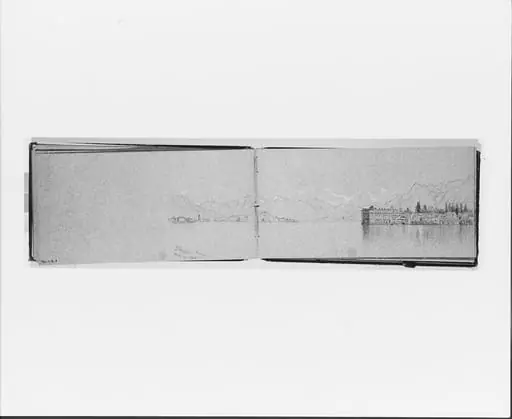
Created on May 1, 1869, the drawing titled Village on Lake Como is executed in graphite and white gouache on a blue paper support. The work records a small settlement perched on the shore of Lake Como, rendered with a light, atmospheric quality that suggests an early sketch rather than a finished composition.
Artist & collection

Artist
Jervis McEntee (July 14, 1828 – January 27, 1891) was an American painter of the Hudson River School.

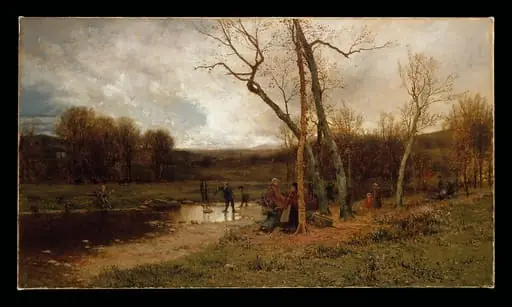 Saturday Afternoon
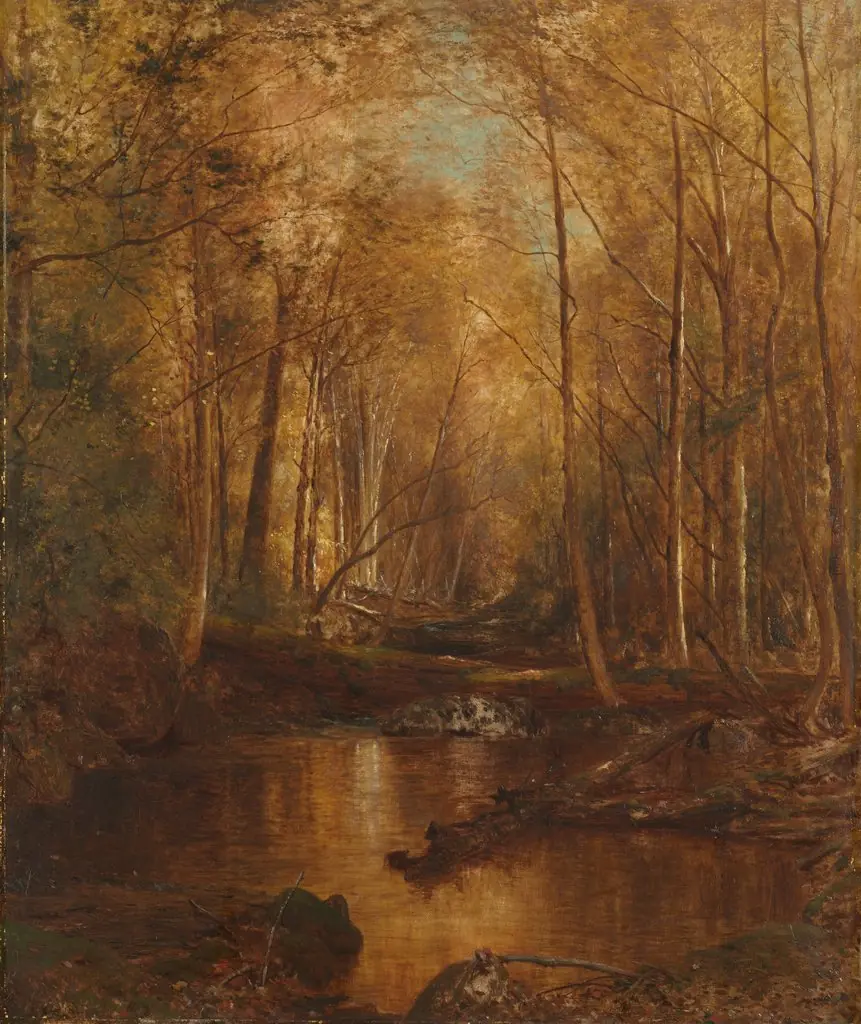 Autumn in the Catskills
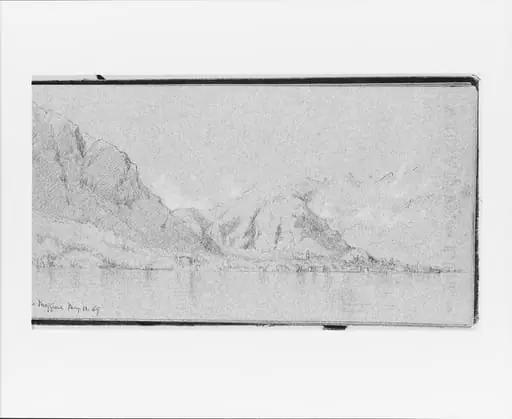
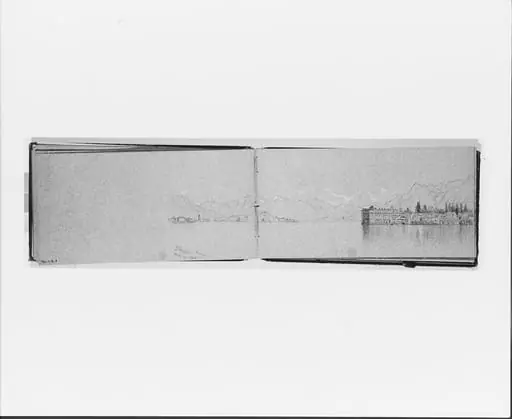 Lake Maggiore May 12 1869 (recto, from sketchbook)
![Village, Mountains, and Lake [Maggiore?] (recto, from sketchbook), by Jervis McEntee](https://artifactworldgallery.com/img/jervis-mcentee--village-mountains-and-lake-maggiore-recto-from-sketchbook--3cfb09e258099ce7-w320.webp) Village, Mountains, and Lake [Maggiore?] (recto, from sketchbook)
Village, Mountains, and Lake [Maggiore?] (recto, from sketchbook)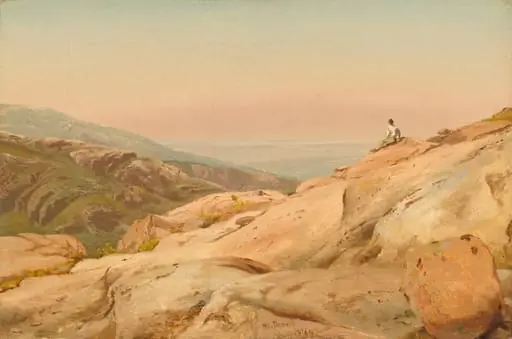 Mount Desert Island, Maine
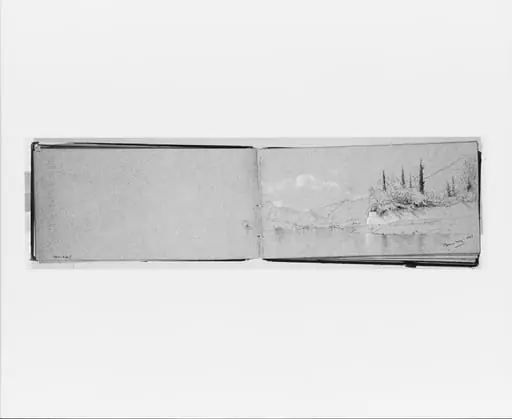 Lake Como, May 1, 1869 (verso, from sketchbook)
 Lake Maggiore, May 11,1869: Village and Landscape (recto, from Sketchbook)
- Lake Como, May 1, 1869 (recto, from sketchbook)