Artwork
Landscape with St Jerome
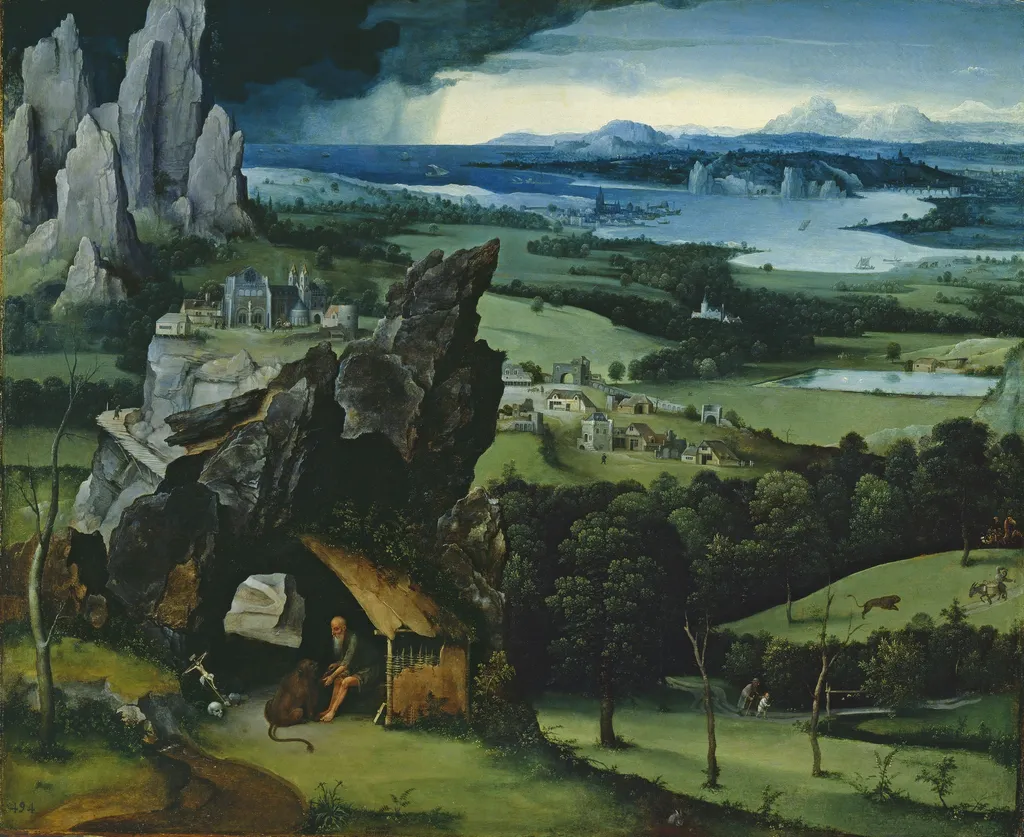
Landscape with St Jerome is an oil painting by the Northern Renaissance artist Joachim Patinir. It dates from 1515 and is held in the collection of the Museo del Prado.
About this work
Subject & Meaning
Patinir represents Jerome as an ascetic seated before a rocky hut, removing a thorn from a lion’s paw, an episode drawn from the Golden Legend.
Landscape with St Jerome depicts the desert penance of the fourth-century hermit-saint, a subject popular in Northern European religious art. Patinir represents Jerome as an ascetic seated before a rocky hut, removing a thorn from a lion’s paw, an episode drawn from the Golden Legend. Scattered across the composition are additional narrative moments: camel-mounted Bedouin thieves, a recumbent donkey, and the lion’s later return with the stolen animal, integrating the full hagiography into a continuous landscape.
The work’s iconography blends Flemish tradition with Italian memento mori motifs. A human skull and a small crucifix placed beside the saint introduce the theme of mortality and penitence, a combination Patinir innovates here by situating these symbols outdoors rather than within a cell. The jagged, arid terrain evokes the Meuse valley around Namur, the artist’s birthplace, while the elevated horizon and sharply divided lighting create a three-dimensional, aerial space that structures the narrative across foreground solitude and background activity.
Technique & Style
The work is executed in oil on wood, with a support measuring 74 cm in height and 91 cm in width, as recorded by the Museo del Prado’s entry for the painting.
Patinir’s handling emphasizes a panoramic landscape that rises sharply from the foreground, where Saint Jerome kneels before a rock-cut hut and extracts a thorn from a lion’s paw. The composition is divided into two zones: the left and lower-right foreground convey the solitude of the desert, while the center and right background introduce human activity along the river. Vertical crags contrast with a low horizon, creating a compressed yet deep spatial recession.
The palette is restrained, with muted greens and ochres, and the sky occupies a narrow band above the jagged ridges inspired by the Meuse valley near Namur. The saint is depicted as an ascetic rather than a cardinal, and the inclusion of a skull beside the crucifix introduces a memento mori motif unusual for this subject in Flemish tradition.
History & Provenance
Landscape with St Jerome is held in the Museo del Prado in Madrid, where it has been part of the Spanish royal collection since the reign of Philip II, who acquired the panel for the monastery of the Order of Saint Jerome at El Escorial. The painting is catalogued in the Prado's critical study of Patinir by P. Silva (2007), where it is discussed on pages 292–303. It is also referenced in the Prado's own official guide (6th edition, 2019), on page 334.
The work is identified in the museum's online database, and its RKD artist record is linked from the French Wikipedia entry on the painting.
No temporary-loan or travelling exhibition history is recorded in the available sources.
Context
Landscape with St Jerome occupies a pivotal place in Joachim Patinir’s oeuvre, exemplifying his fusion of northern eremitic iconography with an expansive, atmospheric landscape. Patinir departs from predecessors such as Rogier van der Weyden and Hans Memling by situating the saint in an ermite’s garb at a cave entrance, rather than in Bethlehem, and by rendering the lion with an open, anguished maw, a shift noted in scholarship that underscores his narrative innovation within Flemish tradition.
The painting’s spatial construction, achieved by elevating the horizon and balancing vertical rock formations against illuminated plains, typifies Patinir’s method and exerted influence on later landscape specialists. Its acquisition by Philip II for the Escorial signaled the prestige of such works within Habsburg collecting, embedding the panel in the broader currents of Iberian religious patronage. Recent technical studies corroborate the painting’s status as a prototype developed through extensive underdrawing and color-layer revisions, reinforcing Patinir’s role as a formative figure in early sixteenth-century landscape painting.
Overview
Landscape with St Jerome, painted by Joachim Patinir in 1515, is a seminal work of Early Netherlandish art that exemplifies the artist's innovation in the world landscape genre. The composition features Saint Jerome, the patron saint of scholars, depicted as a small figure in the foreground seated before a rocky hermitage. He is shown in contemplation, often reading or writing, surrounded by lush vegetation and a donkey.
Patinir organizes the picture plane into distinct horizontal bands of color: a dark foreground of rich greens and browns, a middle ground of blue water and distant settlements, and a hazy, atmospheric background of towering cliffs and a pale sky. This aerial perspective draws the viewer's eye from the immediate narrative of the saint toward an expansive, panoramic view that includes a fortified city across the water. Created during the height of Patinir's career, the work reflects the 16th-century Flemish interest in merging religious narrative with the independent study of nature.
The painting demonstrates the artist's signature technique of using color to denote depth, establishing a new standard for landscape painting where the natural environment becomes the primary subject, even while serving a devotional function.
Own this work as a print
Artist & collection

Artist
Joachim Patinir, also called Patenier, was a Flemish Renaissance painter of history and landscape subjects.


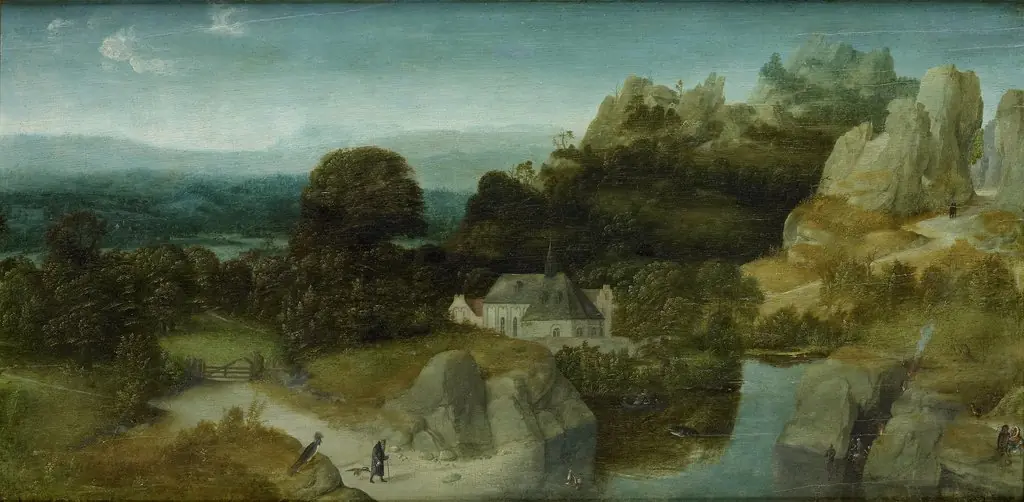
 Landscape with the Penitent Saint Jerome
 Landscape with Procne and Philomela
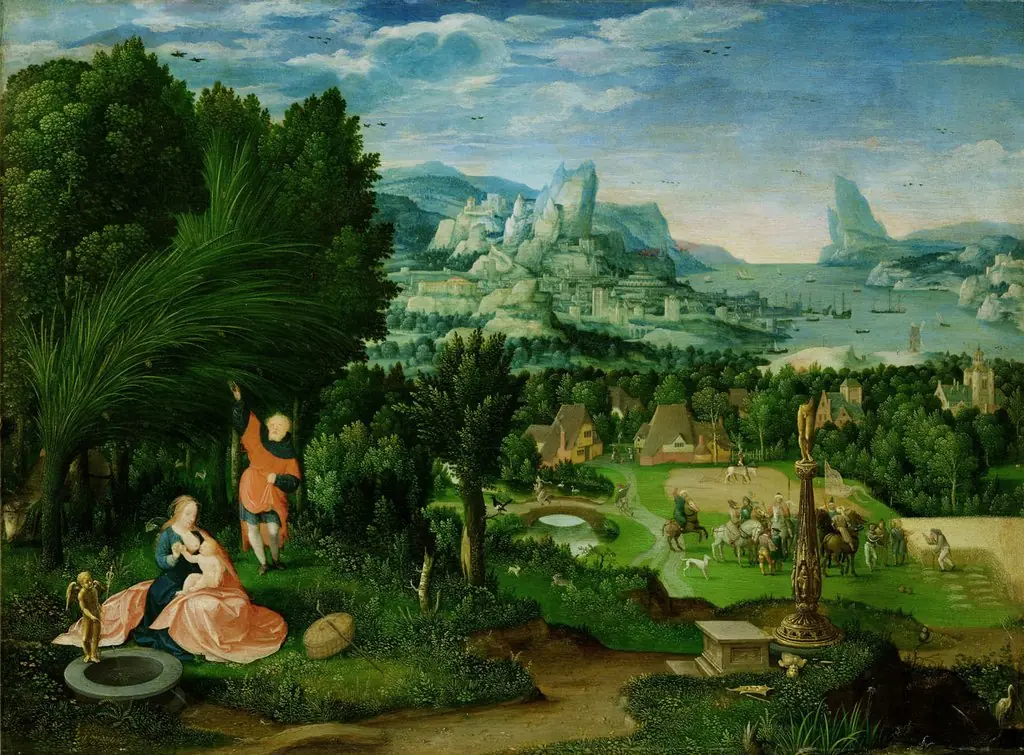 Landscape with the Rest on the Flight into Egypt
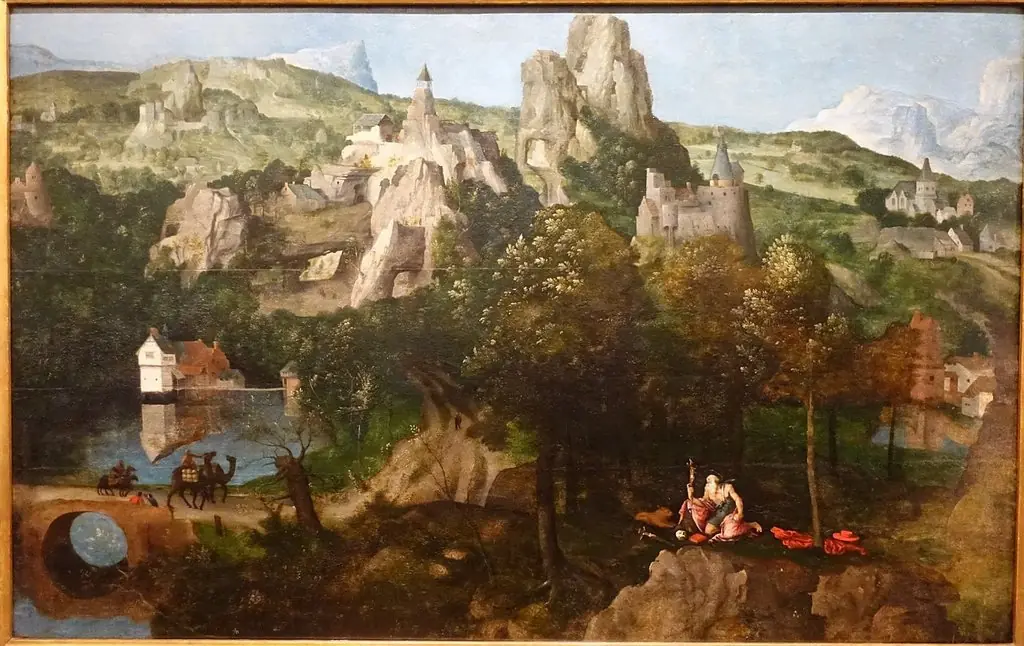 São Jerónimo em Adoração
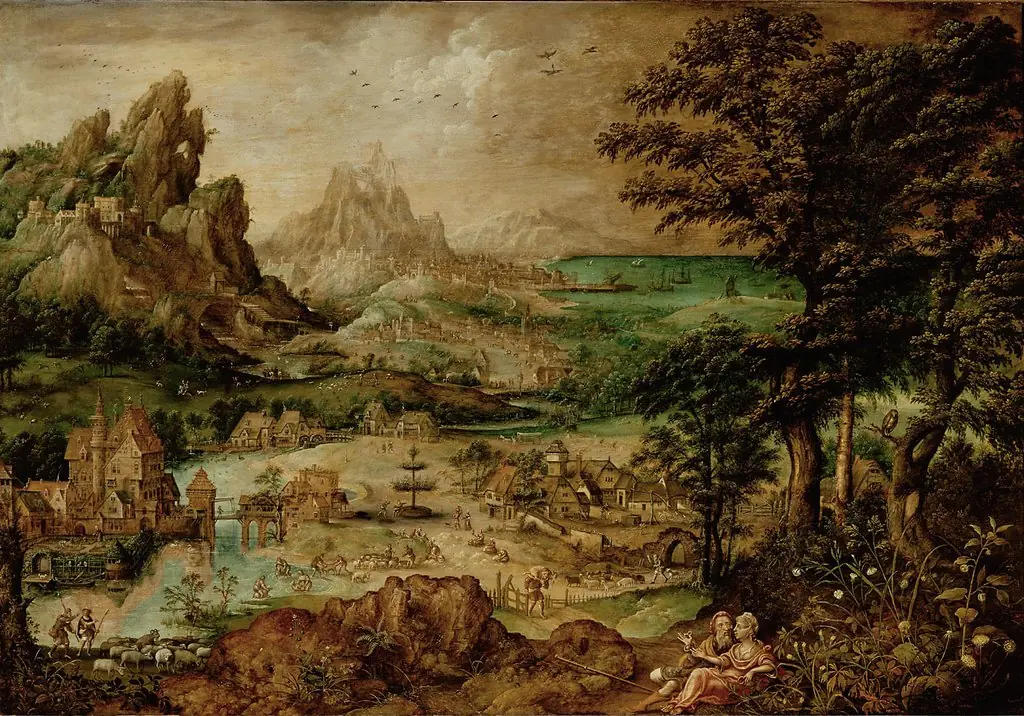 Landscape with Judah and Thamar
 John the Baptist preaching and the Baptism of Christ
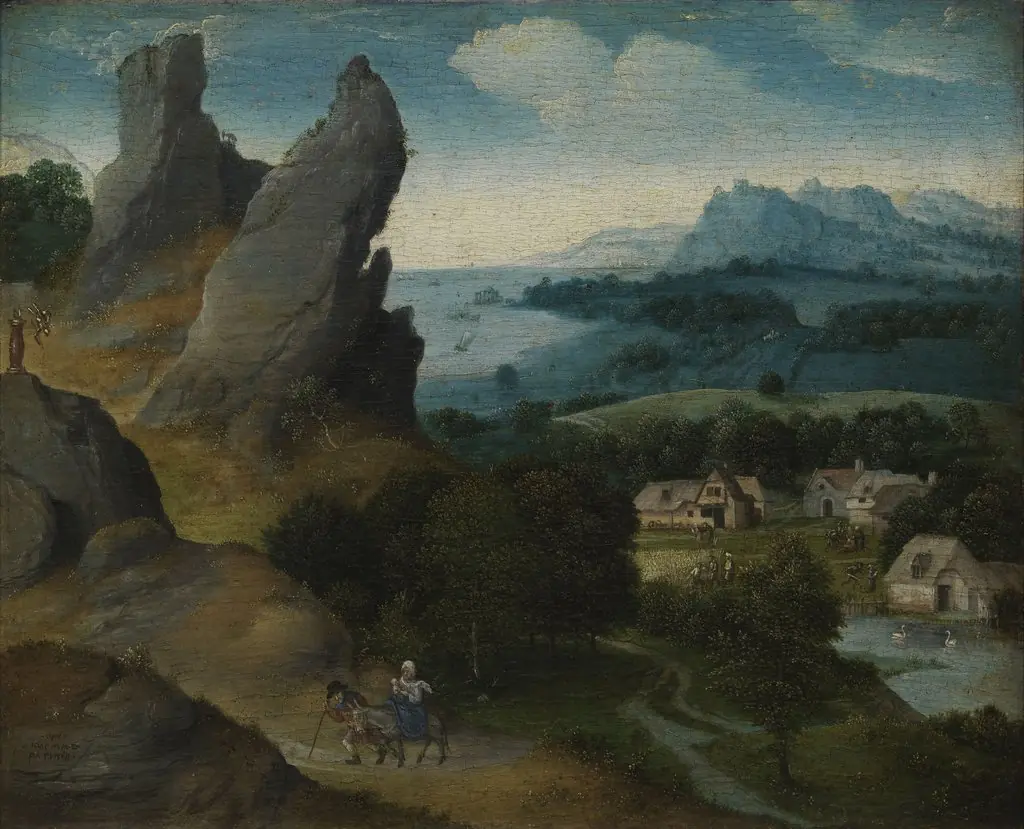 Landscape with the Flight into Egypt
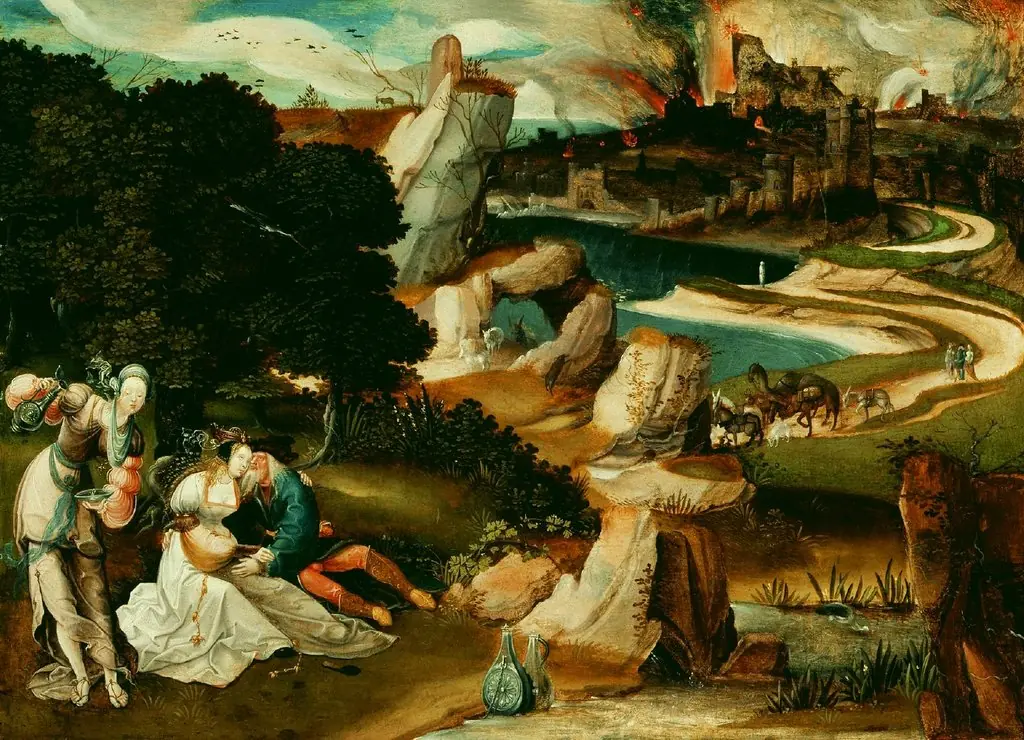 Lot and his daughters
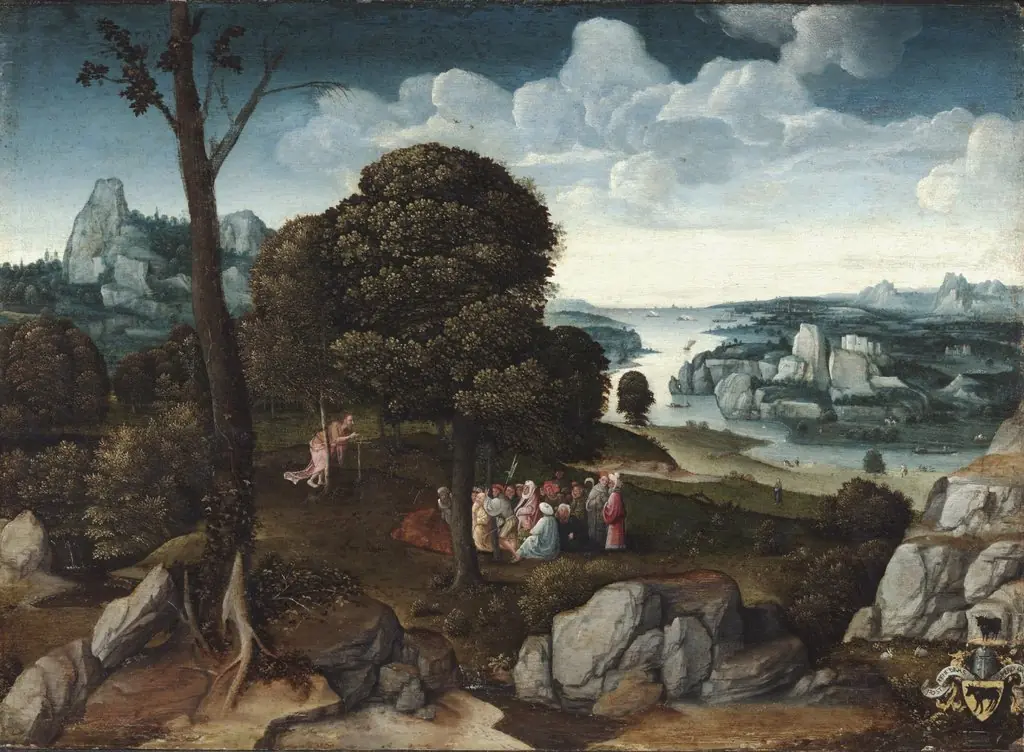 Landscape with Saint John the Baptist Preaching