Artwork
São Jerónimo em Adoração
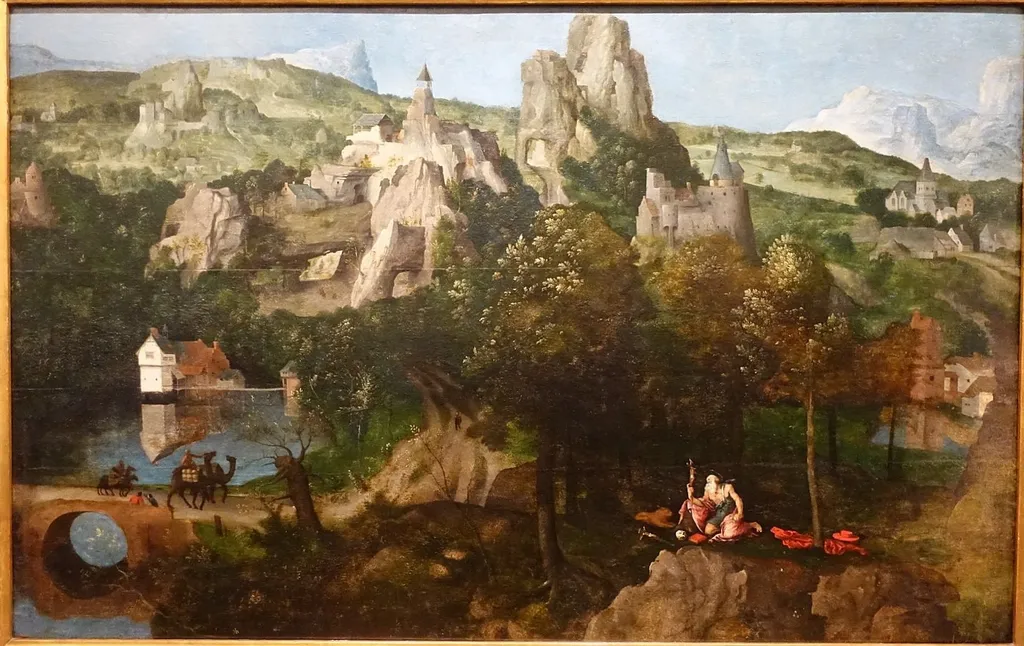
São Jerónimo em Adoração is an unspecified painting by the Northern Renaissance artist Joachim Patinir. It dates from 1520 and is held in the collection of the National Museum of Ancient Art.
About this work
Overview
The painting depicts Saint Jerome, identifiable by his red cardinal's cloak and the lion at his feet, kneeling in prayer within a vast, panoramic setting.
Created around 1520, 'São Jerónimo em Adoração' (Saint Jerome in Adoration) is a significant work by Joachim Patinir, a pioneering figure of the Early Netherlandish school and a master of world landscape. The painting depicts Saint Jerome, identifiable by his red cardinal's cloak and the lion at his feet, kneeling in prayer within a vast, panoramic setting. Patinir structures the composition using his characteristic high horizon line, which allows the viewer to survey an expansive terrain extending to the distant horizon.
The foreground features the saint and a rocky outcrop, while the middle ground is occupied by a winding river, a stone bridge with travelers, and a small settlement. Towering mountains and a luminous sky fill the background. This work exemplifies Patinir's innovation in elevating landscape from a mere backdrop to the primary subject, integrating the religious narrative seamlessly into the natural environment.
The painting reflects the 16th-century Flemish tradition of combining detailed observation of nature with spiritual allegory, establishing a visual language that influenced subsequent generations of landscape painters.
Subject & Meaning
The central figure is Saint Jerome, identifiable by his red cloak and staff, symbols of his ascetic life and scholarly pursuits. His pose suggests meditation or prayer, aligning with the saint’s reputation for contemplation in the wilderness. The surrounding landscape reinforces themes of spiritual solitude and the harmony between divine reflection and the natural world.
Technique & Style
Patinir employs a panoramic perspective typical of early Netherlandish landscape painting, using layered atmospheric depth to guide the eye from foreground to distant peaks. Earthy pigments and subtle chiaroscuro create a sense of volume, while the delicate rendering of foliage and water demonstrates his skill in integrating figures within expansive scenery.
History & Provenance
The painting entered the National Museum of Ancient Art’s holdings in the 20th century, though its earlier ownership records are sparse. Its attribution to Patinir rests on stylistic analysis and comparison with his known works, confirming its place within his mature period of landscape-focused religious subjects.
Artist & collection

Artist
Joachim Patinir, also called Patenier, was a Flemish Renaissance painter of history and landscape subjects.

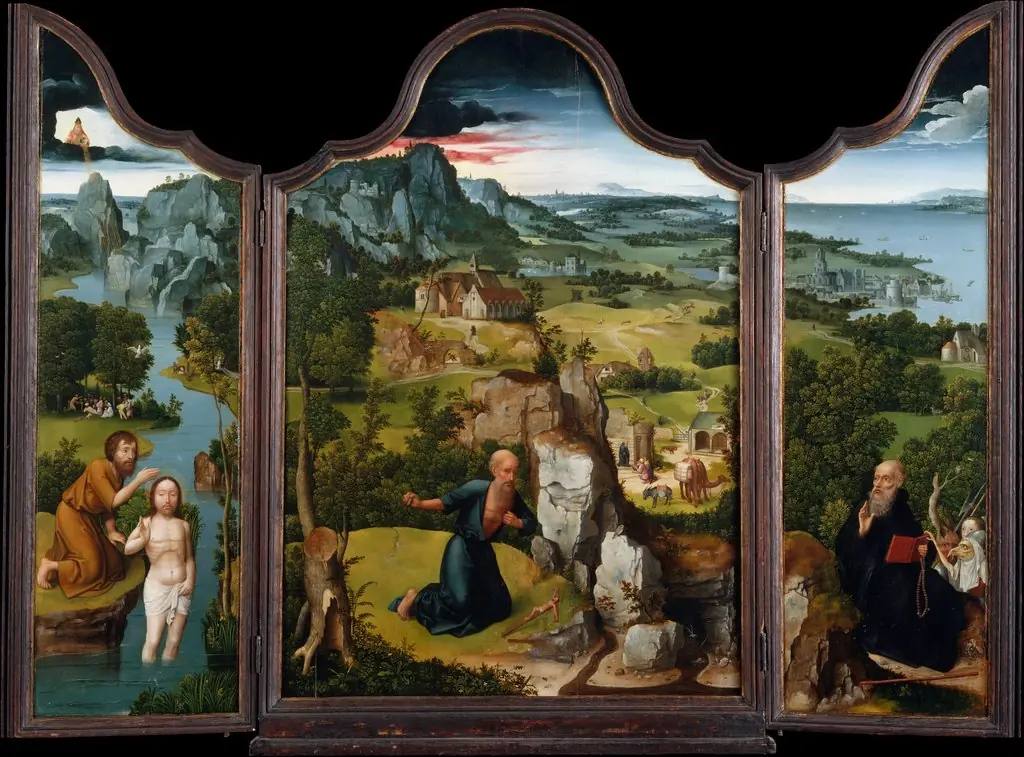 The Penitence of Saint Jerome
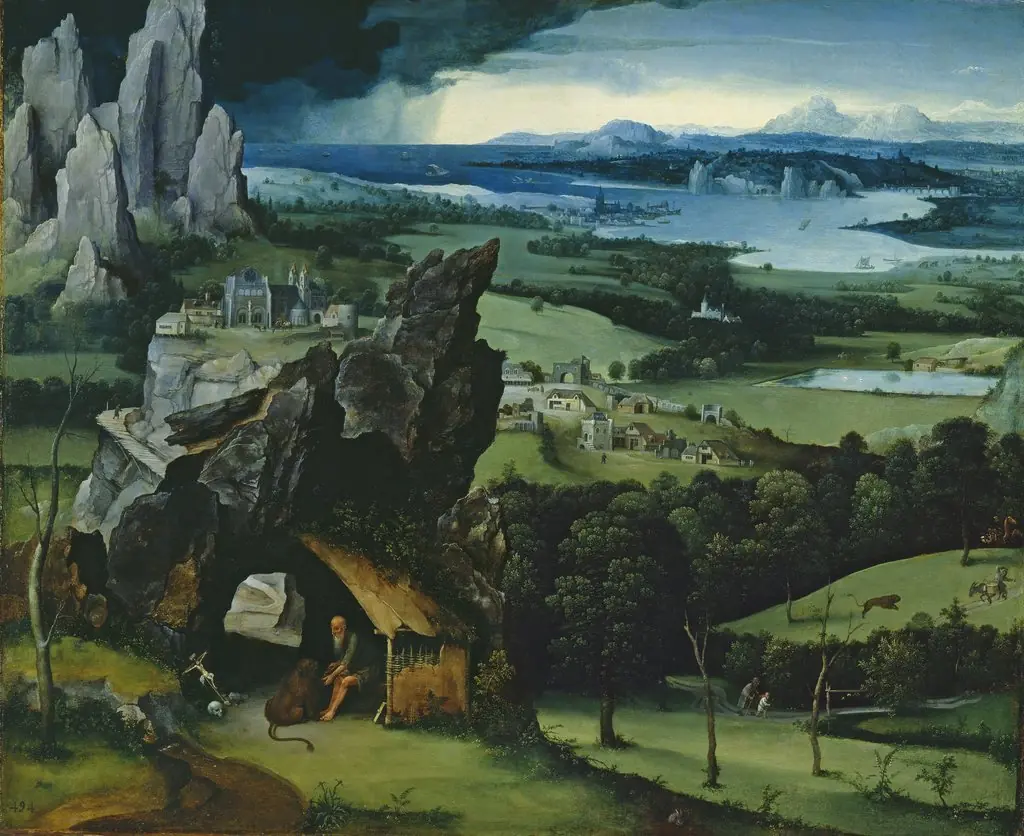 Landscape with St Jerome
 Rest during the Flight to Egypt
 Landscape with Charon Crossing the Styx
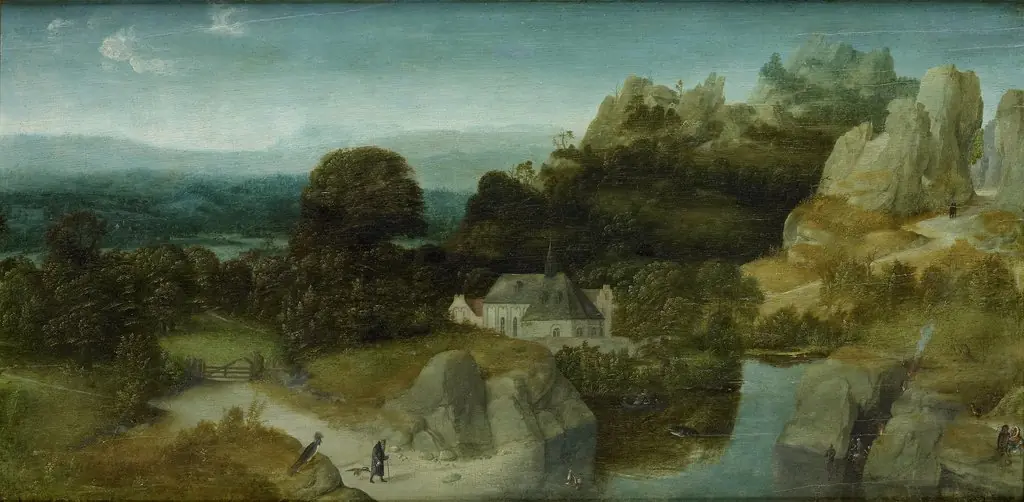 Landscape with the temptation of St Antony
 The Baptism of Christ
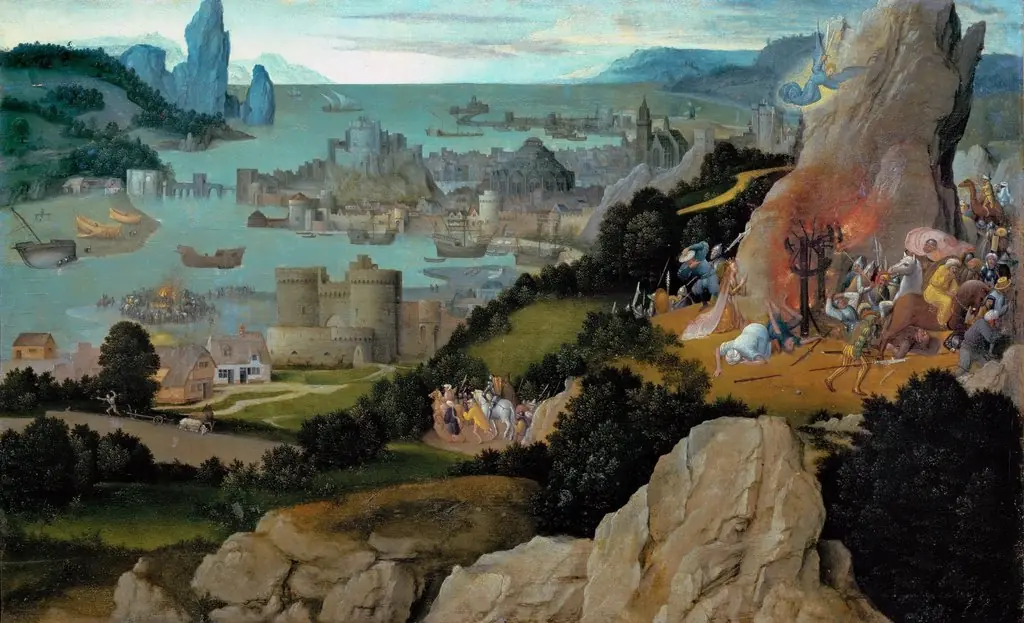 Martyrdom of Saint Catherine
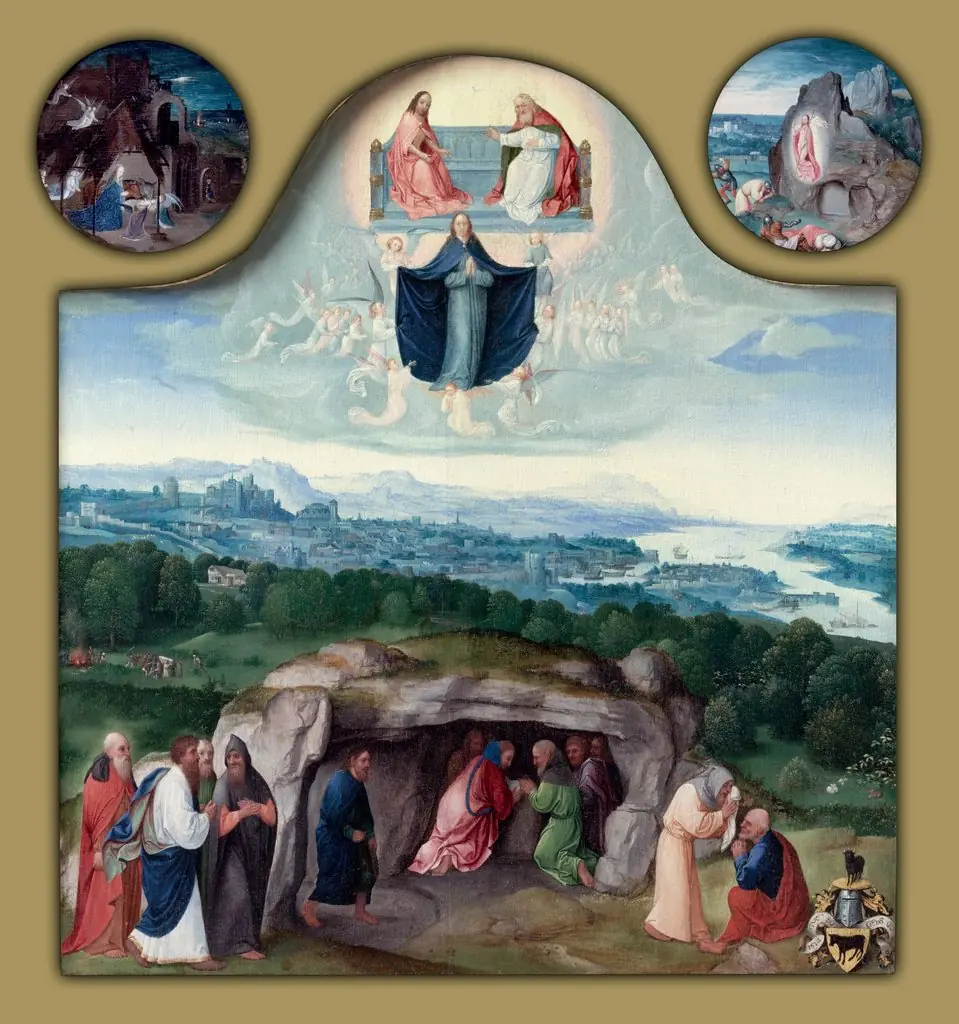 The Assumption of the Virgin, with the Nativity, the Resurrection, the Adoration of the Magi, the Ascension of Christ, Saint Mark and an Angel, and Saint Luke and an Ox
- Landscape with the Flight into Egypt
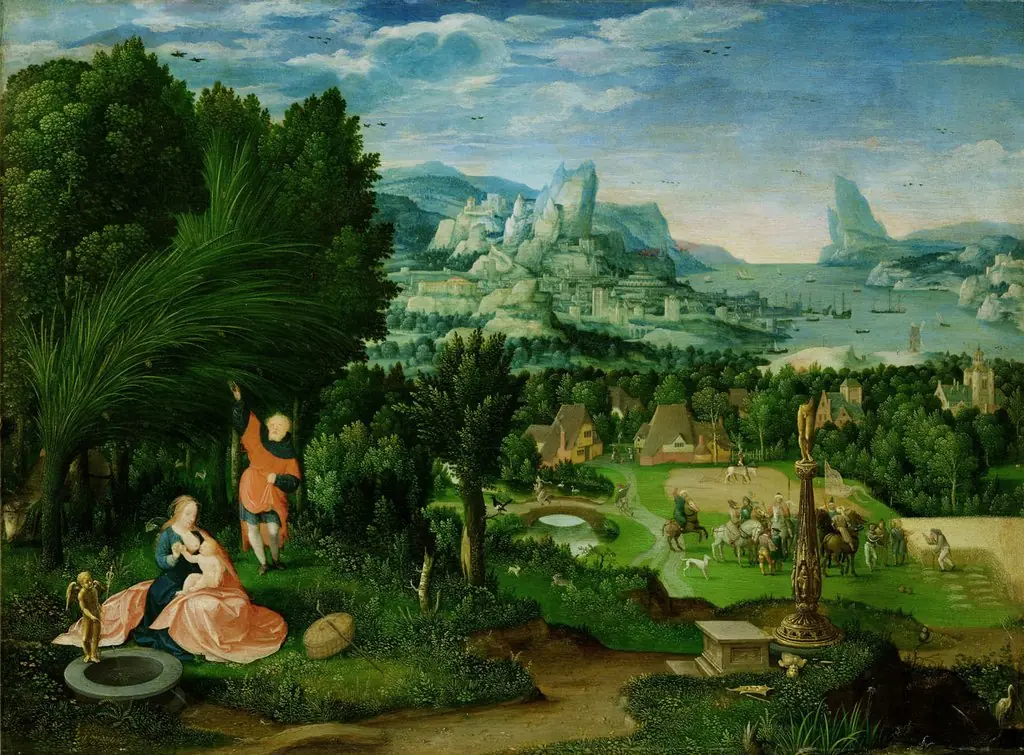 Landscape with the Rest on the Flight into Egypt
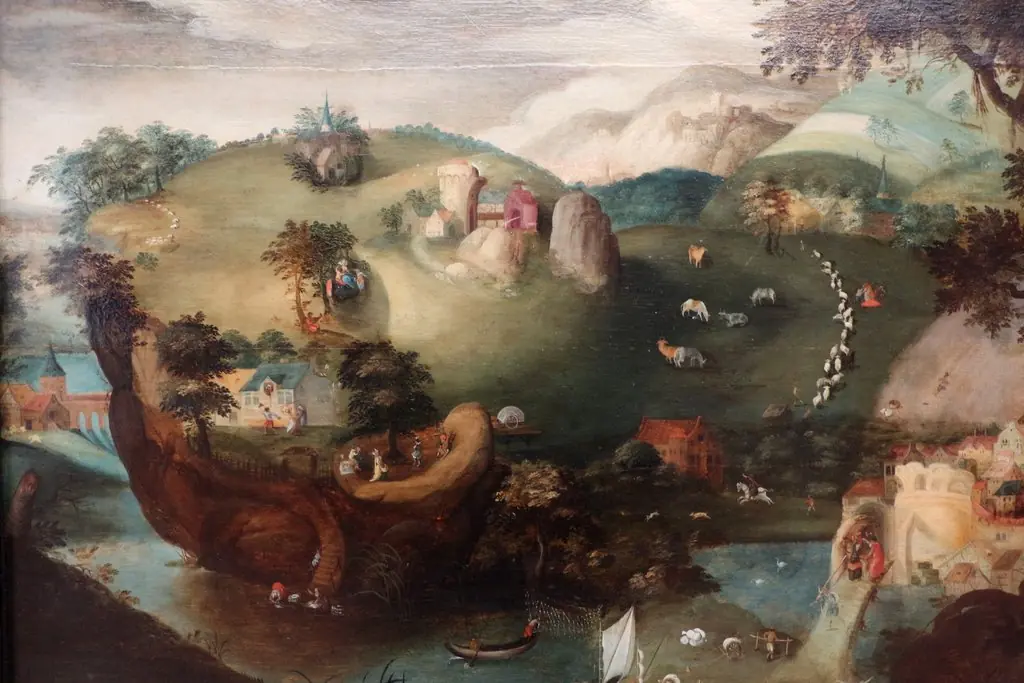 Antropomorf landschap - vrouwenportret
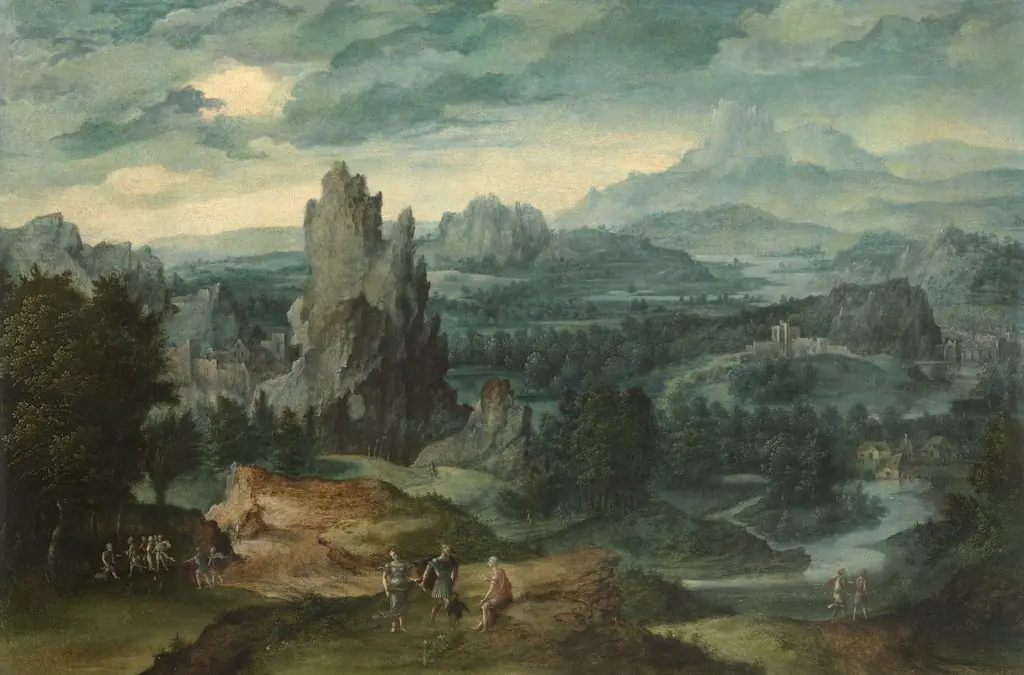 Landscape with Procne and Philomela
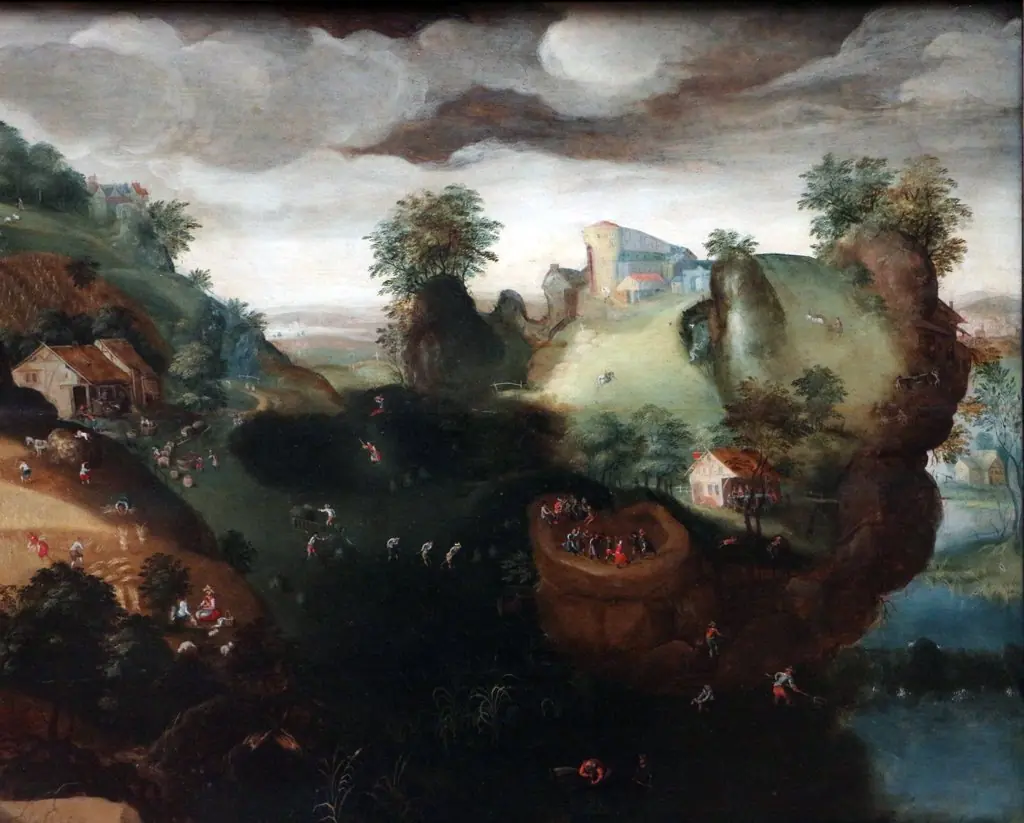 Antropomorf landschap - mannenportret
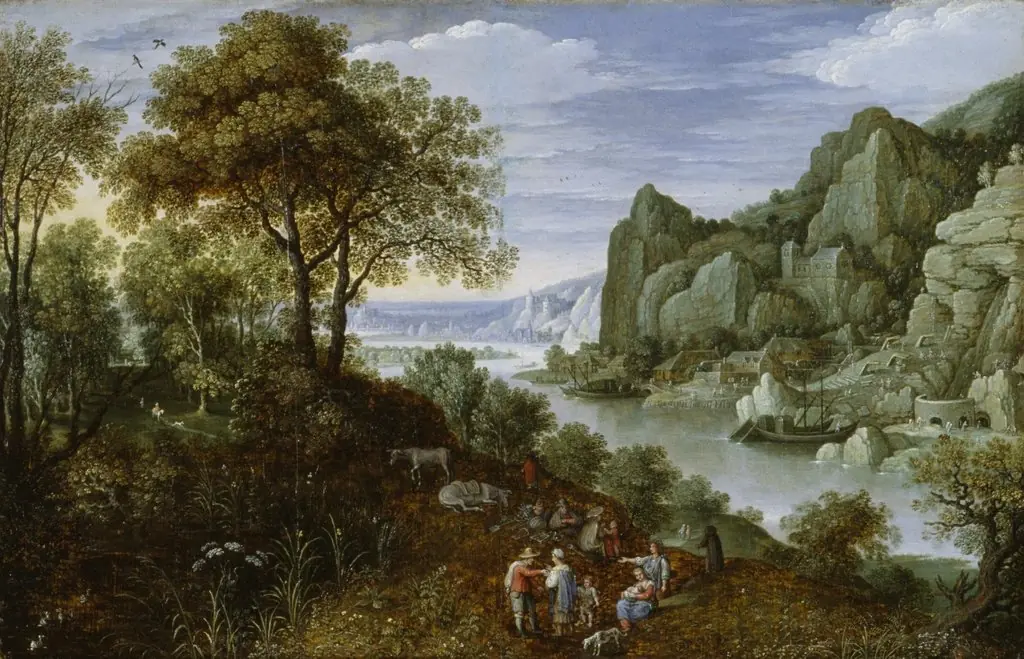 Mining Operations along a River
 Landscape with the Penitent Saint Jerome
 Landscape with the Judgement of Paris
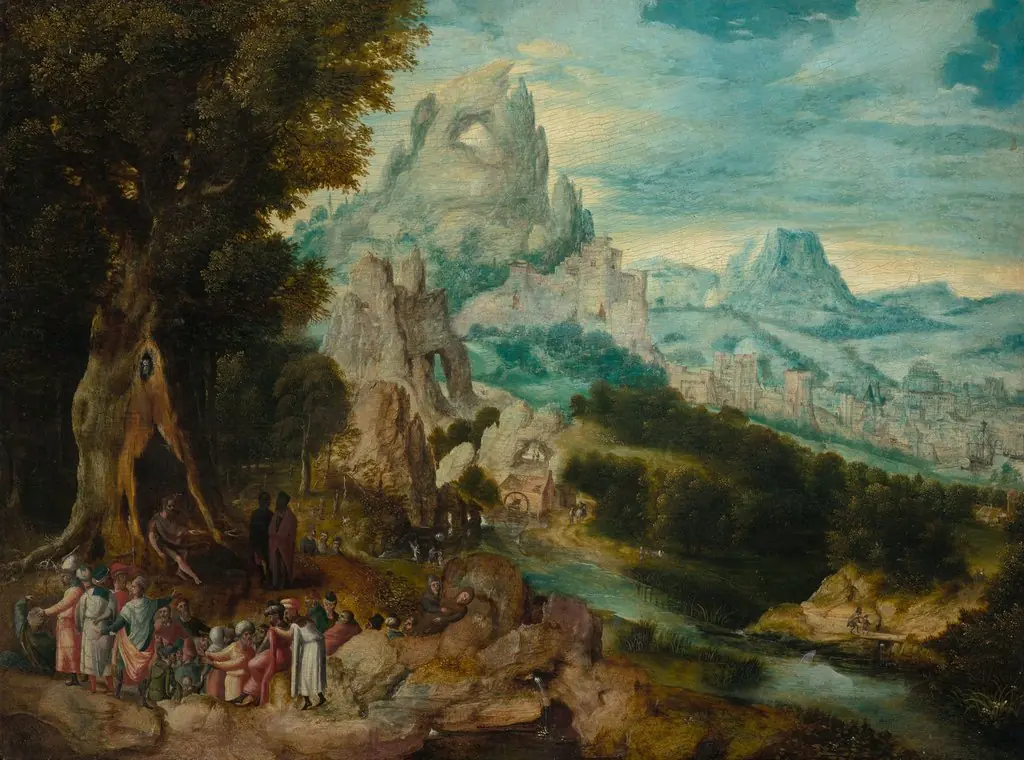 Landschaft mit der Predigt Johannes d. Täufers
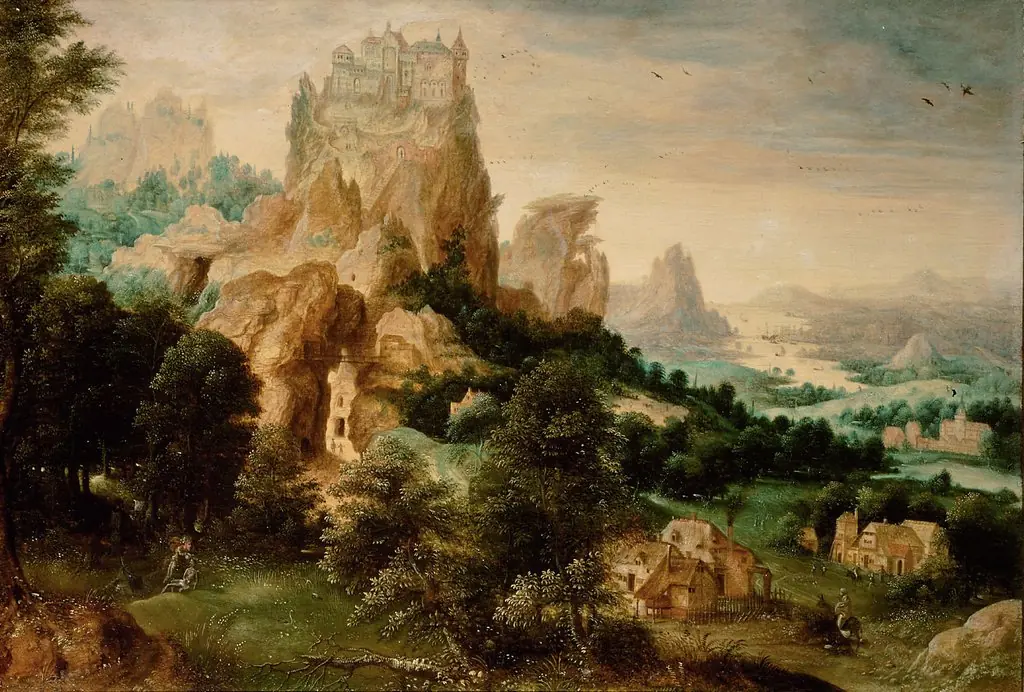 Hilly landscape with the story of the Good Samritan (Luke 10:25-37)
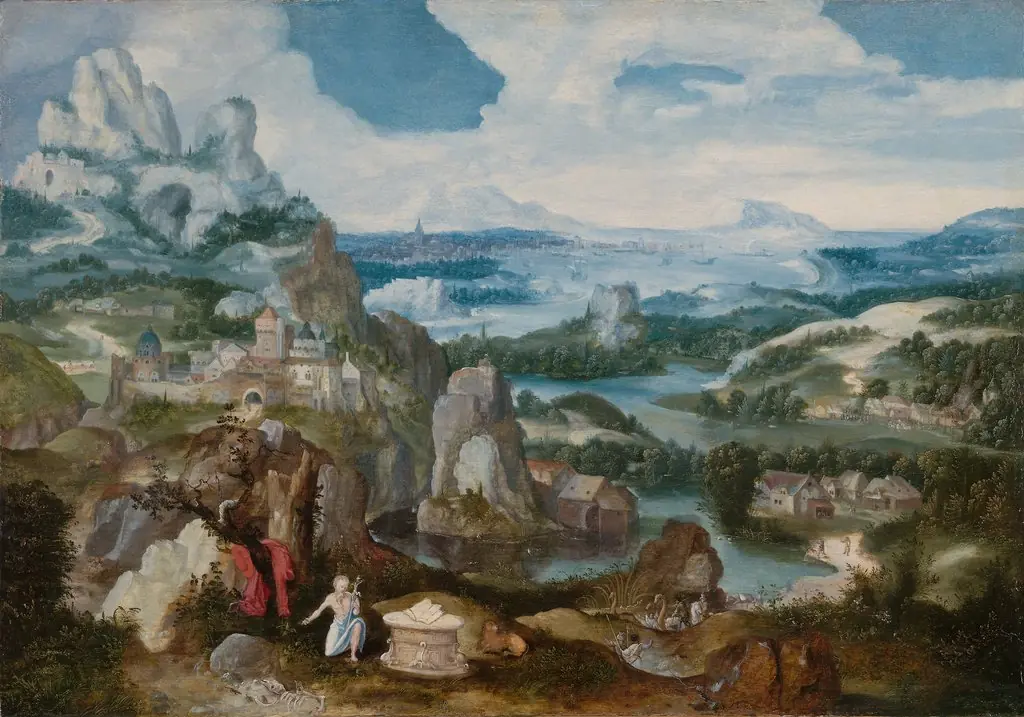 Landscape with the Penitent Saint Jerome