Artwork
The Penitence of Saint Jerome
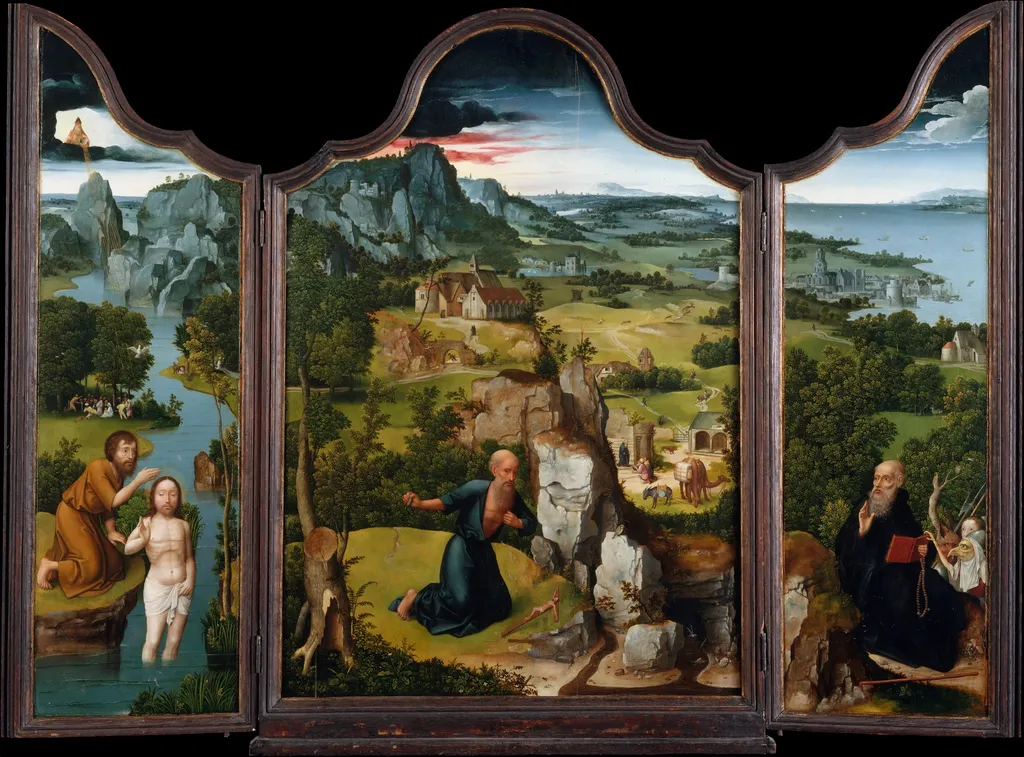
The Penitence of Saint Jerome is an oil painting by the Northern Renaissance artist Joachim Patinir. It dates from 1513 and is held in the collection of the Metropolitan Museum of Art.
About this work
Subject & Meaning
The Penitence of Saint Jerome depicts the fourth-century ascetic Jerome in the wilderness, a popular subject in Northern Renaissance devotional painting.
The Penitence of Saint Jerome depicts the fourth-century ascetic Jerome in the wilderness, a popular subject in Northern Renaissance devotional painting. Patinir portrays the saint engaged in penitential withdrawal from worldly life, set within an expansive landscape. The composition also incorporates the Baptism of Jesus and the figure of Anthony the Hermit, two further elements drawn from the iconographic tradition of hermit saints.
By pairing Jerome with Anthony and embedding the Baptism within the wilderness setting, the painting links the contemplative life of the desert fathers with the scriptural event of Christ's baptism, presenting penance, solitude, and spiritual renewal as interconnected themes.
Technique & Style
Joachim Patinir's The Penitence of Saint Jerome, executed in 1513, is a religious painting created using oil paint applied to a wooden panel support. The work measures 120.7 cm in height and 35.6 cm in width, indicating a narrow, vertical format typical of the artist's landscape-focused compositions. The medium of oil on panel allows for the detailed rendering of the depicted scenes, which include Saint Jerome in the wilderness alongside figures such as Anthony the Hermit and the Baptism of Jesus.
Held within the collection of the Metropolitan Museum of Art, the painting exemplifies the Northern Renaissance style through its integration of religious narrative within an expansive natural setting, utilizing the durability and rich color saturation characteristic of oil paints on rigid panel supports.
History & Provenance
The Penitence of Saint Jerome is an oil painting on panel dated 1513 and attributed to Joachim Patinir. The work, measuring roughly 120.7 × 35.6 cm, portrays Saint Jerome in a desert landscape alongside figures such as John the Baptist and Saint Anthony, reflecting contemporary religious themes. It is housed in the Metropolitan Museum of Art, which records the painting as part of its collection.
The dating and authorship are documented in the museum’s catalog and in scholarly references to Patinir’s output, establishing the work’s place within early‑16th‑century Northern Renaissance art.
The painting is part of the Metropolitan Museum of Art's collection and is displayed at the museum in New York. Its specific accession or inventory number is not listed in the available documentation. No exhibition history is recorded in the cited sources.
Overview
Joachim Patinir’s oil painting, "The Penitence of Saint Jerome," created around 1513, is a religious work that integrates several narratives within an expansive landscape. Currently part of the collection at The Metropolitan Museum of Art, this piece exemplifies Patinir's characteristic approach to combining detailed natural settings with significant spiritual subjects. It serves as a visual meditation on themes of solitude and devotion.
Context
The theme of Saint Jerome in the wilderness, engaged in penance, was a prevalent subject in early 16th-century religious art, symbolizing profound spiritual introspection and ascetic life. Patinir's work places this solitary devotional act within a vast, detailed natural world, underscoring the saint's isolation and the overarching presence of creation. The inclusion of other hermits and biblical events further enriches the spiritual narrative, reflecting contemporary religious interests.
Own this work as a print
Artist & collection

Artist
Joachim Patinir, also called Patenier, was a Flemish Renaissance painter of history and landscape subjects.

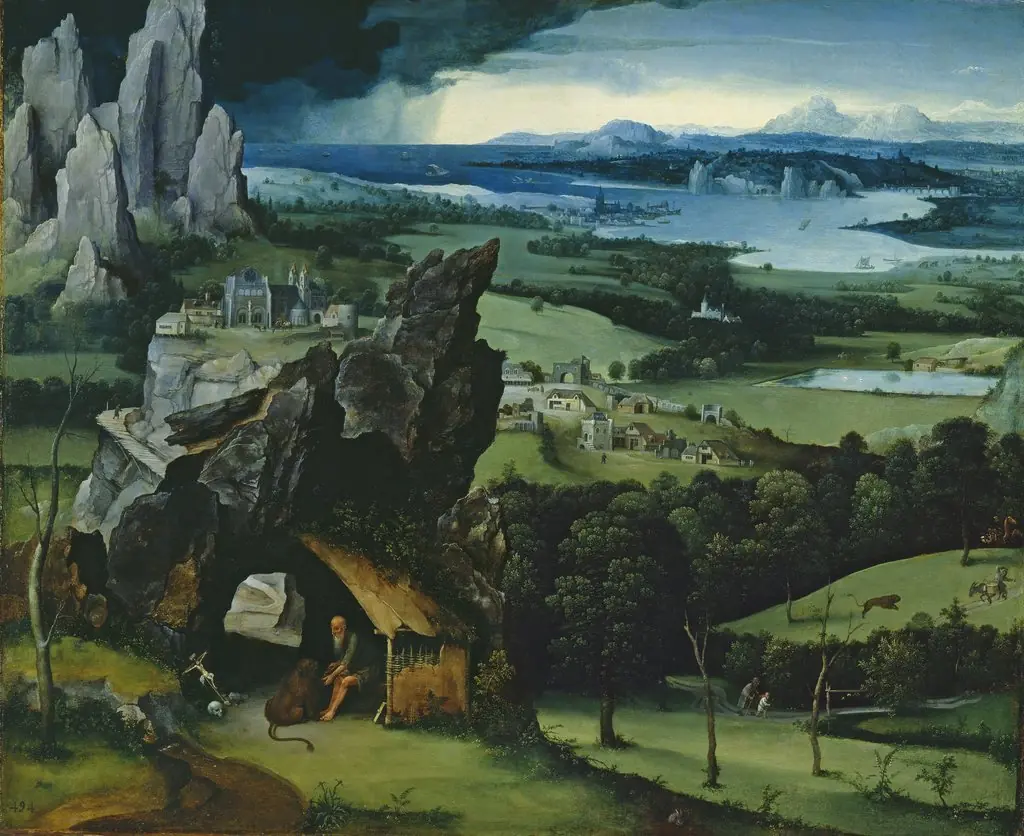
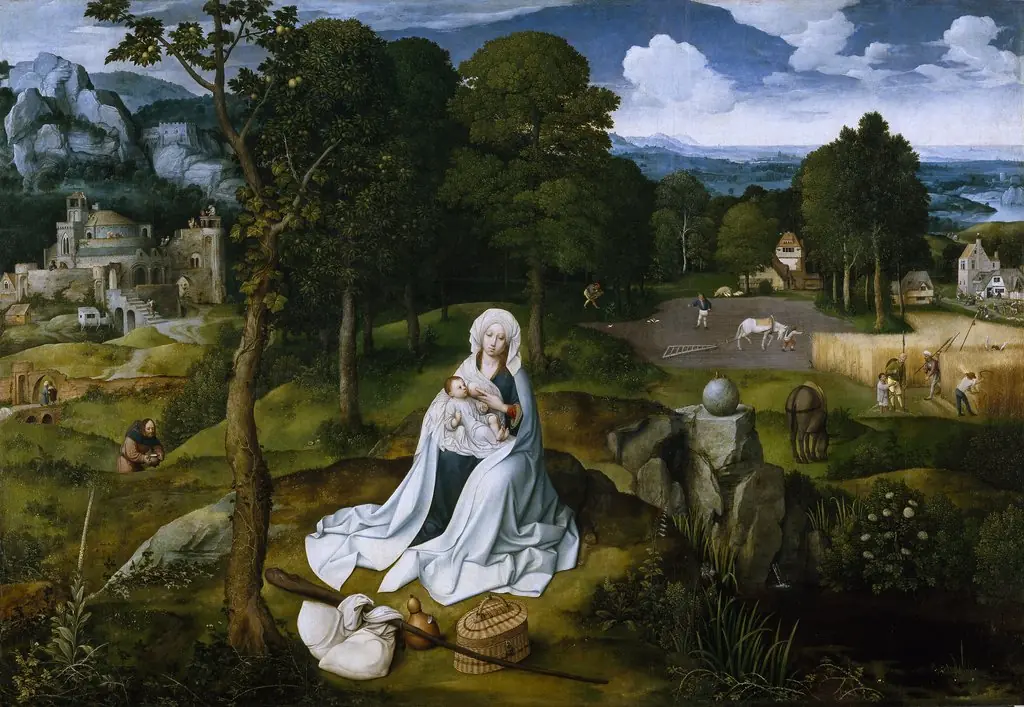
- Triptych: Rest on the Flight into Egypt
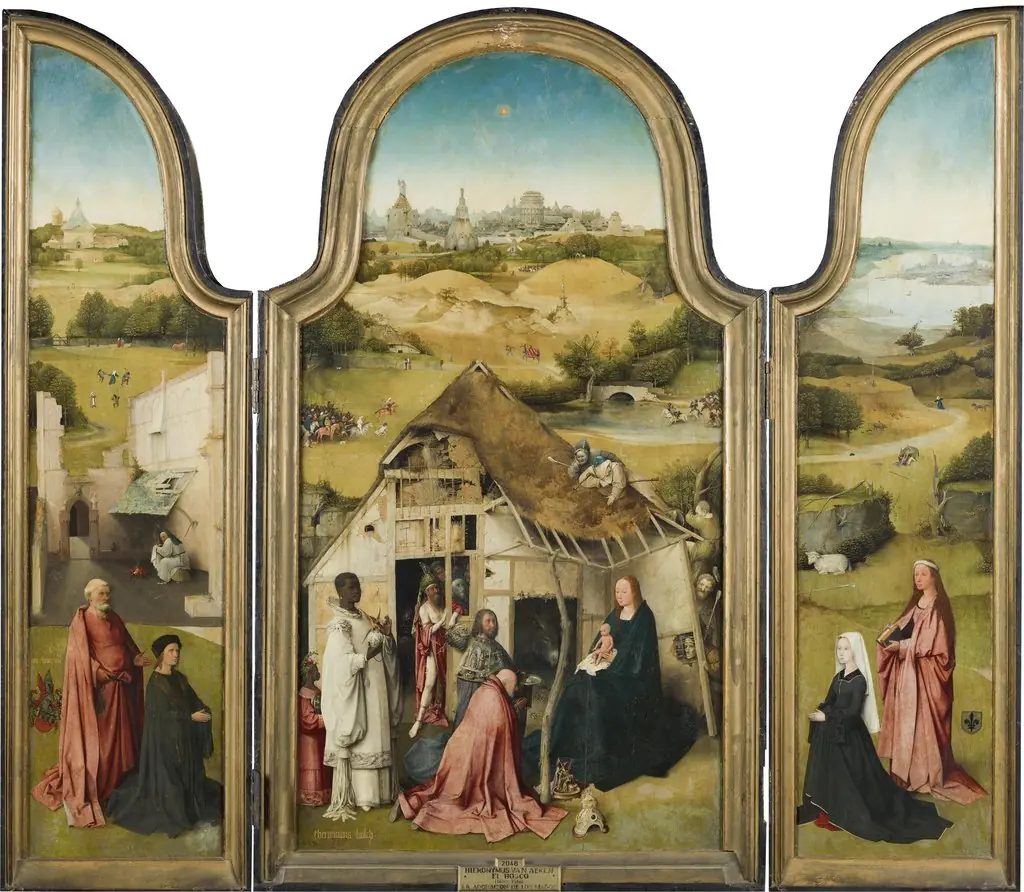 The Epiphany
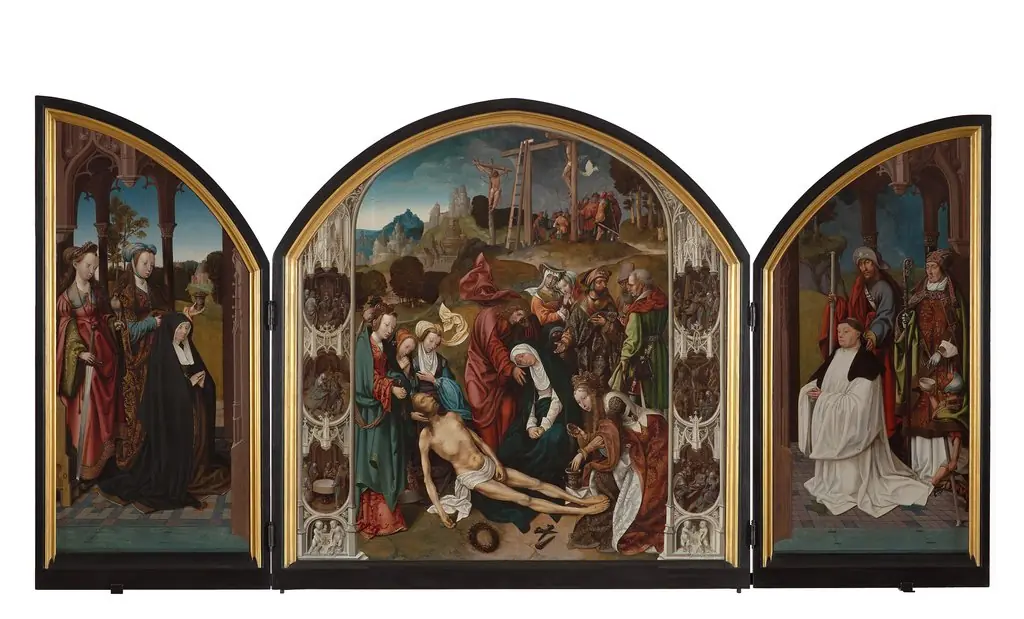 Ss Cecilia,Mary Magdalene with donatrix,lamentation flanked by other six Sorrows of Mary, Ss James Great,Martin of Tours an Augustine monk
 Drieluik met de kruisiging
 Drieluik
 Christ on Mount Olive with donor Agnes von Burgau
 Adoration of the Magi with Sigismund I of Poland.
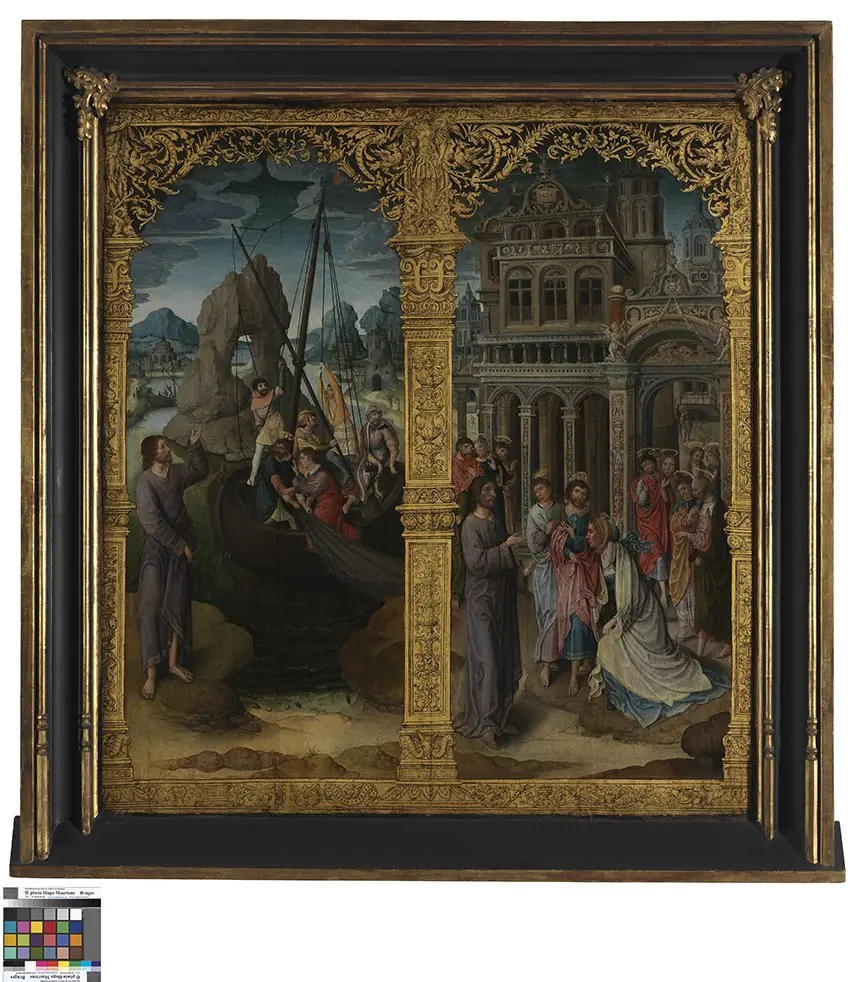 The Calling of James and John
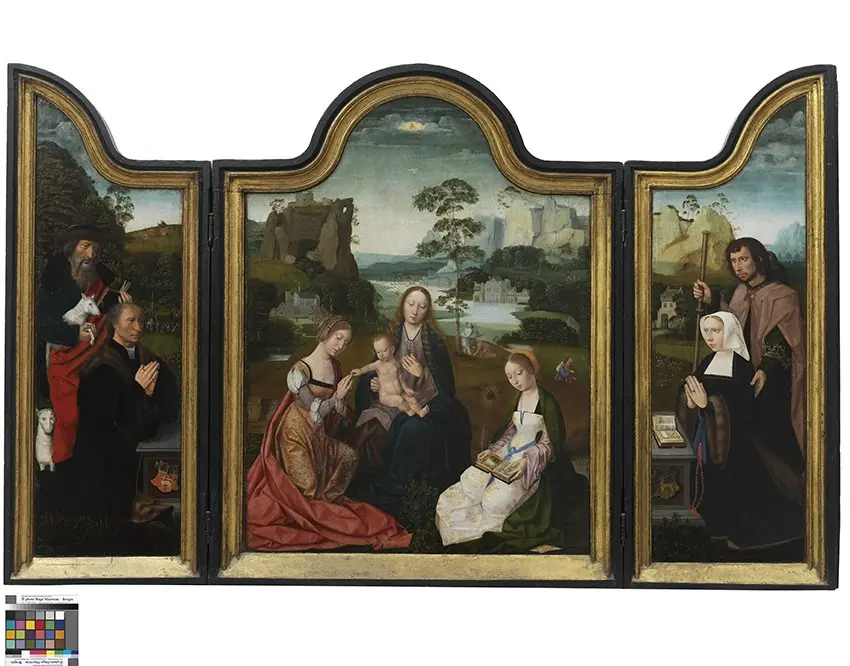 Madonna with the Saints Catherine and Barbara
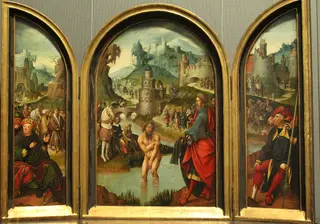 Flügelaltärchen (Flügel): Naam badet im Jordan; Seitenflügel: Hll. Cosmas und Damian
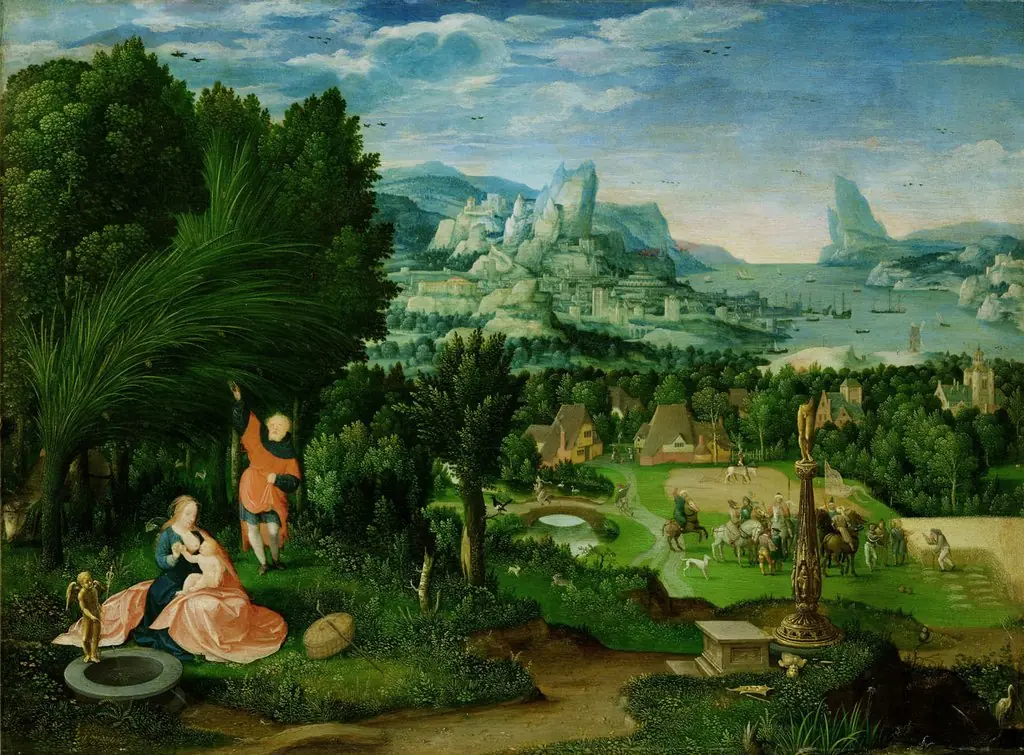 Landscape with the Rest on the Flight into Egypt
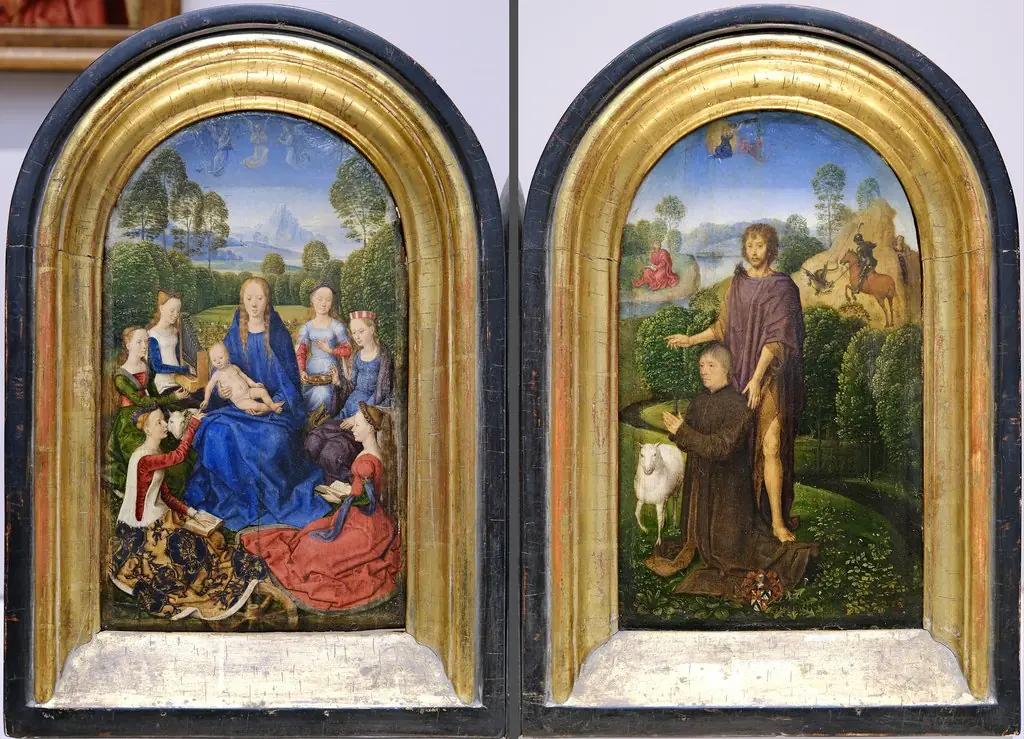 Diptych of Jan du Cellier