Artwork
Summer Day
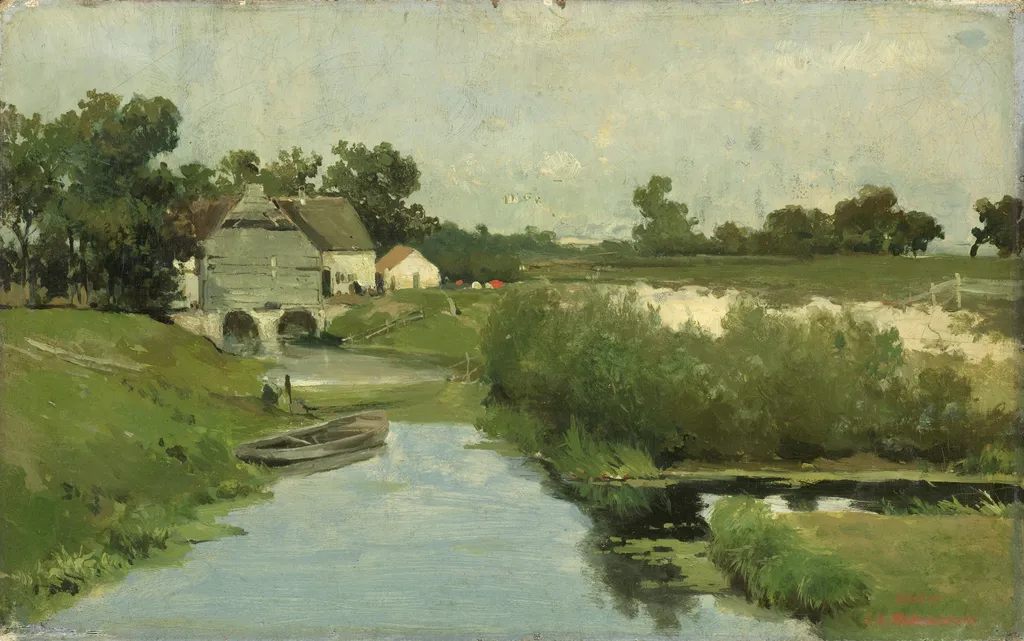
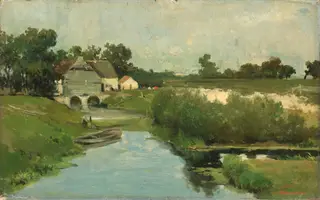
Summer Day is an oil painting by the Impressionist artist Johan Hendrik Weissenbruch. It dates from 1894 and is held in the collection of the Rijksmuseum.
About this work
Subject & Meaning
Summer Day presents a quintessential Dutch rural landscape rendered in oil on panel in 1894.
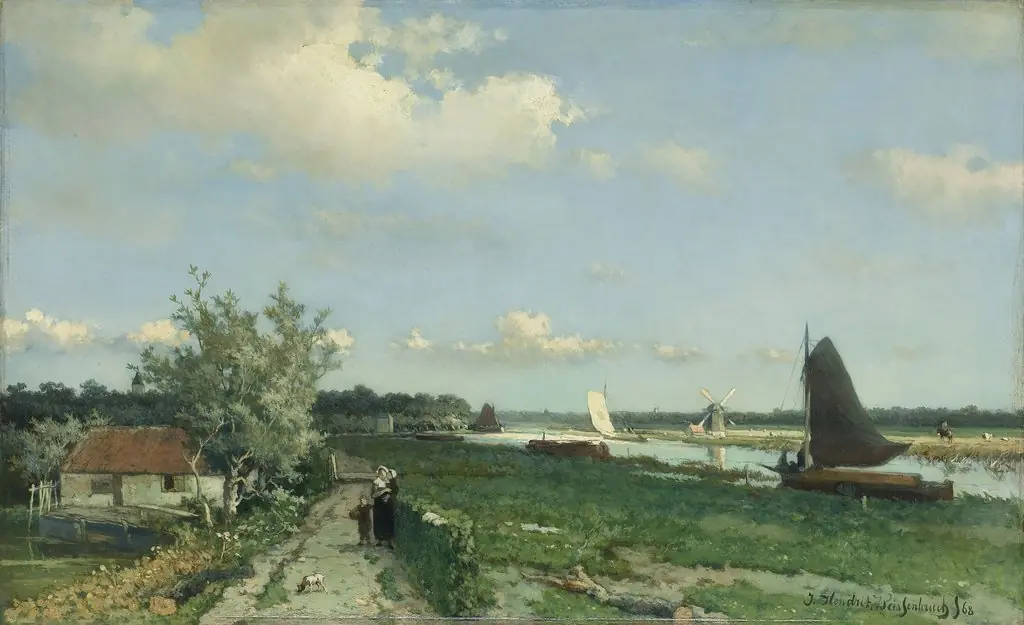
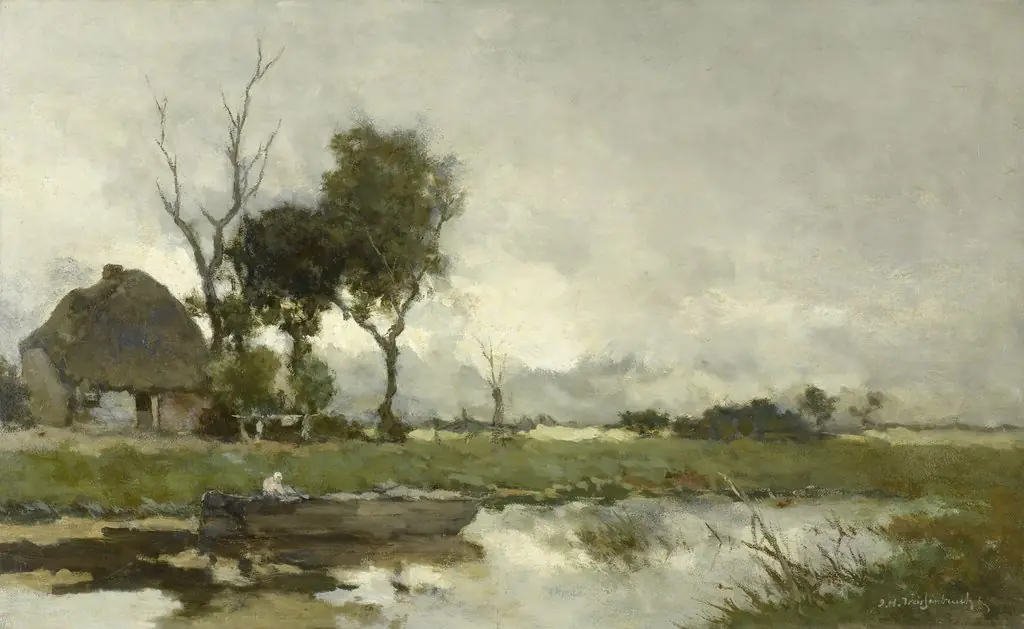
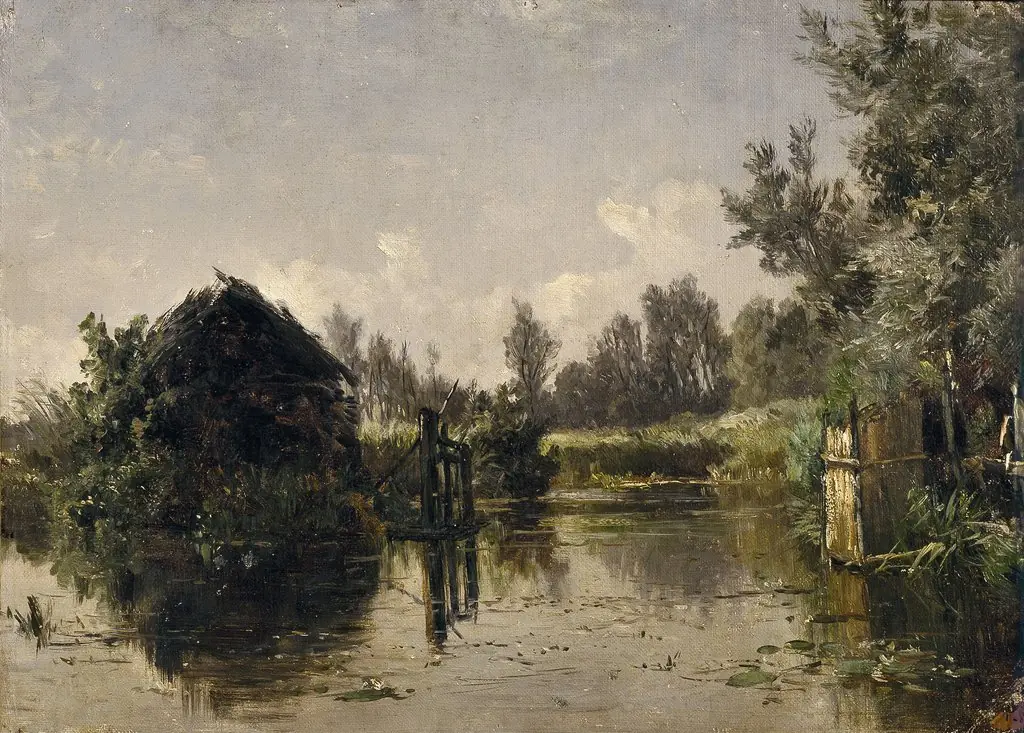
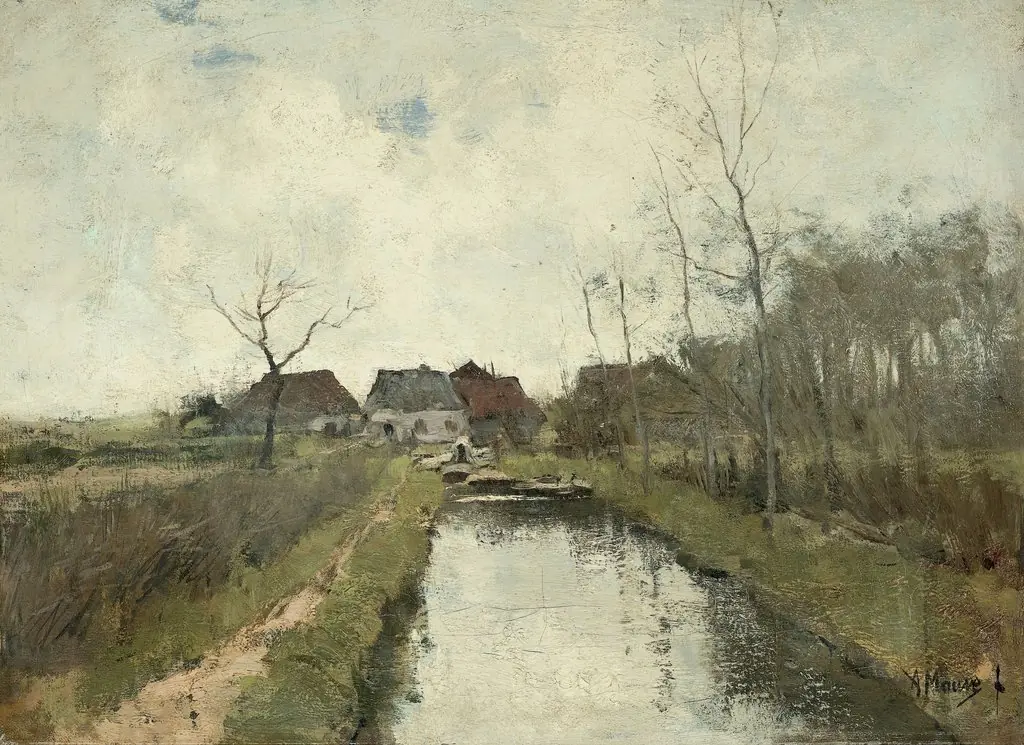
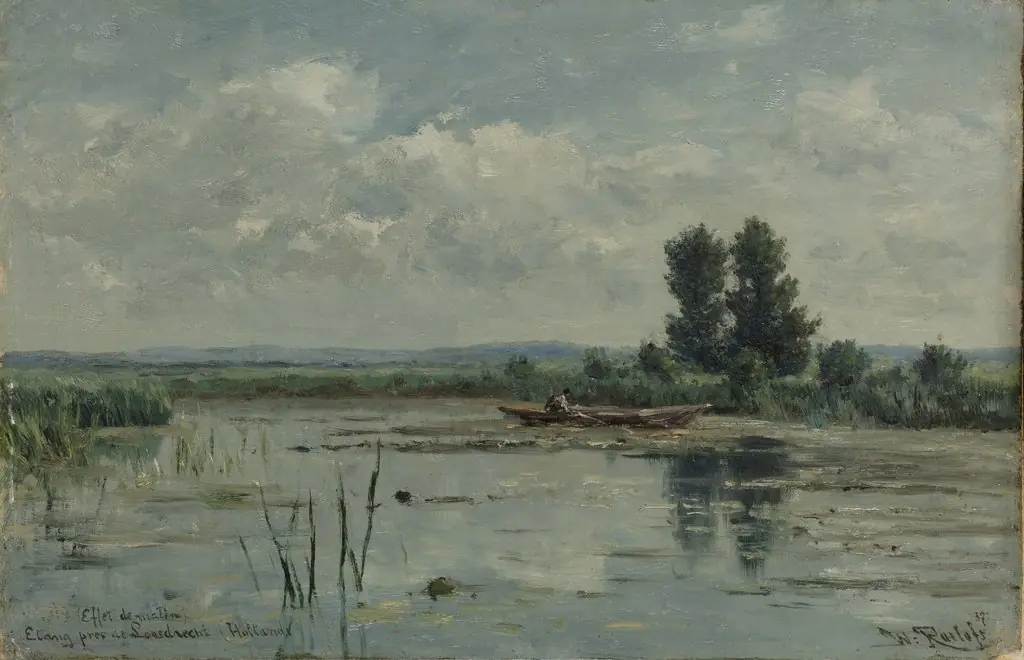
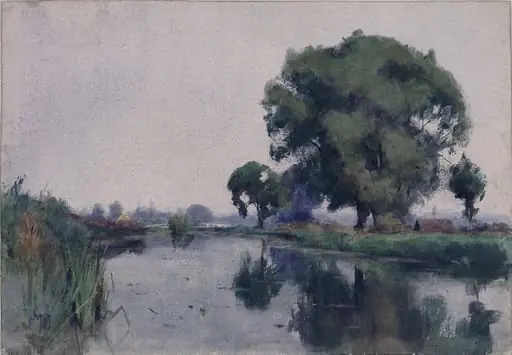
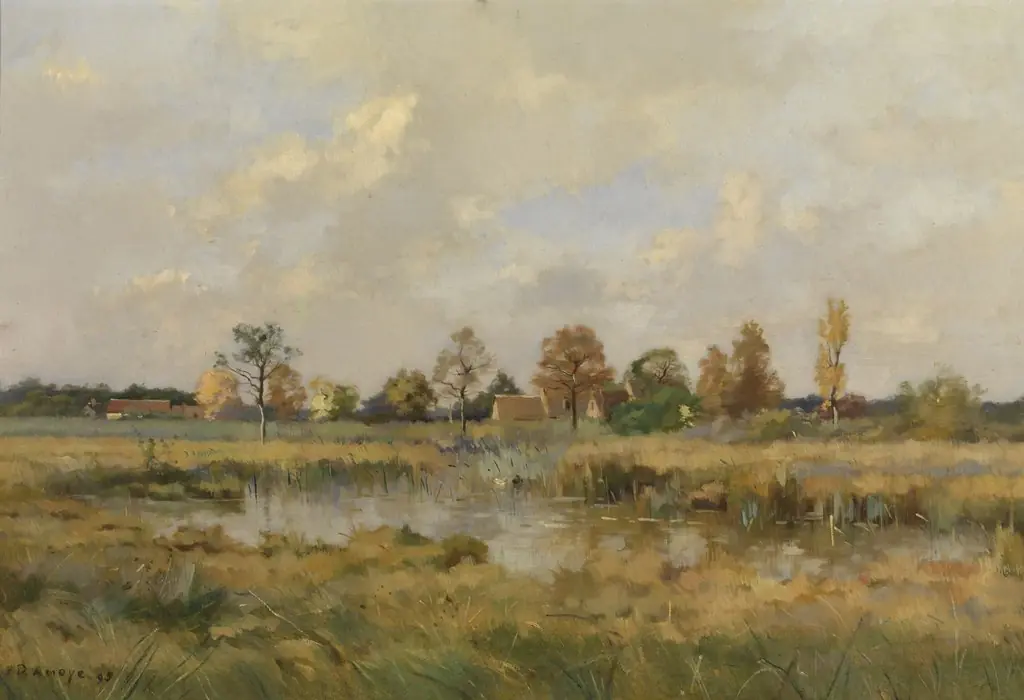
Summer Day presents a quintessential Dutch rural landscape rendered in oil on panel in 1894. The panel depicts a sunlit summer scene featuring a canal winding through pasture grass, flanked by a house, a pumping station, and a polder, with a small boat moored near the shore. Trees line the banks, and the sky is filled with soft clouds.
This assemblage of water, cultivated land, and modest human intervention reflects the harmony between nature and the engineered Dutch countryside, symbolizing seasonal abundance, agrarian tranquility, and the enduring relationship between the populace and their water-managed environment.
Technique & Style
Executed in 1894, Summer Day is an oil painting on panel measuring 19 × 31 cm. Weissenbruch’s handling emphasizes the diffuse light and open atmosphere of a summer day, using thin, fluid glazes to render the hazy sky and reflective water surfaces. The composition privileges broad, horizontal bands that organize the scene into sky, distant horizon, and foreground meadows, while the brushwork remains restrained, avoiding overt texture in favor of atmospheric unity. Subtle impasto accents appear in the foliage and boat details, but overall the touch remains light and descriptive rather than tactile.
History & Provenance
Johan Hendrik Weissenbruch created the landscape painting Summer Day in 1894. Executed in oil paint on a panel, the work measures 19 by 31 centimeters and depicts a rural polder scene featuring a canal, pasture, and a pumping station under a summer sky. The piece is currently held in the collection of the Rijksmuseum in Amsterdam.
While the specific commission details or the original owner are not recorded in the available documentation, the work's inception is dated to 1894. The painting remains a significant example of Weissenbruch's landscape genre, capturing the atmospheric qualities of the Dutch countryside during the late nineteenth century.
Context
Johan Hendrik Weissenbruch produced Summer Day in 1894, an oil painting on panel measuring 19 by 31 centimeters that belongs to the landscape genre. The work depicts a rural scene with a canal, pasture, house, pumping station, and summer sky, reflecting the topographical interest of late nineteenth-century Dutch art. It is catalogued in the Rijksmuseum collection, and its material and dimensions are recorded in museum documentation.
As a landscape painting, Summer Day situates Weissenbruch within the broader development of Dutch landscape practice, illustrating the era’s emphasis on realistic representation of everyday countryside settings.
Overview
This oil painting, titled Summer Day, depicts a serene rural landscape. It captures a quiet moment in the countryside, featuring a modest house situated by a river. The artwork conveys a sense of warmth and tranquility, characteristic of a pleasant summer afternoon. The artist's approach emphasizes a natural and understated beauty through its visual elements.
Own this work as a print
Artist & collection
Artist
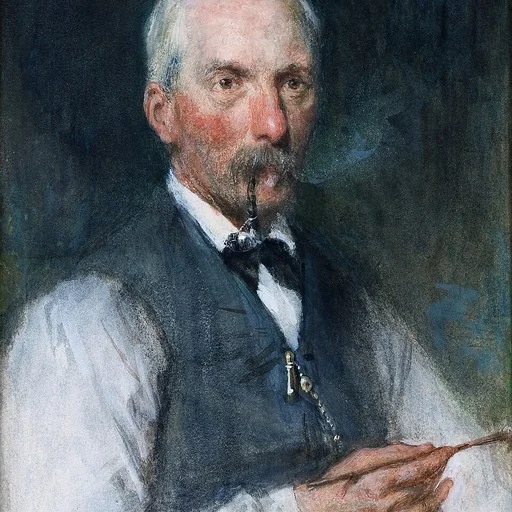
Jan Hendrik Weissenbruch, also known as Hendrik Johannes Weissenbruch (born 19 June 1824 in The Hague – died 24 March 1903 in The Hague) was a Dutch painter of the Hague School. He is noted especially for his watercolours.