Artwork
The mill
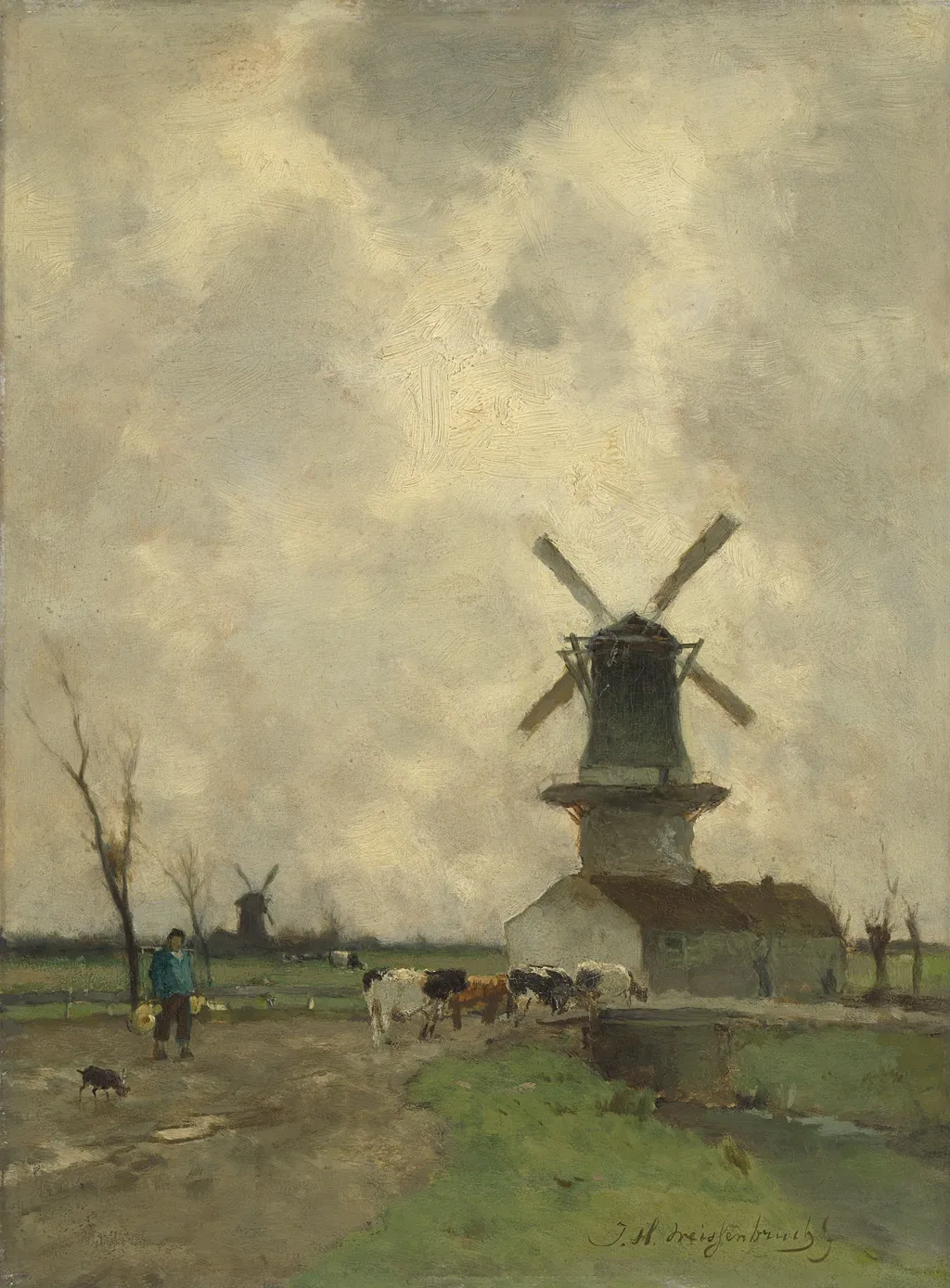
The mill is an oil painting by the Impressionist artist Johan Hendrik Weissenbruch. It dates from 1894 and is held in the collection of the Rijksmuseum.
About this work
Subject & Meaning
While the title identifies the central structure as a mill, the available records specifically confirm the presence of arboreal elements within the depiction.
Created in 1886 by Johan Hendrik Weissenbruch, this oil painting on panel is classified as a landscape work. The composition depicts a tree, serving as the primary visual subject within the scene. While the title identifies the central structure as a mill, the available records specifically confirm the presence of arboreal elements within the depiction.
The work functions as a representation of the natural environment, consistent with the landscape genre practiced by the artist during the late nineteenth century.
Technique & Style
The painting is executed in oil paint on panel, a support that allows for fine detail and smooth handling. Weissenbruch’s brushwork is broad and expressive, particularly in the depiction of the sky and the windmill’s sails, conveying a sense of atmospheric movement. The composition is structured with a low horizon, emphasizing the expansive sky, while the palette is subdued, dominated by earthy browns, muted greens, and soft grays, characteristic of the Hague School’s tonal realism.
The panel measures 41 × 30.5 cm, a modest format that focuses attention on the interplay of light and texture across the landscape.
History & Provenance
Johan Hendrik Weissenbruch created the oil painting The Mill in 1886. Executed on a panel measuring 41 cm by 30.5 cm, the landscape depicts a tree. The work was once owned by Jean Charles Joseph Drucker. It currently resides in the collection of the Rijksmuseum.
Context
Johan Hendrik Weissenbruch created The mill in 1886 as an oil painting on panel, classified as a landscape within his oeuvre. The work measures 41 cm in height and 30.5 cm in width and was originally owned by Jean Charles Joseph Drucker before entering the Rijksmuseum collection in Amsterdam. It depicts a solitary tree and was exhibited at the Rijksmuseum in 1886 as part of its early acquisitions of Dutch landscape painting.
Contemporary scholarship situates the painting within the broader development of 19th-century Dutch landscape art, reflecting the transition from Romanticism toward more naturalistic representation in the late 19th century.
Legacy
The work's later influence and reputation are tied to its inclusion in prominent collections and exhibitions, reflecting its significance within Dutch landscape painting. Its legacy is reinforced by scholarly attention to Weissenbruch's role in 19th-century Dutch art, though specific later exhibitions or critical assessments are not detailed in the provided sources. The painting's technical execution in oil on panel and its depiction of natural elements have contributed to its enduring presence in discussions of the genre.
Overview
Johan Hendrik Weissenbruch’s 1894 oil painting The Mill presents a tranquil Dutch countryside dominated by a prominent windmill. The composition includes a solitary figure near a fence, grazing cattle, and a distant, faintly rendered second mill beneath a soft, pale sky. The work is part of the Rijksmuseum’s collection.
Own this work as a print
Artist & collection
Artist
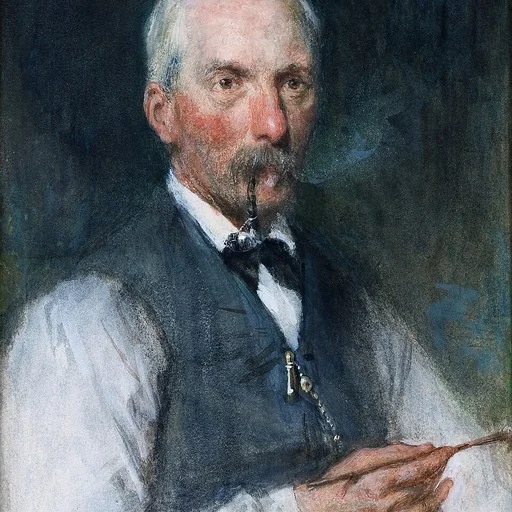
Jan Hendrik Weissenbruch, also known as Hendrik Johannes Weissenbruch (born 19 June 1824 in The Hague – died 24 March 1903 in The Hague) was a Dutch painter of the Hague School. He is noted especially for his watercolours.

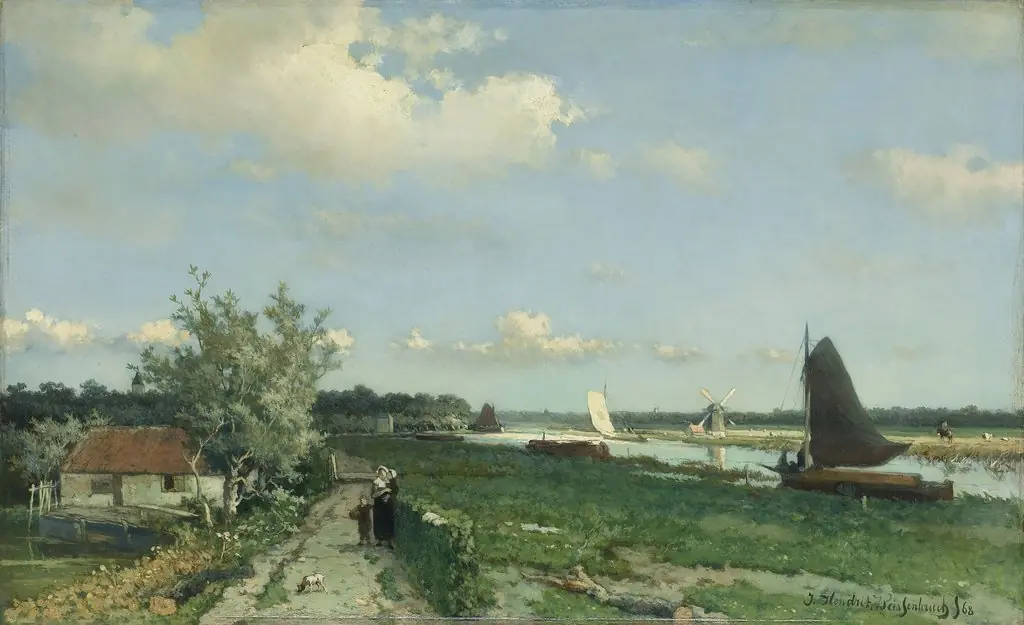
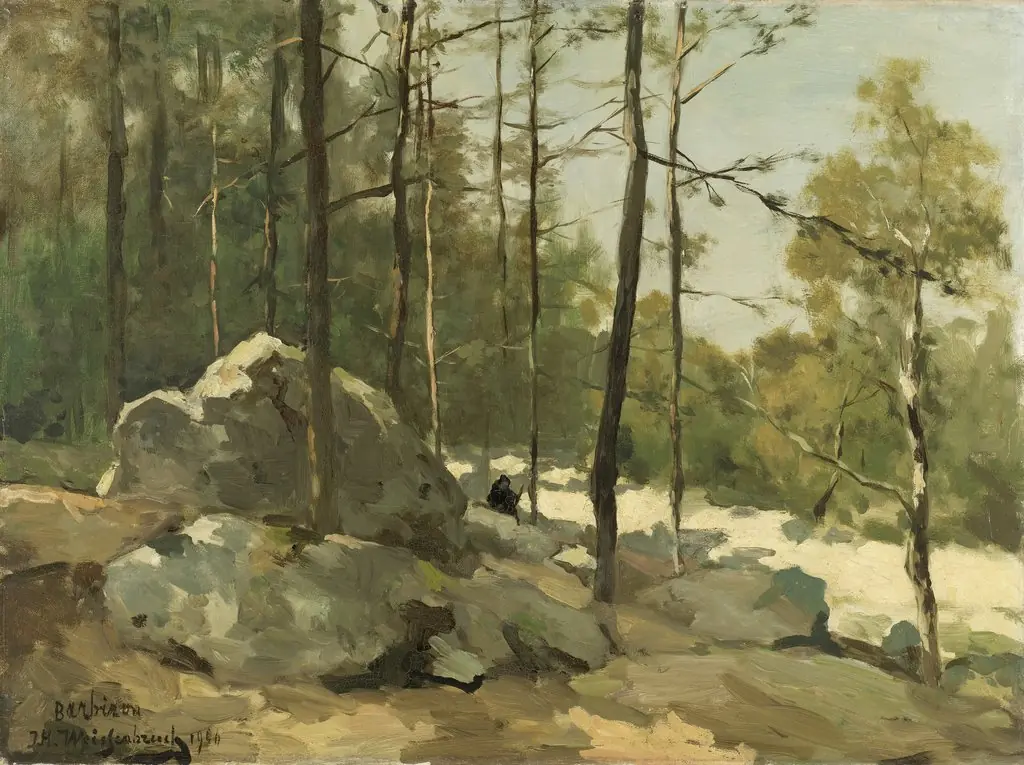
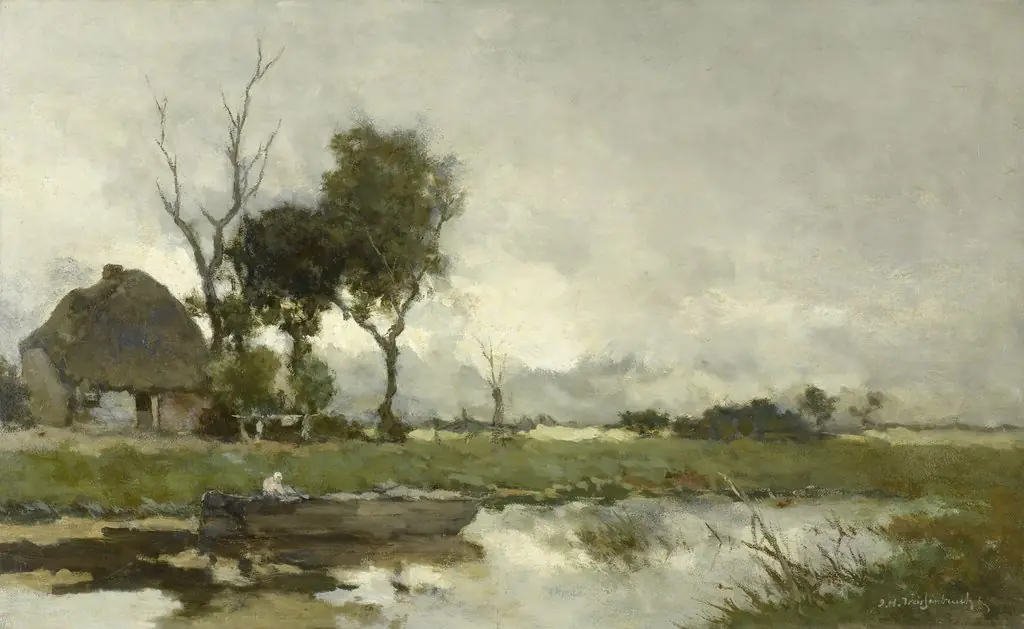
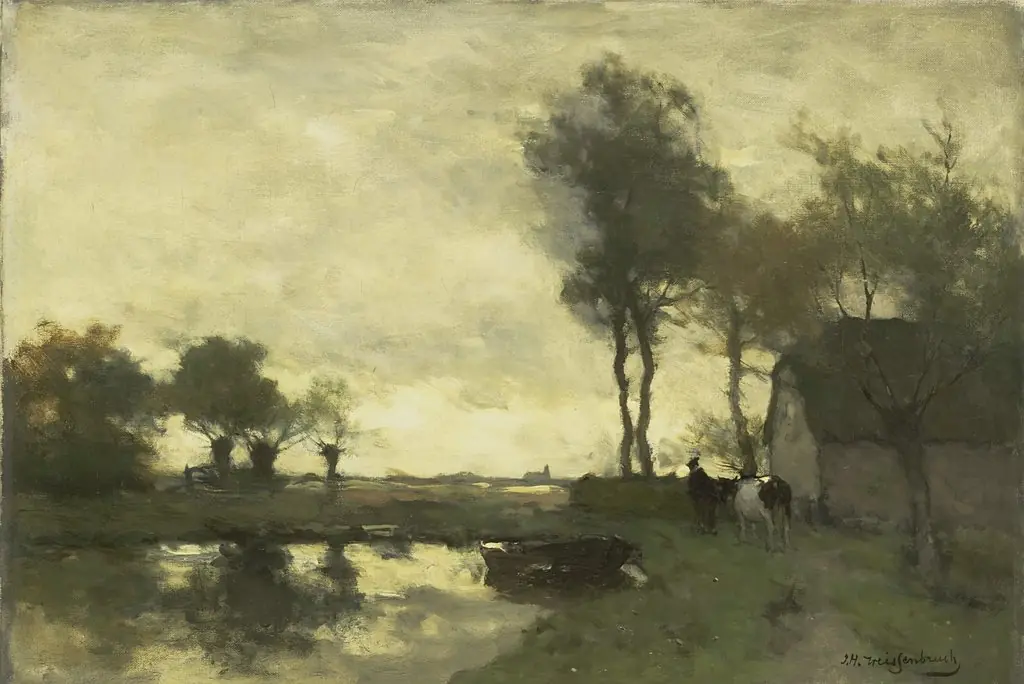
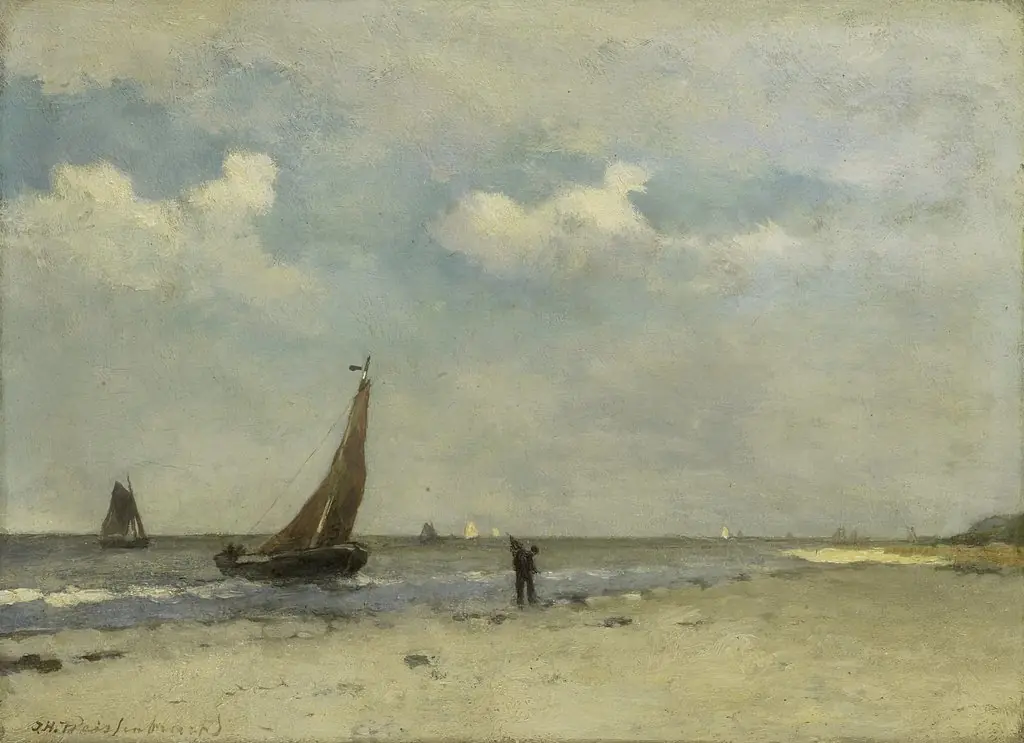
- The Windmill
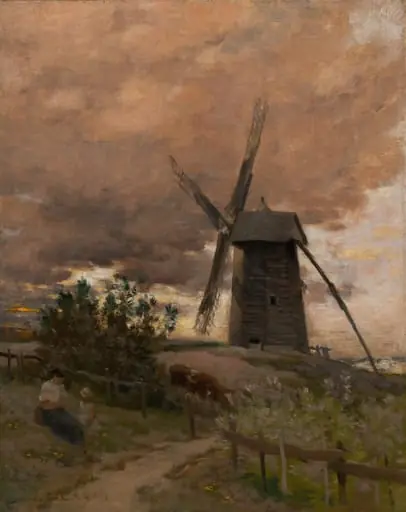 The Windmill
 The Windmill
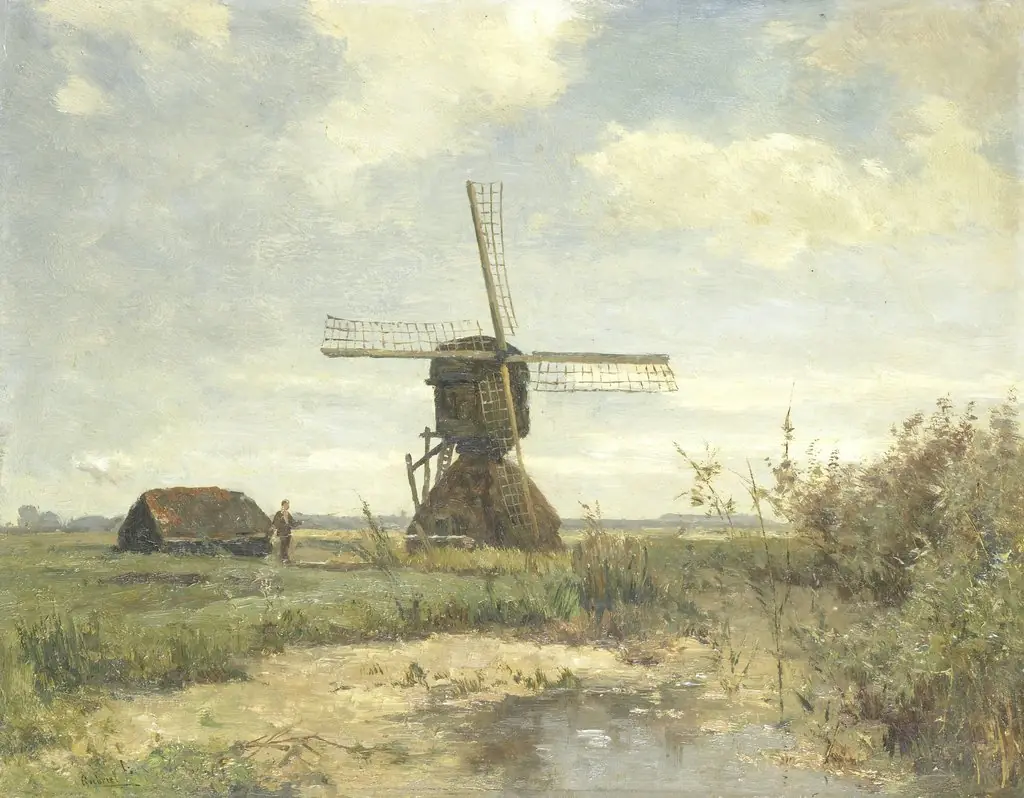 ‘Sunny Day’: a windmill on a watercourse
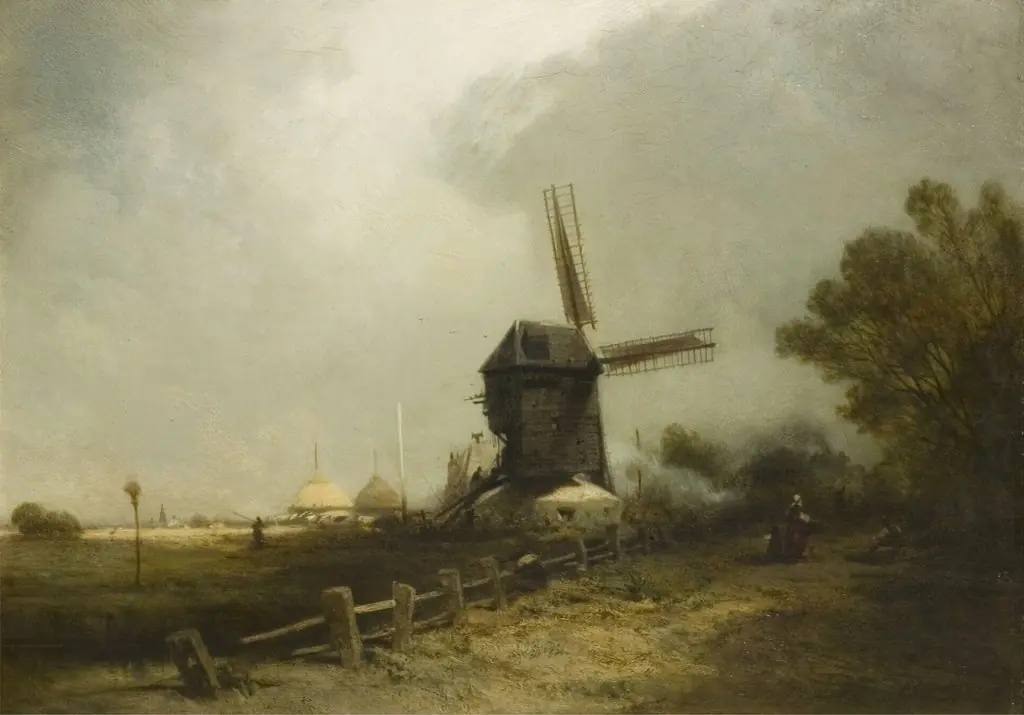 The Windmill
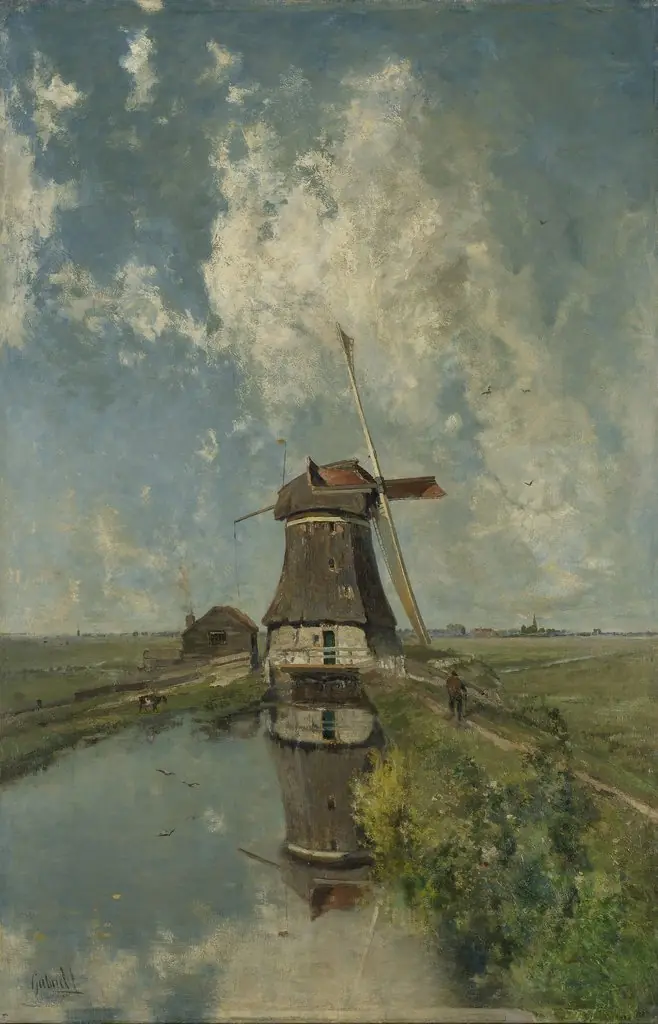 A Windmill on a Polder Waterway, Known as ‘In the Month of July’
 A Windmill on a Polder Waterway, Known as ‘In the Month of July’
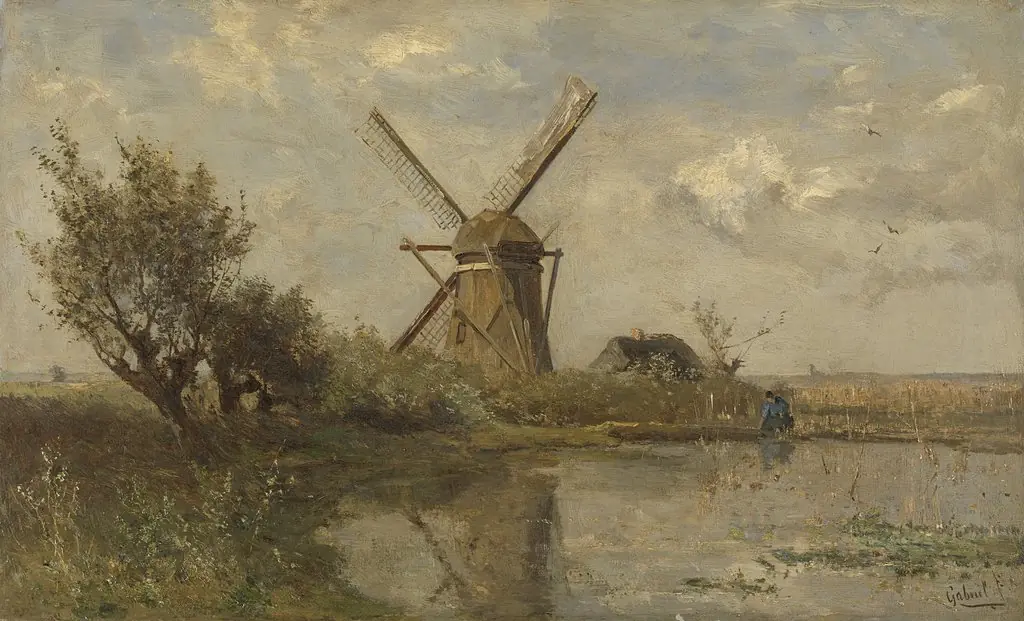 Windmill on a pond
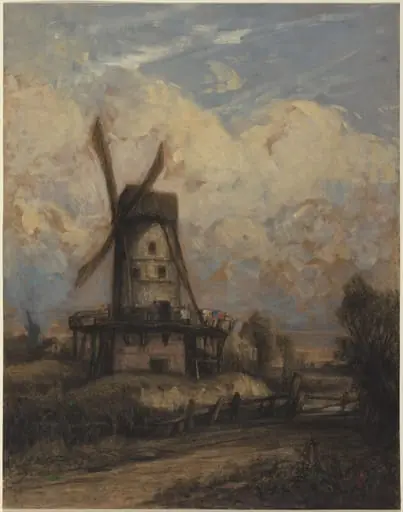 A Windmill against a Cloudy Sky
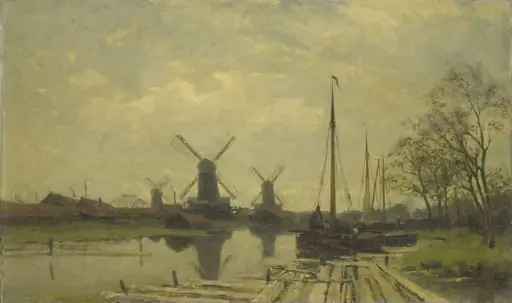 Waterway near the Baarsjes, Amsterdam
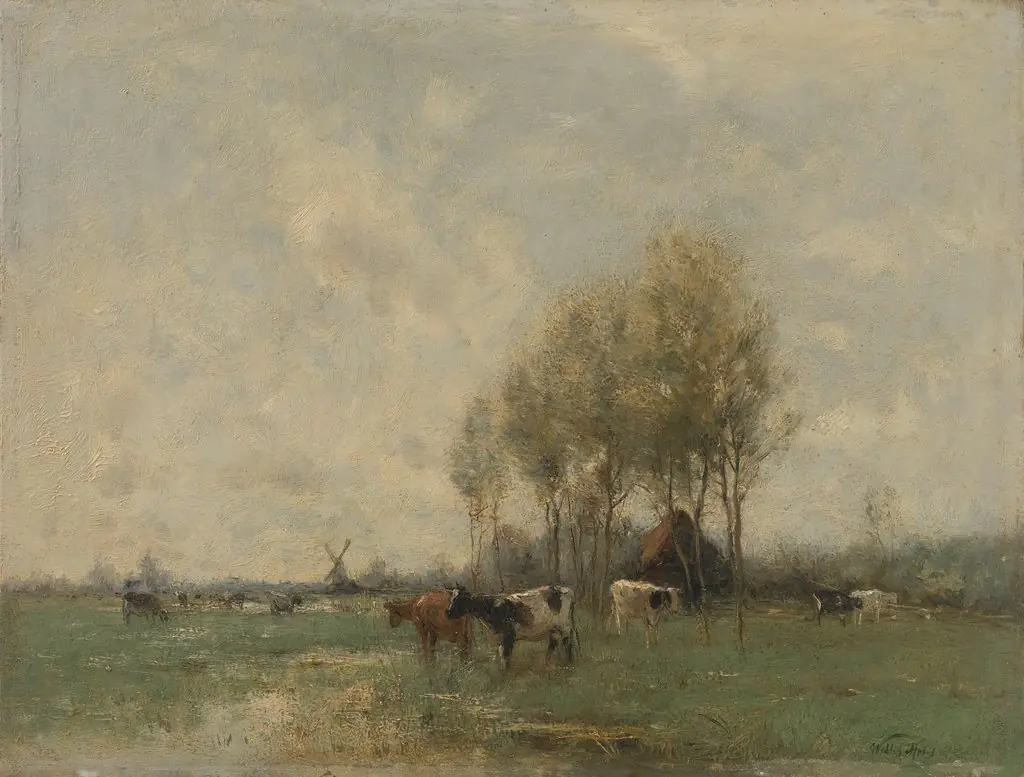 Meadow with cows
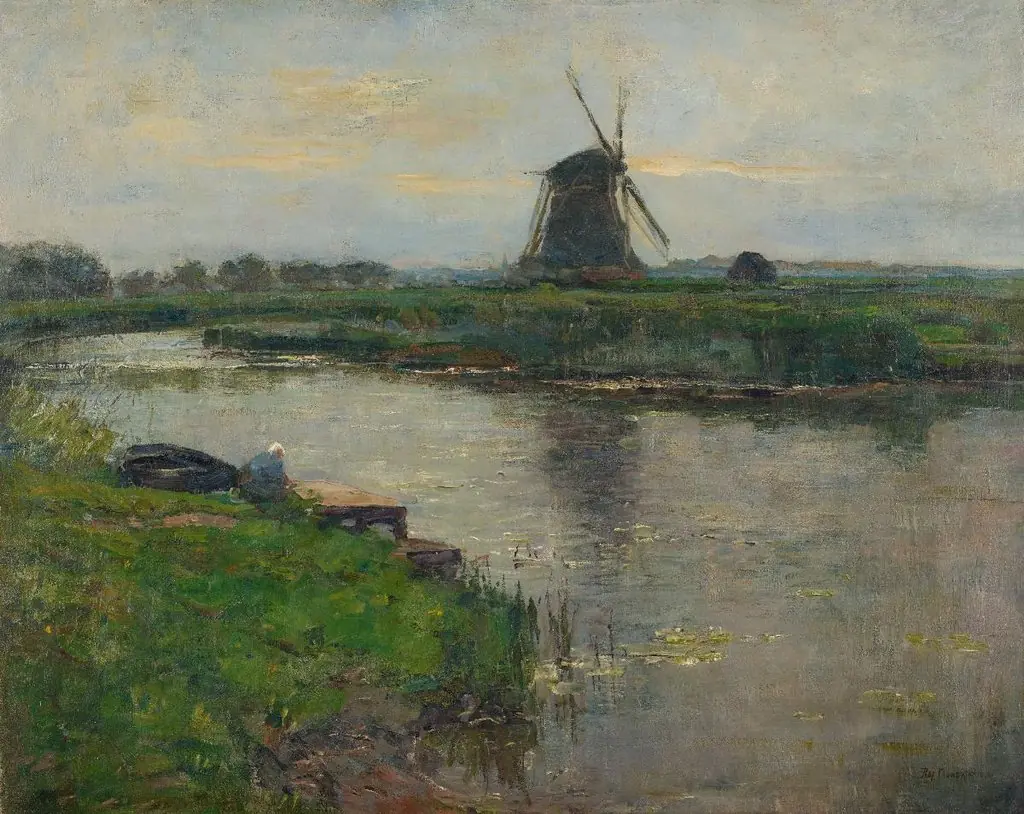 Windmühle an der Gein