Artwork
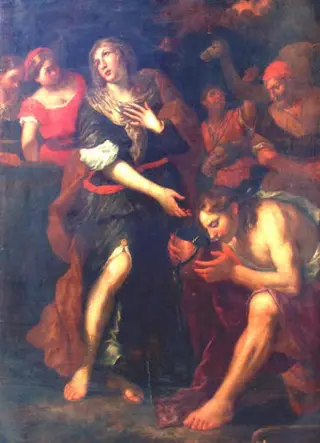
Eleazar and Rebekah at the Well
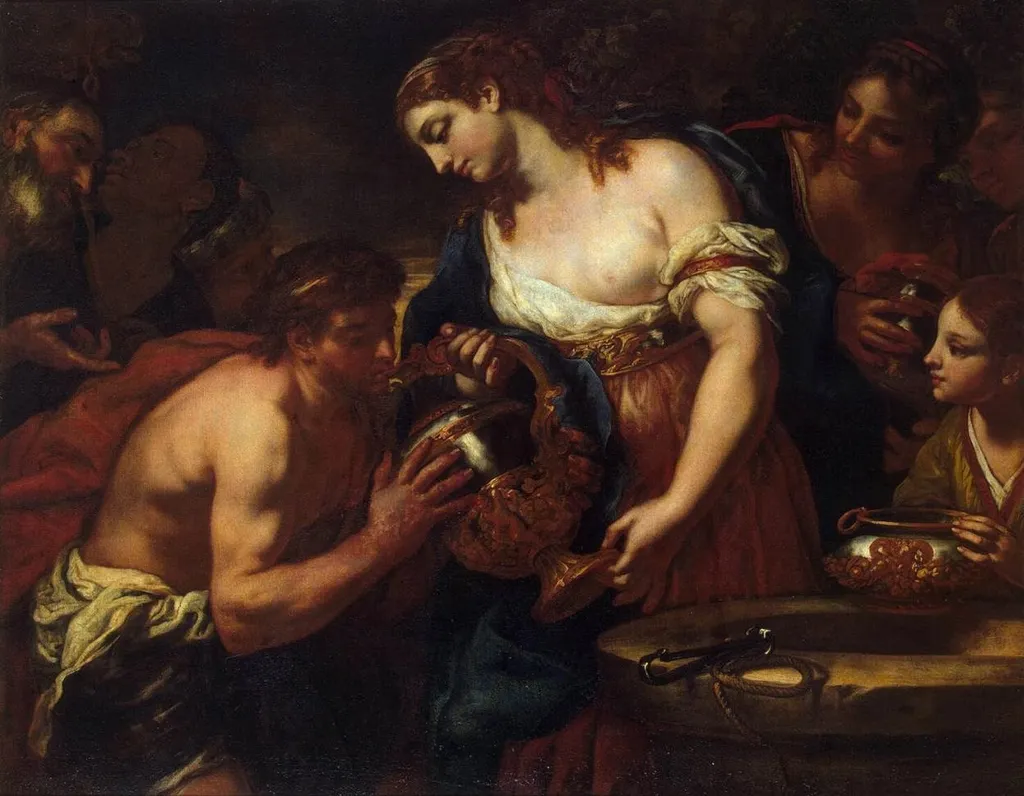
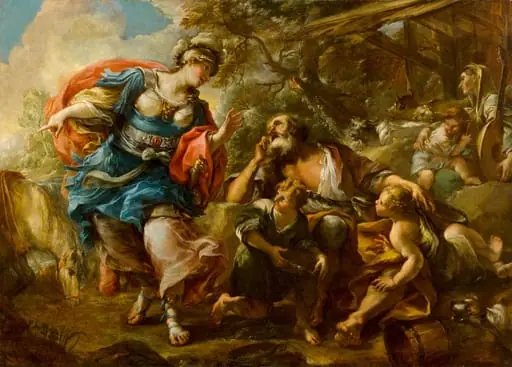
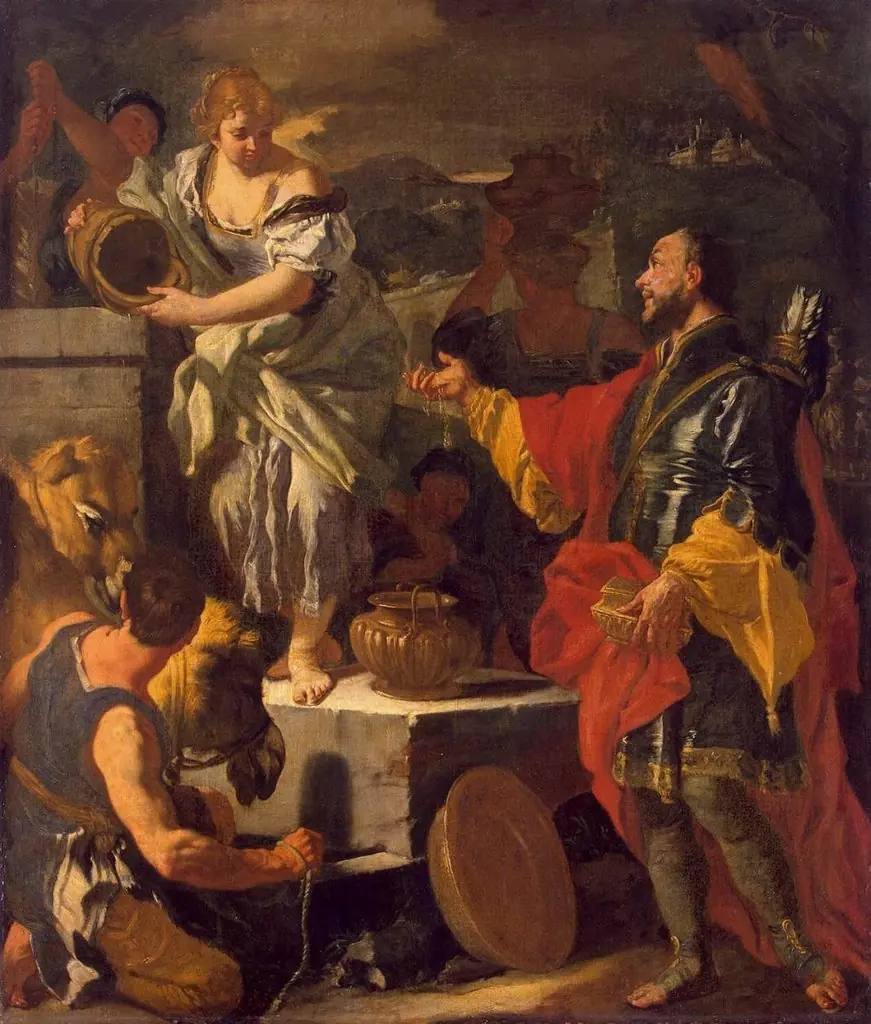
Eleazar and Rebekah at the Well is an oil painting by Johann Carl Loth. It dates from 1670 and is held in the collection of the Hermitage Museum.
About this work
Subject & Meaning
As a piece of religious art, the composition focuses on the interaction between the man and woman at the water source, capturing the instant of their encounter.
Johann Carl Loth's 1670 oil painting depicts the biblical narrative of Eleazar and Rebekah at the well. The work illustrates the meeting between Eliezer, the servant of Abraham, and Rebecca, a key moment in the Book of Genesis where Rebecca agrees to marry Isaac. As a piece of religious art, the composition focuses on the interaction between the man and woman at the water source, capturing the instant of their encounter.
The scene symbolizes divine providence and the fulfillment of a patriarchal vow, emphasizing themes of hospitality and destiny within the religious tradition.
Technique & Style
The painting Eleazar and Rebekah at the Well by Johann Carl Loth is executed in oil paint on canvas, measuring 123 cm in height and 158.5 cm in width. It was created in Germany around 1670 and depicts the biblical scene of Eliezer and Rebecca at the well. The work belongs to the religious art genre and is part of the collection at the Hermitage Museum.
Stylistically, the composition emphasizes narrative clarity through balanced figure placement and naturalistic gestures, reflecting the Baroque emphasis on dynamic movement and emotional expression. The handling of light and color contributes to a vivid, theatrical atmosphere characteristic of Loth's mature period.
History & Provenance
Eleazar and Rebekah at the Well is an oil painting created in 1670 by Johann Carl Loth. The work measures 123 cm by 158.5 cm and was produced in Germany. It entered the collection of the Hermitage Museum, where it remains on display.
The painting was commissioned as a religious work and completed in the late 17th century. It has been part of the Hermitage Museum's collection since its acquisition, reflecting a continuous ownership chain from its creation to the present.
Eleazar and Rebekah at the Well, painted by Johann Carl Loth in 1670, is held in the collection of the Hermitage Museum. The work is catalogued as an oil-on-canvas painting measuring 123 cm in height and 158.5 cm in width.
No specific inventory or accession number is recorded in the available sources, and no exhibition history is documented.
Overview
Johann Carl Loth’s oil on canvas, dated 1670, portrays the biblical encounter between Eliezer and Rebecca at a well. The work is part of the collection of the State Hermitage Museum. Central figures, a woman in a flowing blue garment offering water from a jug to a shirtless man, are set against a dimly lit backdrop populated by onlookers.
Artist & collection