Artwork
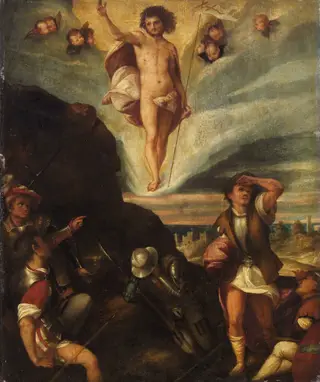
The Resurrection of Christ
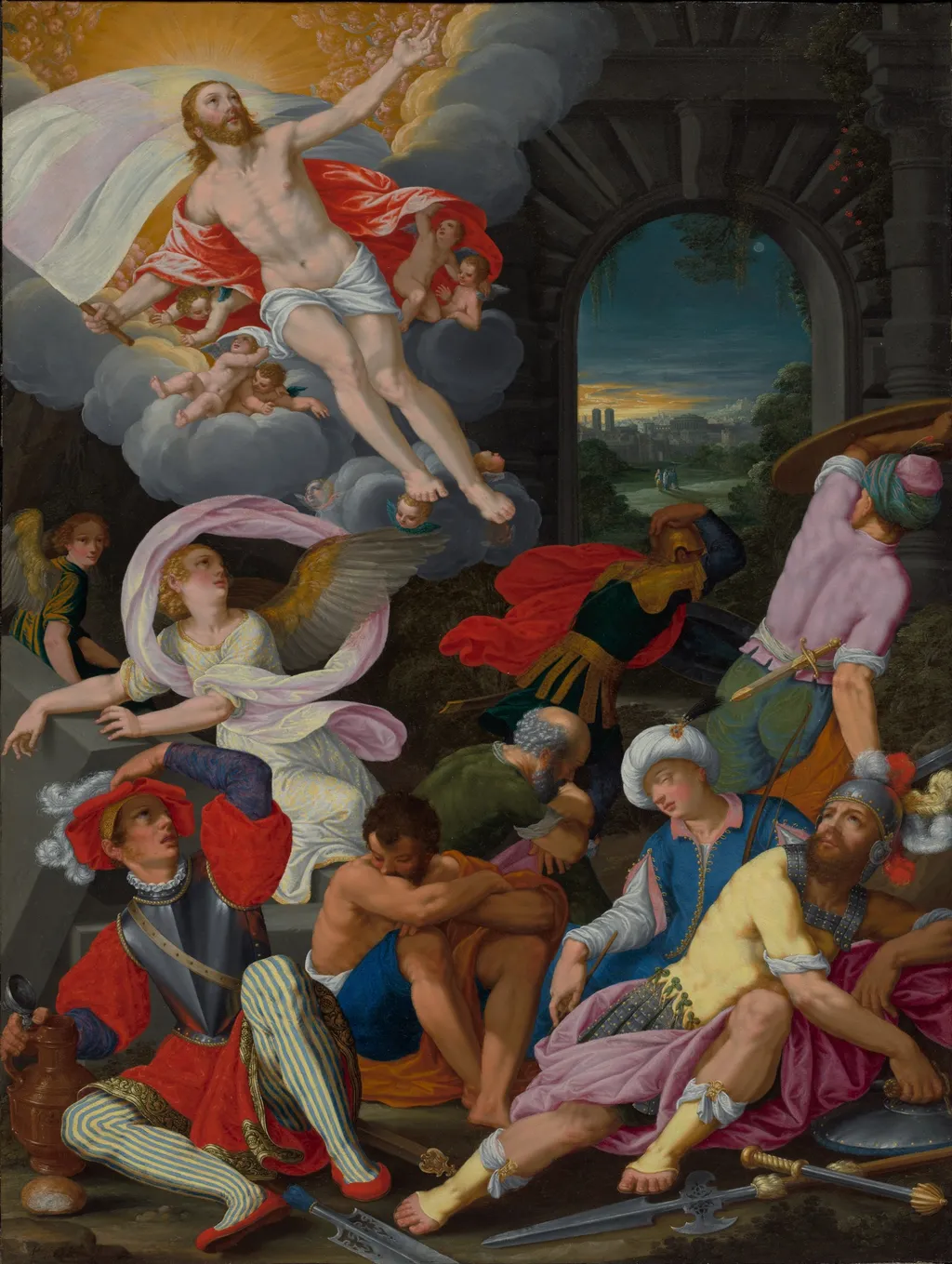
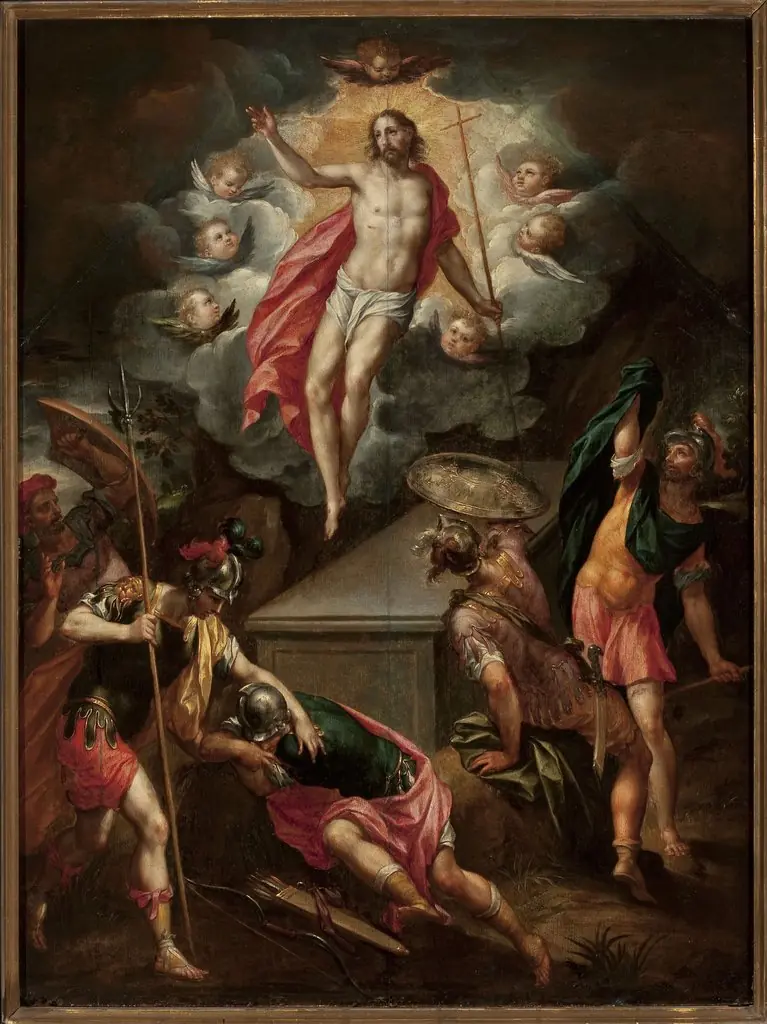
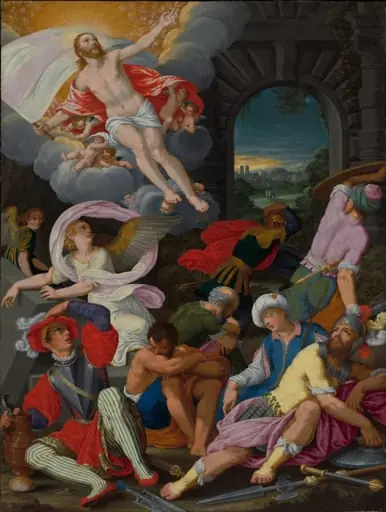
The Resurrection of Christ is an unspecified painting by the Early Baroque Italian artist Johann König. It dates from 1622 and is held in the collection of the Cleveland Museum of Art.
About this work
History & Provenance
0 centimeters and is held in the collection of the Cleveland Museum of Art, where it is catalogued under accession number 2017.
Created in 1622 by the German artist Johann König (1586–1642), this religious painting depicts the Resurrection of Jesus. Produced in Germany, it measures 61.0 by 46.0 centimeters and is held in the collection of the Cleveland Museum of Art, where it is catalogued under accession number 2017.192. The specific circumstances of its original commission and its ownership history prior to entering the museum are not detailed in the available records, and no exhibition history is provided.
Overview
Johann König's The Resurrection of Christ, painted in 1622, captures a pivotal moment in Christian theology. This work by the early 17th-century German artist depicts Jesus ascending from his tomb, surrounded by startled onlookers. The painting is part of the collection at The Cleveland Museum of Art, showcasing König's engagement with dramatic narrative scenes characteristic of the period.
Subject & Meaning
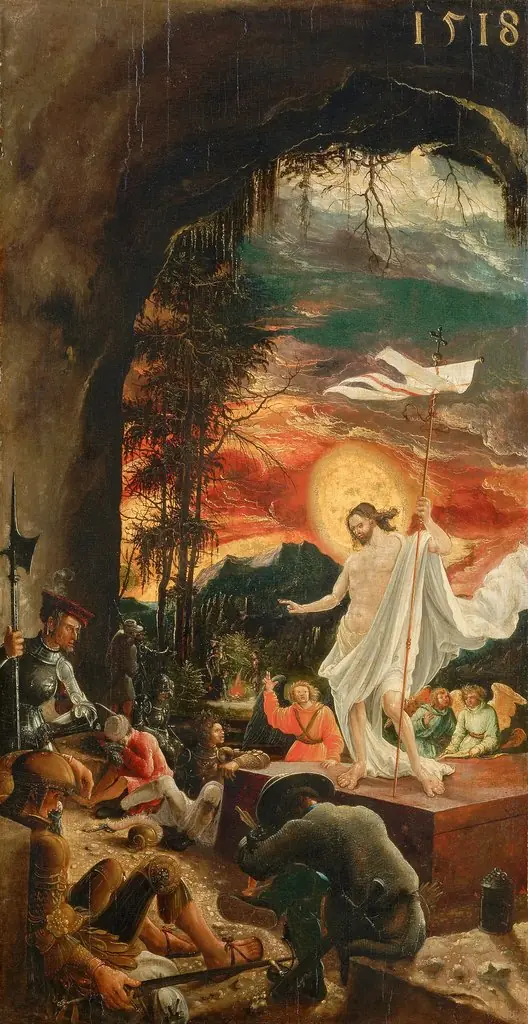
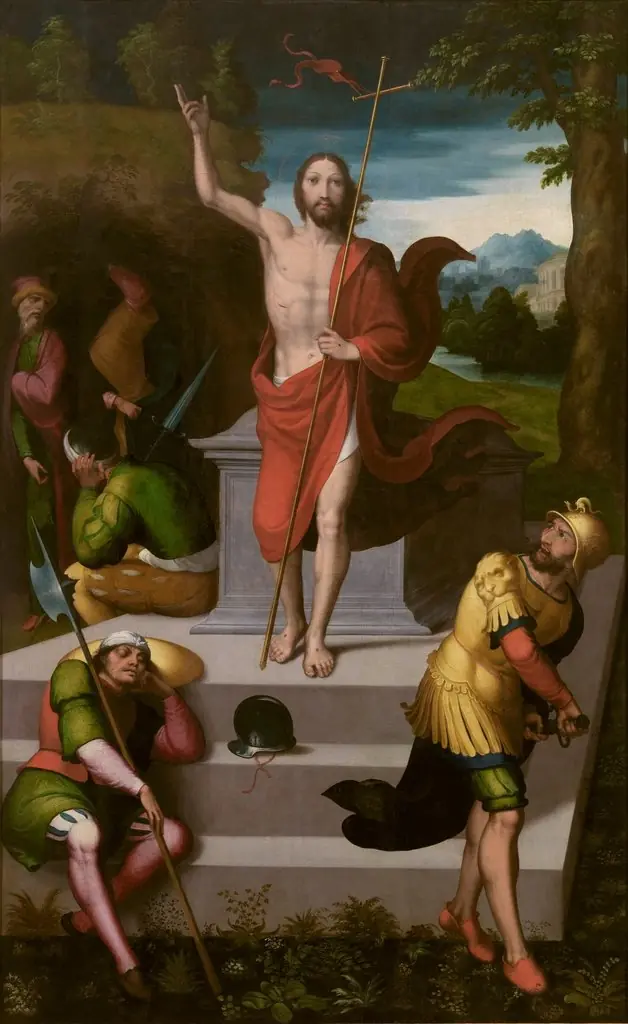
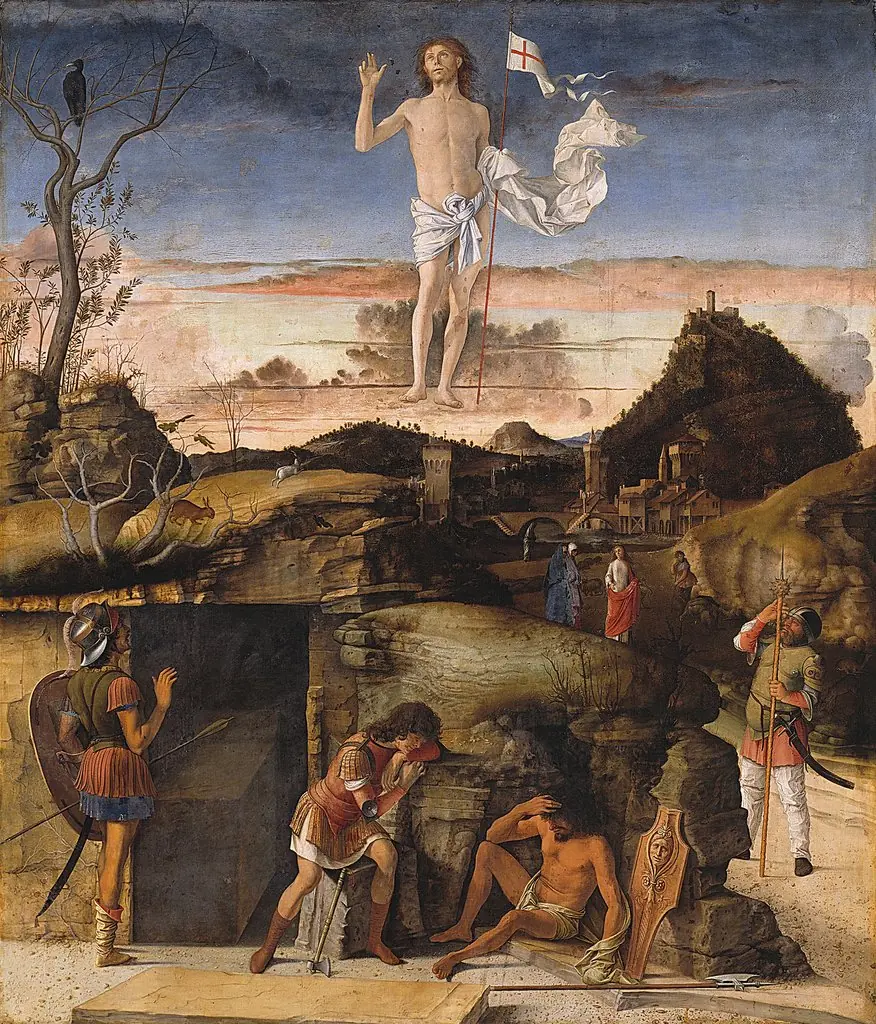
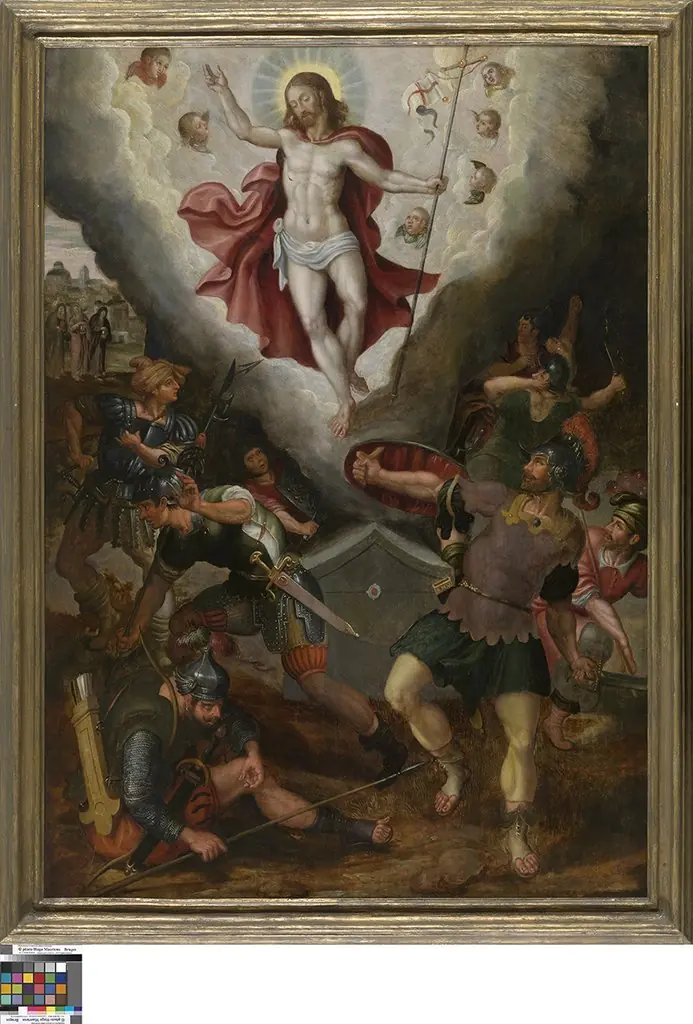
The composition centers on the figure of Christ, depicted shirtless and with outstretched arms, emerging heavenward amidst swirling clouds. Below, a group of richly dressed figures, likely Roman guards, react with expressions ranging from awe to fear, some kneeling while others gesture in disbelief. An angelic presence, distinguished by golden and pink wings, hovers nearby, underscoring the divine nature of the event.
Technique & Style
König's painting exemplifies early Baroque characteristics through its dramatic lighting and emotional intensity. The artist employs strong contrasts between illuminated and shadowed areas, a technique known as chiaroscuro, to heighten the visual impact of Christ's ascent. Bright, yet carefully controlled, colors define the figures and their elaborate attire, contributing to the overall theatricality. This approach reflects the influence of artists like Adam Elsheimer, known for their small-scale, meticulously rendered works.
Own this work as a print
Artist & collection
Artist
Johann König (21 October 1586 – 4 March 1642) was a German painter. He was a follower of Adam Elsheimer. He is known primarily for his painted copper panels.