Artwork
Christ Resurrected
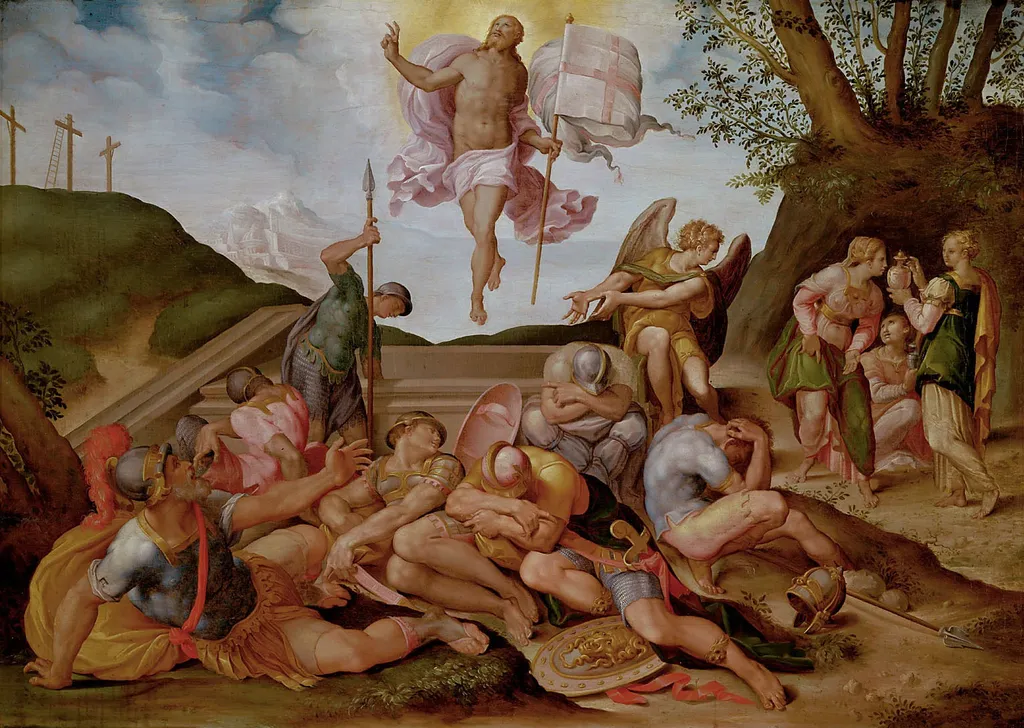
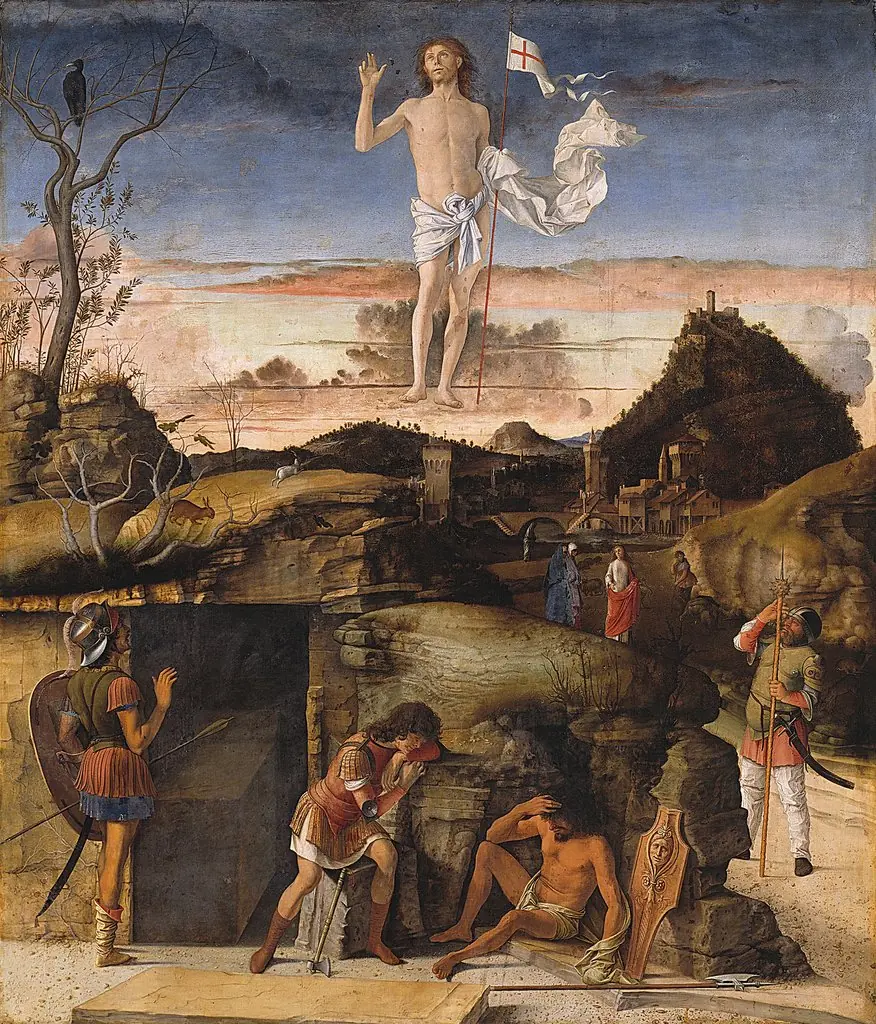
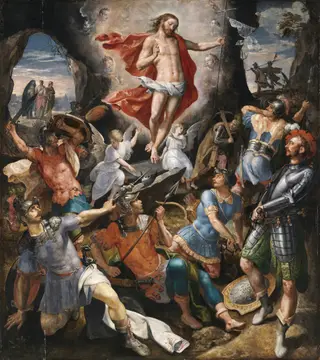
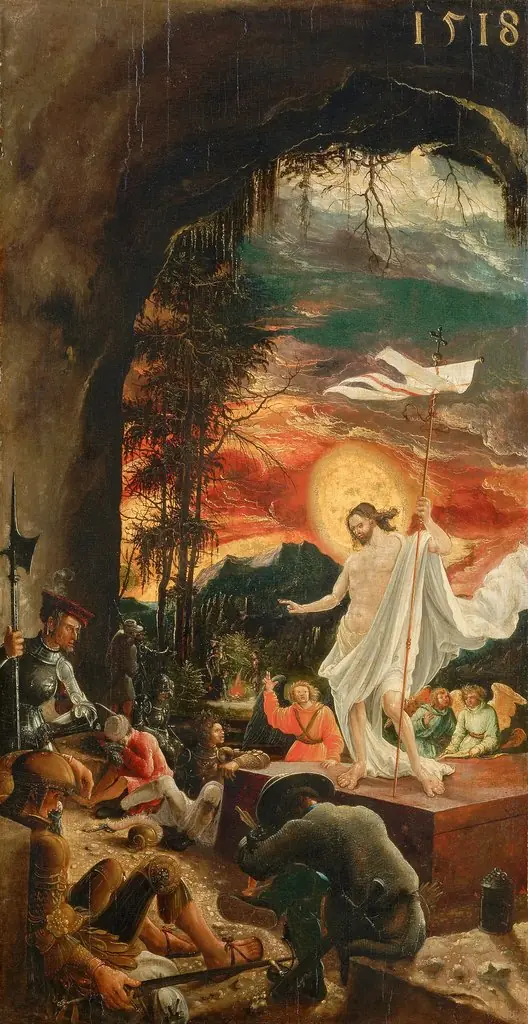
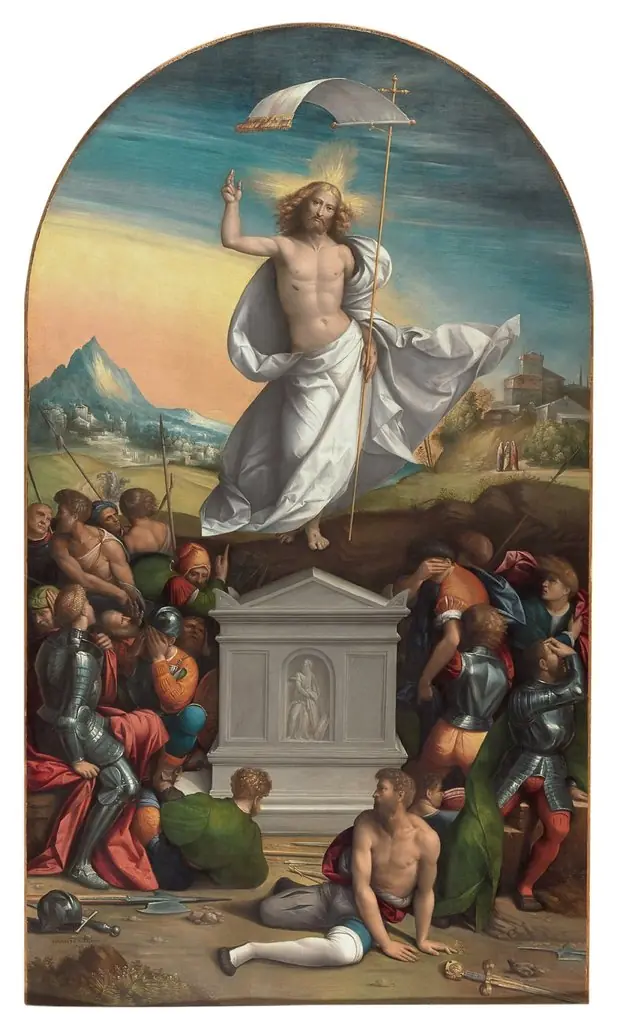
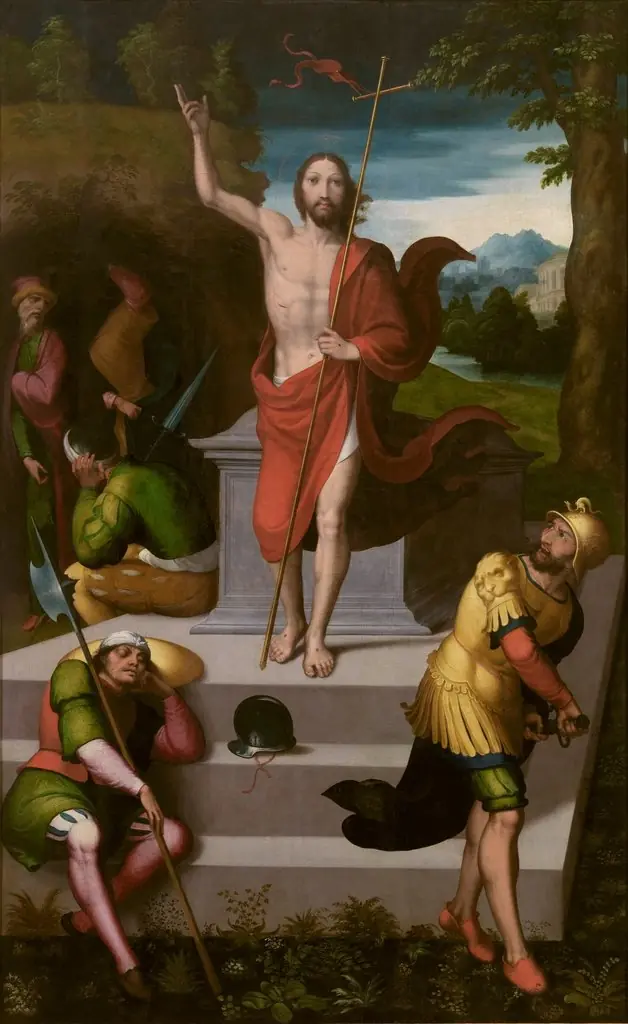
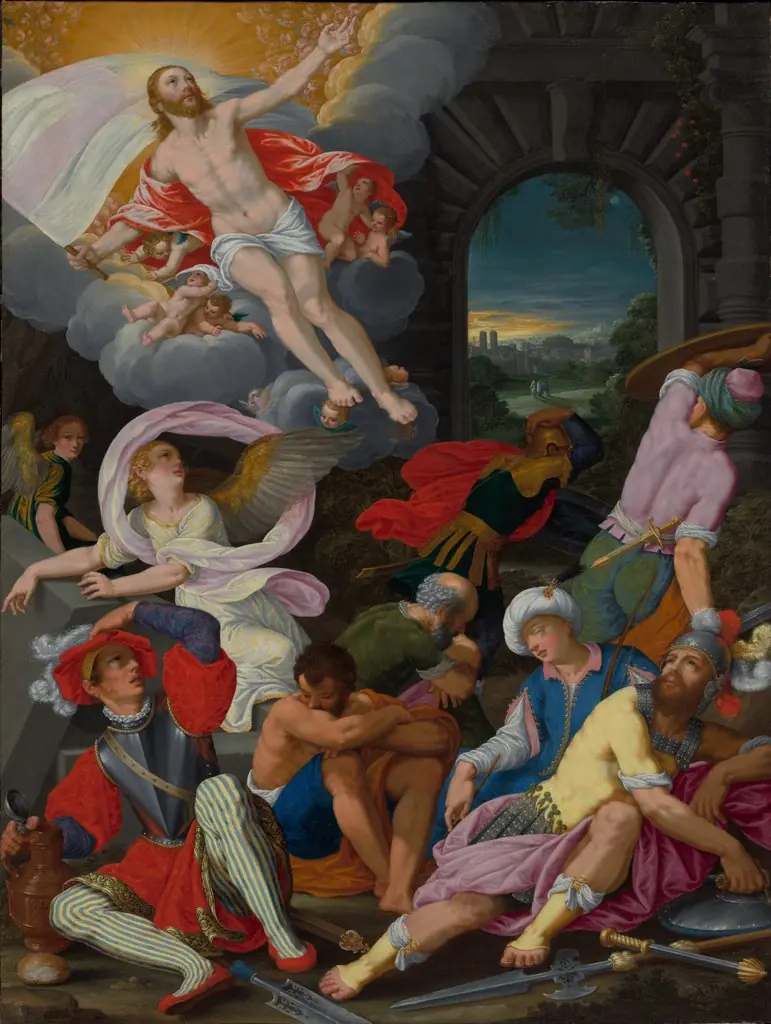
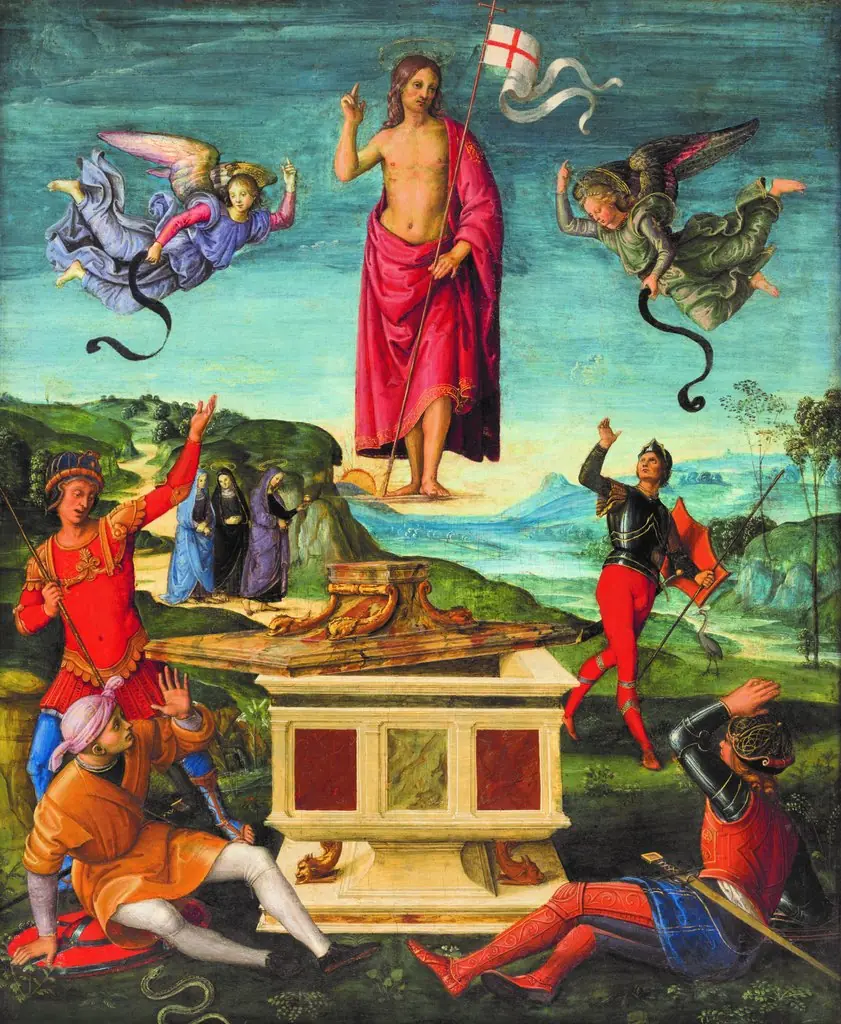
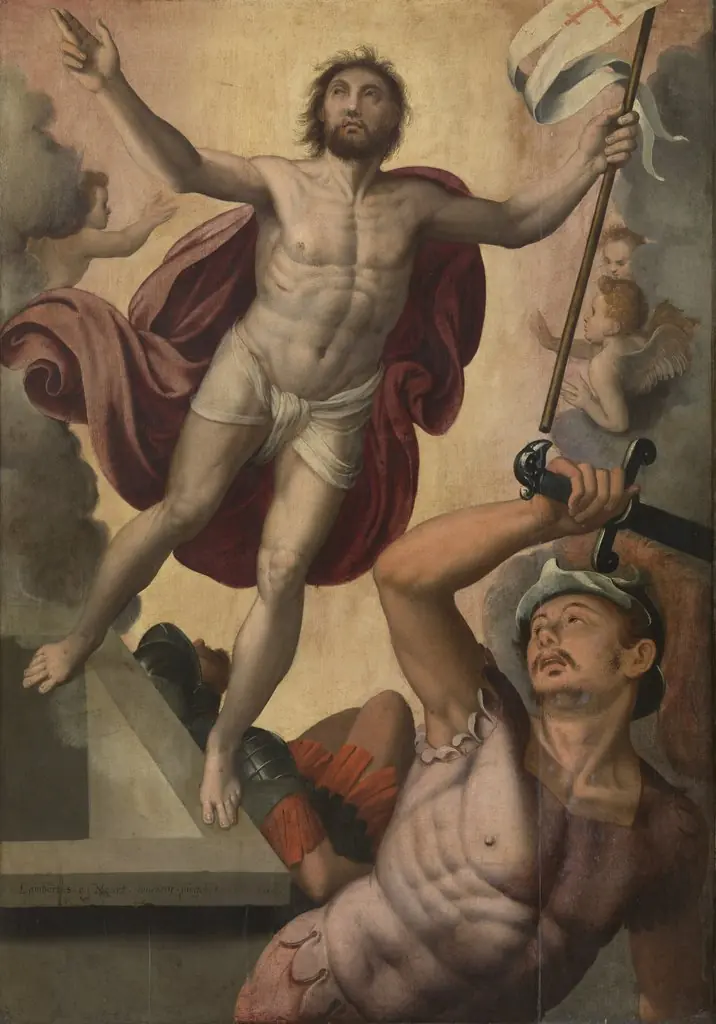
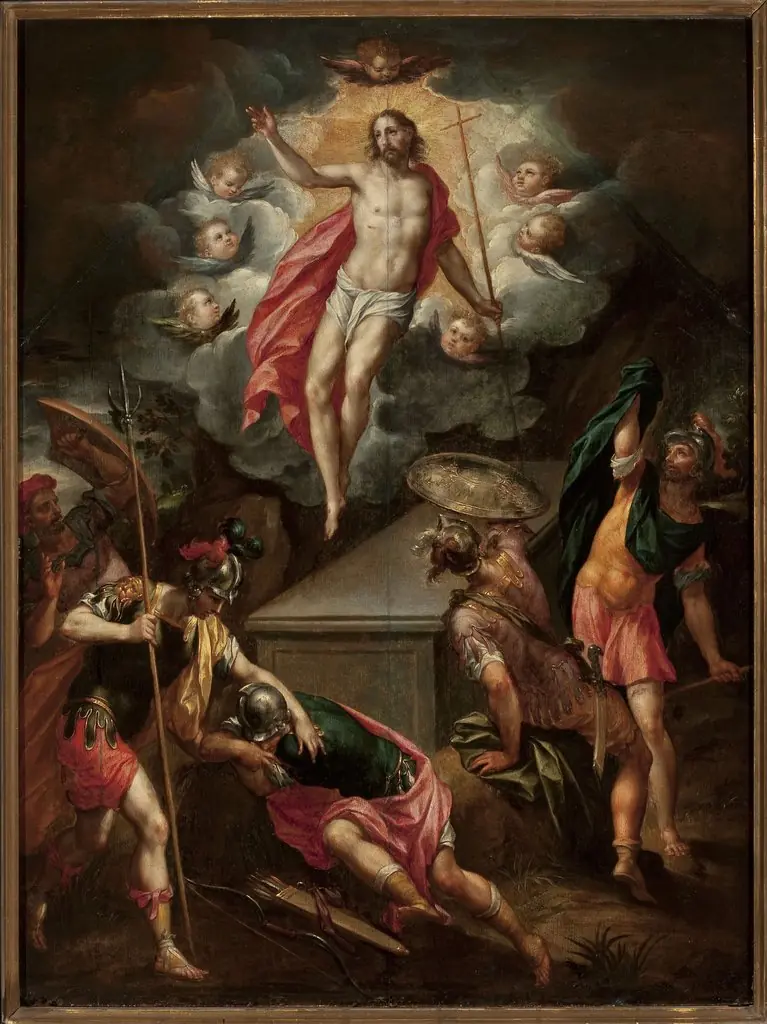
Christ Resurrected is an unspecified painting by the Mannerist artist Unknown. It dates from 1560 and is held in the collection of the Kunsthistorisches Museum. The canvas presents a nude figure hovering above a war‑torn landscape, clutching a banner and a spear.
About this work
Subject & Meaning
The iconography aligns with Counter-Reformation devotional aims, emphasizing Christ’s victory as a source of hope and assurance of salvation for the faithful.
The work depicts the Resurrection of Jesus, a central Christian theme in which Christ emerges from the tomb as victor over death. The scene centers on the standing figure of Jesus, robed in white and haloed, with the cross of his Passion held aloft, signifying triumph and redemption. The tomb’s open structure and the sleeping guards below emphasize the miraculous event’s supernatural character, while the radiant light around Christ conveys divine glory and the transformative power of resurrection.
The iconography aligns with Counter-Reformation devotional aims, emphasizing Christ’s victory as a source of hope and assurance of salvation for the faithful.
History & Provenance
The painting Christ Resurrected, dated to 1560 and attributed to a Florentine artist, is held in the collection of the Kunsthistorisches Museum. The work is cataloged within the museum's holdings as a religious painting depicting the Resurrection of Jesus. No specific inventory or accession number is provided in the available documentation, nor is there any recorded exhibition history associated with this piece.
Legacy
The painting's later influence and reputation are anchored in its attribution to the Florentine school and its prominent display at the Kunsthistorisches Museum. Its depiction of the Resurrection of Jesus has contributed to scholarly discussions of Counter-Reformation religious art, though specific later attributions or restorations are not detailed in the sources. The work's legacy is primarily tied to its continued presence in the museum's collection and its role within the broader study of 16th-century Venetian-influenced painting.
Overview
The canvas presents a nude figure hovering above a war‑torn landscape, clutching a banner and a spear. Beneath him, disordered soldiers lie strewn across the ground, some still gripping shields, others collapsed in defeat. To the right, a small group of women observe the scene, one cradling a child.
A pale sky and a ring of trees frame the tableau, lending a quiet perimeter to the tumult.
Technique & Style
The work employs a stark chiaroscuro, highlighting the luminous figure against the darker, muddied ground. Soft, almost translucent fabric drapes the central body, while the armor and weapons are rendered with meticulous, gritty detail. The composition balances vertical ascent with horizontal spread, guiding the eye from the floating Christ down to the scattered troops and the distant observers.
Context
Positioned within the broader iconography of the Resurrection, the painting merges traditional religious symbolism with a martial setting, echoing themes of triumph over mortality. The inclusion of civilian onlookers links the divine event to everyday humanity, reinforcing the narrative that resurrection impacts both the spiritual and the worldly realms.
Artist & collection