Artwork
Portrait of a Woman
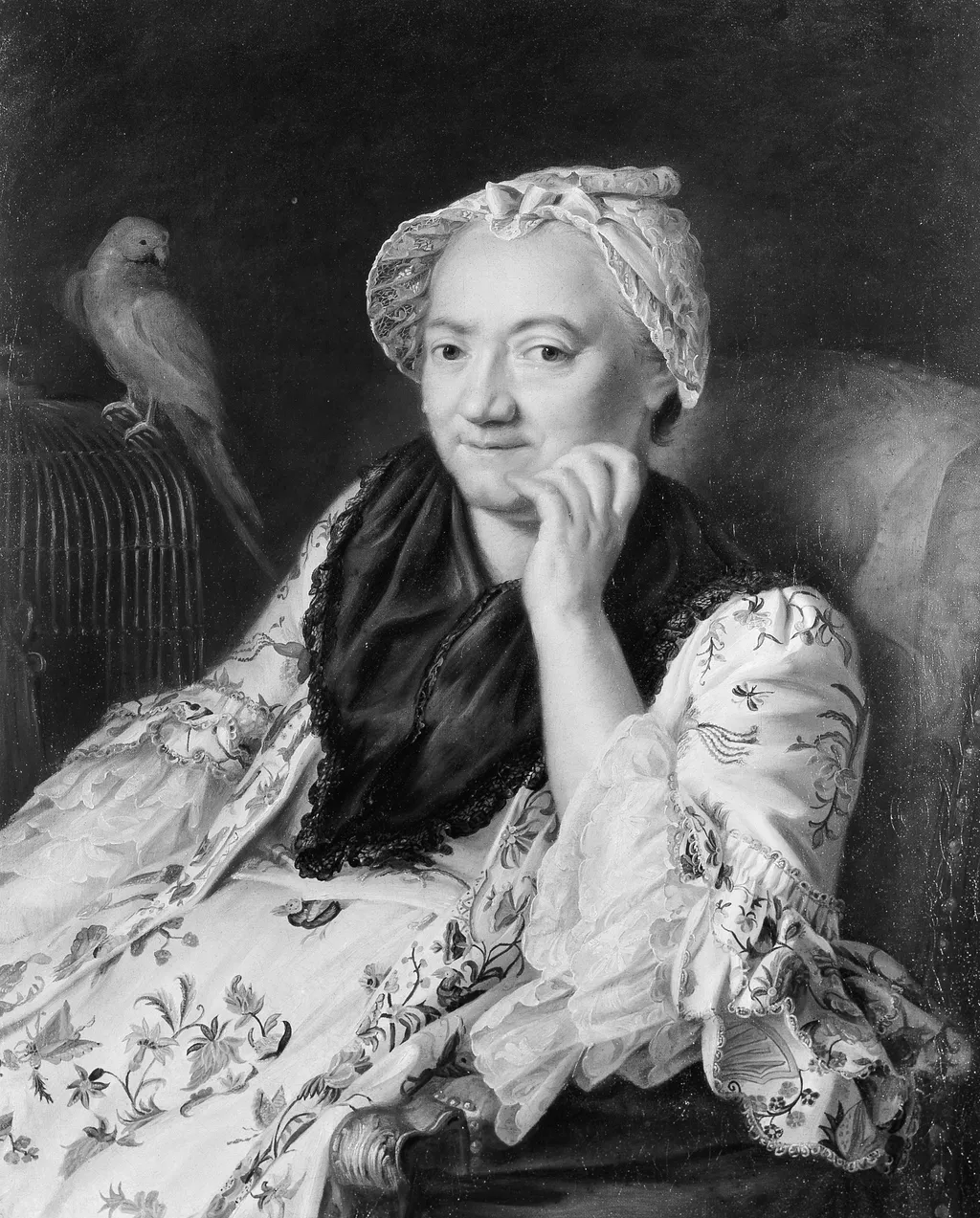
Portrait of a Woman is an oil painting by the Rococo painting artist Johann Nikolaus Grooth. It dates from 1750 and is held in the collection of the Metropolitan Museum of Art.
About this work
Subject & Meaning
The composition incorporates several distinct iconographic elements that inform the work's meaning and visual representation.
Johann Nikolaus Grooth's 1750 Portrait of a Woman features an unidentified female as its central subject. The composition incorporates several distinct iconographic elements that inform the work's meaning and visual representation. The woman is depicted wearing a cap adorned with a ribbon, as well as a lace shawl.
Beyond her attire, the painting includes symbolic accessories: a parrot and a birdcage. In 18th-century portraiture, caged birds and parrots frequently carried connotations of domesticity, exoticism, or vanity, though the specific interplay of these objects with the sitter's attire constructs the narrative identity of the depicted woman within her contemporary social setting.
Technique & Style
The Portrait of a Woman by Johann Nikolaus Grooth (1750) is executed in oil paint on canvas, a standard medium for European portraiture of the period. The handling reflects the refined Rococo aesthetic, with smooth, blended brushwork in the rendering of the woman's lace collar and satin garment, while the parrot perched on her hand is depicted with greater textural precision. The composition balances delicacy in the woman's facial features and the ornate shawl with a subtle dynamism conveyed by the bird's alert posture.
The formal qualities, elegant drapery, refined accessories, and the inclusion of the exotic parrot, align with mid-18th-century aristocratic portrait conventions.
History & Provenance
The work titled Portrait of a Woman was created in 1750 by the artist Johann Nikolaus Grooth. Executed in oil on canvas, the painting measures 81.3 by 65.1 centimeters. The piece is currently held in the collection of the Metropolitan Museum of Art.
The painting depicts a female subject accompanied by a parrot and a birdcage, elements that define its genre as a portrait. No specific earlier provenance or accession number is provided in the available records.
Context
The Portrait of a Woman, painted by Johann Nikolaus Grooth in 1750, is an oil on canvas portrait housed in the Metropolitan Museum of Art. The work shows a woman wearing a cap, lace shawl, and a ribbon, accompanied by a parrot in a birdcage, elements that reflect mid‑eighteenth‑century European portrait conventions. Grooth, a German‑born artist active in the European art market, exemplifies the transnational career of court painters who moved between Dresden and St. Petersburg. Most scholarly analysis of the painting appears in collection catalogues rather than dedicated art‑historical studies.
Overview
The oil painting titled "Portrait of a Woman" captures a seated female figure in a moment of quiet introspection. Her posture, with her chin gently supported by her hand, suggests a contemplative state. The artist meticulously renders her elaborate attire and includes a subtle background element, all contributing to the artwork's overall serene and thoughtful atmosphere.
Own this work as a print
Artist & collection

- Een vrouw met een vogelkooi, zogenaamd portret van Susanna van Collen (1692-1745), sedert 1727 echtgenote van Jacob Feitama
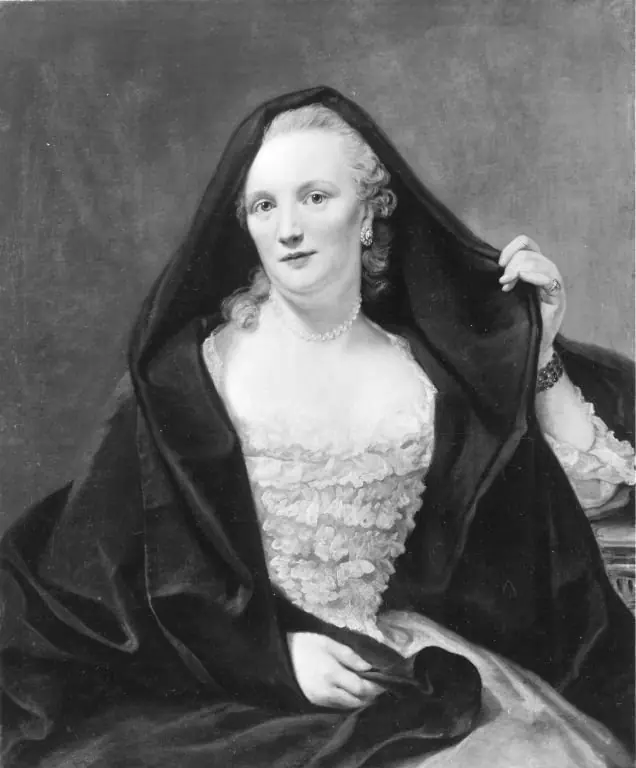 Giovanna Chichiniere von Verschaffelt, Gattin des Münchner Hofbildhauers Peter von Verschaffelt
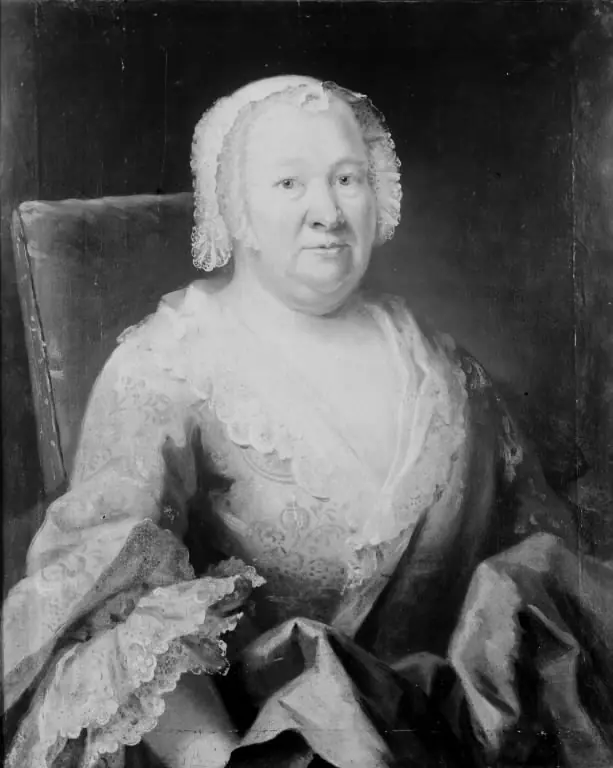 Portrait of an Elderly Woman
 Portret van een dame met waaier
 Portrait of a Woman
 Dameportræt
 Portrait of an Elderly Woman
 Portrait of a Young Woman
 Dorothée Louise Viedebandt (The Artist's Wife)
 Mme. de M ... en habit de bal
 Portrait of Maria Perekusikhina
 Портрет баронессы В.С. Васильевой