Artwork
Procession of the Prince Giovanni Battista Borghese for the 1664 Carnival of Rome
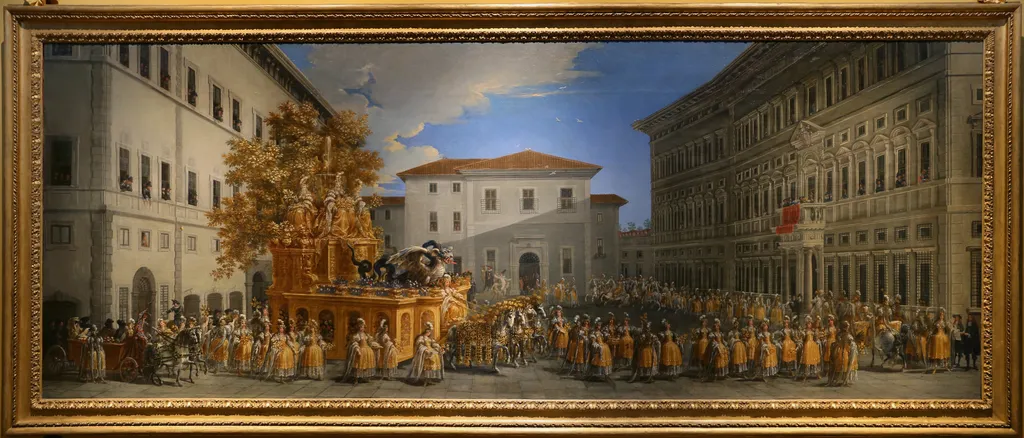
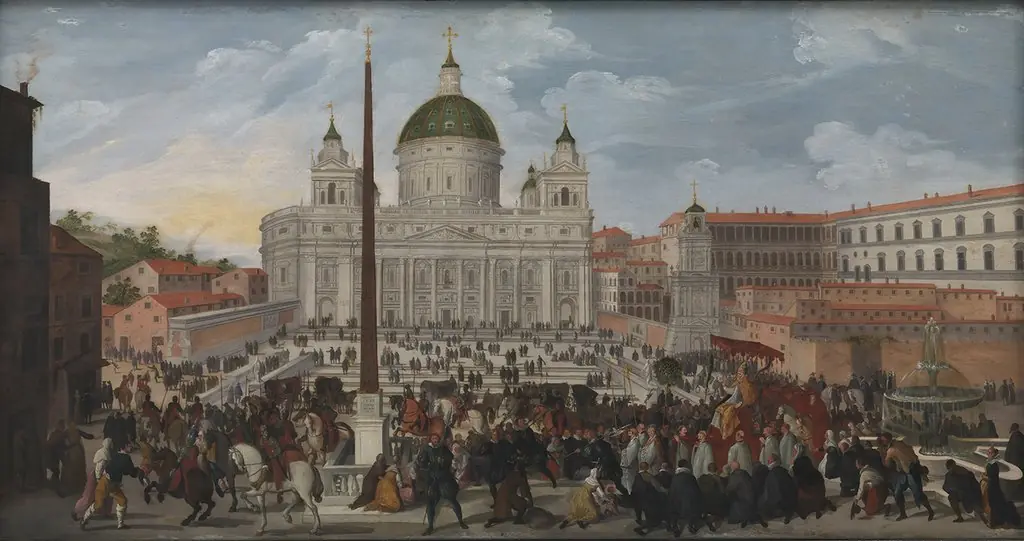
Procession of the Prince Giovanni Battista Borghese for the 1664 Carnival of Rome is an oil painting by the Early Baroque Italian artist Johann Paul Schor. It dates from 1664 and is held in the collection of the Uffizi Gallery. Created in 1664, this oil painting records a lavish Roman carnival procession led by Prince Giovanni Battista Borghese.
About this work
A group of people in yellow and white robes are gathered around the carriage, while others look on from the balconies of the surrounding buildings.
The painting depicts a grand procession in a courtyard, with a large golden carriage at its center. The carriage is adorned with statues and figures, and is being pulled by two black horses. A group of people in yellow and white robes are gathered around the carriage, while others look on from the balconies of the surrounding buildings.
The scene is set against a backdrop of tall, ornate buildings with columns and arches. The sky above is blue with white clouds, and a tree with yellow leaves is visible in the background.
This painting, "Procession of the Prince Giovanni Battista Borghese for the 1664 Carnival of Rome," is held at the Uffizi Gallery.
Subject & Meaning
The painting shows the 1664 Carnival of Rome, featuring a masquerade procession with a richly decorated carriage carrying Prince Giovanni Battista Borghese. Symbolic elements include theatrical disguises and ornate decorations that celebrate the festive spectacle of Baroque carnival culture, emphasizing themes of power, celebration, and public display.
The work reflects the elaborate public celebrations of the period, where masked figures and lavish floats highlighted social hierarchy and communal revelry.
Technique & Style
The work is an oil painting on canvas, measuring 1.22 by 3.17 metres, executed in 1664 by Johann Paul Schor. Its panoramic format and veduta genre place it within the tradition of expansive cityscape views, suited to capturing the spectacle of public celebration. The painting depicts the Carnival of Rome, rendering masquerade, carriage, and parade scenes with attention to the ephemeral splendour of Baroque festivity.
History & Provenance
The painting Procession of the Prince Giovanni Battista Borghese for the 1664 Carnival of Rome was created in 1664 by Johann Paul Schor as an oil on canvas work. It was commissioned for the 1664 Carnival of Rome and depicts a procession featuring Giovanni Battista Borghese, masquerade participants, and a decorated carriage. The artwork has been housed in the collection of the Uffizi Gallery and is currently stored in its museum storage facility.
It was included in the 2017 exhibition Johann Paul Schor's Golden Float. The ephemeral splendour of the Baroque carnival at the XXX Biennale dell'Antiquariato, highlighting its historical significance.
The painting is part of the Uffizi Gallery collection and is currently stored in museum storage.
It was included in the 2017 exhibition Johann Paul Schor's Golden Float. The ephemeral splendour of the Baroque carnival at the XXX Biennale dell'Antiquariato.
The work measures 122 cm in height and 317 cm in width.
Overview
Created in 1664, this oil painting records a lavish Roman carnival procession led by Prince Giovanni Battista Borghese. The composition centers on an opulent golden carriage drawn by two black horses, surrounded by revelers in bright yellow and white garments and observed from the balconies of surrounding Baroque façades.
Context
The procession depicted coincided with the 1664 Carnival, a period when Rome staged elaborate public pageants. Schor, who contributed designs for such events, captured the grandeur of the celebration, reflecting the broader Baroque fascination with theatricality, movement, and the display of power through public ceremony.
Artist & collection
Artist
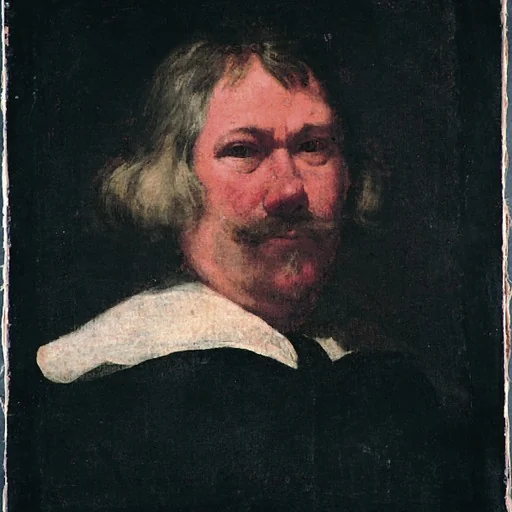
Johann Paul Schor (1615 – 1674), known in Rome as Giovanni Paolo Tedesco ( Tedesco literally means German in Italian), was an Austrian artist.