Artwork
Procession in the Courtyard of the Ducal Palace, Venice
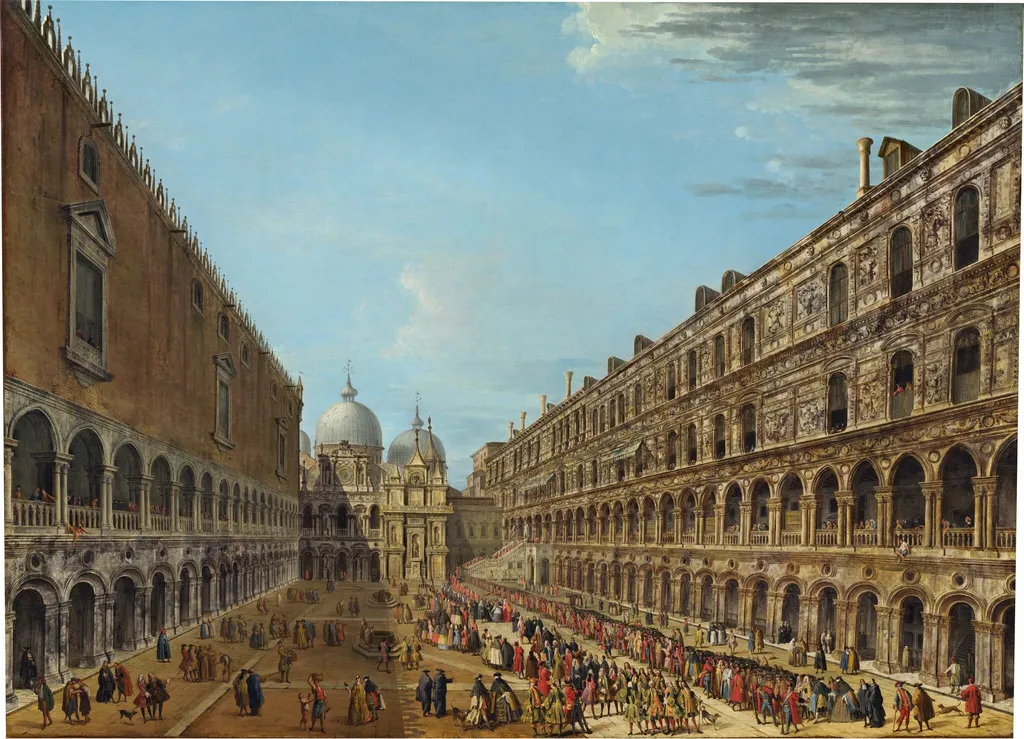
Procession in the Courtyard of the Ducal Palace, Venice is an oil painting by the Baroque artist Antonio Joli. It dates from 1742 and is held in the collection of the National Gallery of Art.
About this work
Subject & Meaning
Its iconography centers on the architectural backdrop and the orderly advance of participants, symbolizing the institutional prestige of Venice.
The canvas shows a public procession taking place in the courtyard of the Doge’s Palace in Venice, a scene identified as a Veduta of a ceremonial event in the city. The depiction captures the architectural setting of the Venetian Republic’s seat of power and the movement of figures within its ceremonial space, reflecting the city’s civic and ceremonial life in the eighteenth century. The work is attributed to Antonio Joli and dates to 1742, when such processions were common displays of republican authority and grandeur.
Its iconography centers on the architectural backdrop and the orderly advance of participants, symbolizing the institutional prestige of Venice.
Technique & Style
Executed in 1742, this work is an oil painting on canvas measuring 160.7 by 221.6 centimeters. Classified as a veduta or cityscape, the piece depicts the Doge's Palace in Venice. The composition utilizes the oil medium to render the architectural details of the ducal courtyard and the ceremonial procession within it.
While early nineteenth-century accounts described similar works by the artist as having vast dimensions, the specific physical scale of this extant panel confirms its status as a large-format interior view. The handling of the paint supports the genre's characteristic focus on topographical accuracy and atmospheric perspective, typical of Antonio Joli's approach to Venetian subjects during this period.
History & Provenance
The painting was executed in 1742 by Antonio Joli as an oil on canvas veduta of the Doge’s Palace courtyard. Its earliest known ownership traces to Cardinal Gianfrancesco Stopani (d. 1774) in Rome, after which it passed by inheritance to the Marchese Schiuchinelli of Cremona. In 1836 the work appeared in the collection of Giuseppe Castagna and Felice Ponzio.
It subsequently entered the British collection of Lady Mary Baillie of Polkemmet (d. 1910) and then her nephew Admiral Johnston Stewart, who sold it at Christie’s in June 1912. C. H. Thrift acquired it for Arthur Tooth and Sons that year; it was sold to Viscount Gabriel Chabert in July 1925, passed through Arnold Seligmann’s London gallery in the early 1930s, entered Barbara Hutton’s possession, and was given to the National Gallery of Art in 1945.
The painting entered the National Gallery of Art in Washington, D.C. in 1945 as a gift from Barbara Hutton. Its provenance traces through several private owners, beginning possibly with Cardinal Gianfrancesco Stopani (d. 1774) in Rome, then by inheritance to Marchese Schiuchinelli in Cremona, before passing to Giuseppe Castagna and Felice Ponzio in 1836. It later belonged to Lady Mary Baillie of Polkemmet (d. 1910), then to Admiral Johnston Stewart of Polkemmet, and was sold at Christie's in London on 21 June 1912.
C. H. Thrift purchased it through Arthur Tooth and Sons in 1912, and it was sold to Viscount Gabriel Chabert on 14 July 1925. It passed through Arnold Seligmann in London in the early 1930s before being acquired by Barbara Hutton, who donated it to the NGA in 1945. No formal exhibition history is documented in the available sources.
Legacy
The painting’s entry into the National Gallery of Art in 1945 cemented its scholarly reputation as an early example of the Venetian veduta genre, a category that later defined 18th‑century cityscapes. Its provenance, from a Roman cardinal to an American collector before acquisition by the museum, highlights a trajectory that scholars such as Ticozzi noted as emblematic of the work’s significance, despite his ambiguous measurements. Contemporary catalogues classify the piece alongside other Venetian urban vistas, underscoring its role in shaping the visual language of later vedute painters who emphasized architectural precision and atmospheric perspective.
The work’s inclusion in a major public collection has ensured continued study of its compositional influence on subsequent cityscapes.
Overview
Antonio Joli's oil painting, "Procession in the Courtyard of the Ducal Palace, Venice," captures a lively moment within the historic Venetian landmark. Executed in oil on canvas, the work depicts a bustling scene, characteristic of the artist's focus on the city's prominent architectural settings. It offers a glimpse into the daily life and grandeur associated with the Doge's Palace during Joli's era.
Context
Antonio Joli was particularly known for his vedute, or detailed cityscapes, often featuring the architectural splendor of Venice. His artistic practice frequently catered to the burgeoning Grand Tour market, where affluent travelers sought visual mementos of their journeys. This painting exemplifies Joli's skill in rendering iconic Venetian structures, providing patrons with a lasting impression of their experiences abroad.
Own this work as a print
Artist & collection

Artist
Antonio Joli painted grand, sunlit views of Italian ruins and landscapes in the 1700s.

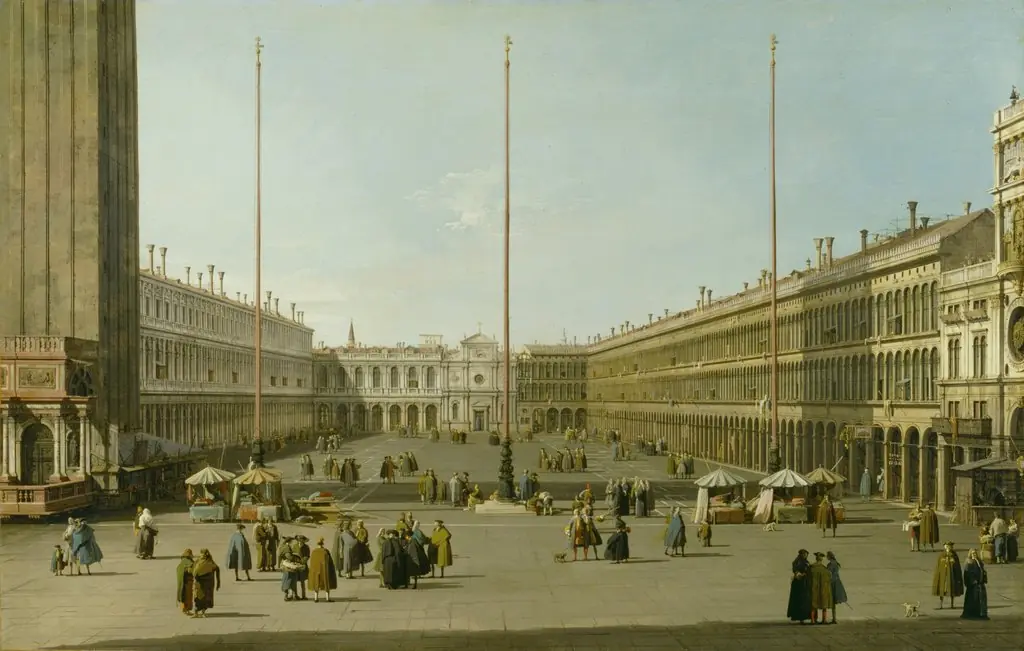 The Piazza San Marco (with view west)
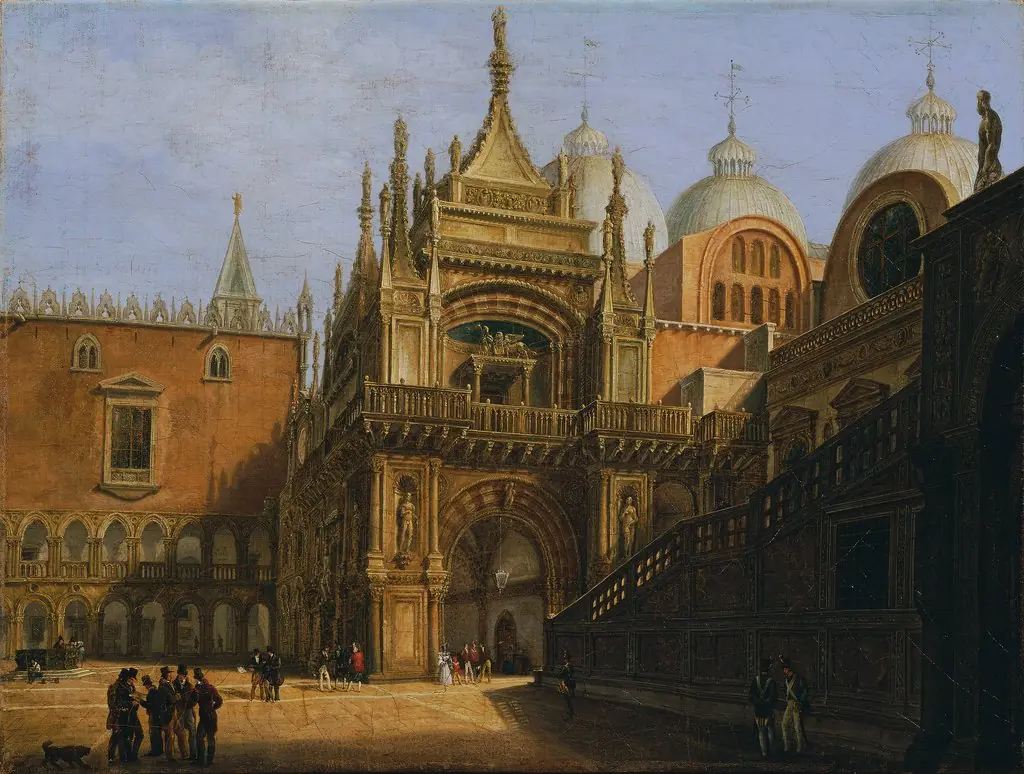 Der Hof des Dogenpalastes
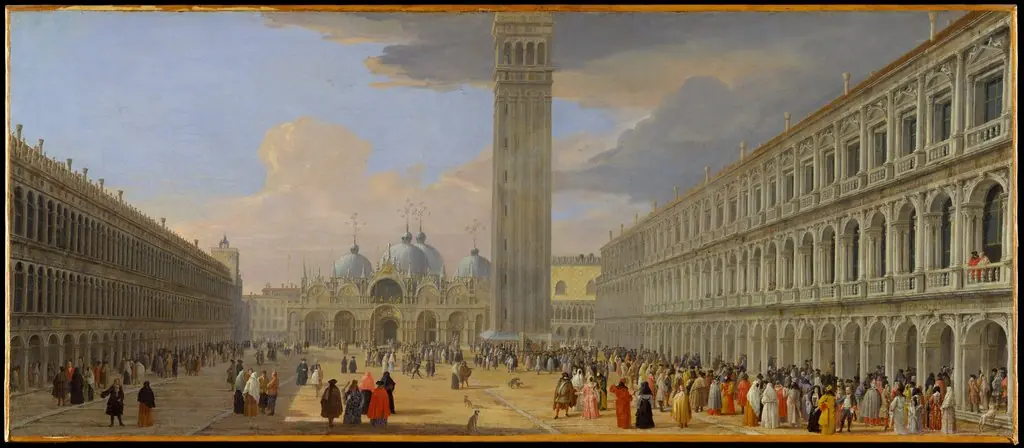 Piazza San Marco, Venice
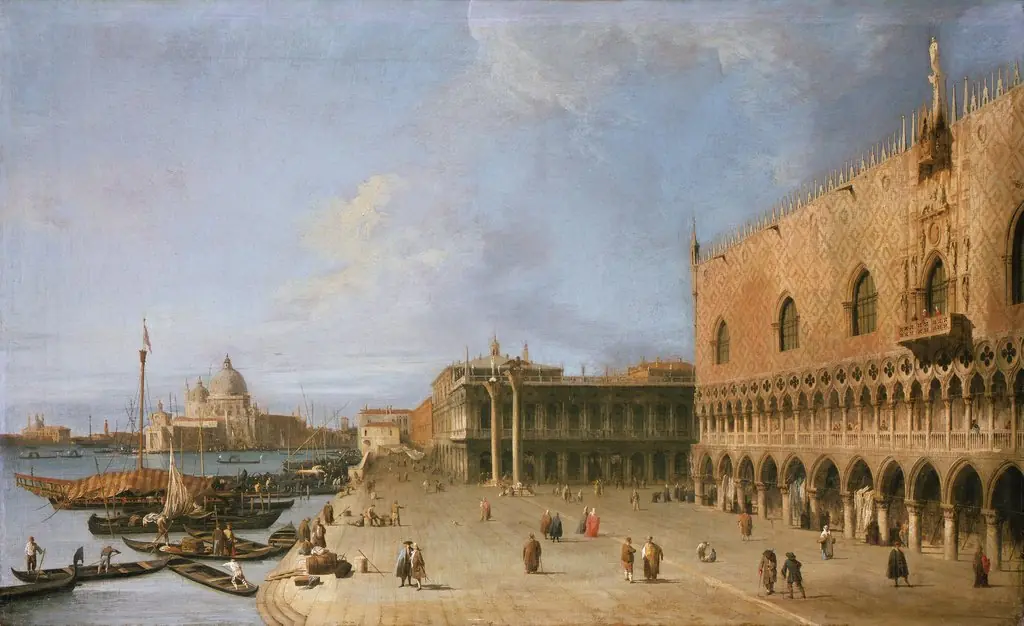 The Molo in Front of the Doge's Palace in Venice
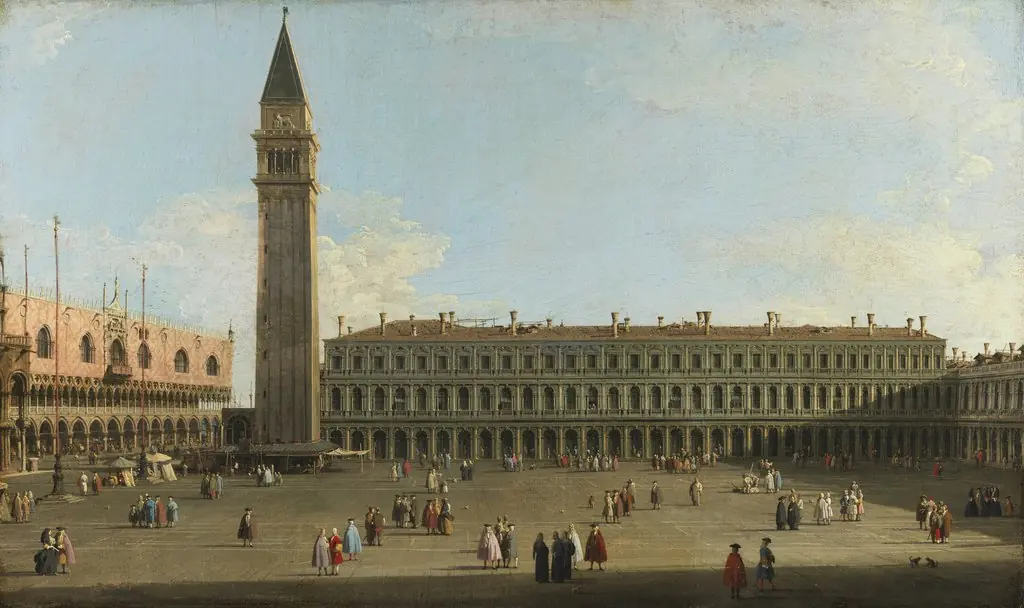 Saint Mark's Square, Venice
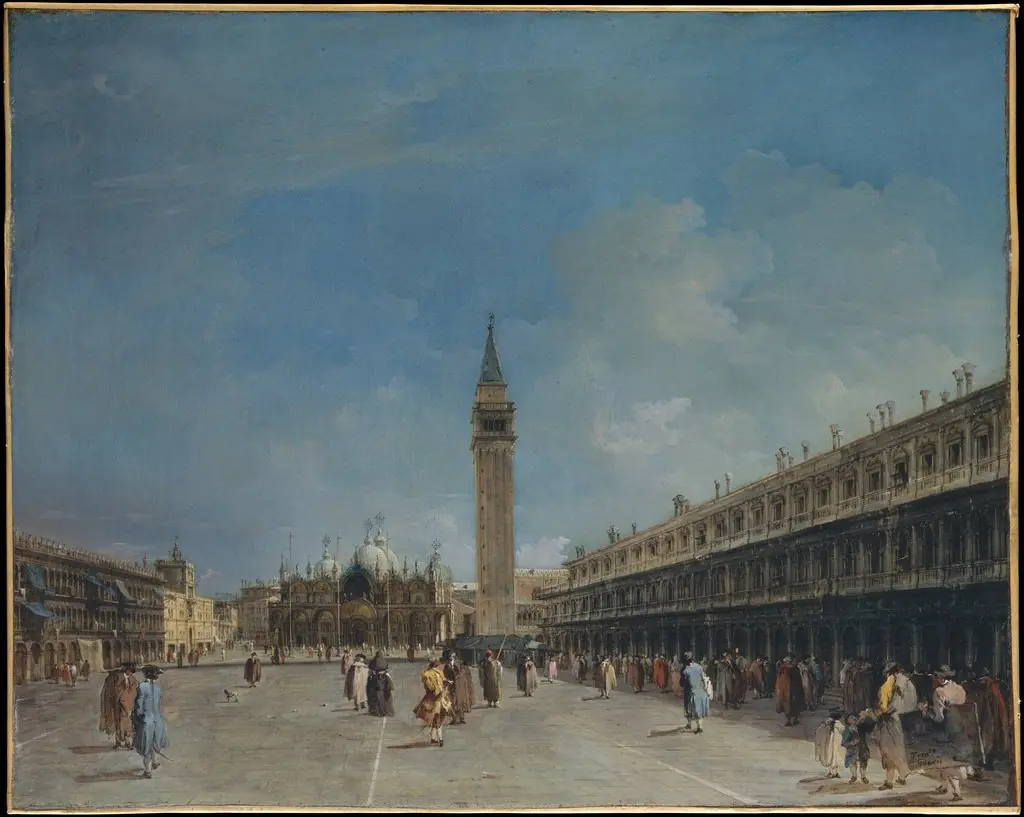 Piazza San Marco
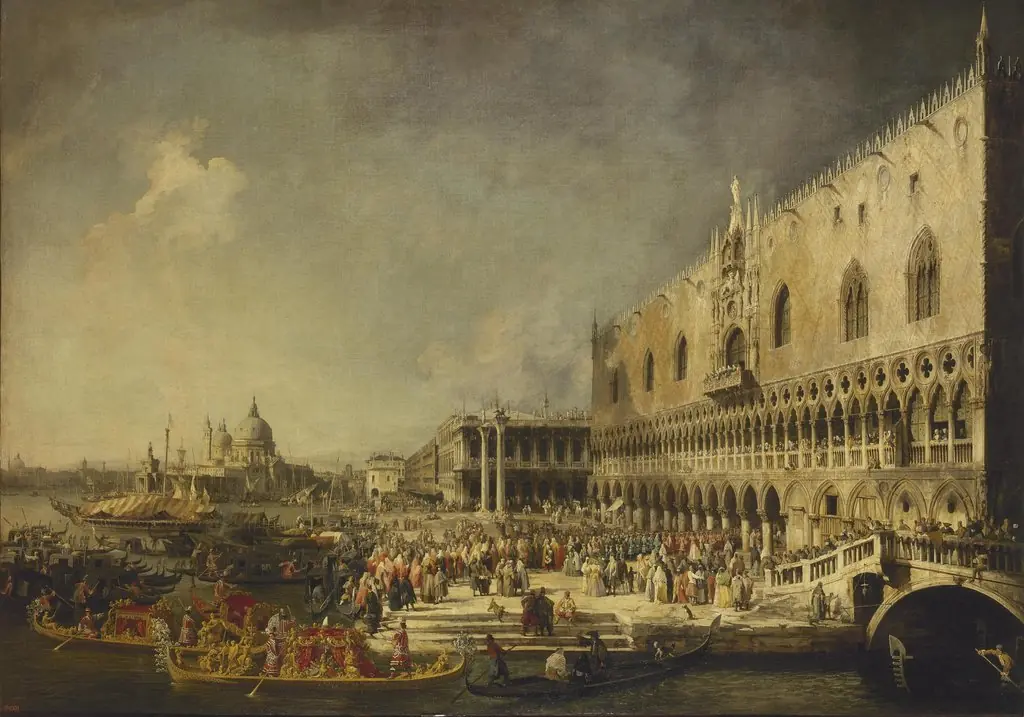 Arrival of the French Ambassador in Venice
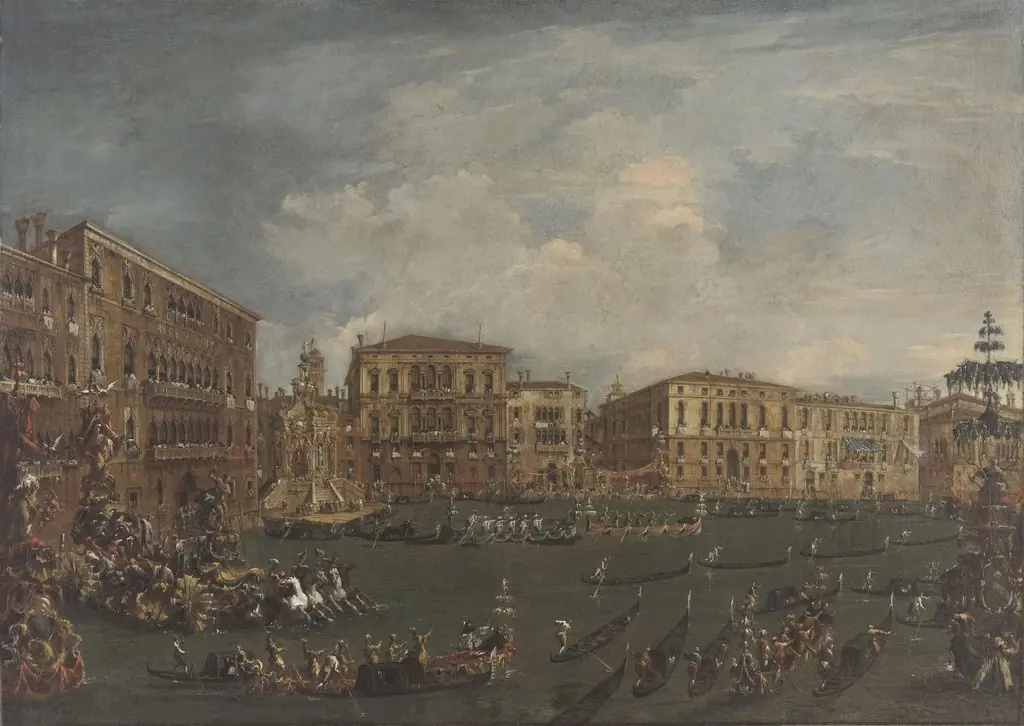 Regatta in Volta di Canal
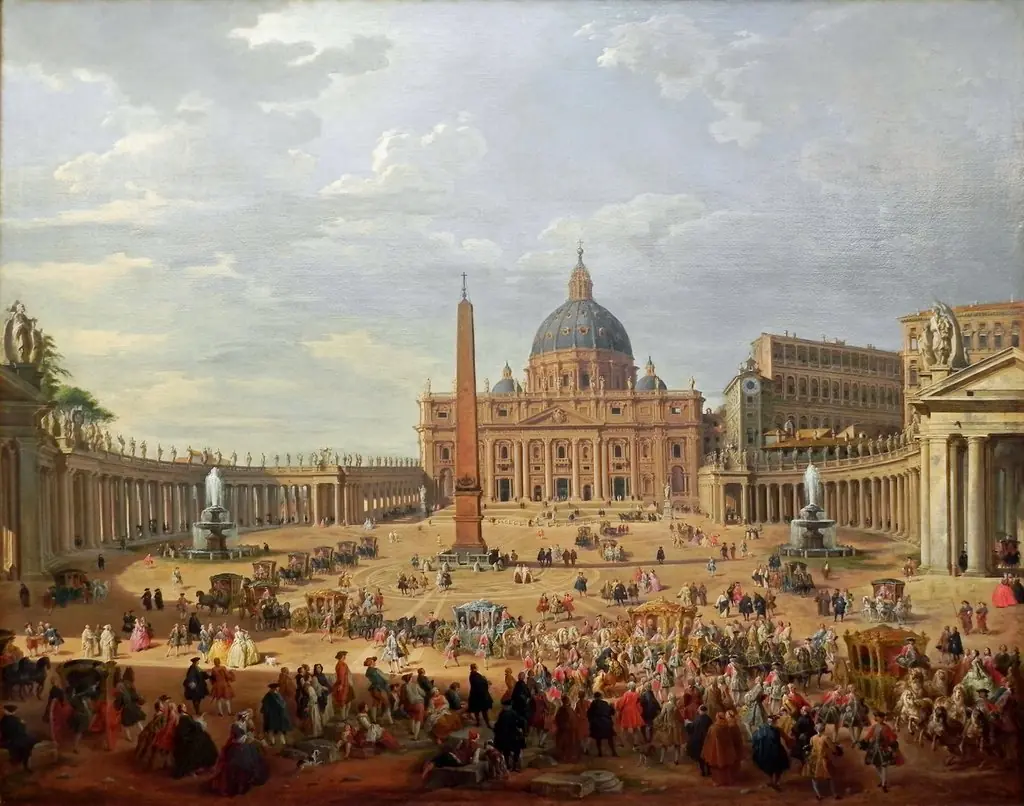 Departure of the Duc de Choiseul from the Piazza di San Pietro