Artwork
Arrival of the French Ambassador in Venice
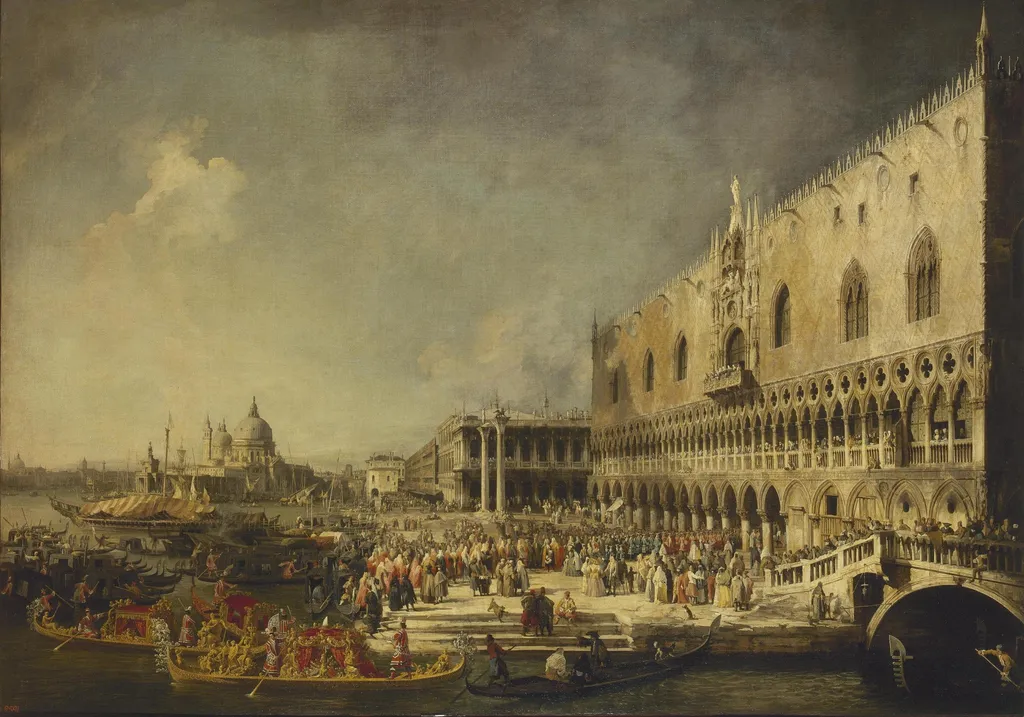
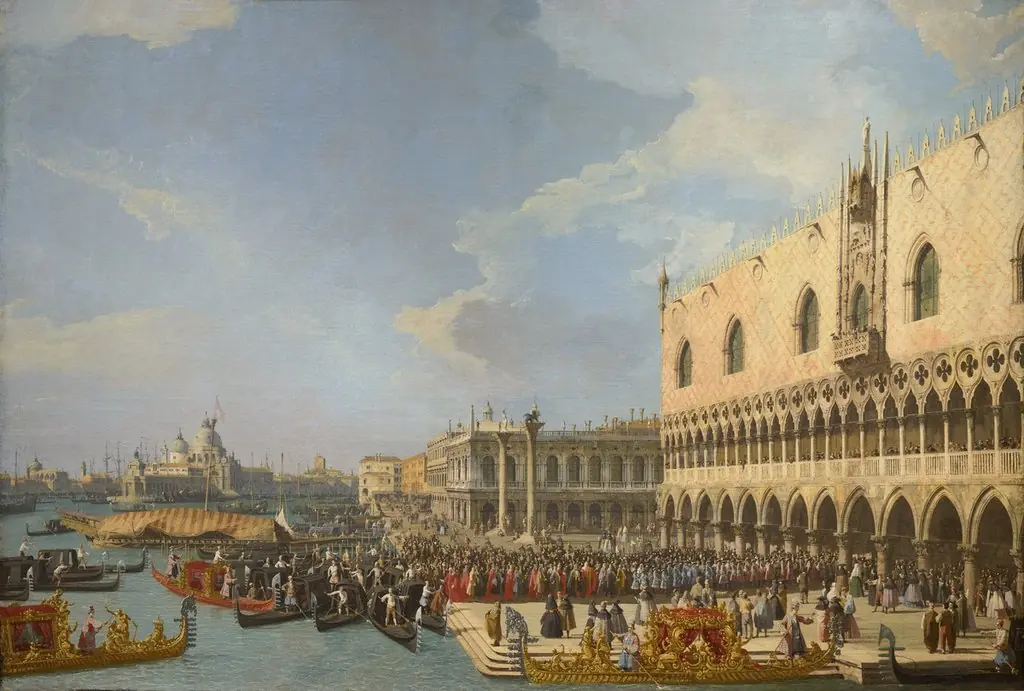
Arrival of the French Ambassador in Venice is an oil painting by the Rococo painting artist Canaletto. It dates from 1727 and is held in the collection of the Hermitage Museum.
About this work
This painting shows a fancy moment in Venice. A French ambassador steps off a boat near the Doge’s Palace. He’s met by Venetian officials in old-time clothes.
Canaletto painted this around 1726–27. It’s one of his early big scenes, not just a quiet canal view. The scene feels busy but orderly, typical for Canaletto’s work.
Check out the State Hermitage Museum to see it in person.
Subject & Meaning
The canvas portrays the French envoy Count Jacques‑Vincent Languet de Gergy stepping onto the quay before the Doge's Palace, a moment witnessed by Venetian officials. He is situated within an idealised view of Venice that functions as a diplomatic tableau: the background includes the basin of San Marco, the Biblioteca Nazionale Marciana, the molo of the Doge's Palace and the domed church of Santa Maria della Salute. Architectural elements carry symbolic weight: the twin columns at the centre bear the lion of St Mark and Saint Theodore, emblems of the republic's patron saints; the façade of the palace displays the personified Justice, underscoring the ceremonial authority of Venice.
Together these details convey the ceremony's purpose of displaying Venice's lingering prestige and its capacity to host grand receptions despite political decline.
Technique & Style
The painting Arrival of the French Ambassador in Venice is an oil on canvas measuring 181 × 259 cm, created circa 1726–27 by Canaletto.
The painting Arrival of the French Ambassador in Venice is an oil on canvas measuring 181 × 259 cm, created circa 1726–27 by Canaletto. It belongs to the veduta genre and was executed in Venice, Italy. The composition combines precise architectural rendering of landmarks such as the Doge's Palace, Santa Maria della Salute and the two central columns with a narrative scene of the French envoy's disembarkation.
Canaletto's characteristic luminous palette and careful handling of light emphasise the texture of stone and water, while the overall balance reflects the ceremonial grandeur typical of eighteenth‑century Venetian diplomatic events. The work is part of the Hermitage Museum collection.
History & Provenance
Executed circa 1726–1727 by Giovanni Antonio Canal, known as Canaletto, this oil on canvas commemorates the arrival of French ambassador Jacques‑Vincent Languet de Gergy in Venice, set against a backdrop of Venetian landmarks. Measuring approximately 181 by 259.5 centimetres, the work entered the imperial collection of Catherine the Great of Russia between 1763 and 1796 and has remained in the Hermitage Museum, Saint Petersburg, ever since. The available records do not list temporary exhibitions or loan history outside its permanent residence in the museum.
Legacy
The painting's enduring reputation stems from its exemplary depiction of Venetian ceremonial life and its architectural precision, qualities that have made it a reference point for studies of Canaletto's vedute and eighteenth‑century diplomatic iconography. Acquired by Catherine the Great and housed in the Hermitage since the 1760s, the work is cited as a key example of how Canaletto combined topographical accuracy with narrative detail. Its inclusion in museum catalogues underscores its status as an emblem of Venice's ceremonial grandeur, reinforcing Canaletto's reputation as a chronicler of the Republic's public spectacles.
Overview
The "Arrival of the French Ambassador in Venice" is an oil on canvas painting created by Canaletto around 1726–27. This work captures a significant ceremonial event: the disembarkation of Count Jacques-Vincent Languet de Gergy, the French Ambassador, at the Doge's Palace. It represents one of Canaletto's earlier large-scale depictions of public life in Venice, moving beyond his more intimate views of canals and everyday scenes.
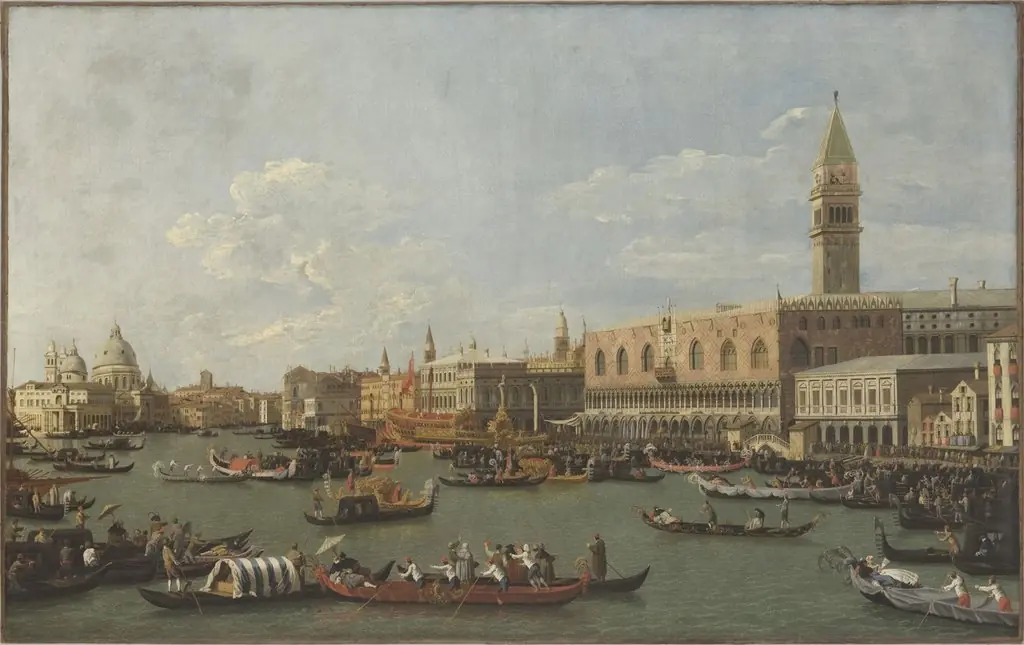
Own this work as a print
Artist & collection
Artist
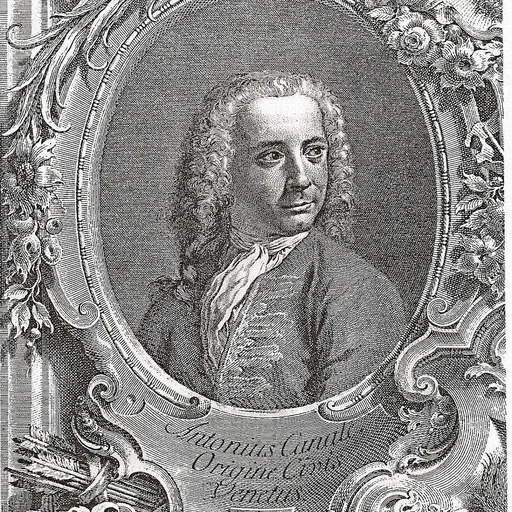
Giovanni Antonio Canal (18 October 1697 – 19 April 1768), commonly known as Canaletto (Italian: ), was an Italian painter from the Republic of Venice, considered an important member of the 18th-century Venetian school.

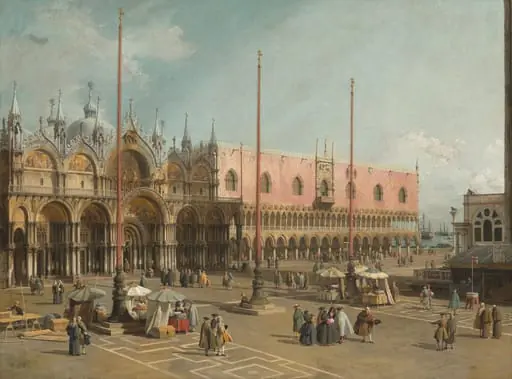
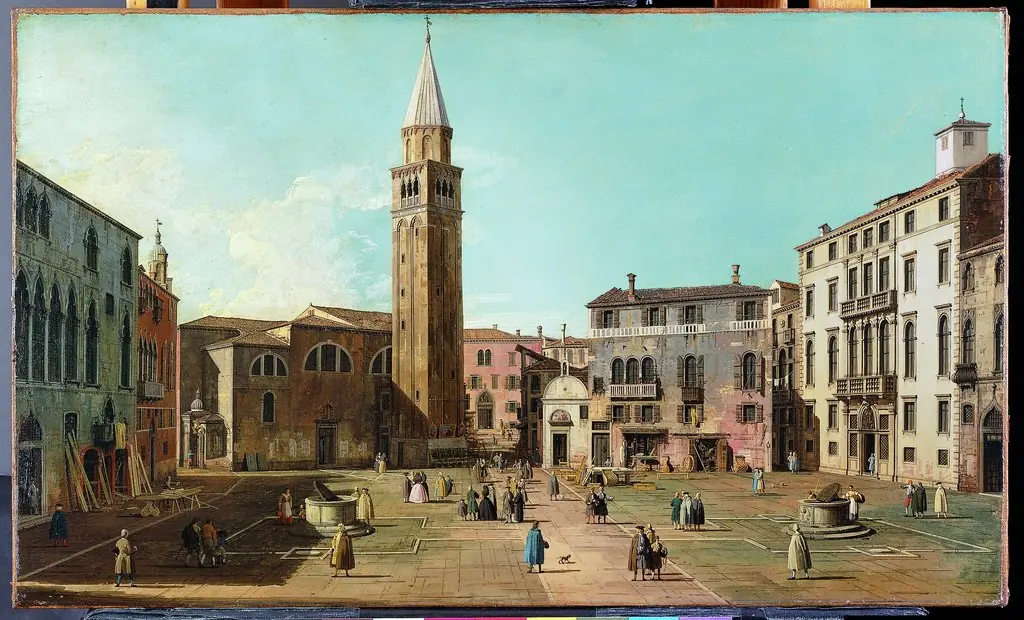
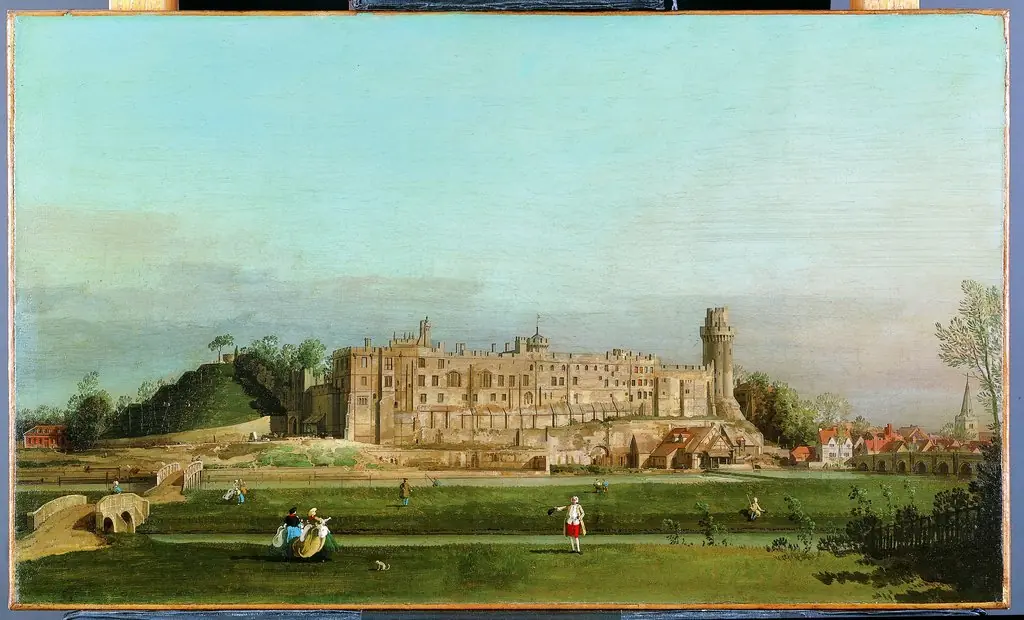
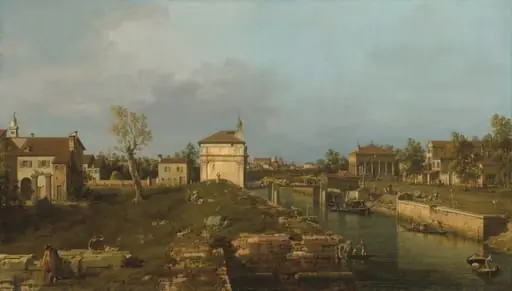
- The Bucintoro at the Molo on Ascension Day
 Ricevimento dell’ ambasciatore imperiale a Palazzo Ducale
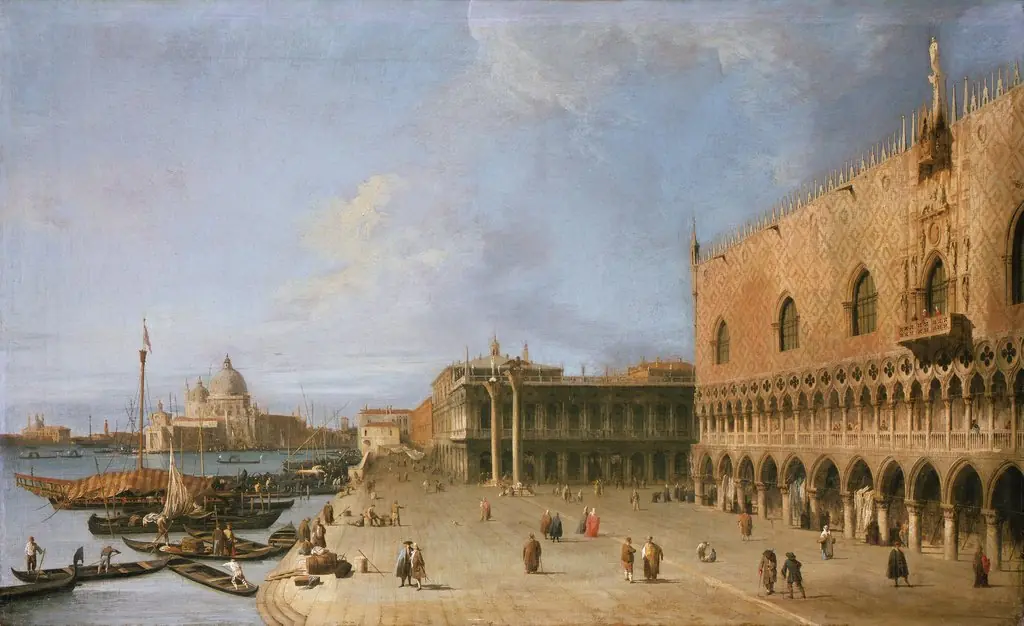 The Molo in Front of the Doge's Palace in Venice
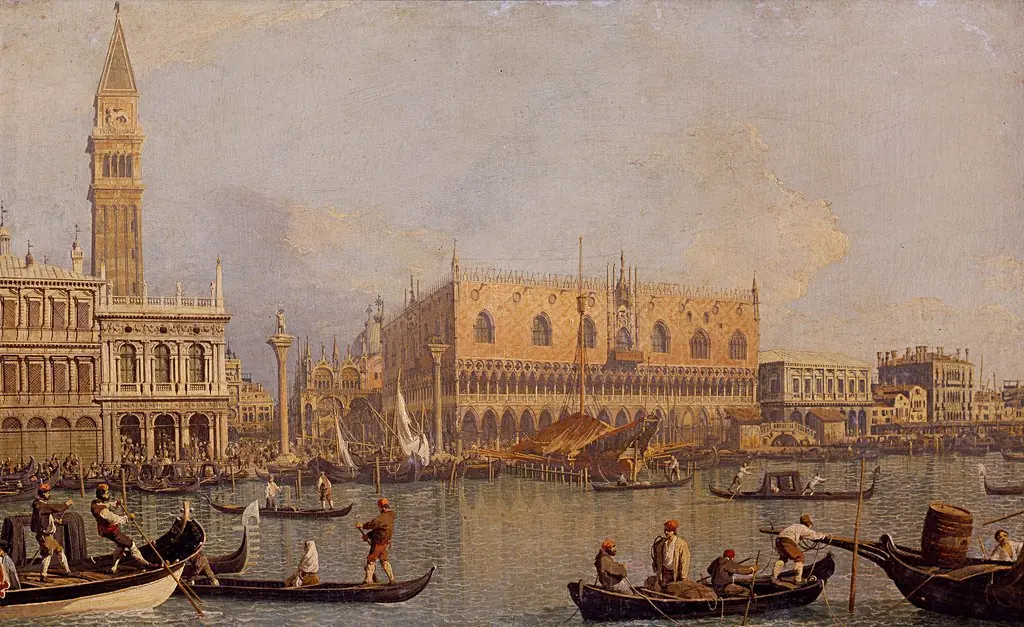 View of the Ducal Palace in Venice
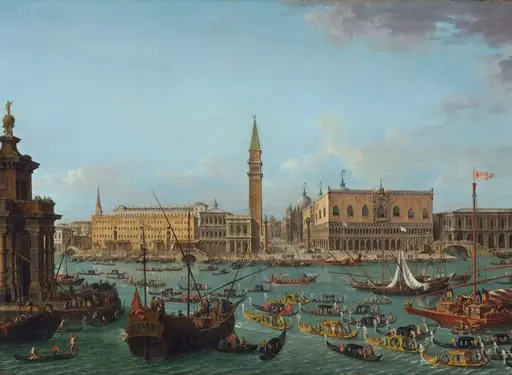 Procession of Gondolas in the Bacino di San Marco, Venice
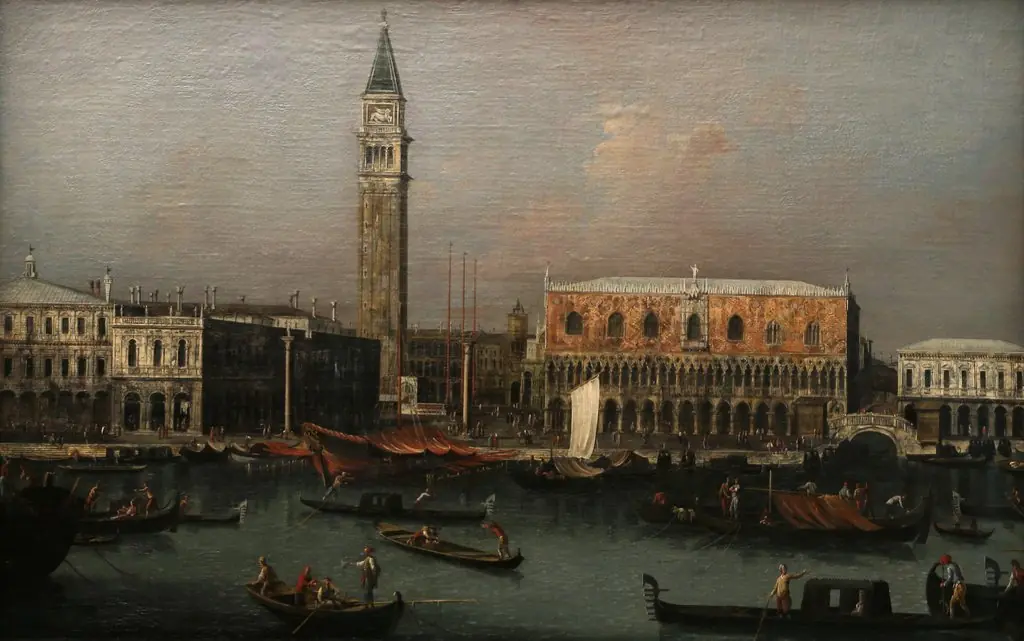 View of the Piazetta and the Molo in Venice from the Bacino di S. Marco
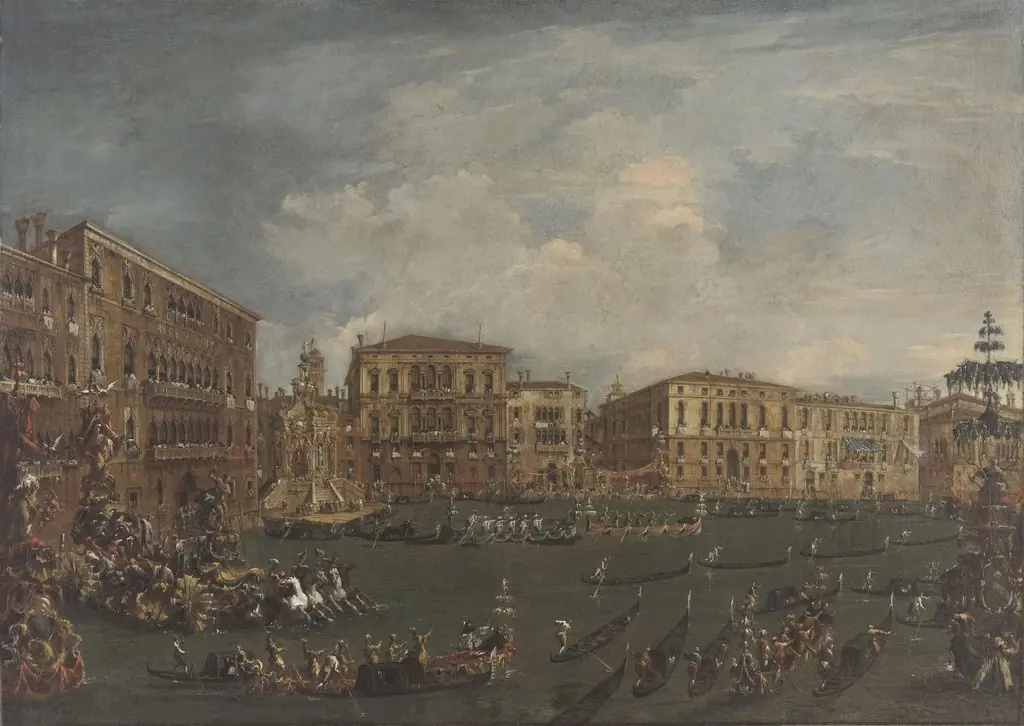 Regatta in Volta di Canal
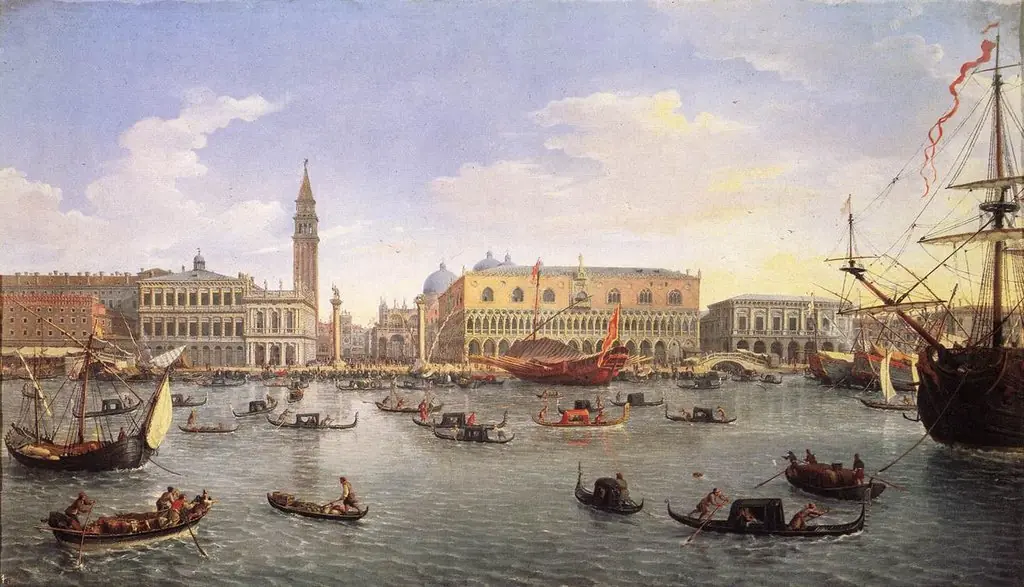 View of Venice from the Island of San Giorgio
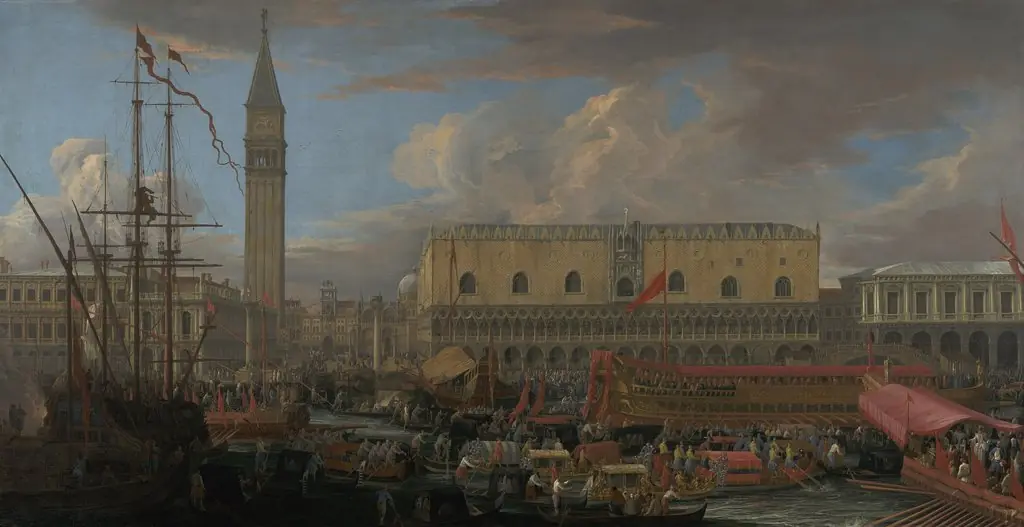 The Bucintoro Departing from the Bacino di San Marco
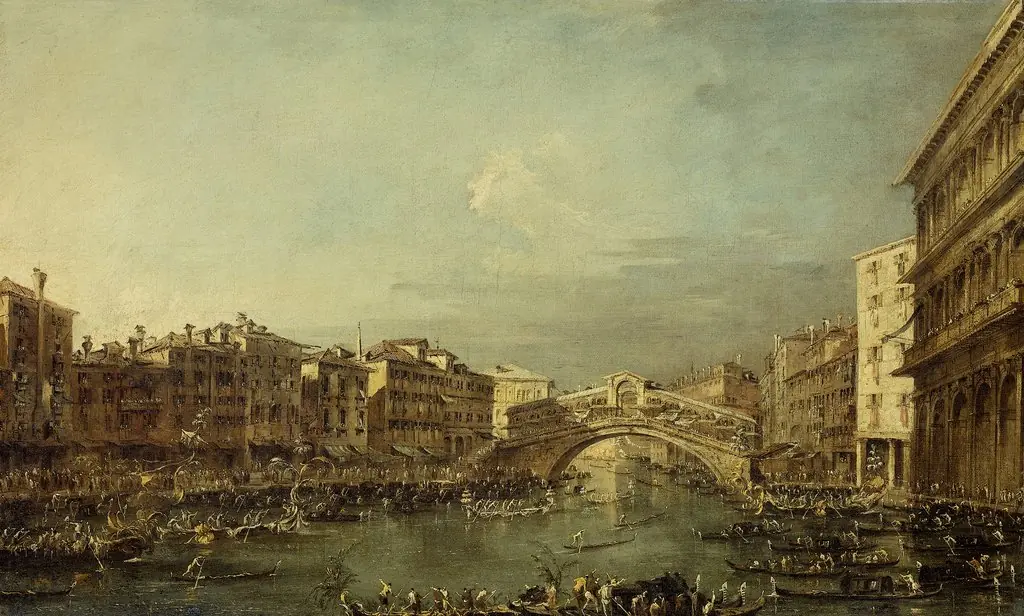 A Regatta on the Grand Canal with the Rialto Bridge in Venice
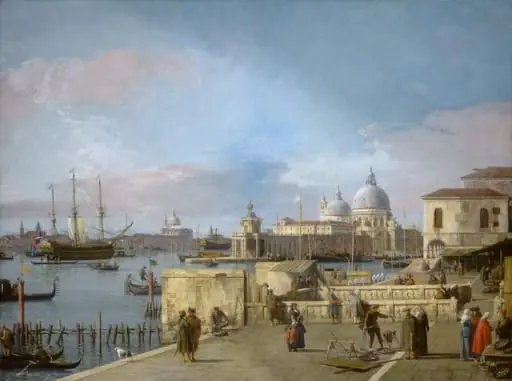
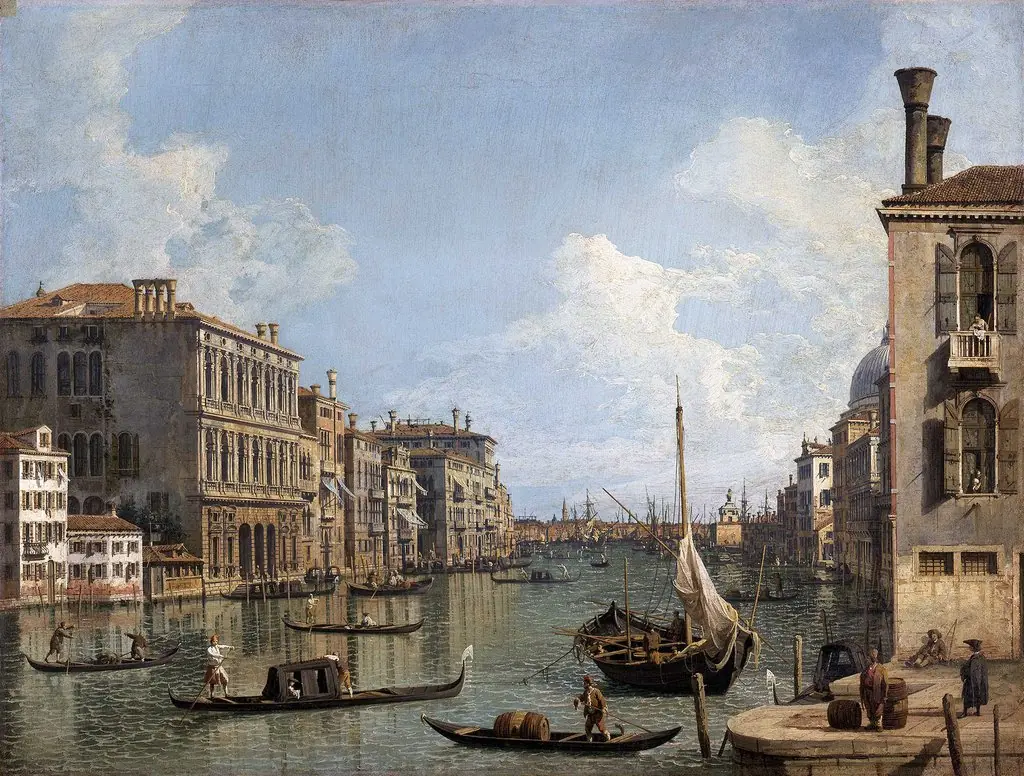 View of the Grand Canal toward the Punta della Dogana
 Untitled