Artwork
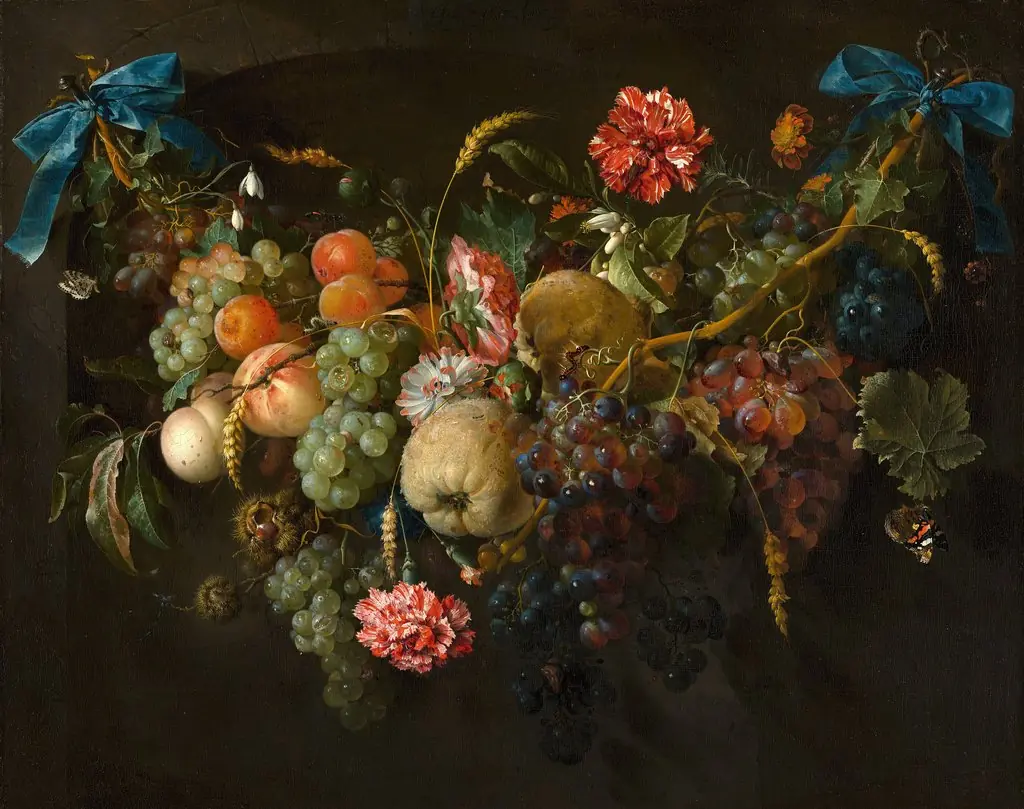
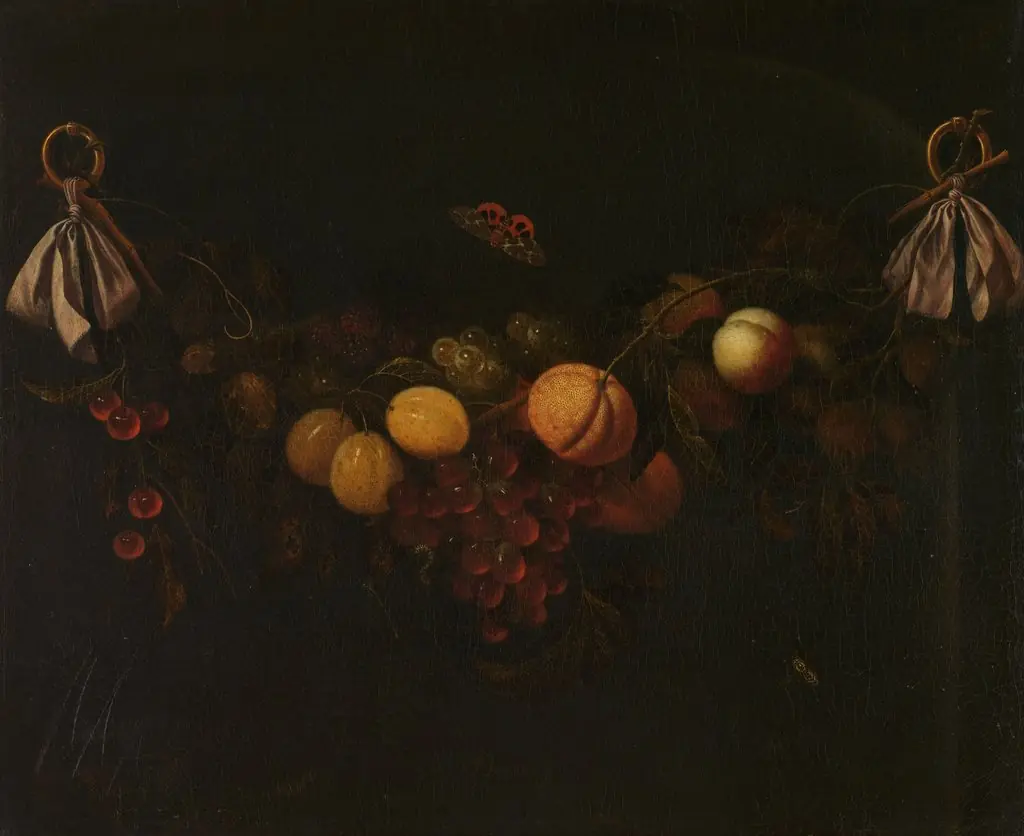
Festoon of Fruits
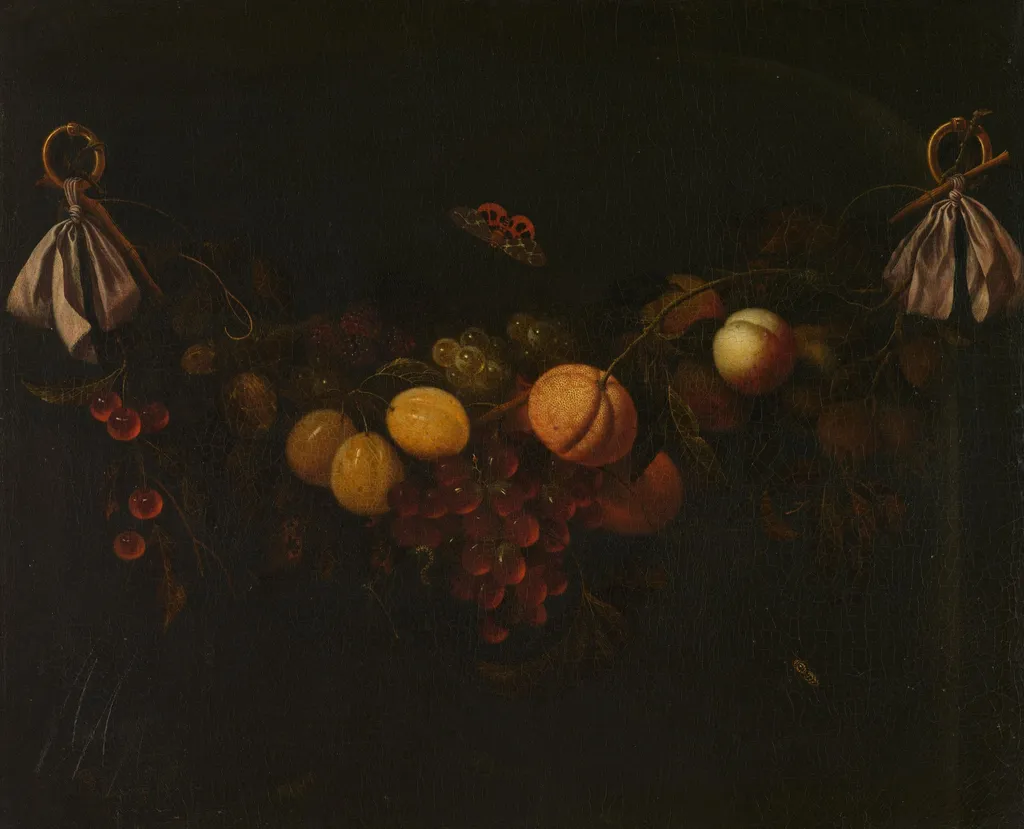
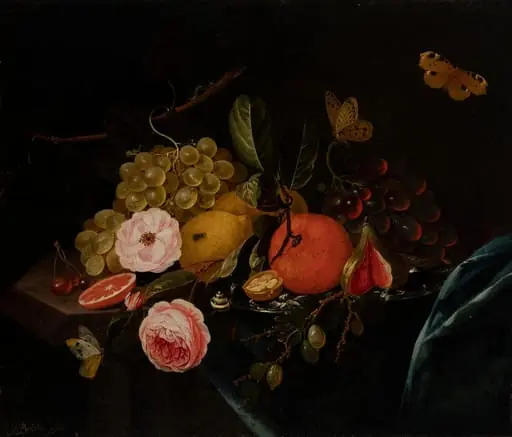
Festoon of Fruits is an unspecified painting by the Dutch Golden Age artist Johannes Borman. It dates from 1653 and is held in the collection of the Rijksmuseum.
About this work
Subject & Meaning
1658) situates it within the flourishing Dutch still life market, as noted in contemporary records of his guild membership and activity.
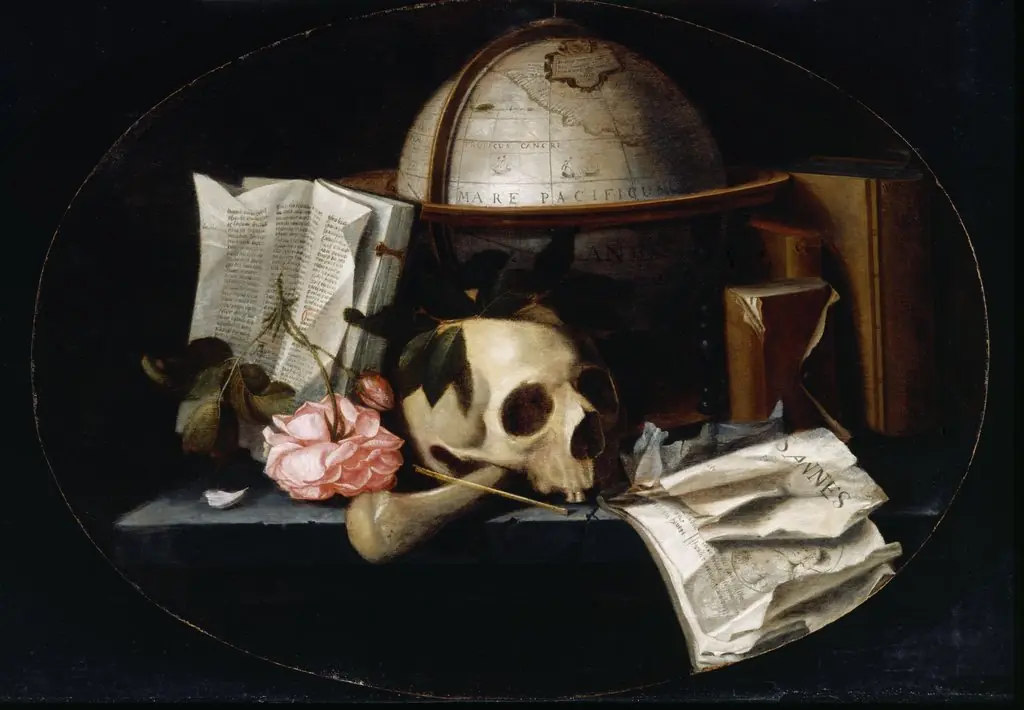
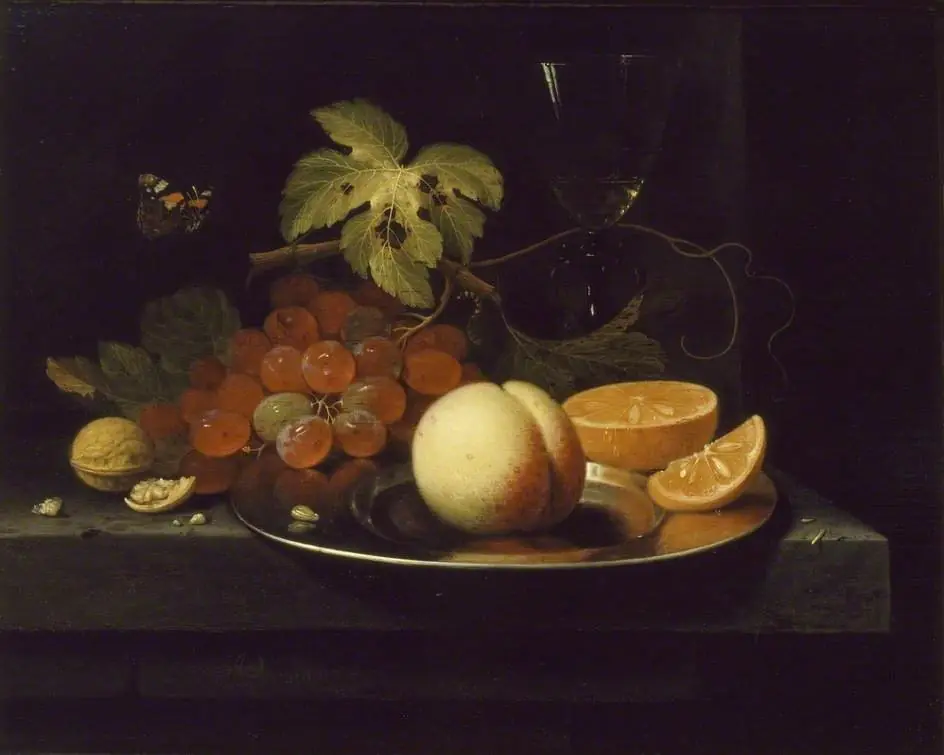
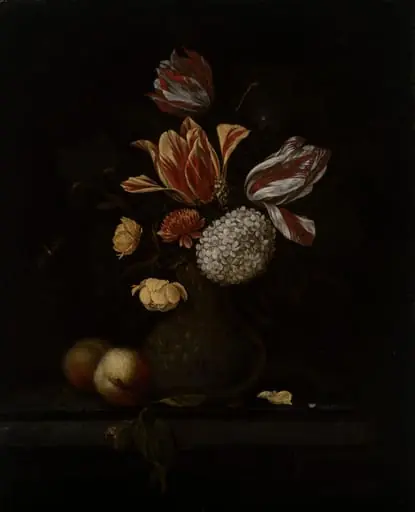
Festoon of Fruits depicts an arrangement of grapes, figs, peaches, and other produce suspended by a decorative ribbon, a motif drawn from vanitas and floral traditions that symbolizes the transience of abundance and the passage of time. The work reflects typical Dutch Golden Age still life interests in sensory richness and moral reflection on material pleasures. The subject combines naturalistic fruit rendering with symbolic references to mortality and the fleeting nature of earthly wealth. The painting's iconography aligns with vanitas themes, where perishable foods serve as emblems of temporal decay, a connection documented in scholarly references to Borman's oeuvre. Its creation during Borman's Leiden period (c. 1653, c. 1658) situates it within the flourishing Dutch still life market, as noted in contemporary records of his guild membership and activity.
History & Provenance
Festoon of Fruits is attributed to Johannes Borman, a Dutch Golden Age still life painter active in Leiden between approximately 1653 and 1658, before relocating to Amsterdam in 1659. The work is dated to around 1653-1658 based on stylistic analysis and archival records of his activity in Leiden. Borman, born circa 1620-1625 in The Hague, was a member of the Leiden Guild of St. Luke during this period and specialized in fruit and flower still lifes, often incorporating vanitas motifs. Provenance and ownership history are not detailed in the sources, but the work is documented in scholarly references to his oeuvre, including listings on Art UK and Artnet. It appears in museum collections and exhibition contexts such as Vanitasstilleven at Christie's and Vruchtenstilleven at BBC, with visual records held by the Rijksmuseum Amsterdam.
Legacy
Festoon of Fruits has been cited in scholarly and curatorial discourse as an example of mid-17th-century Dutch still-life painting, particularly within discussions of vanitas symbolism and the development of fruit-themed compositions in the Netherlands. Its legacy is reflected in its inclusion in major museum collections and exhibitions, such as those at the Rijksmuseum Amsterdam, where it was featured in thematic displays of vanitas and fruit still lifes. The work is frequently referenced in relation to contemporaries like Abraham Mignon and Rachel Ruysch, though direct influence remains unconfirmed without explicit documentation. The painting’s attribution to Johannes Borman has been reinforced through archival records and auction histories, including sales at Christie's and listings on Artnet, contributing to a sustained academic and public interest in his body of work.
Own this work as a print
Artist & collection