Artwork
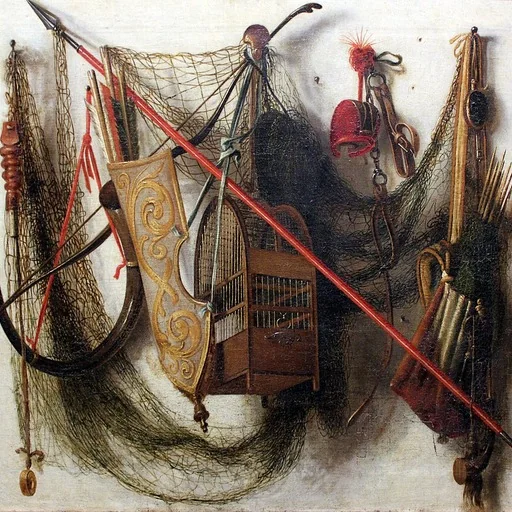
Still life with hunting implements
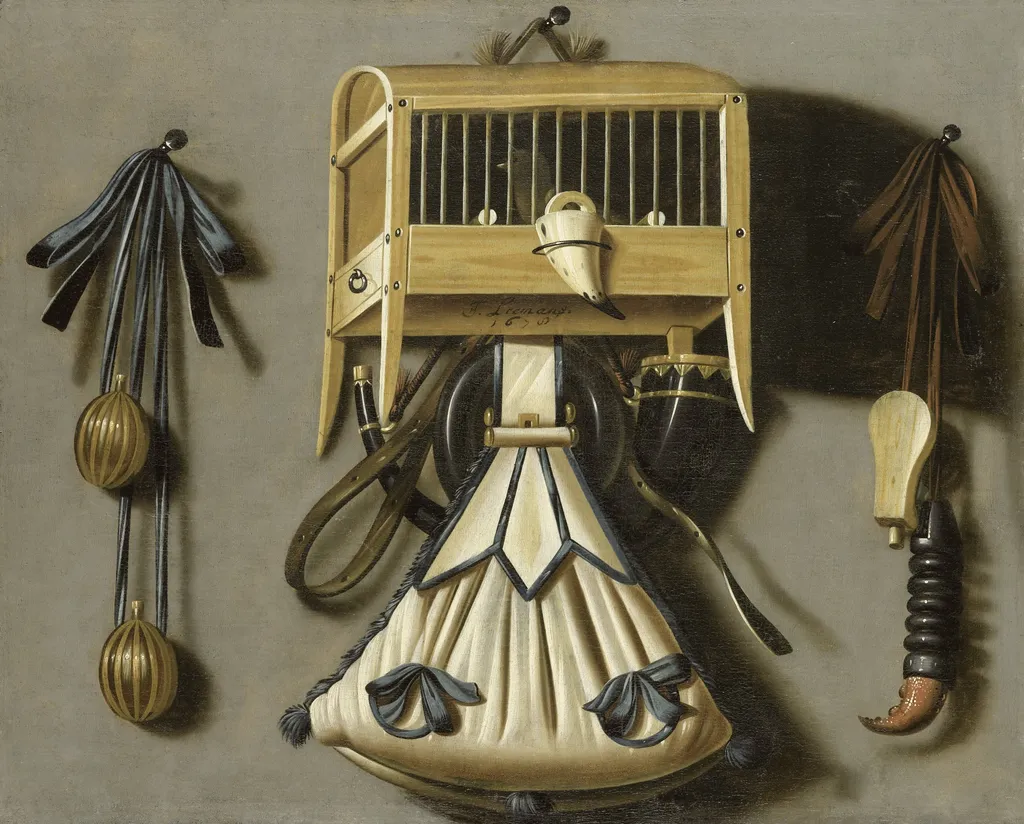
Still life with hunting implements is an oil painting by the Dutch Golden Age artist Johannes Leemans. It is held in the collection of the Rijksmuseum.
About this work
Technique & Style
Johannes Leemans executed Still Life with Hunting Implements in 1678 using oil paint applied to a canvas support.
Johannes Leemans executed Still Life with Hunting Implements in 1678 using oil paint applied to a canvas support. The work measures 62 cm in height and 76.5 cm in width, adhering to the genre conventions of the Dutch still life tradition. As an oil painting, the medium allows for the detailed rendering of textures characteristic of hunting equipment and game, though specific handling techniques or current conservation conditions are not detailed in the available records. The piece remains a classified painting within the corpus of 17th-century Dutch art.
History & Provenance
Still life with hunting implements is an oil painting on canvas created in 1678 by Johannes Leemans. It measures 62 cm in height and 76.5 cm in width. The work entered the collection of Abraham Bredius before being acquired by the Rijksmuseum, where it remains on display.
The painting's provenance traces a clear ownership chain from its creation to Bredius's ownership and subsequent transfer to the Rijksmuseum, establishing its authenticated history within the museum's collection.
Dating is confirmed by the inception date of 1678 recorded in the work's documentation, aligning with the artist's active period and stylistic analysis.
These provenance details are drawn from the painting's cataloguing within the Rijksmuseum's records and historical ownership listings attributed to Bredius.
The creation history is defined by its classification as a still life genre work, executed in oil on canvas during the late 17th century.
The painting Still life with hunting implements by Johannes Leemans is held in the collection of the Rijksmuseum in Amsterdam. The work, executed on canvas with oil paint in 1678, measures 62 cm in height and 76.5 cm in width. Prior to its current location, the piece was owned by Abraham Bredius.
The provided sources do not contain specific inventory numbers, accession codes, or a record of the work's exhibition history.
Context
The painting has been discussed in scholarship as an example of Dutch Golden Age hunting-themed still lifes, reflecting 17th-century Netherlands' cultural emphasis on outdoor pursuits and game consumption. It is housed at the Rijksmuseum in Amsterdam, which holds it as part of its collection.
The work is attributed to Johannes Leemans, a painter active in the late 17th century known for game and hunting scenes. Its creation date of 1678 aligns with the peak period of Dutch still life production, contemporaneous with artists like Willem Kalf. The composition features hunting equipment such as firearms and game bags, symbolizing both material abundance and moral themes related to sport and mortality.
The artwork was previously owned by Abraham Bredius, a noted Dutch art collector and merchant active in the late 19th and early 20th centuries. It remains in the Rijksmuseum's possession today.
Legacy
The work established a precedent for later Dutch still lifes that incorporated game and hunting equipment, a theme that resonated through 18th-century decorative painting and influenced artists who specialized in game pieces for elite households. Its presence in the collection of Abraham Bredius helped preserve the compositional model for subsequent generations of painters who adapted the motif for both private and public commissions.
Overview
Still Life with Hunting Implements is a 17th-century oil painting by Johannes Leemans, dated to 1690.
Subject & Meaning
The painting depicts an assortment of hunting equipment, including a birdcage, hunting horn, and bag, arranged against a plain backdrop. The composition invites the viewer to contemplate the objects and their uses.
Own this work as a print
Artist & collection

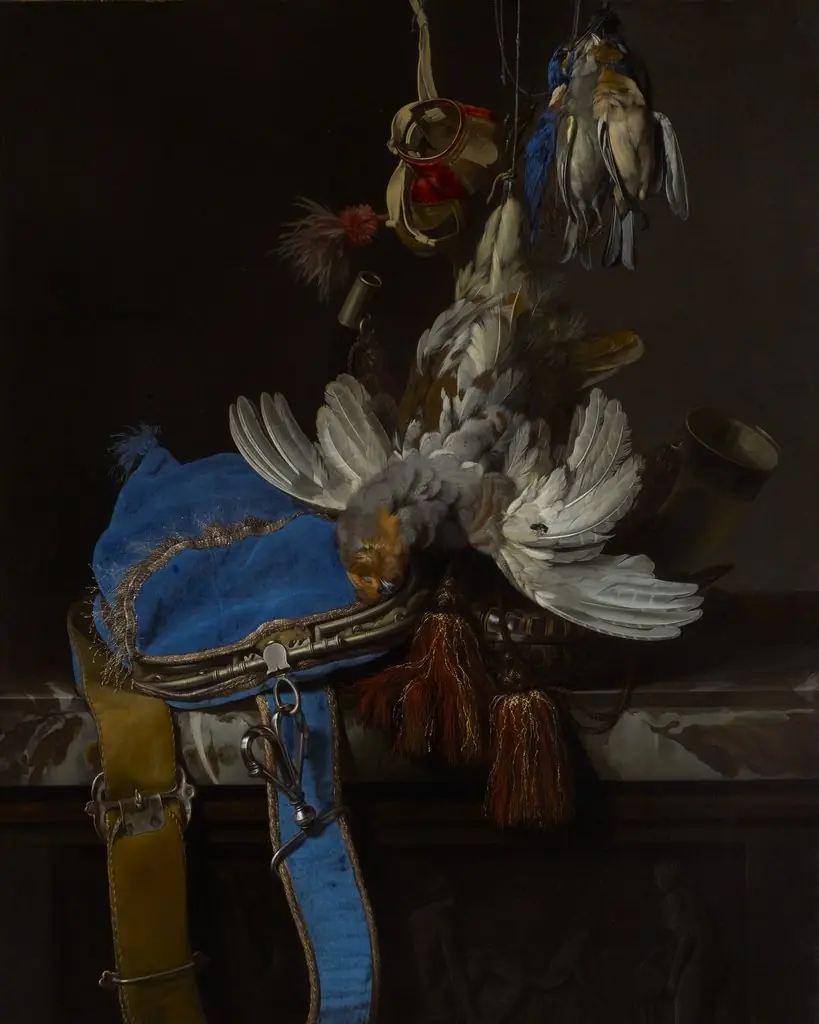 Hunt Still Life with a Velvet Bag on a Marble Ledge
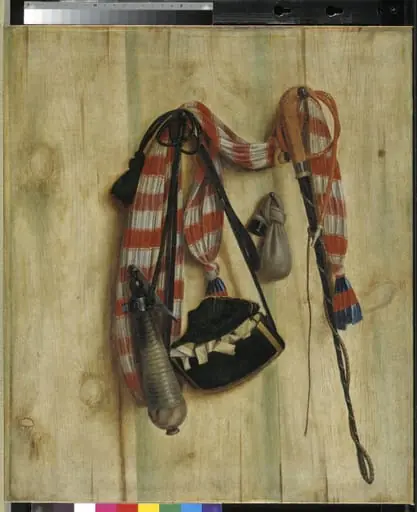 Trompe l'Oeil with Riding Whip and Letter Bag
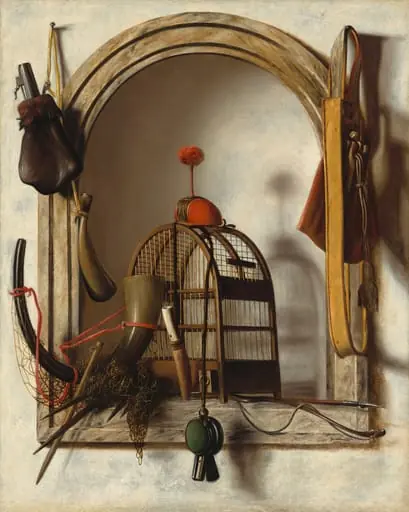 Niche with Falconry Gear
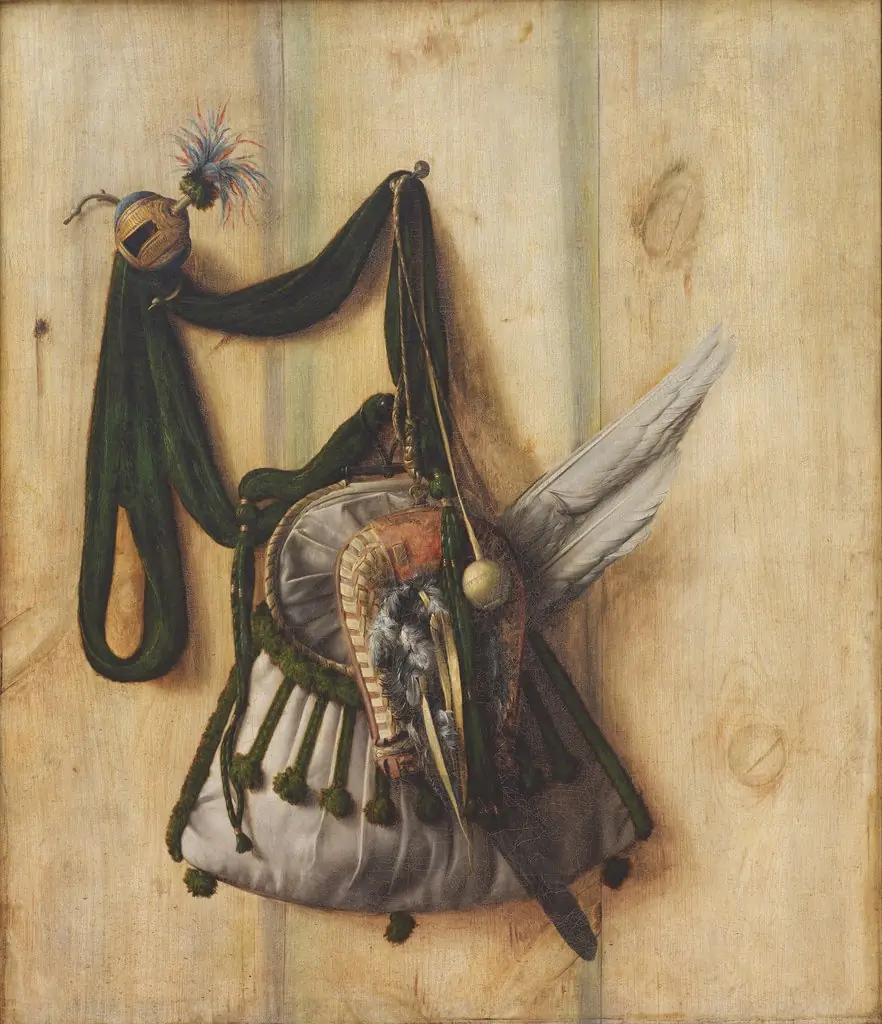 Trompe l'Oeil with Falconer's Bag and other Equipment for Falconry
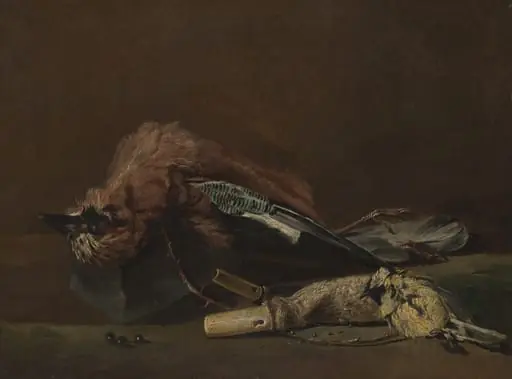 Dead Birds and Shot Bags
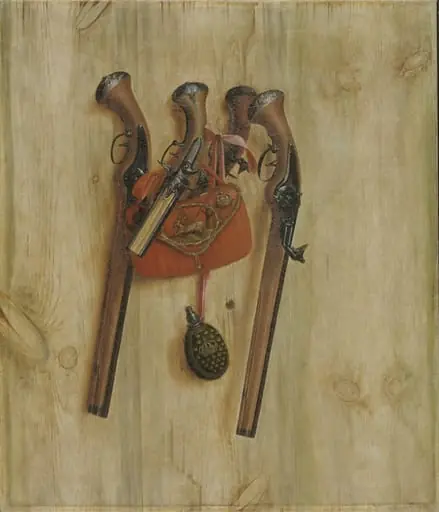 Trompe l'Oeil with Pistols
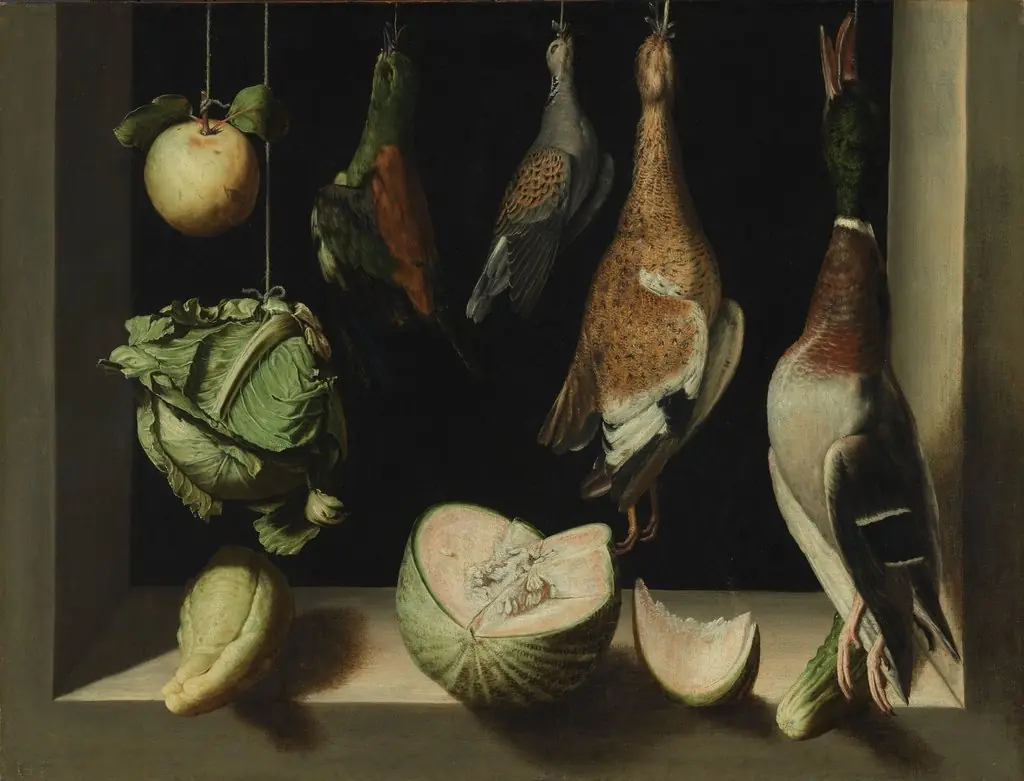 Still Life with Game Fowl
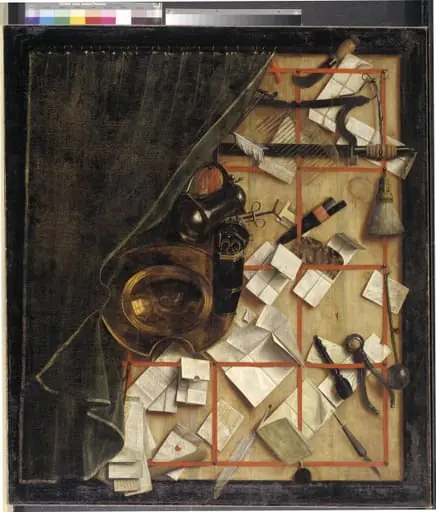 Trompe l'oeil. Letter Rack with a Barber-Surgeon's Instruments
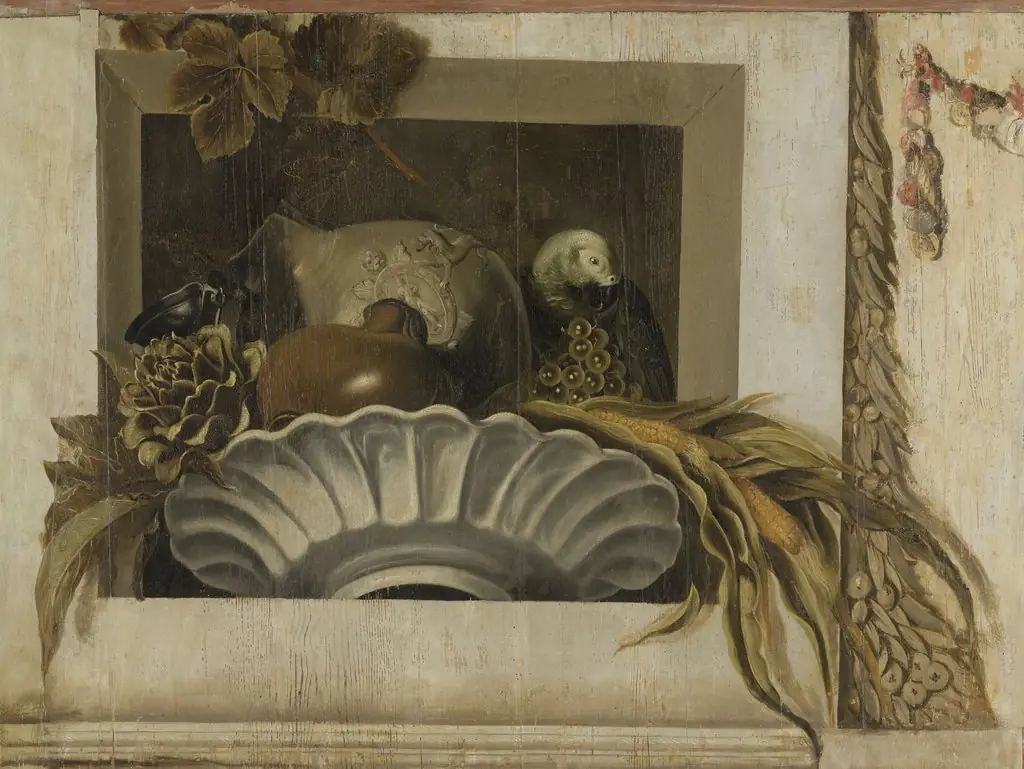 Still a Bowl of Corn, Artichokes, Grapes and a Parrot