Artwork
Battle Scene
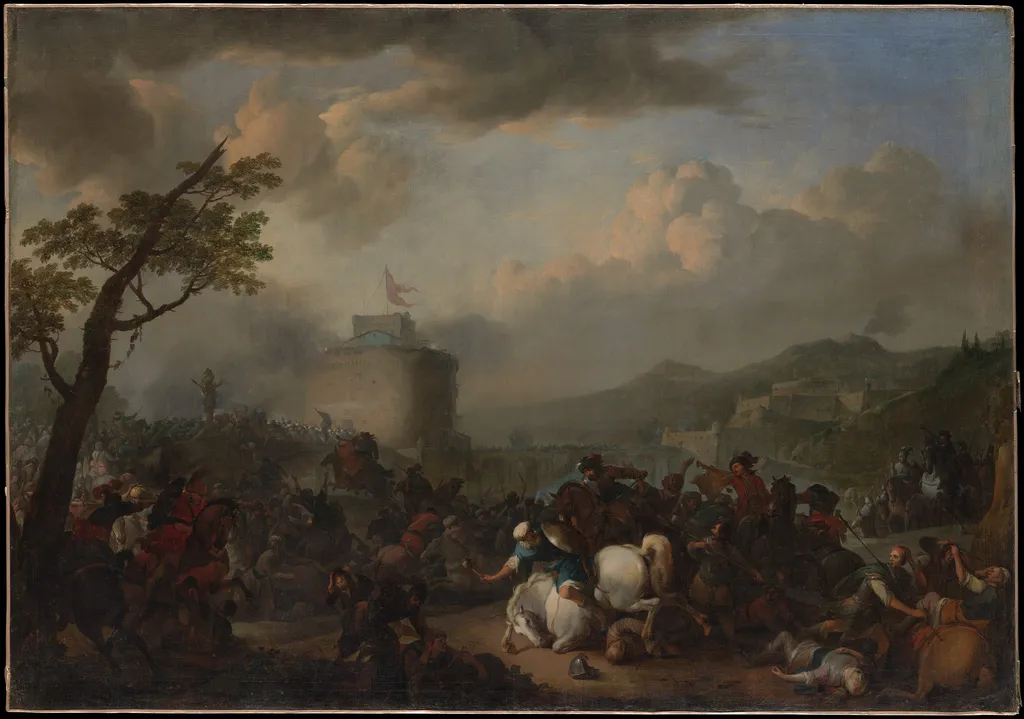
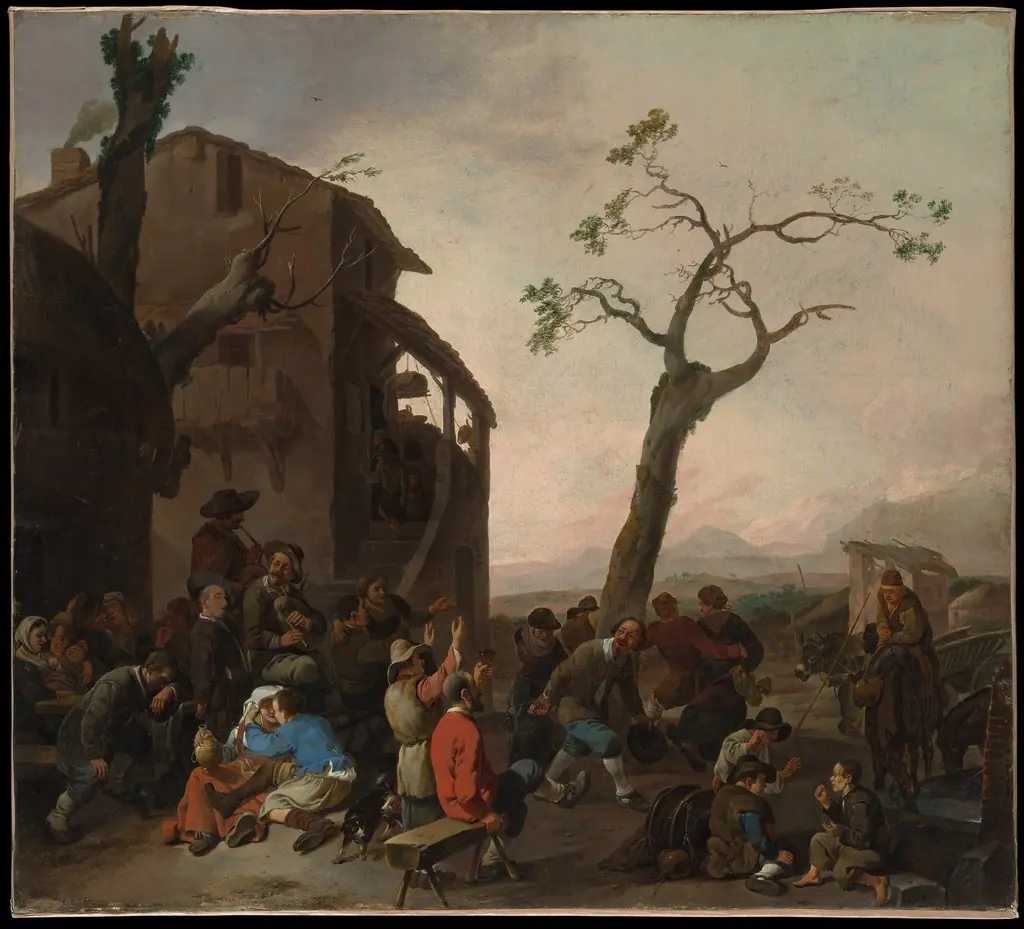
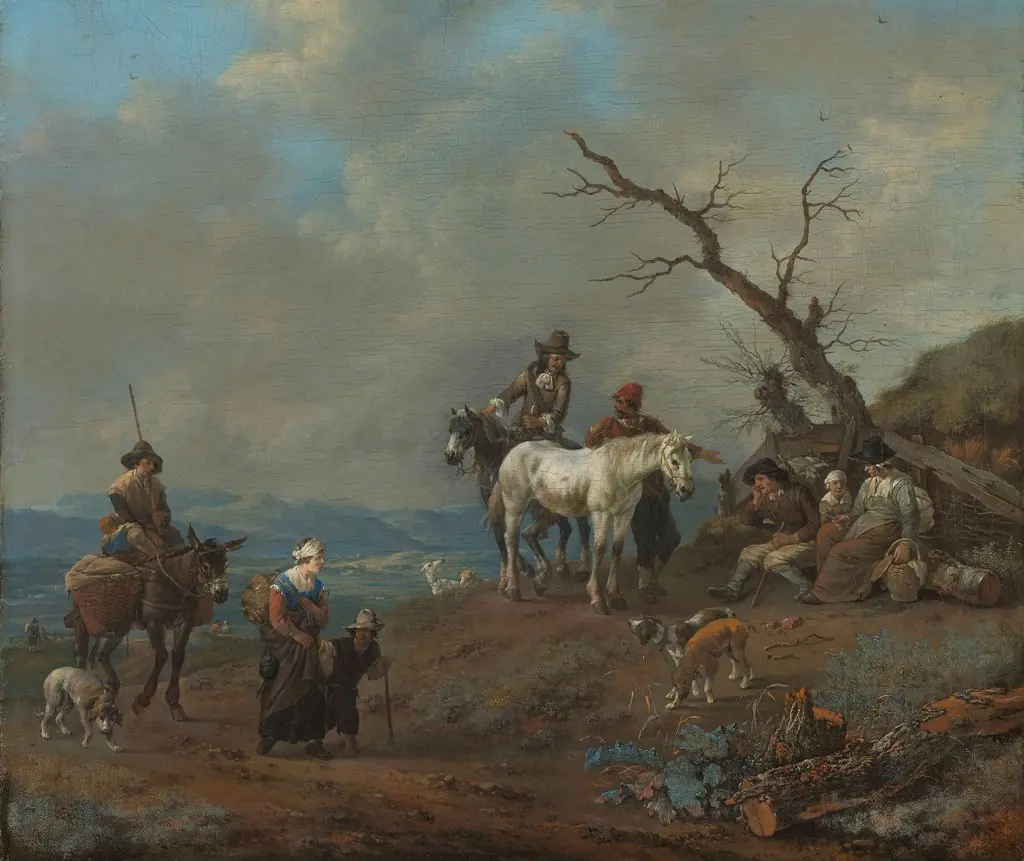
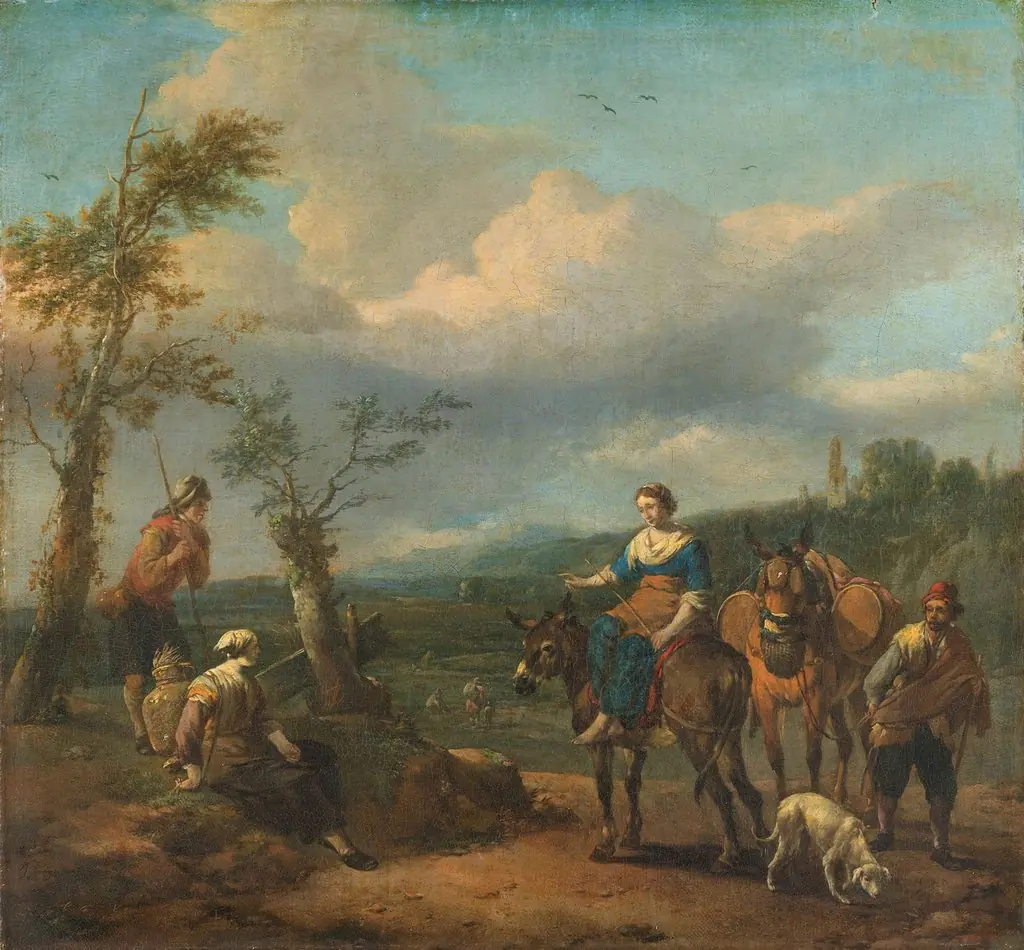
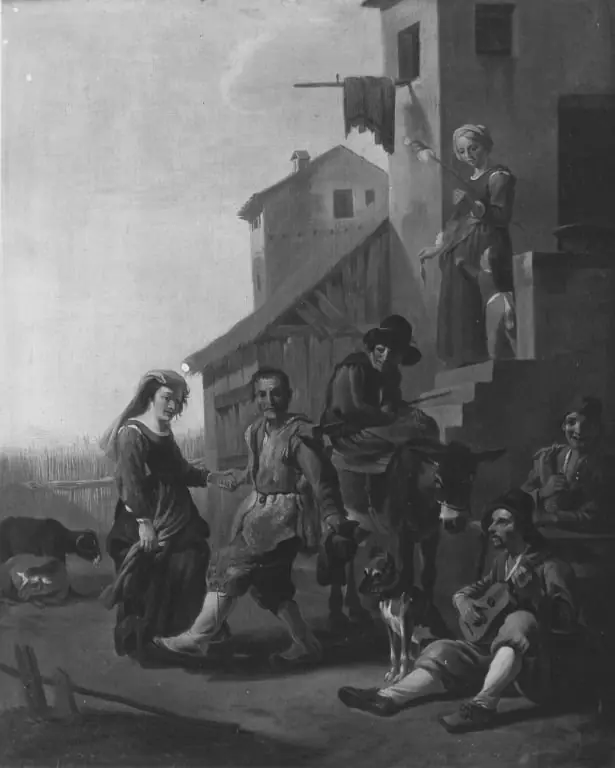
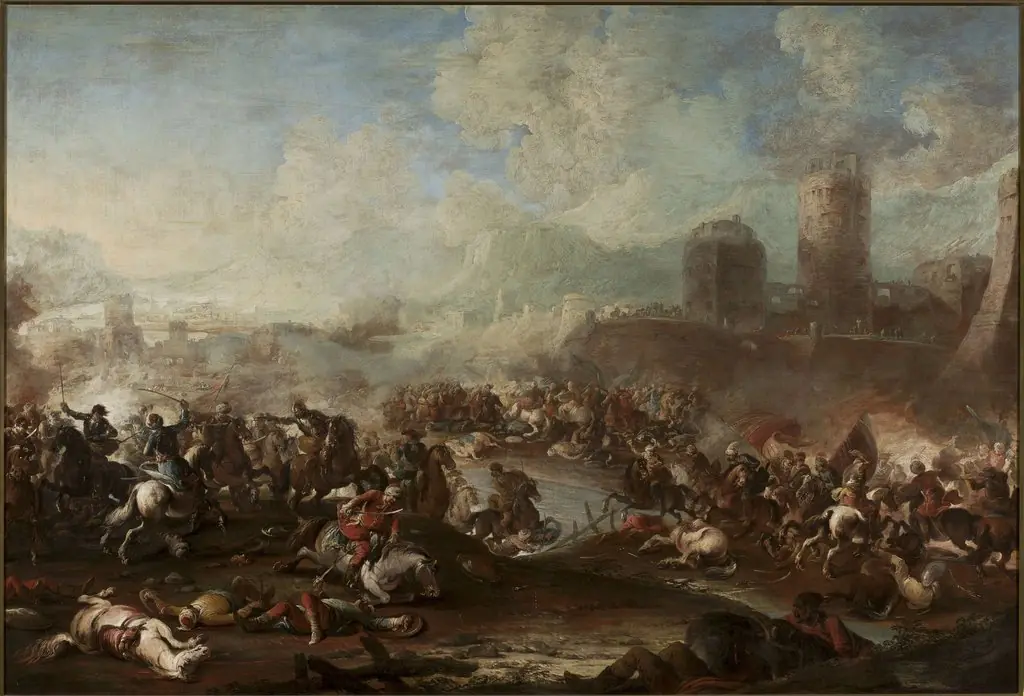
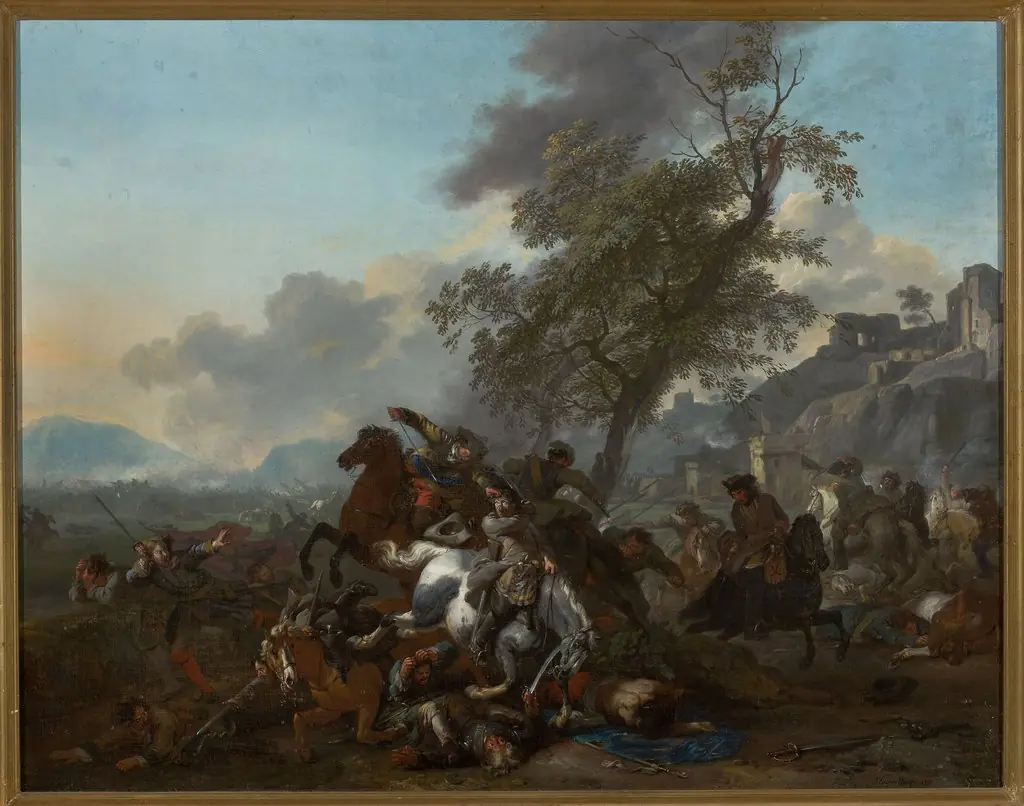
Battle Scene is an oil painting by the Dutch Golden Age artist Johannes Lingelbach. It dates from 1671 and is held in the collection of the Metropolitan Museum of Art.
About this work
Subject & Meaning
The composition features soldiers and equestrian figures locked in combat, emphasizing the dynamic movement and violence characteristic of battle.
Johannes Lingelbach's 1671 oil painting, titled Battle Scene, functions as a history painting depicting a chaotic military engagement. The composition features soldiers and equestrian figures locked in combat, emphasizing the dynamic movement and violence characteristic of battle. While the work explicitly portrays men and horses in conflict, the available records do not detail specific allegorical figures, religious symbolism, or a deeper philosophical meaning beyond the literal representation of warfare.
The iconography relies on the standard visual vocabulary of seventeenth-century battle scenes, focusing on the physical struggle between opposing forces rather than a coded narrative. Consequently, the work represents a direct visualization of martial conflict, capturing the intensity of the moment through its depiction of armed combatants and cavalry.
Technique & Style
Johannes Lingelbach's Battle Scene, executed in 1671, is an oil painting on canvas. The work measures 112.7 centimeters in height and 160.7 centimeters in width. As a history painting, the medium of oil paint allows for the detailed depiction of soldiers, men, and equestrian figures engaged in combat.
The canvas support provides a stable foundation for the dynamic composition characteristic of the genre. The painting remains part of the collection of the Metropolitan Museum of Art, having been owned previously by William T. Blodgett.
History & Provenance
The painting Battle Scene was executed in 1671 by Johannes Lingelbach using oil on canvas. Its subject includes a soldier, a man, a battle and equestrian elements, reflecting the history‑painting genre. The work was first recorded in the collection of William T. Blodgett before entering the Metropolitan Museum of Art, where it remains on display.
Documentation of its creation history notes the date 1671‑01‑01 and specifies dimensions of 112.7 cm by 160.7 cm. No surviving records indicate a specific commissioning patron; the painting’s early ownership is traced only to Blodgett, after which it was acquired by the museum.
The painting is held in the collection of the Metropolitan Museum of Art in New York, where it is recorded under accession number 67.165.1. It was previously owned by William T. Blodgett, whose collection formed the nucleus of the museum’s 1871 acquisition. The work has not been included in major thematic exhibitions since its entry into the museum’s holdings, remaining in storage or displayed only in gallery rotations focused on Dutch and Flemish seventeenth-century paintings.
Overview
Johannes Lingelbach's Battle Scene, an oil painting from 1671, represents a historical combat scene typical of the Dutch Golden Age. This work, now housed at The Metropolitan Museum of Art, highlights equestrian figures amidst a chaotic engagement. Lingelbach, a Dutch artist who spent time in Rome, was associated with the Bamboccianti, a group known for their genre scenes.
Context
Johannes Lingelbach was a significant figure within the Dutch Golden Age, known for his diverse subjects. His association with the Bamboccianti in Rome, a group that favored naturalistic portrayals of everyday life, influenced his approach to depicting human activity. While Battle Scene addresses a historical theme, it aligns with the era's appreciation for detailed narrative and dramatic, often chaotic, human interaction.
Own this work as a print
Artist & collection
Artist
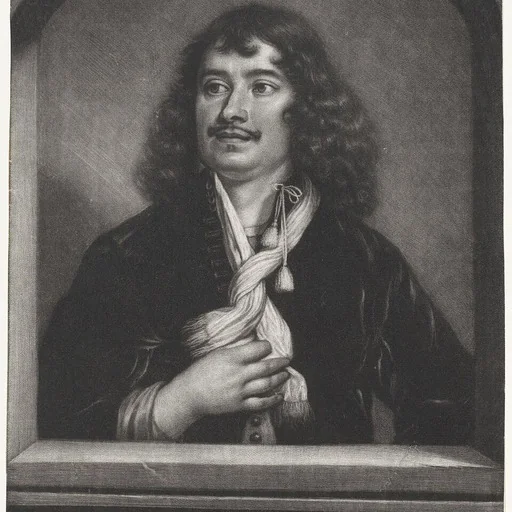
Johannes (or Johann) Lingelbach (1622 – 3 November 1674) was a Dutch Golden Age painter, associated with the second generation of Bambocciate, a group of genre painters working in Rome from 1625–1700.