Artwork
The climbing of the Capitol with the gray horse of the newly elected pope
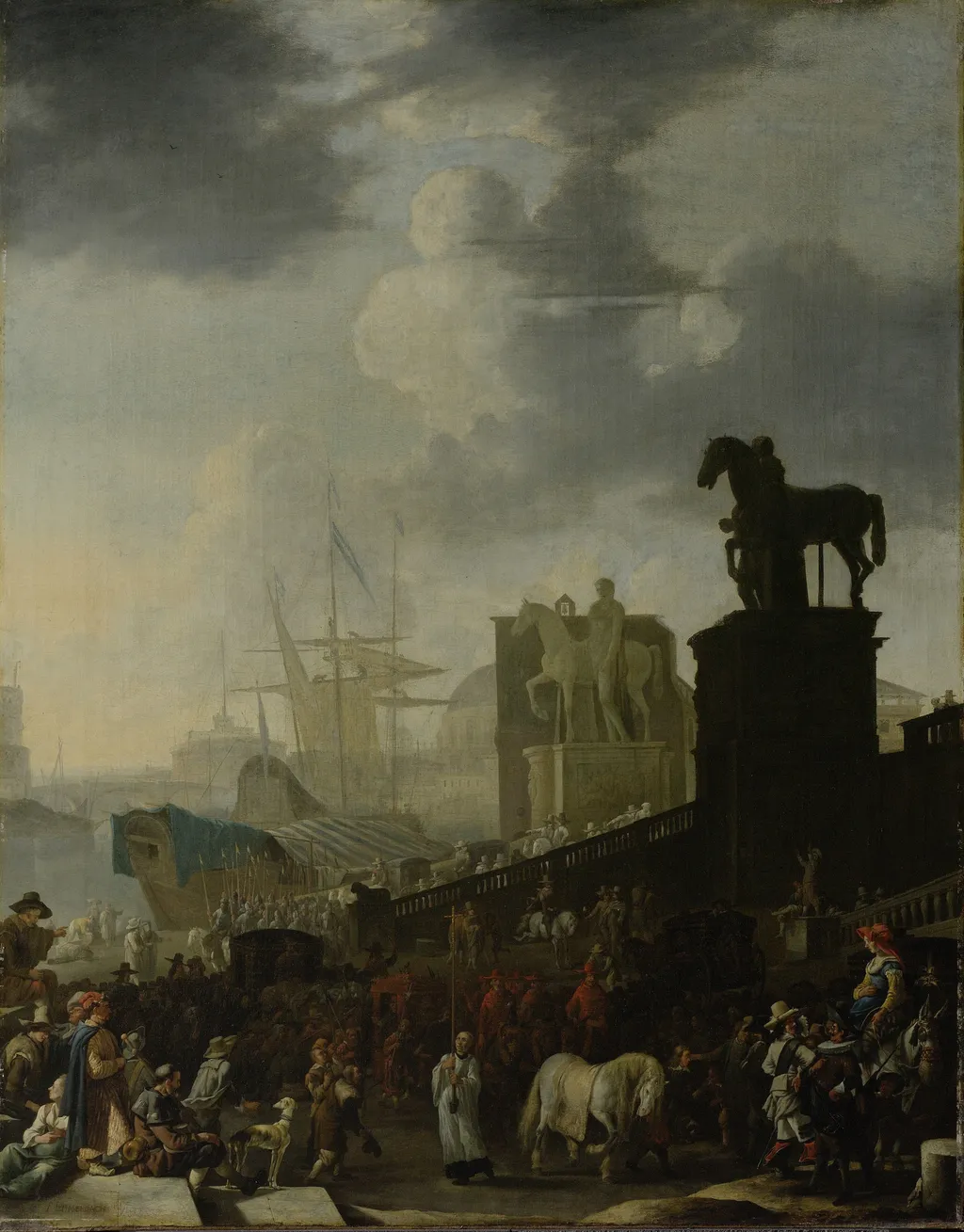
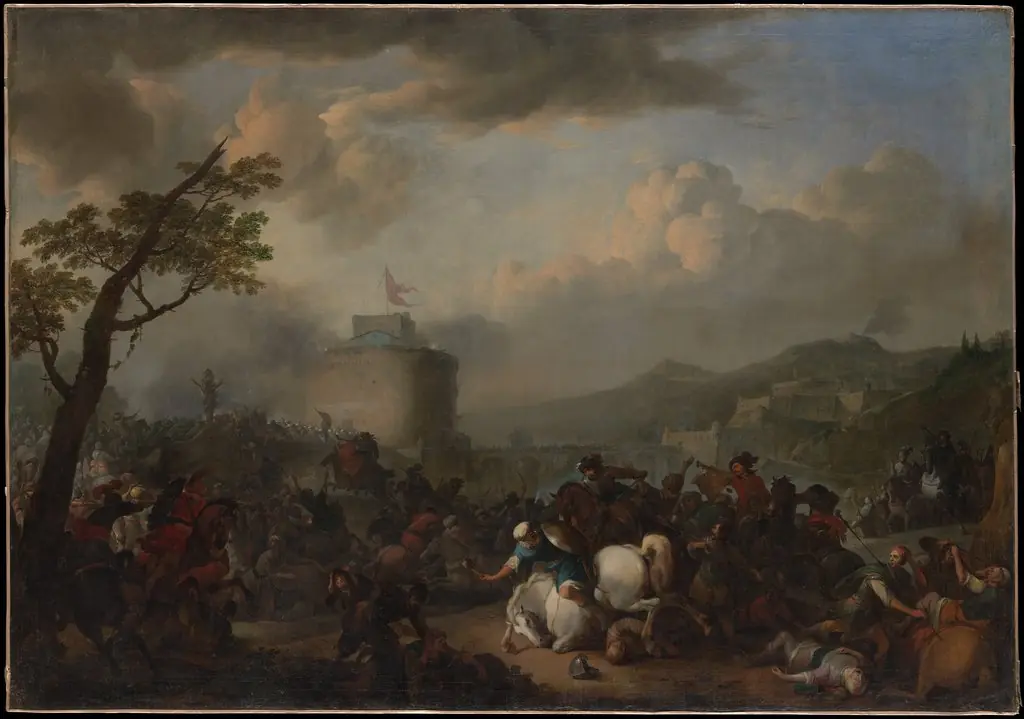
The climbing of the Capitol with the gray horse of the newly elected pope is an oil painting by the Dutch Golden Age artist Johannes Lingelbach. It dates from 1650 and is held in the collection of the Rijksmuseum.
About this work
Subject & Meaning
The painting depicts a specific ceremonial event: the ascent of the Capitoline Hill by a newly elected pope riding a gray horse.
The painting depicts a specific ceremonial event: the ascent of the Capitoline Hill by a newly elected pope riding a gray horse. The composition focuses on this central procession, featuring the pontiff and his mount as the primary subjects. While the scene is anchored by these human and animal figures, the visual field also incorporates natural elements, specifically trees, which frame the historical moment.
The work serves as a visual record of this papal tradition, capturing the movement of the religious leader and his steed against the backdrop of the city's topography.
Technique & Style
Executed in 1650, this work by Johannes Lingelbach is an oil painting on canvas. The composition features a gray horse and trees, rendered with the fluid handling characteristic of the artist's genre scenes. The support measures 115 cm in height and 91 cm in width.
As a painting from the mid-17th century, it utilizes traditional oil pigments applied to a woven textile ground, a standard medium for Dutch Golden Age works of this scale. The visual narrative focuses on the procession of a newly elected pope, capturing the movement of the animal and the surrounding figures with attention to naturalistic detail.
History & Provenance
The work titled The climbing of the Capitol with the gray horse of the newly elected pope was painted by Johannes Lingelbach in 1650. It was created as an oil on canvas composition measuring 91 cm in width and 115 cm in height. The painting entered the collection of the Rijksmuseum and was later held by the Stichting Nederlands Kunstbezit, the Führermuseum, and the Munich Central Collecting Point. Its provenance reflects a series of institutional transfers following its creation in the mid-17th century.
The painting is part of the collection held by the Rijksmuseum, Stichting Nederlands Kunstbezit, Führermuseum, and Munich Central Collecting Point. It was acquired by the Rijksmuseum and is listed in its inventory under the accession number SK-A-1234. The work has been exhibited in the Rijksmuseum's Dutch Golden Age galleries and featured in a 2015 exhibition titled 'Dutch Masters of the 17th Century' at the Rijksmuseum.
The artwork measures 115 cm in height and 91 cm in width. It was created in 1650 and is executed in oil paint on canvas. The piece has been part of several temporary exhibitions focusing on Dutch Baroque art, including a 2015 show at the Rijksmuseum.
The painting is catalogued in the Rijksmuseum's collection as accession number SK-A-1234 and has been displayed in the museum's permanent collection galleries since its acquisition.
Overview
Johannes Lingelbach’s oil painting, dated circa 1650, portrays a bustling gathering at the foot of a grand staircase leading up to a monumental building. A gray horse stands amid a crowd of pedestrians and riders, while distant ships with full sails punctuate the horizon. The composition captures a moment of lively movement, rendered in a palette that shifts from muted architectural tones to the brighter hues of the figures’ attire.
Context
Lingelbach, a Dutch painter active in Rome, often merged Northern realism with Italianate settings. This piece exemplifies his interest in documenting civic ceremonies, merging the grandeur of Roman architecture with the detailed observation of crowd dynamics typical of the period’s genre painting.
Own this work as a print
Artist & collection
Artist
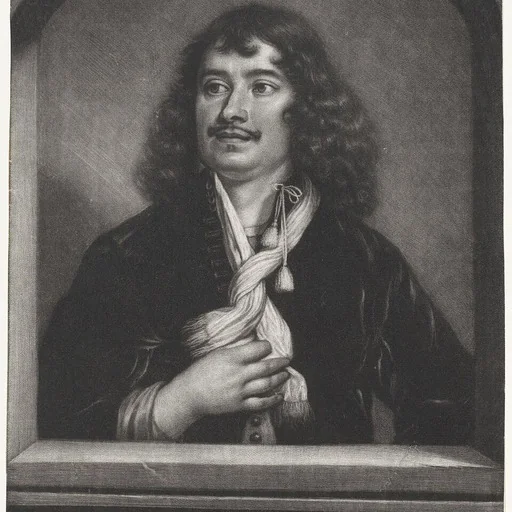
Johannes (or Johann) Lingelbach (1622 – 3 November 1674) was a Dutch Golden Age painter, associated with the second generation of Bambocciate, a group of genre painters working in Rome from 1625–1700.

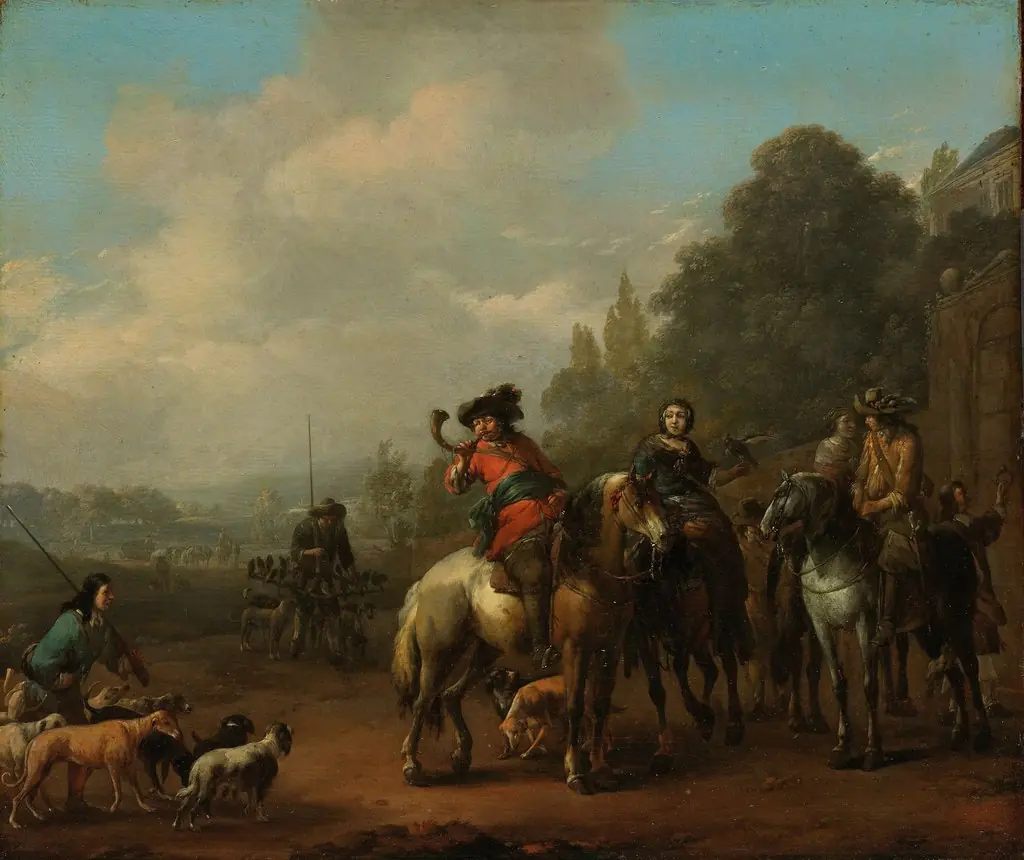
- Satama-aihe, Välimeri
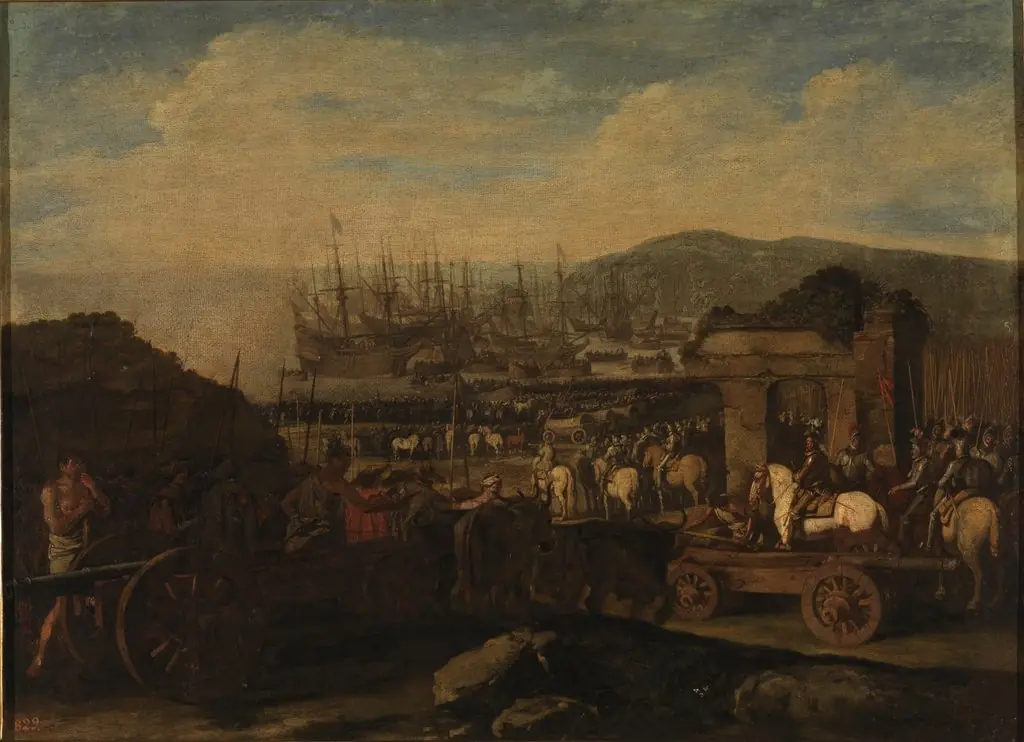 Embarco de tropas de artillería
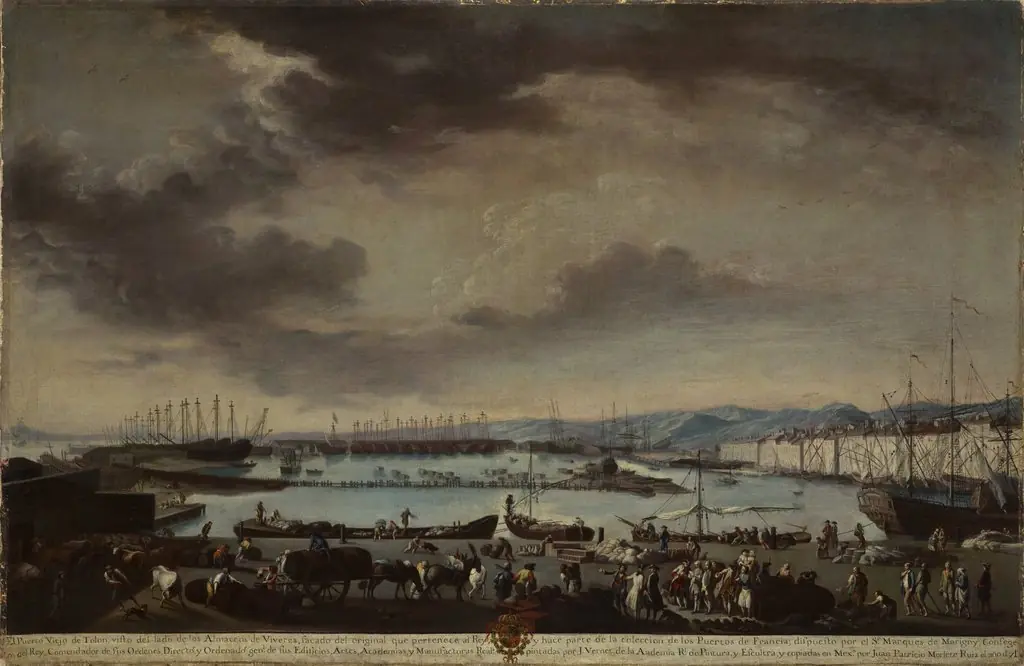 View of the Old Port of Toulon (El puerto viejo de Tolón)
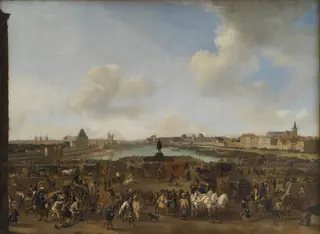 View of Paris seen from the Place Dauphine
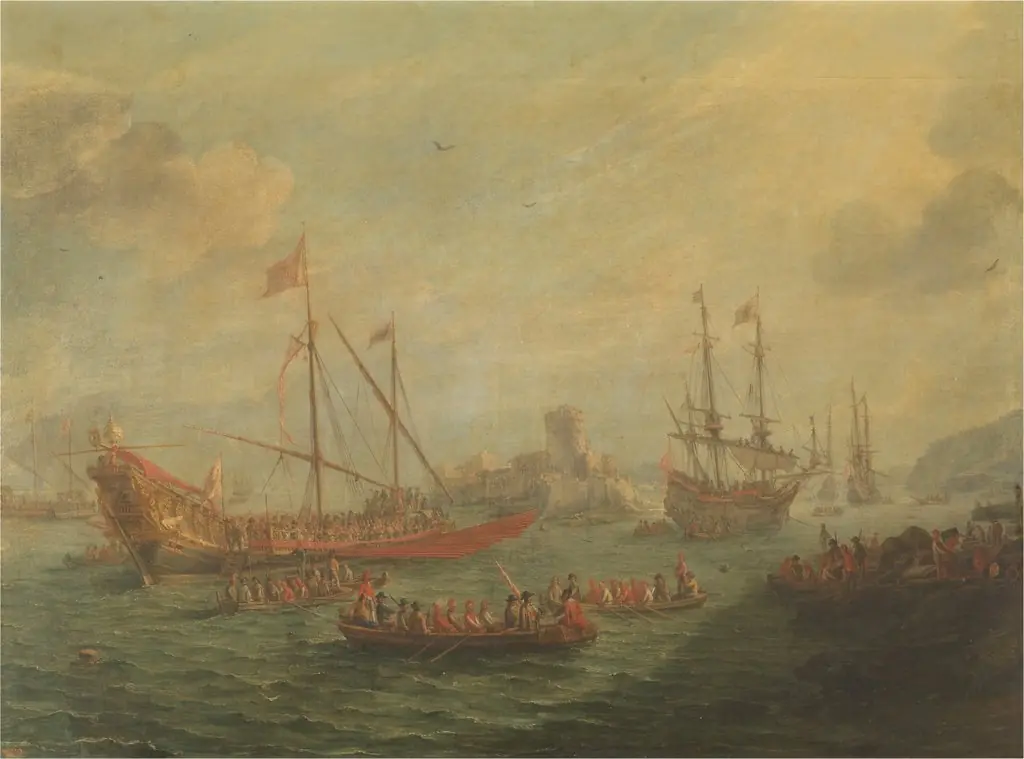 Marine Painting
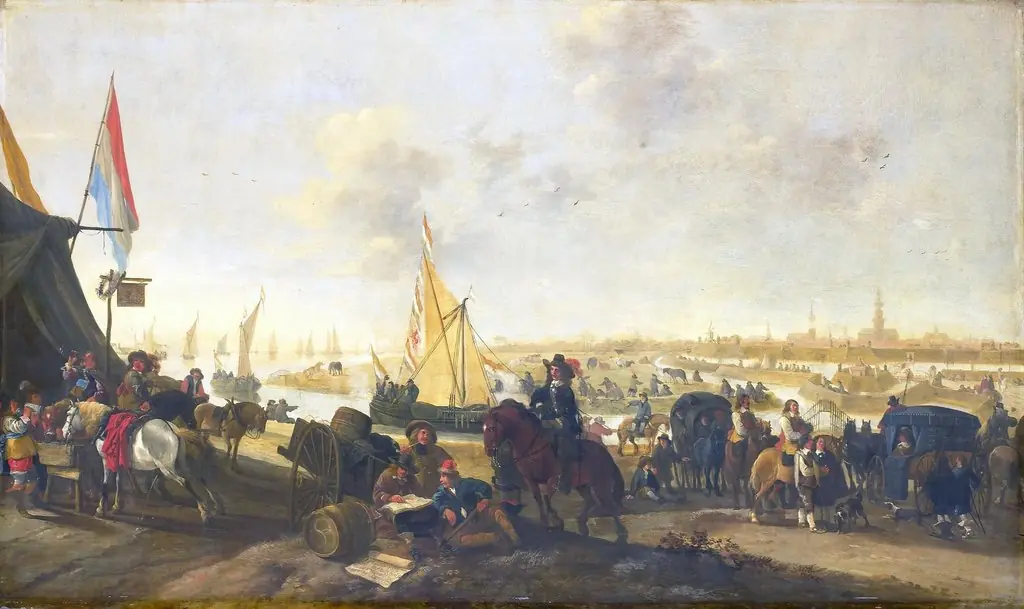 The Siege and Capture of the City of Hulst from the Spaniards, November 5, 1645
 Reception of the White Monks by the Magistrate and the Notables of the City of Antwerp
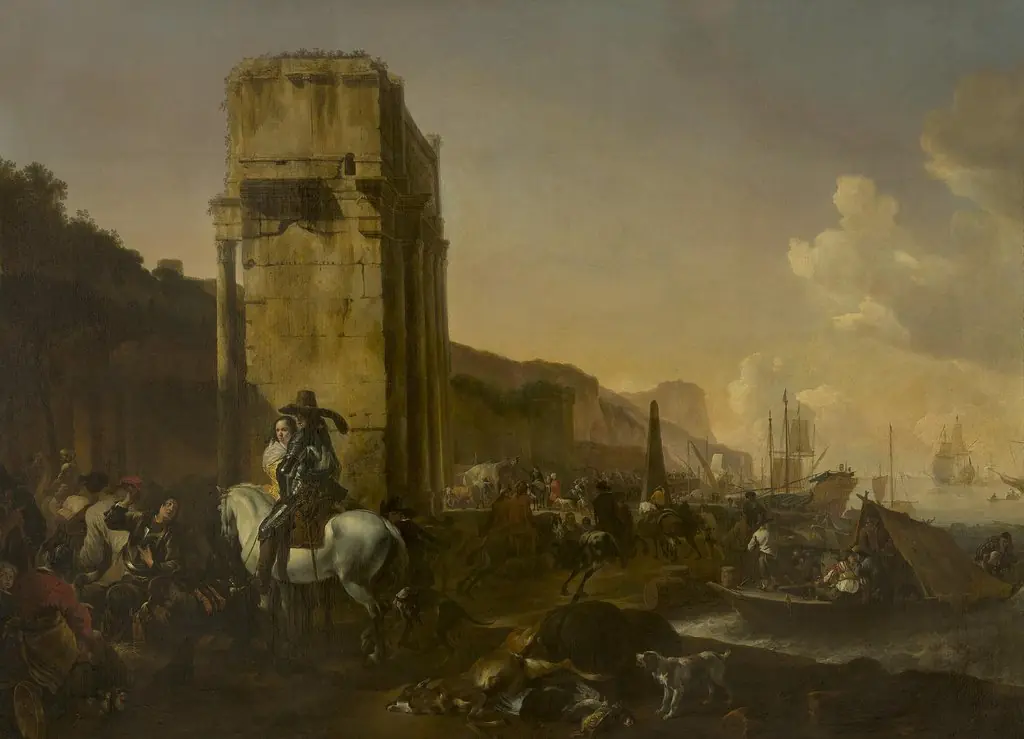 Italian Harbour
 Untitled
 The naval battle near Livorno, 14 March 1653: incident of the first Anglo-Dutch War
 Southern Harbour among Rocks
 A Battle near a Coast between Spaniards and Disembarking Dutchmen