Artwork
Imperial Framed Miniature of Tsar Nicholas II
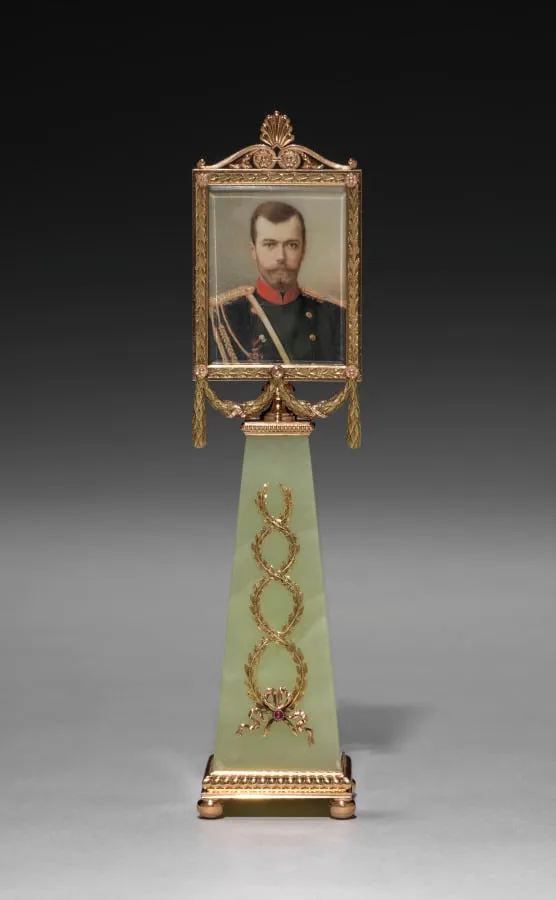
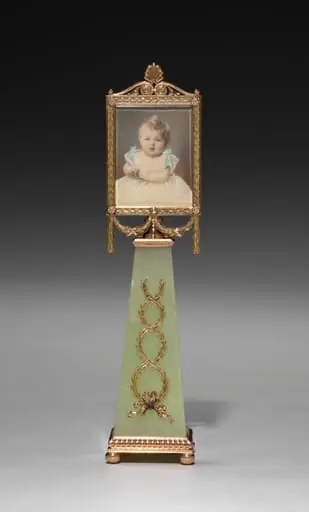
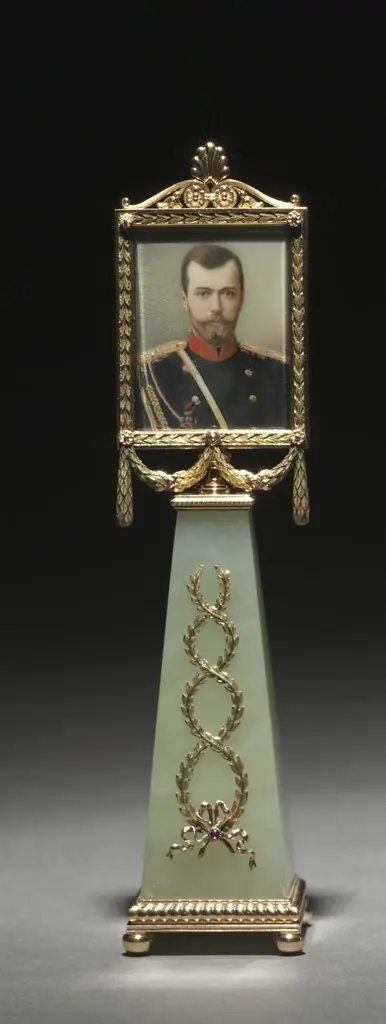
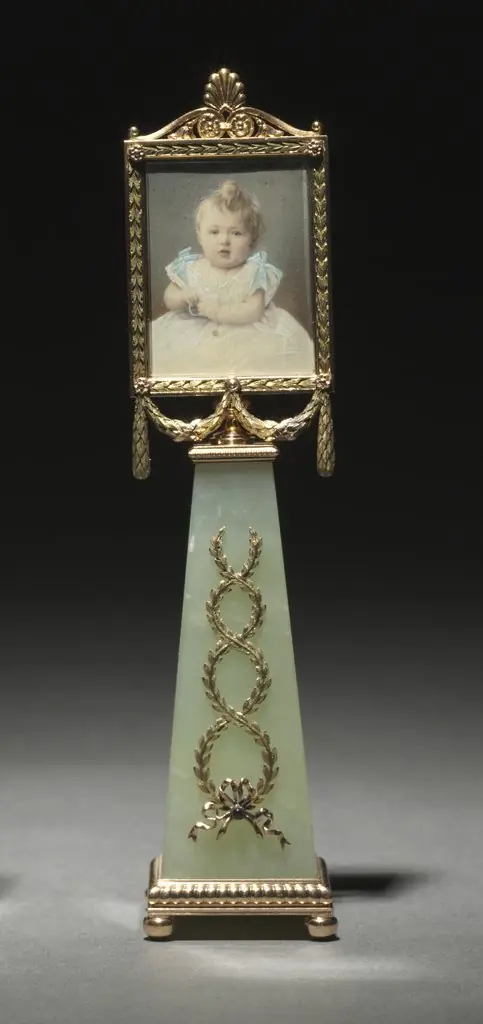
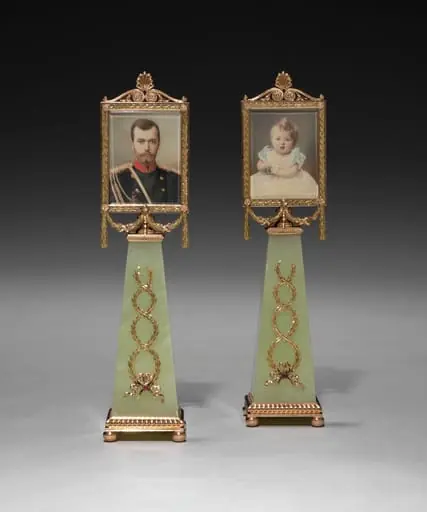
Imperial Framed Miniature of Tsar Nicholas II is an unspecified portrait miniature by the Impressionist artist Johannes Zehngraf. It dates from 1896 and is held in the collection of the Cleveland Museum of Art. This miniature portrait depicts Tsar Nicholas II within an ornate gold frame set with diamonds and rubies.
- Accession no.
- 1966.458.1
- Credit line
- The India Early Minshall Collection
About this work
Overview
Unlike public state imagery, such objects served as personal tokens, blending artistic craftsmanship with familial sentiment in the imperial household.
This miniature portrait depicts Tsar Nicholas II within an ornate gold frame set with diamonds and rubies. Created by the House of Fabergé, it reflects a tradition among European aristocracy of commissioning small, intimate portraits for private display. Unlike public state imagery, such objects served as personal tokens, blending artistic craftsmanship with familial sentiment in the imperial household.
Subject & Meaning
The portrait captures Nicholas II in a quiet, formal pose, intended for private contemplation rather than public veneration. Its placement within the imperial residences transformed the imperial quarters into spaces of personal connection, softening the rigidity of court life. These miniatures functioned as intimate reminders of family presence, reinforcing bonds among relatives in an environment otherwise governed by protocol.
Technique & Style
The miniature is painted on a small enamel or ivory panel with fine brushwork, typical of 19th-century Russian portrait miniatures. The frame, crafted in gold and set with precisely placed gemstones, exemplifies Fabergé’s signature attention to detail and luxury materials. The contrast between the delicate portrait and the lavish setting underscores the object’s dual role as both likeness and status symbol.
History & Provenance
Commissioned by the Romanov family, this piece was likely made between the 1890s and early 1910s, during a period when imperial patrons frequently ordered such items for private use. Its survival through the revolution is uncommon, as many imperial possessions were dispersed or destroyed. The miniature’s continued existence suggests it was removed from Russia before the fall of the monarchy.
Context
The Romanovs’ collection of miniature portraits aligned with broader European aristocratic customs, where small-scale likenesses were exchanged as tokens of affection. Fabergé’s involvement elevated these objects into luxury artifacts, merging portraiture with jewelry-making. Similar objects, including the famed Easter eggs, reveal a consistent aesthetic of opulence and personal symbolism within the imperial circle.
Legacy
This miniature remains a tangible link to the private world of the last Russian tsar, illustrating how royalty used art to construct emotional intimacy amid political isolation. Its craftsmanship continues to inform studies of imperial material culture, while its survival offers rare insight into the domestic rituals of a dynasty whose public image was carefully managed but whose private life remains elusive.
Artist & collection