Artwork
Portrait of Emperor Nicholas II
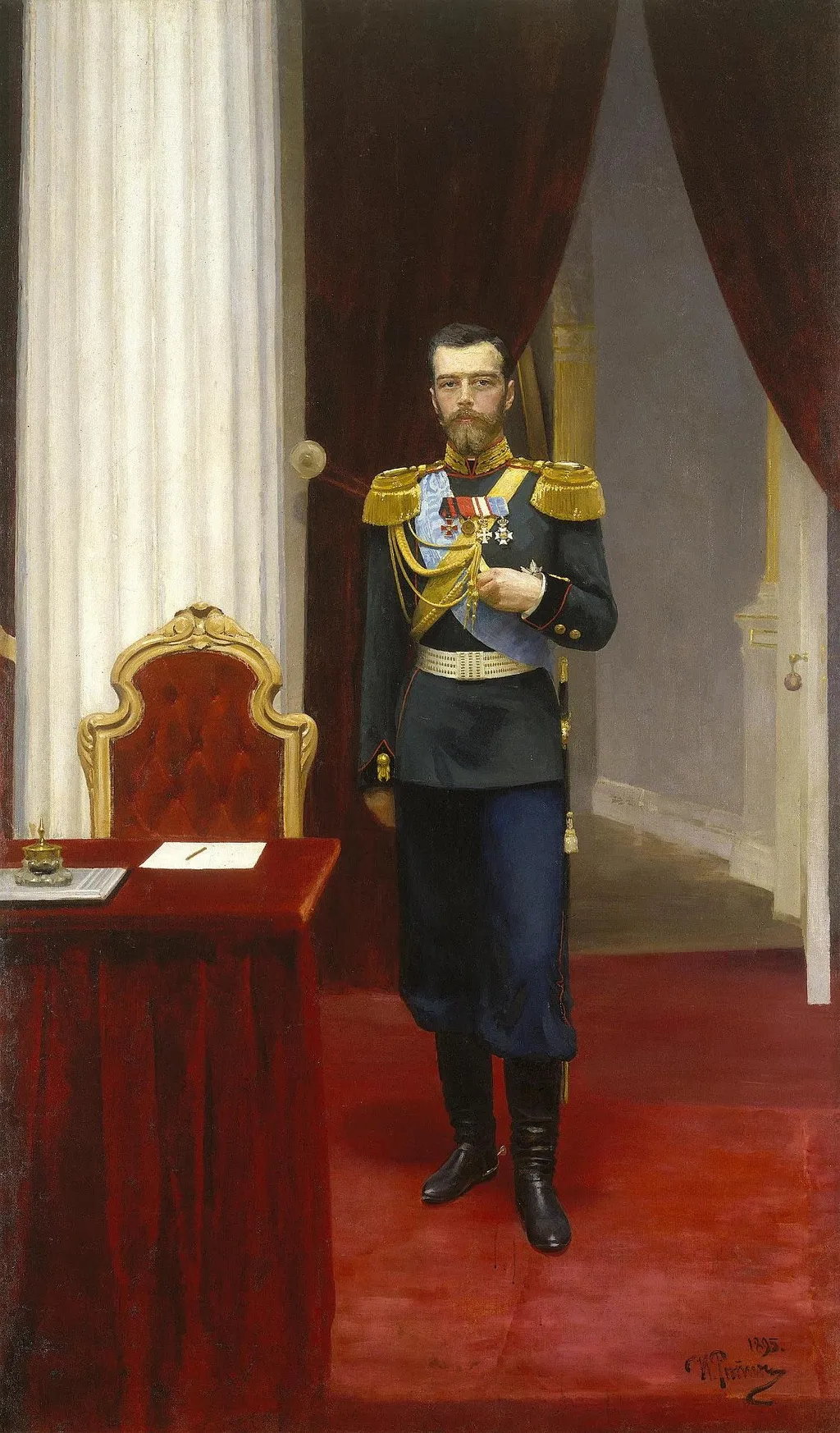
Portrait of Emperor Nicholas II is an oil painting by the Realist artist Ilya Repin. It dates from 1898 and is held in the collection of the Hermitage Museum.
About this work
Overview
Measuring 297 by 177 centimeters, this full-length portrait depicts the last Russian Emperor in formal military attire within an opulent interior setting.
The Portrait of Emperor Nicholas II is an oil-on-canvas painting by Ilya Yefimovich Repin, executed in 1895. Measuring 297 by 177 centimeters, this full-length portrait depicts the last Russian Emperor in formal military attire within an opulent interior setting. The work is held in the collection of the Hermitage Museum in St. Petersburg, where it remains an important example of late imperial Russian portraiture. Repin, already established as one of Russia's most celebrated realist painters, produced this ceremonial portrait early in Nicholas II's reign, following the Emperor's accession in October 1894. The painting exemplifies the intersection of artistic prestige and state patronage in the Russian Empire, while also serving as a document of the monarch's official image during a period of significant political tension.
Subject & Meaning
The portrait depicts Nicholas II, who ruled as the last Emperor of Russia from 1894 until his abdication in March 1917. In Repin's rendering, the Emperor stands in full-length military dress, positioned slightly right of center. He wears a dark green coat with gold epaulettes, a light blue sash, and multiple medals, signifying his rank as supreme commander. His right hand rests behind his back in a gesture of composed authority, while his left hand holds a small object near his chest. The figure's stance conveys both regal dignity and a degree of reserve. The surrounding iconography reinforces imperial status: to the left stands a red upholstered chair with gold carved wood framing, partially veiled by a long white curtain; before it sits a draped table bearing an open book, inkwell, and writing materials, suggesting the apparatus of governance. Behind the figure, dark red curtains part to reveal a pale wall and a columned space beyond, evoking the architecture of state power. The overall composition projects the splendor and formality expected of a reigning monarch's official image, while the even lighting and direct presentation emphasize the Emperor's presence as the focal point of imperial representation.
Technique & Style
Repin executed the portrait in oil on canvas, employing the smooth, highly finished technique characteristic of his ceremonial commissions. The brushwork is meticulous in the rendering of the face and uniform details, where gold accoutrements, buttons, and fabric textures are described with precision. By contrast, the background drapery and architectural elements are handled more loosely, creating a visual hierarchy that directs attention toward the figure. The palette is dominated by deep reds, golds, dark greens, and blues set against pale neutrals, producing a rich but controlled chromatic effect. Lighting falls evenly across the scene with soft shadows, avoiding dramatic contrast in favor of a clear, legible presentation suitable for official display. The composition follows conventions of European court portraiture while incorporating specifically Russian imperial symbols, such as the military orders and the distinctive sash. A signature and date appear in the lower right corner, marking the work's completion in 1895. The overall effect balances realism with idealization, capturing a recognizable likeness while elevating the subject through formal grandeur.
History & Provenance
The portrait was painted in 1895, the year following Nicholas II's accession, as part of a broader program of imperial commissions that Repin undertook for the new reign. The artist had already established a relationship with the Romanov court, having painted The Wedding of Nicholas II and Alexandra Feodorovna in 1894, now in the State Hermitage Museum. The work entered the collection of the Hermitage Museum, where it remains today. Its precise acquisition date and earlier provenance chain are not documented in the available sources. The painting has served as a significant reference point in the study of Repin's imperial portraiture and has been reproduced in scholarly contexts examining the visual culture of the late Russian Empire. In a notable later use, the portrait appeared as a ceremonial backdrop within Repin's much larger collective work, The Ceremonial Meeting of the State Council 7 May 1901, where it is shown hanging above the seated Emperor in the Round Hall of the Mariinsky Palace. This meta-representation underscores the portrait's function as an official image of state authority.
Context
Repin's portrait belongs to a period of intense productivity for the artist in imperial service. Following Nicholas II's accession in October 1894, Repin painted numerous ceremonial portraits of the new Emperor, despite his own anti-monarchist political sympathies. This apparent contradiction, noted by scholars, reflects the complex position of artists in late imperial Russia, where state patronage offered substantial financial rewards and professional prestige. The portrait participates in a tradition of official Romanov imagery that sought to project continuity and legitimacy during a period of mounting social and political pressure. Nicholas II's reign witnessed rapid industrialization, the Russo-Japanese War, the 1905 Revolution, and ultimately the collapse of the monarchy in 1917. The kind-hearted but indecisive character of the Emperor, as historical assessments have noted, proved ill-suited to the challenges of governing a modernizing empire in crisis. Repin's portrait, created before these traumas fully unfolded, captures the monarch at a moment of apparent stability, embodying the formal expectations of imperial representation. The work has been discussed in scholarship on Russian realist painting and the visual construction of monarchical authority in the late nineteenth century.
Legacy
The Portrait of Emperor Nicholas II has endured as one of the most recognizable visual representations of the last Russian Tsar, circulating widely in reproductions and scholarly literature. Its influence extends beyond the realm of fine art into the broader cultural memory of the Russian monarchy. The portrait's afterlife was notably amplified by its incorporation into Repin's monumental The Ceremonial Meeting of the State Council 7 May 1901, where it appears as a painted-within-a-painting, reinforcing its status as the definitive official image of Nicholas II. The original of this larger work, measuring 4 by 8 meters, has been in the State Russian Museum since 1938 and occupies an entire wall in a dedicated hall; a copy was installed in the Mariinsky Palace in December 2024, testament to the continuing resonance of Repin's imperial imagery. The loss of another ceremonial portrait commissioned for the State Duma in 1905, destroyed in the upheavals of 1917, has further elevated the significance of the surviving 1895 canvas. Repin himself welcomed the February 1917 Revolution that overthrew the autocracy he had so profitably depicted, adding a layer of historical irony to the legacy of his imperial commissions. Today, the portrait stands as a primary document of Romanov visual culture and a case study in the complex negotiations between artistic integrity, political patronage, and historical circumstance.
Artist & collection
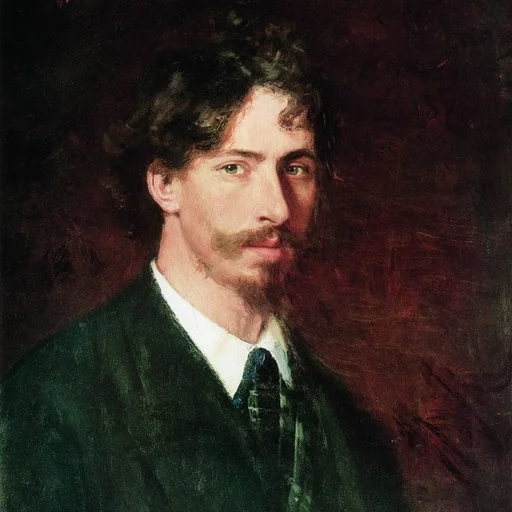
Artist
Ilya Yefimovich Repin (5 August 1844 – 29 September 1930) was a Ukrainian-born Russian painter.

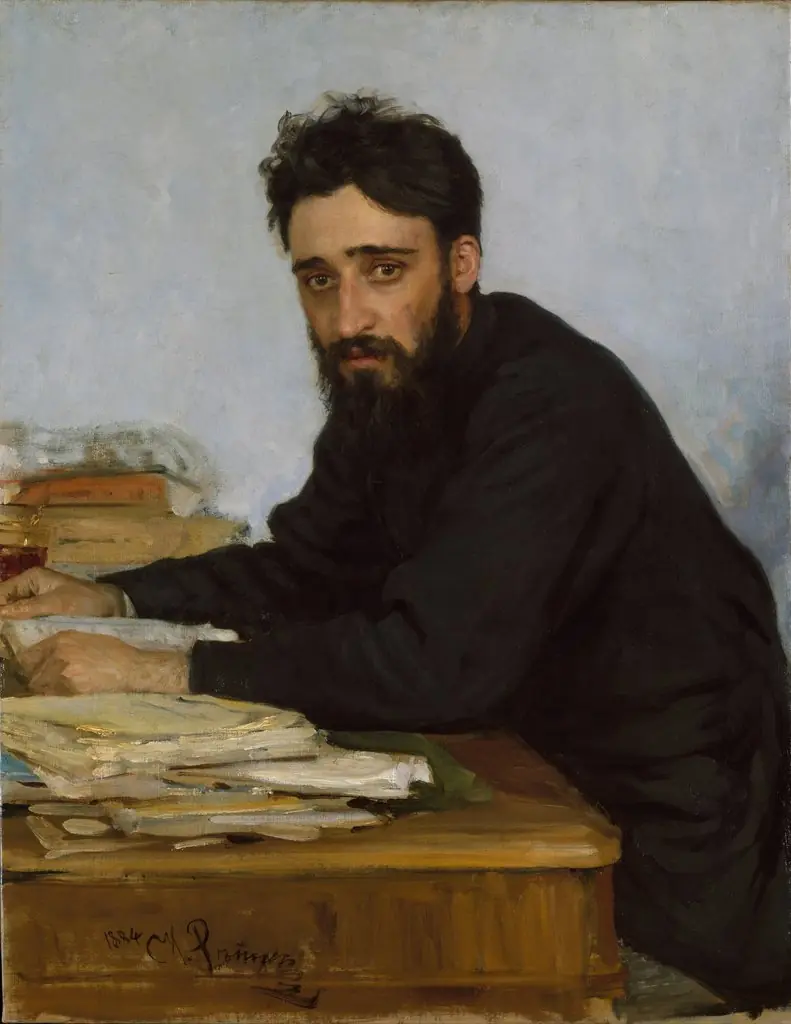 Vsevolod Mikhailovich Garshin (1855–1888)
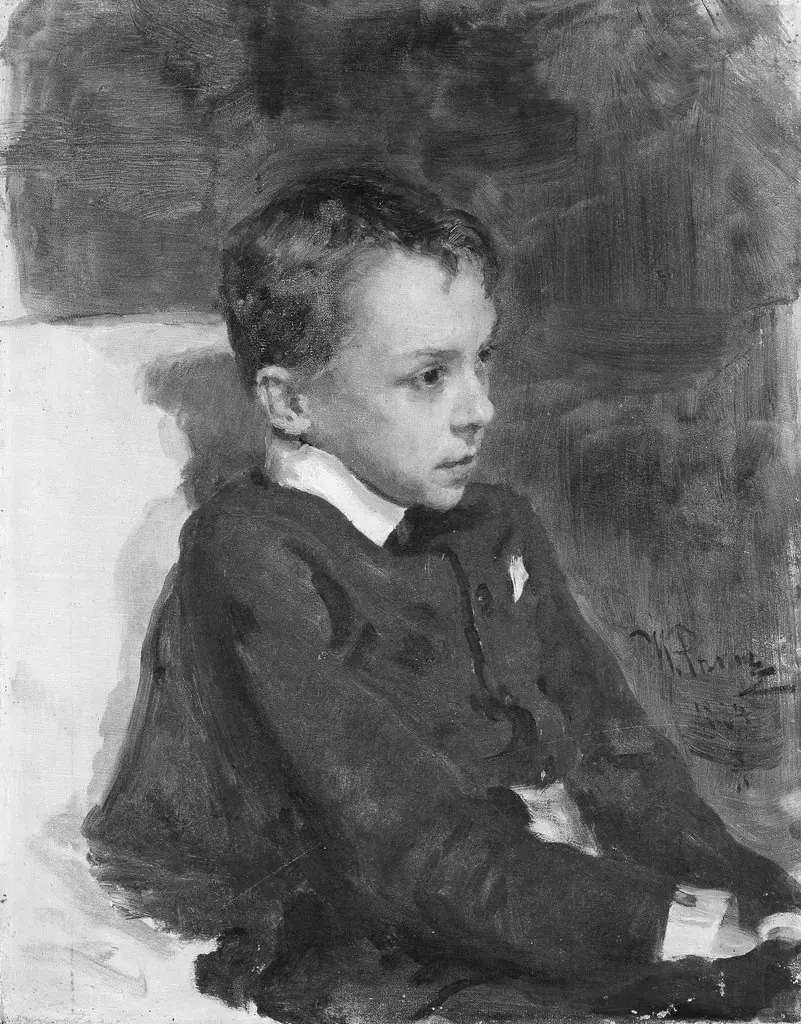 Portrait of a Boy
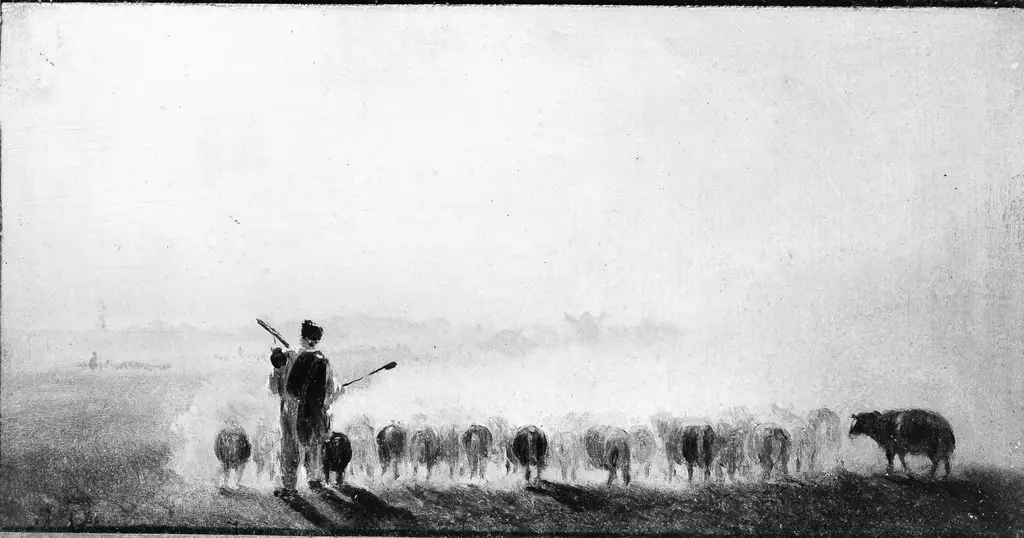 Shepherd with a Flock of Sheep
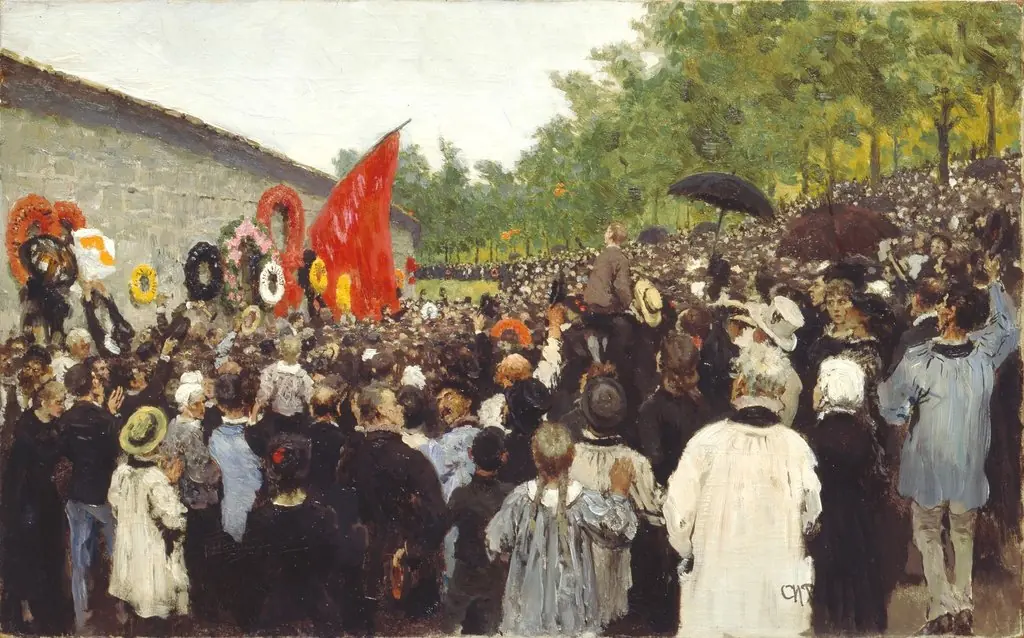 The Annual Memorial Meeting Near the Wall of the Communards in the Cemetery of Père-Lachaise in Paris
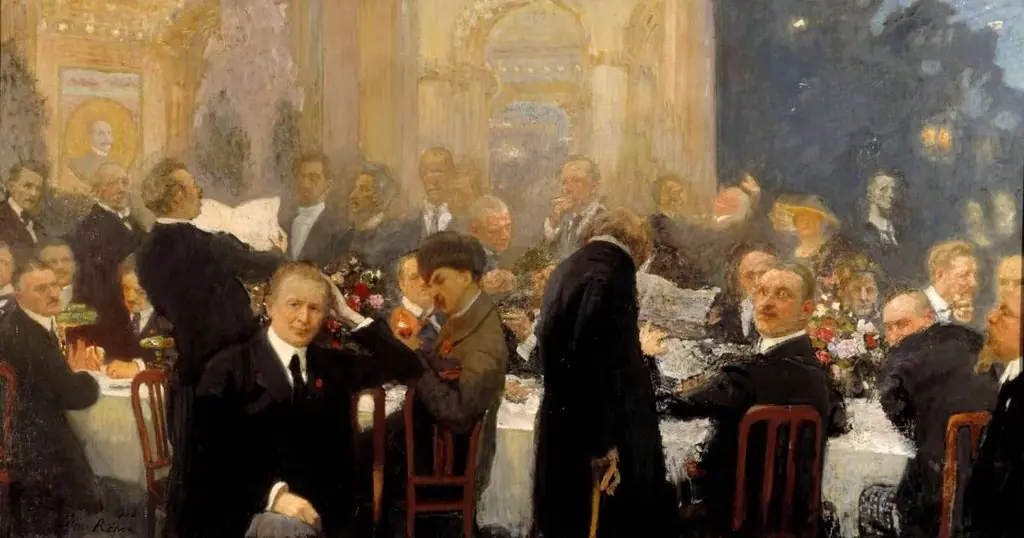 The Great Men of Finland
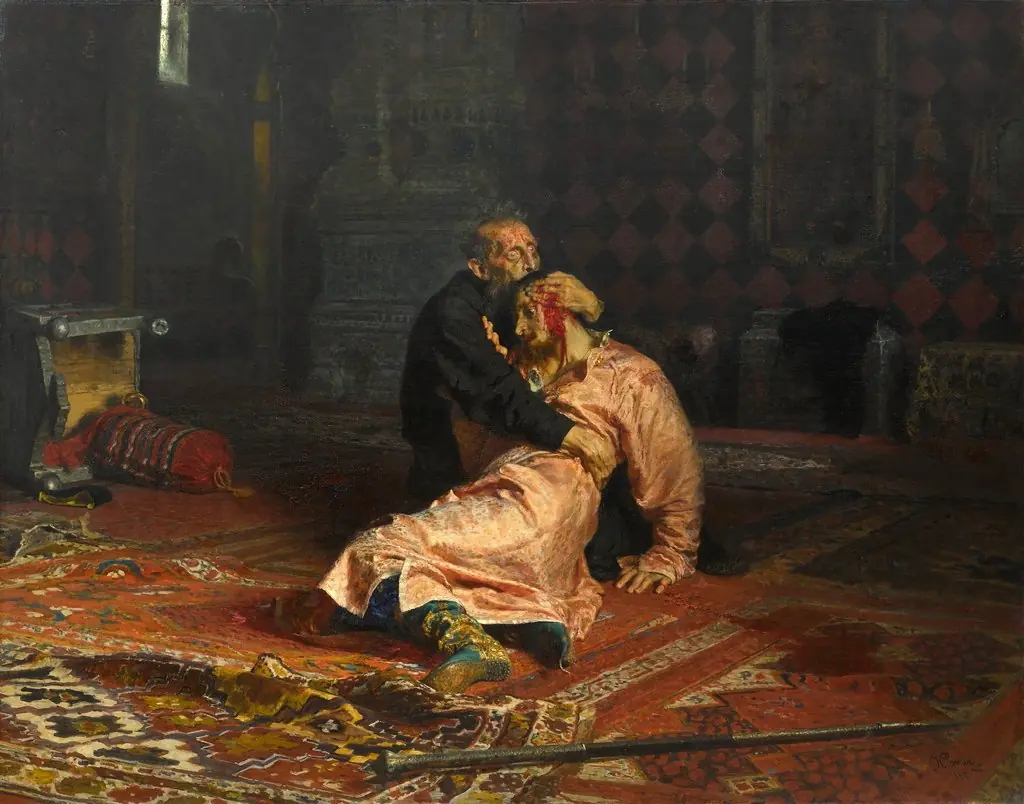 Ivan the Terrible and his son Ivan on November 16, 1581
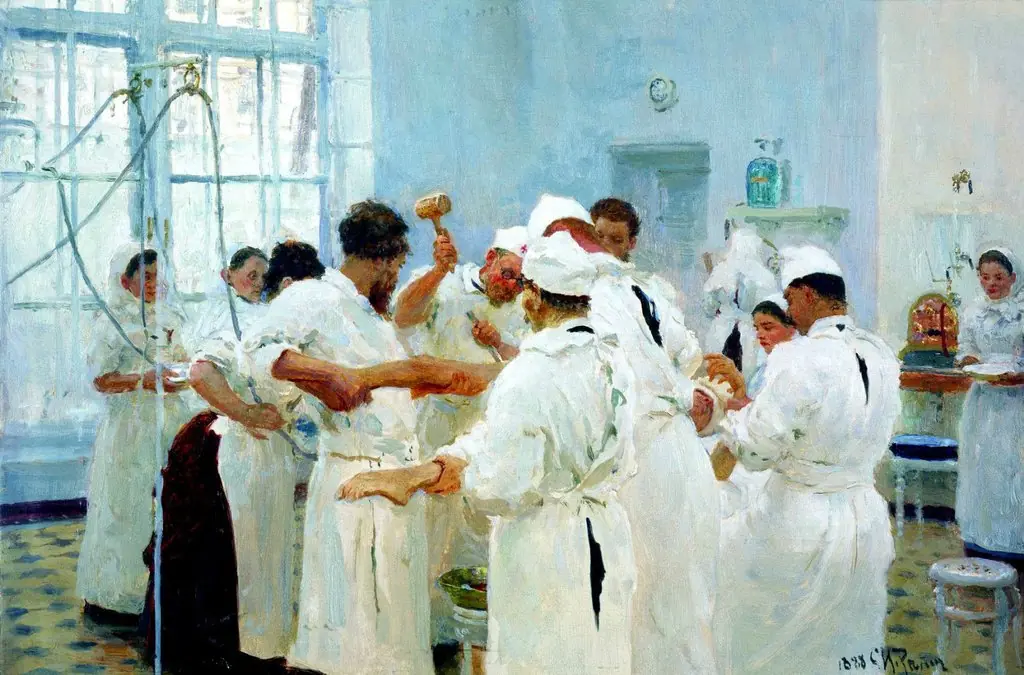 Surgeon E. V. Pavlov in the operating room
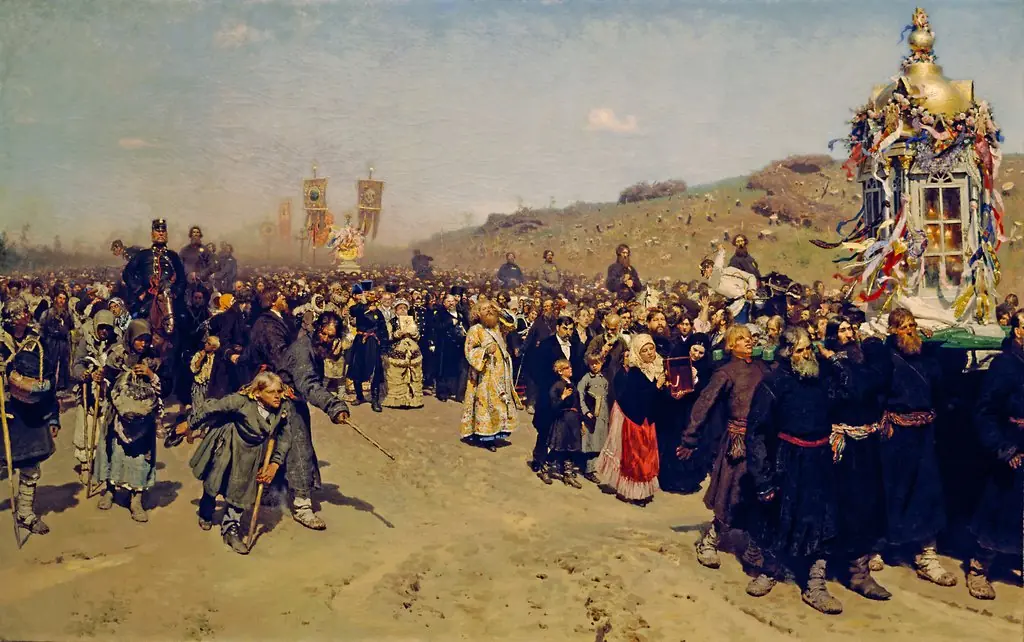 Religious Procession in Kursk Province