Artwork
Dedham Lock and Mill
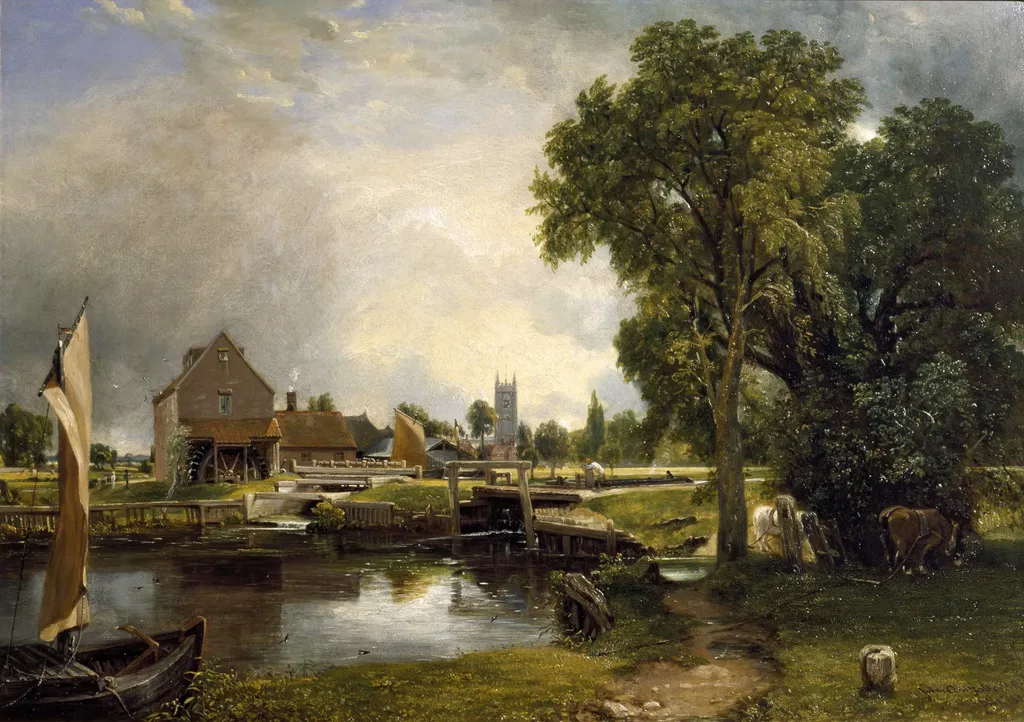
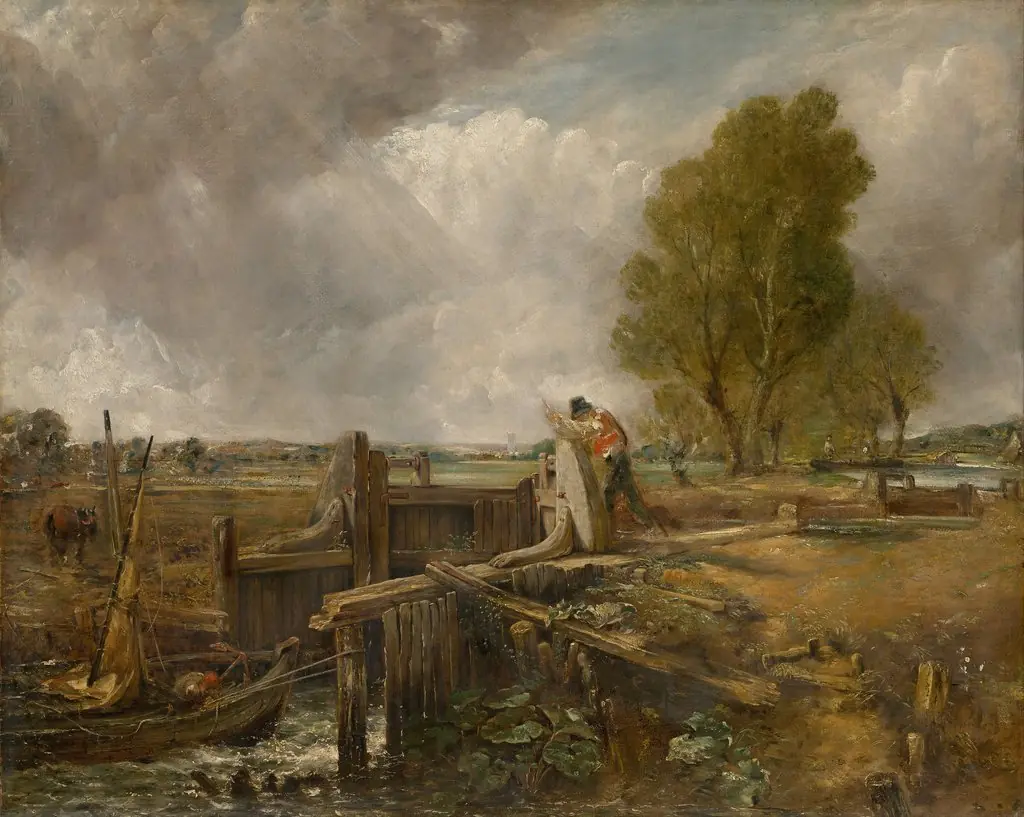
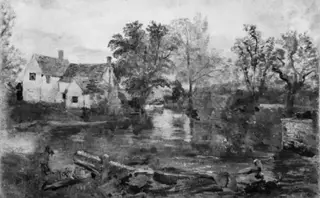
Dedham Lock and Mill is an oil painting by the Romanticist artist John Constable. It dates from 1820 and is held in the collection of the Victoria and Albert Museum.
About this work
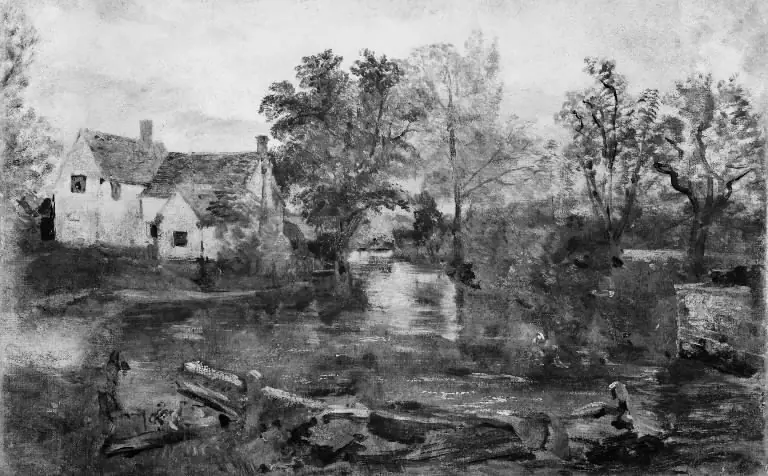
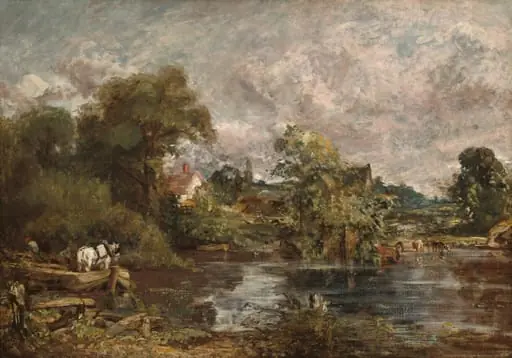
The work looks over the River Stour at Dedham in Essex, near the border of Constable’s native Suffolk.
Dedham Lock and Mill is a landscape painted in oil by the English artist John Constanbe around 1820. The work looks over the River Stour at Dedham in Essex, near the border of Constable’s native Suffolk. It includes the mill his father owned, and St Mary’s Church appears in the distance.
The painting is part of the collection at the Victoria and Albert Museum. If you’re curious about more of Constable’s river scenes, check out the subject River Stour.
Subject & Meaning
Dedham Lock and Mill depicts a rural scene on the River Stour near Dedham, featuring a mill, lock, canal, boat and surrounding landscape. The work symbolizes the agricultural and watermill heritage of the area that Constable knew from childhood, reflecting his attachment to the countryside and the changing relationship between industry and nature in early 19th‑century England. The composition emphasizes the mill as a central element, with St Mary's Church visible in the distance, underscoring the spiritual and communal aspects of the locale.
This painting is part of Constable's broader series of views of Flatford and Dedham, where he repeatedly explored the mill owned by his father, using the subject to convey nostalgia for a vanishing pastoral way of life.
The depiction draws on Romantic ideals that valorize nature and rural simplicity, positioning the mill not merely as a functional building but as a cultural emblem of domestic industry and familial legacy.
Technique & Style
The painting was executed in oil on canvas, a medium typical of Romantic landscape practice in early 19th-century Britain. Constable applied the paint with a brush to a stretched canvas support, building up layers to suggest atmospheric depth and the reflective surface of water. The handling reveals his characteristic broken brushwork, especially in the depiction of the mill and surrounding foliage, where short, varied strokes create texture and movement.
Stylistically, the work aligns with the Romantic emphasis on naturalistic observation, featuring detailed topographical elements such as the mill, lock, and River Stour, balanced by a luminous tonal harmony. These formal qualities underscore the painting’s status as both a documentary view and an expressive landscape.
History & Provenance
Dedham Lock and Mill is an oil on canvas painted by John Constable, dated 1820. According to one account, the work may have been begun in 1817 and exhibited at the Royal Academy's Summer Exhibition in 1818, but the 1820 date is considered more likely, as it is the date Constable himself assigned and the one given by his friend and biographer Charles Robert Leslie. Constable painted the mill, which had belonged to his father, on three occasions between 1818 and 1820.
The painting entered the collection of the Victoria and Albert Museum in London as part of the Sheepshanks Gift, donated by the art collector John Sheepshanks in 1857. Its accession number is FA.34.
The oil sketch of Dedham Lock and Mill is held by the Victoria and Albert Museum in London, where it is displayed in Room 87. It entered the collection as part of the Sheepshanks Gift from the art collector John Sheepshanks in 1857, and its accession number is FA.34.
The work's exhibition history includes a possible showing at the Royal Academy's Summer Exhibition in 1818, though this is uncertain and the 1820 date Constable assigned to it is generally accepted. The painting has also been associated with the Tate in its exhibition record.
Context
Dedham Lock and Mill belongs to the Romantic movement and is part of John Constable's sustained engagement with the landscape of the River Stour near his native Suffolk, an area now popularly known as "Constable Country." The mill depicted was owned by his father, the miller Golden Constable, and the artist painted it on three occasions between 1818 and 1820, having worked there during his childhood. The painting is closely linked to Constable's more famous depictions of the neighbouring Flatford Mill, also a family property.
The work's accepted 1820 date derives from Constable himself and was corroborated by his friend and biographer Charles Robert Leslie, though some scholars have suggested an earlier start around 1817 and a possible showing at the Royal Academy's 1818 Summer Exhibition. The oil sketch entered the Victoria and Albert Museum in 1857 as part of the Sheepshanks Gift, and the work has been discussed in standard surveys of British art such as Reynolds's Constable's England and Hamilton's Constable: A Portrait.
Legacy
Dedham Lock and Mill has been cited as a key example of Constable’s mature landscape vision, shaping later Romantic depictions of rural England. Its detailed rendering of water and mill machinery informed subsequent artists’ treatment of industrial scenes, while its inclusion in major exhibitions helped cement the view of the River Stour as emblematic of the English countryside. The work’s provenance, particularly its acquisition by the Victoria and Albert Museum through the Sheepshanks Gift, has contributed to ongoing scholarly interest in Constable’s influence on 19th‑century British art.
Overview
Created around 1820, this oil landscape by John Constable depicts the River Stour at Dedham, a village in Essex close to the Suffolk border. The composition centers on the waterway and the mill owned by Constable’s father, with the spire of St Mary’s Church rising in the background. The work belongs to the Victoria and Albert Museum’s collection.
Own this work as a print
Artist & collection
Artist
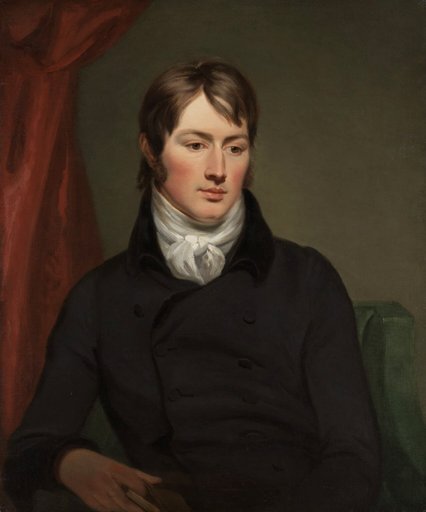
John Constable was an English landscape painter in the Romantic tradition. Born in Suffolk, he is known principally for revolutionising the genre of landscape painting with his pictures of Dedham Vale, the area on the…