Artwork
The Mill Stream
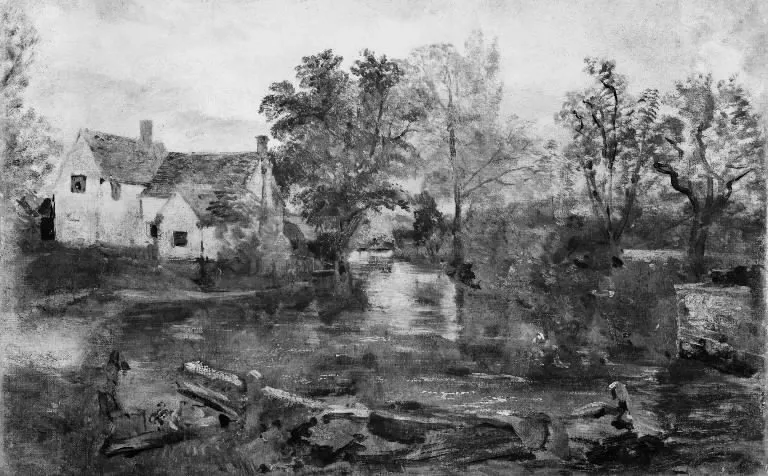
The Mill Stream is an unspecified painting by John Constable. It dates from 1814 and is held in the collection of the Statens Museum for Kunst.
About this work
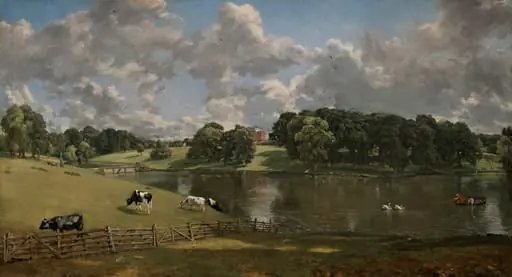
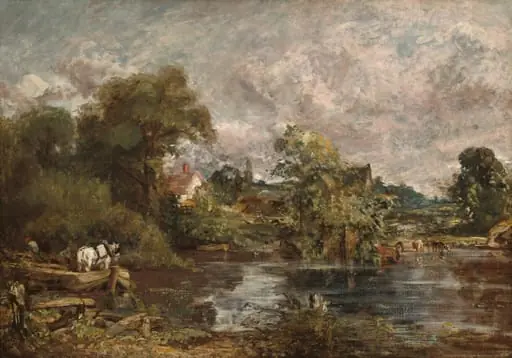
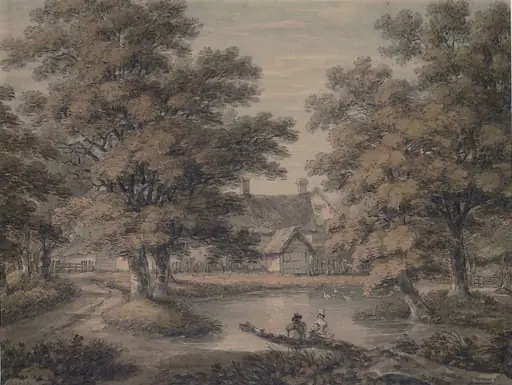
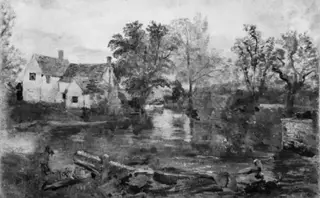
John Constable painted a quiet country scene called The Mill Stream in 1814. It shows a small river near a mill, with trees and a house in the background. The ferry carries people across the water.
This spot near Willy Lott’s Cottage in Suffolk became famous. Years later, Constable reused the view for The Hay Wain.
Look up the house itself next: Willy Lott's Cottage.
Subject & Meaning
The composition also includes the small ferry that crossed the stream, anchoring the scene in everyday rural life.
The Mill Stream depicts a quiet rural scene centered on the mill stream that flows past Willy Lott's Cottage in Flatford, Suffolk, accompanied by a cluster of trees, a house with a prominent chimney, and a low sky overhead. The composition also includes the small ferry that crossed the stream, anchoring the scene in everyday rural life.
Constable's rendering emphasizes the harmony between the cottage, the water, and the surrounding landscape, evoking the continuity of labor and habitation in the countryside. The work is closely linked to his later painting The Hay Wain (1821), which shares a similar view of the same location, reinforcing its role as a study of place and memory.
History & Provenance
John Constable created The Mill Stream in 1814, depicting the mill stream adjacent to Willy Lott's Cottage in Flatford, Suffolk. This landscape served as a precursor to his later famous work, The Hay Wain (1821), which used a similar viewpoint. The painting was exhibited at the Royal Academy Exhibition of 1814, held at Somerset House in London.
It is currently held in the collection of Christchurch Mansion, managed by the Colchester and Ipswich Museums Service. A preparatory oil sketch for the composition is held by Tate Britain in London.
Context
The Mill Stream (1814) premiered at the Royal Academy Exhibition in London that year, situating it within the early phase of John Constable's sustained engagement with the Suffolk landscape and its rural motifs. Scholars note the painting's preparatory oil sketch in Tate Britain, which evidences Constable's method of distilling compositional clarity from plein-air observation. The composition's later echo in The Hay Wain (1821) underscores its role as a transitional study within Constable's evolving treatment of mill-stream settings, linking intimate local topography to broader Romantic landscape ambitions in British art.
Its reception reflects Constable's growing stature in the 1810s, when his topographical fidelity began to be recognized alongside the Picturesque tradition. The work's inclusion in the 1814 Academy exhibition aligns it with contemporary trends that valorized vernacular English scenery, even as Constable's atmospheric effects and textural handling signaled a departure from conventional landscape formulas.
Legacy
The Mill Stream holds significance as a direct precursor to John Constable's most celebrated masterpiece, The Hay Wain. Created seven years earlier in 1814, the work features a similar view of the mill stream and Willy Lott's Cottage in Flatford, which Constable later adapted for the 1821 painting. This evolution demonstrates how the earlier composition served as a foundational study for his later, more famous depiction of the Suffolk landscape.
The work's historical value is further anchored by its initial display at the Royal Academy Exhibition of 1814, marking its early entry into the public consciousness of the British art world.
Overview
John Constable’s 1814 oil painting The Mill Stream depicts a tranquil stretch of water beside a mill, framed by trees and a modest cottage. A small ferry traverses the stream, adding a hint of everyday activity to the otherwise peaceful rural scene.
Technique & Style
Executed in oil on canvas, the painting showcases Constable’s early mastery of atmospheric effects, using delicate brushwork to render water reflections and foliage. The composition balances a low horizon with a clear sky, a device that would become characteristic of his later landscapes.
Artist & collection
Artist
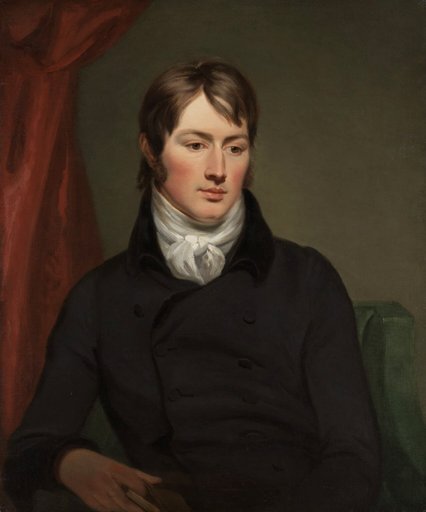
John Constable was an English landscape painter in the Romantic tradition. Born in Suffolk, he is known principally for revolutionising the genre of landscape painting with his pictures of Dedham Vale, the area on the…