Artwork
Salisbury Cathedral from Lower Marsh Close
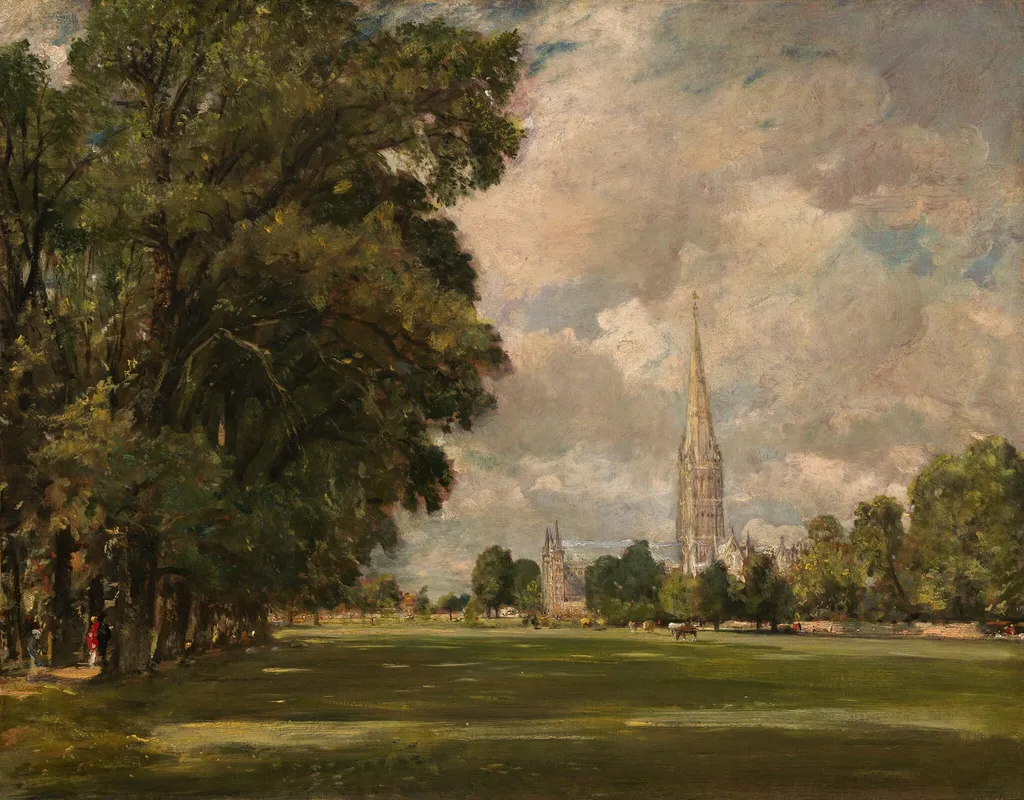
Salisbury Cathedral from Lower Marsh Close is an oil painting by the Romanticist artist John Constable. It dates from 1820 and is held in the collection of the National Gallery of Art.
About this work
Subject & Meaning
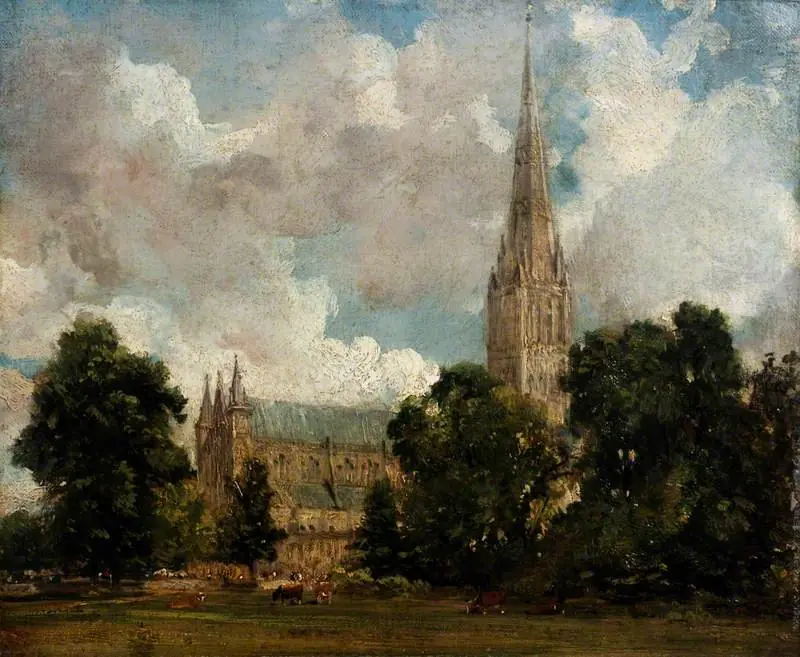
The composition specifically captures the architectural landmark as seen from Lower Marsh Close, with trees featured prominently in the foreground.
Painted in 1820, this work presents a landscape view of Salisbury Cathedral located in Wiltshire, England. The composition specifically captures the architectural landmark as seen from Lower Marsh Close, with trees featured prominently in the foreground. The cathedral was a recurring subject in John Constable's oeuvre, reflecting his deep personal and professional ties to the city through his friendships with the Bishop of Salisbury and the Bishop's nephew, John Fisher.
As a landscape painting, the piece represents a specific geographic reality rather than an allegorical or symbolic construction, documenting the relationship between the natural environment and the religious structure within the English countryside.
Technique & Style
Salisbury Cathedral from Lower Marsh Close is an oil painting executed on a canvas support. The work measures 73 cm in height and 91 cm in width. Created in 1820, the piece depicts the cathedral and surrounding trees using oil paint, consistent with John Constable's standard practice for his major landscape compositions.
The painting remains in the collection of the National Gallery of Art in Washington, D.C., having been acquired in 1937.
History & Provenance
John Constable completed this oil painting in 1820. The artist retained the work until his posthumous sale at Messrs. Foster in London during May 1838, where it was purchased by William Hooker Carpenter.
Following Carpenter's death, the picture appeared at Christie's in February 1867, bought by a collector named Halsted before entering the collection of Sir John Kelk at Tedworth, Wiltshire.
After Kelk's estate was auctioned in March 1899, the canvas passed through several London dealers, including Thomas Agnew & Sons and Lawrie & Co., before reaching New York via M. Knoedler & Co. in 1901. American collector William K. Bixby acquired the work for his St. Louis home, lending it to a local exhibition in 1911. Bixby sold the painting back to Knoedler's in May 1918; Andrew W. Mellon purchased it that same spring.
Mellon later deeded the artwork to his charitable trust, which gifted it to the National Gallery of Art in Washington, D.C., in 1937.
Salisbury Cathedral from Lower Marsh Close is held by the National Gallery of Art in Washington, D.C., as part of the Andrew W. Mellon Collection. It entered the institution in 1937 as a gift from The A.W. Mellon Educational and Charitable Trust of Pittsburgh.
Prior to that, Andrew W. Mellon acquired the painting in April 1918 through M. Knoedler & Co. of New York. The documented provenance traces back through a series of nineteenth-century owners, including William K. Bixby of St. Louis, Sir John Kelk of Tedworth, and earlier figures such as William Hooker Carpenter and a buyer named Halsted, with intervening sales in London and New York.
A documented exhibition appearance occurred in 1911, when Bixby lent the painting to an exhibition at the City Art Museum in St. Louis. No other exhibition history is recorded in the available sources.
Context
The painting was first exhibited in 1911 at the City Art Museum in St. Louis, lent by William K. Bixby, who owned it at the time.
It entered the National Gallery of Art collection in Washington, D.C., through a series of transactions involving M. Knoedler & Co., Andrew W. Mellon, and the A.W. Mellon Educational and Charitable Trust, culminating in its gift in 1937.
The work is part of John Constable's mature landscape output, reflecting his ongoing exploration of atmospheric effects and topographical accuracy, themes central to his broader artistic practice and the development of English landscape painting in the early 19th century.
Legacy
Salisbury Cathedral from Lower Marsh Close has maintained a significant presence in major public collections, securing its place in art history. After passing through the hands of prominent collectors such as William K. Bixby and Andrew W. Mellon, the work entered the National Gallery of Art in Washington, D.C., in 1937 as part of the Andrew W. Mellon collection. Its institutional history includes a notable public exhibition in 1911 at the City Art Museum in St. Louis, lent by Bixby.
The painting remains a key example of John Constable's engagement with Salisbury, a subject he revisited frequently due to his personal connections with the Bishop of Salisbury and his nephew, John Fisher.
Overview
John Constable’s 1820 oil on canvas presents a panoramic view of Salisbury Cathedral as seen from Lower Marsh Close in Wiltshire. The composition captures the cathedral’s spire rising above a landscape populated with trees, rendered with a sense of atmospheric movement. The work exemplifies Constable’s early‑career focus on English scenery and stands as a notable example of his landscape practice.
Own this work as a print
Artist & collection

Artist
John Constable was an English landscape painter in the Romantic tradition. Born in Suffolk, he is known principally for revolutionising the genre of landscape painting with his pictures of Dedham Vale, the area on the…


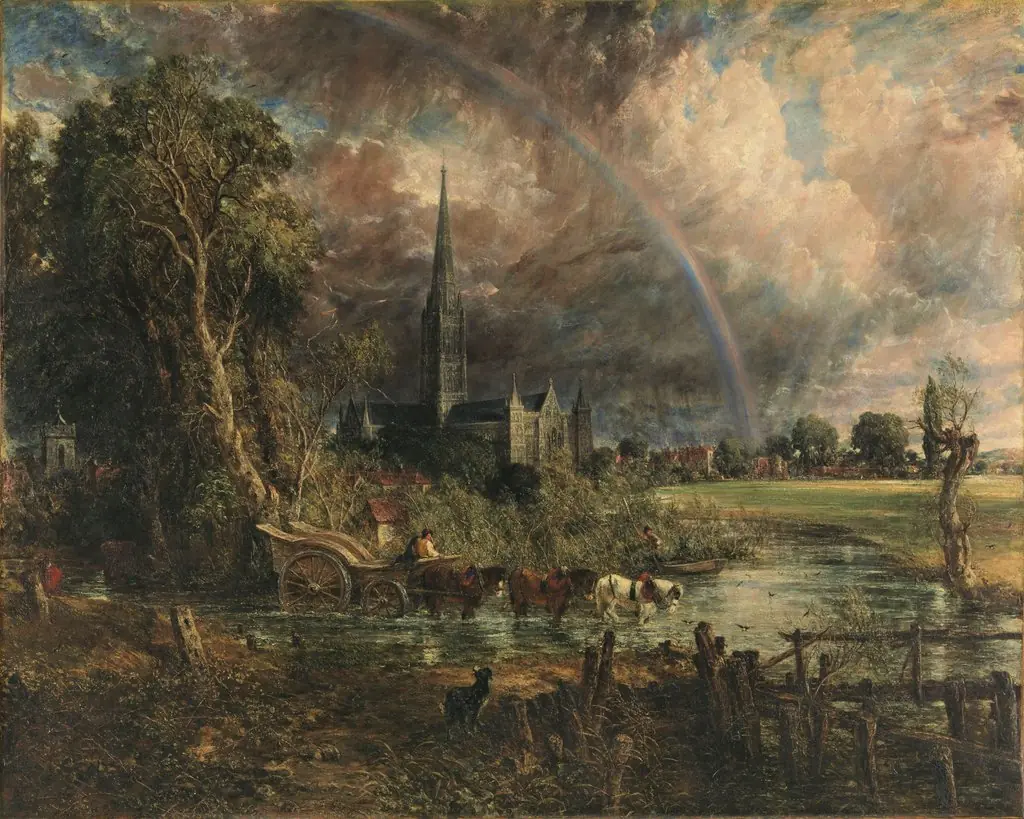
- Distant View of Salisbury Cathedral
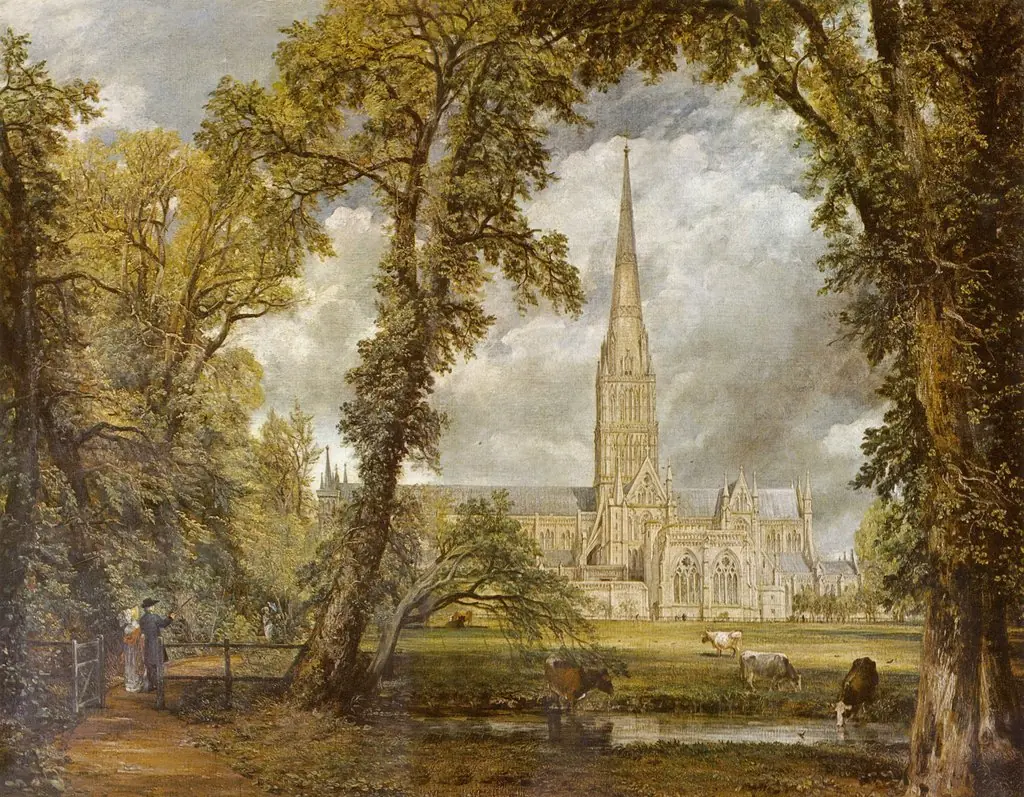 Salisbury Cathedral from the Bishop's Grounds
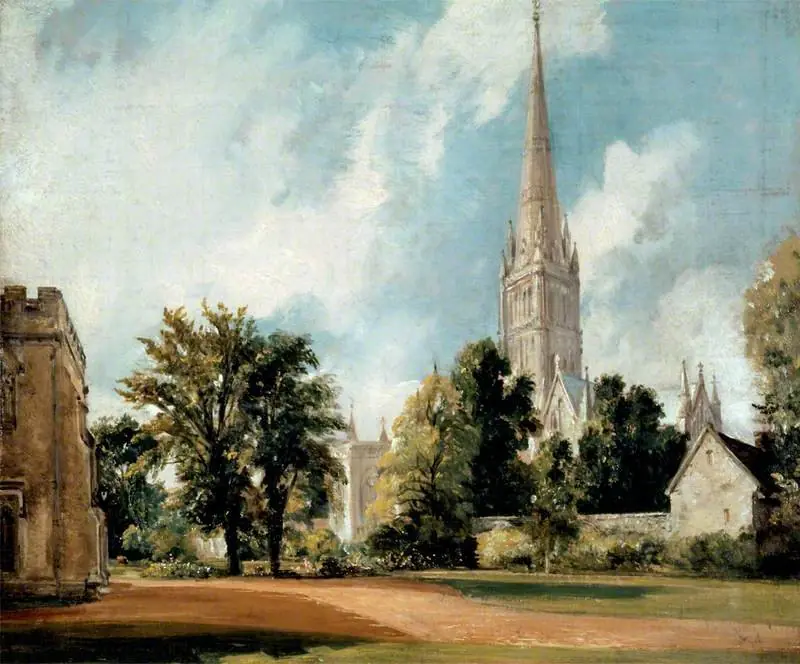 Salisbury Cathedral from the Close
 Salisbury Cathedral from West Harnham
 Salisbury Cathedral from the South-West
 Salisbury Cathedral from the River Nadder
 Salisbury Cathedral with trees
 Salisbury Close
 Salisbury cathedral
 Salisbury Cathedral from the Bishop's Garden