Artwork
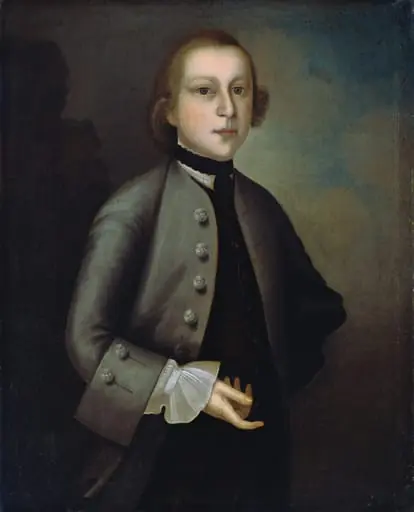
Boy of the Crossfield Family (Possibly Richard Crossfield)
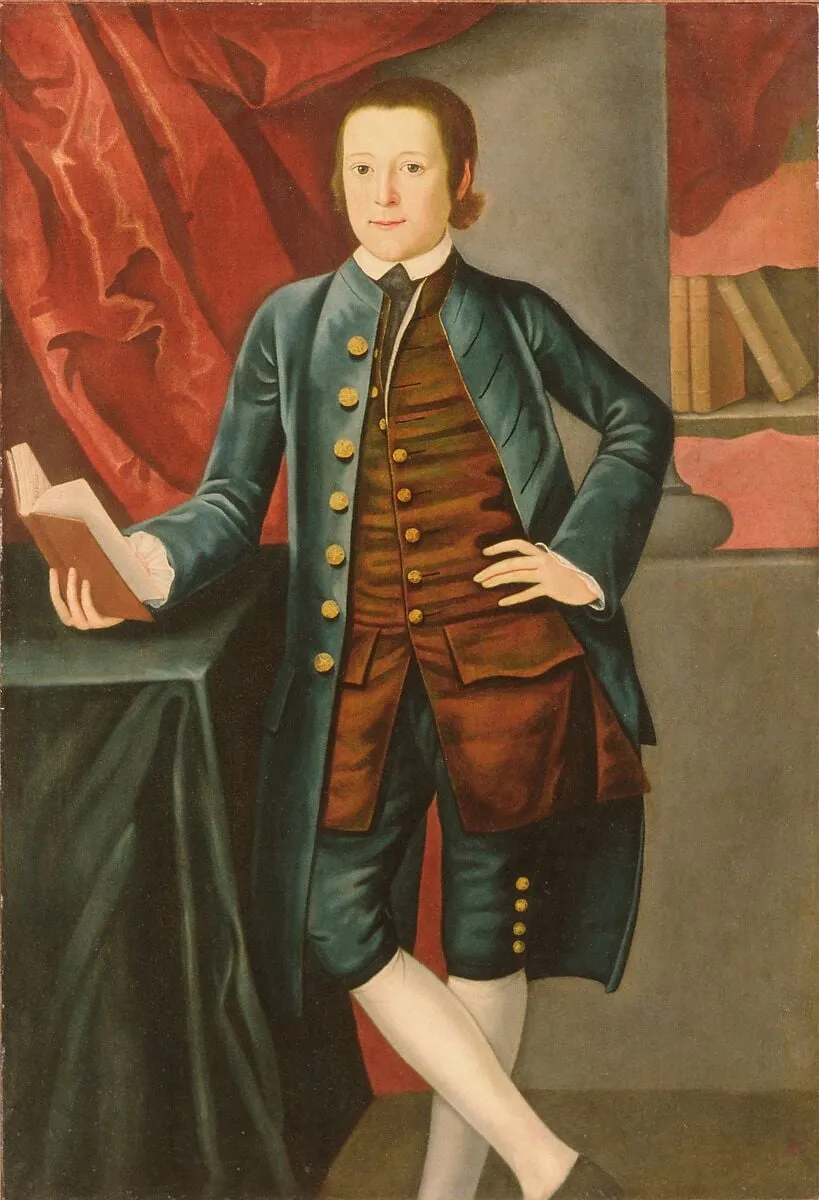
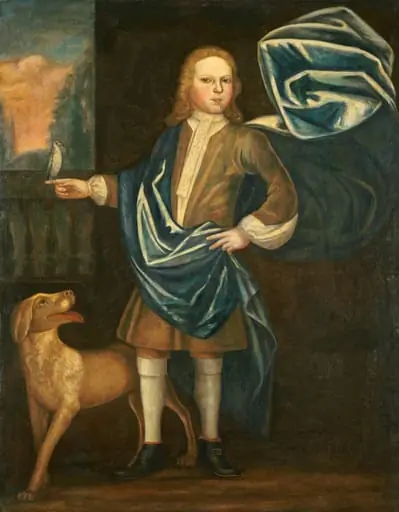
Boy of the Crossfield Family (Possibly Richard Crossfield) is an oil painting by the Rococo painting artist John Durand. It dates from 1767 and is held in the collection of the Metropolitan Museum of Art.
About this work
Subject & Meaning
The inclusion of a book alongside the sitter's fine clothing signals both intellectual aspiration and social standing within the colonial elite.
The portrait shows a young boy clutching a book, a visual cue that his family valued education and literacy in the mid-18th century. The inclusion of a book alongside the sitter's fine clothing signals both intellectual aspiration and social standing within the colonial elite. Rendered by John Durand in 1767, the work belongs to the American Wing's portrait genre and reflects early American artistic practice that combined realistic likeness with symbolic attributes to convey family identity.
The depiction of a white male child in a domestic setting underscores contemporary notions of lineage and the transmission of cultural values across generations.
Technique & Style
Executed in oil on canvas, Boy of the Crossfield Family (Possibly Richard Crossfield) measures 127.6 by 87.6 centimeters, a sizable portrait format well suited to a half- or three-quarter-length depiction of a seated boy with a book. The medium and support are consistent with John Durand's standard practice for colonial American portraiture, in which oil paint was applied to a woven canvas ground to produce a durable, light-stable surface capable of fine modeling. The work is classified within the Metropolitan Museum of Art's American Wing, and its handling falls within the conventions of mid-eighteenth-century Anglo-American portrait painting, emphasizing the sitter's features and attributes through careful tonal gradation.
History & Provenance
The painting was executed in 1767 by American artist John Durand as an oil-on-canvas portrait depicting a young boy (possibly Richard Crossfield) with a book. After its creation, the work entered the commercial art market, passing through the hands of New York dealers Nathan Liverant and Sons, then acquired by collectors Edgar William Garbisch and Bernice Chrysler Garbisch, before being accessioned by the Metropolitan Museum of Art, where it remains in the American Wing.
Overview
Painted in 1767 by John Durand, Boy of the Crossfield Family (Possibly Richard Crossfield) is a significant early American portrait executed in oil on canvas. The work depicts a young boy, likely Richard Crossfield, standing against a dark, unadorned background that emphasizes the figure through strong chiaroscuro. The subject wears a vibrant red coat and holds an open book, a common attribute in portraiture of the era intended to signify literacy, education, and moral virtue.
Durand illuminates the boy's face and the pages of the book with a focused light source, creating a dramatic contrast that draws the viewer's attention to the sitter's expression and the symbolic object. As one of the earliest surviving portraits by Durand, an itinerant painter active in the American colonies, this piece demonstrates the artist's skill in adapting British portrait conventions to the American context. The painting remains unsigned, leading to the tentative identification of the sitter, yet it stands as a notable example of mid-18th-century colonial portraiture, capturing the aspirations of the emerging American gentry.
Artist & collection

Artist
John Durand (active 1765–1782) was a colonial American portraitist. With John Mare, Abraham Delanoy, and Lawrence Kilburn, he was one of a number of portraitists living and working in New York City during the 1760s.…