Artwork
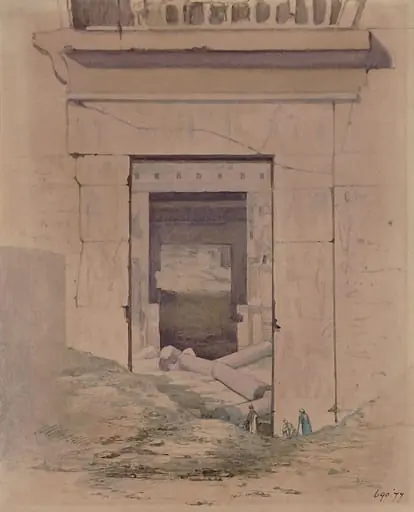
The Temple of Edfu: The Door of the Pylon
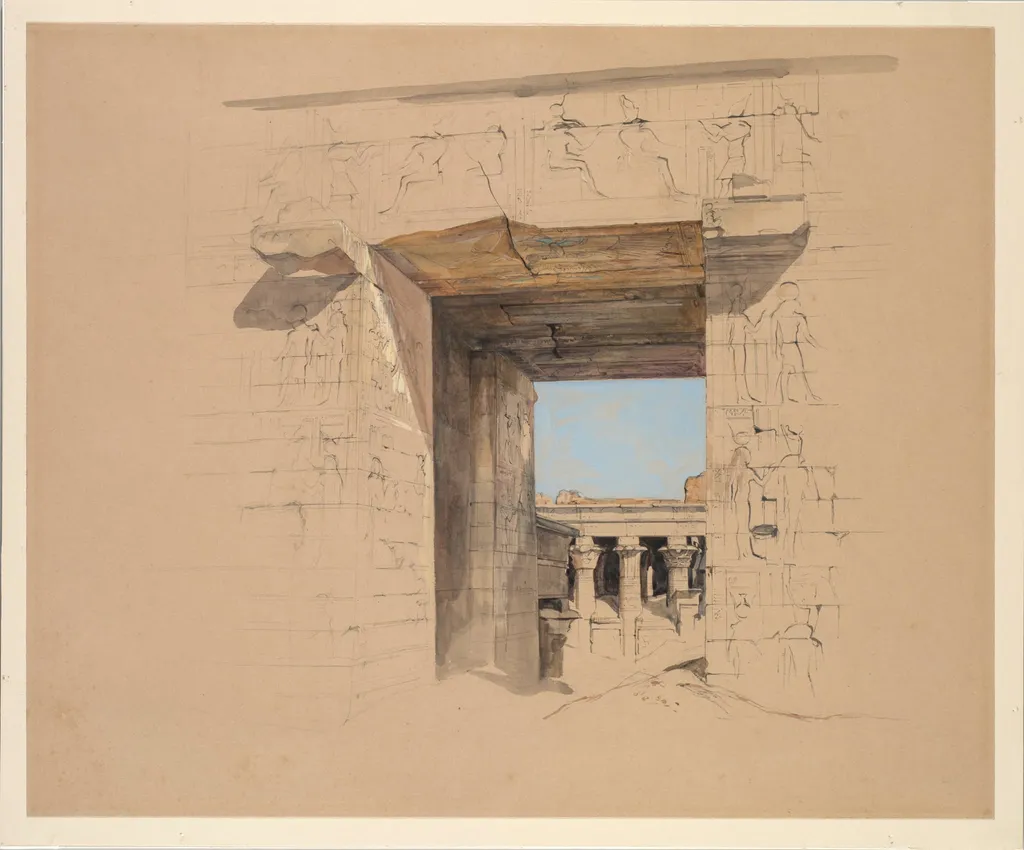
The Temple of Edfu: The Door of the Pylon is a drawing by the Impressionist artist John Frederick Lewis. It dates from 1850 and is held in the collection of the Cleveland Museum of Art.
- Accession no.
- 2015.73
- Credit line
- John L. Severance Fund
About this work
Overview
Created during a Nile expedition with his wife, the work reflects Lewis’s close observation of Egypt’s monuments before widespread photographic documentation.
This watercolor drawing by John Frederick Lewis captures the Temple of Edfu’s pylon doorway as it appeared in 1849–50, when the structure was buried under nearly forty feet of desert sand. Created during a Nile expedition with his wife, the work reflects Lewis’s close observation of Egypt’s monuments before widespread photographic documentation. His precise technique records architectural detail with quiet intensity, offering one of the earliest visual records of the site in its partially excavated state.
Subject & Meaning
The drawing focuses on the monumental entrance to the temple, half-revealed by shifting sands. Hieroglyphs along the stone surface are rendered with clarity, suggesting both scholarly interest and personal wonder. Lewis does not idealize the ruin but presents it as a silent, weathered witness to time. The composition conveys the quiet awe of encountering a buried past, emphasizing discovery over spectacle.
Technique & Style
Lewis employs fine, controlled brushwork in watercolor to define textures of eroded stone and intricate carvings. Light falls diagonally across the surface, enhancing the relief of the inscriptions without dramatic contrast. His approach avoids romantic embellishment, favoring accuracy and atmospheric subtlety.
The precision of line and tone reflects a methodical eye, aligned with topographical drawing traditions rather than theatrical Orientalism.
History & Provenance
Created during Lewis’s extended stay in Egypt, the drawing stems from a journey he undertook shortly before photography became common in the region. It predates most systematic archaeological excavations at Edfu and stands as an early visual record made by a Western artist who lived among the sites he depicted. The work entered the collection as a significant example of 19th-century travel documentation from firsthand observation.
Context
At the time Lewis drew the temple, few Europeans had seen Edfu in its buried state. His images circulated among antiquarians and later influenced early photographers, who adopted similar compositions. While contemporaries like David Roberts emphasized grandeur, Lewis’s focus on quiet detail offered a more intimate perspective, aligning with emerging interests in archaeological fidelity over picturesque effect.
Legacy
Lewis’s drawing remains a key reference for understanding the temple’s condition prior to large-scale excavation. Its technical restraint and observational rigor set it apart from more stylized depictions of Egypt. The work exemplifies how artistic documentation contributed to early Egyptology, preserving visual data that later photographic methods would refine but not surpass in nuance.
Own this work as a print
Artist & collection

Artist
John Frederick Lewis (1804–1876) was an English Orientalist painter. He specialized in Oriental and Mediterranean scenes in detailed watercolour or oils, very often repeating the same composition in a version in each…

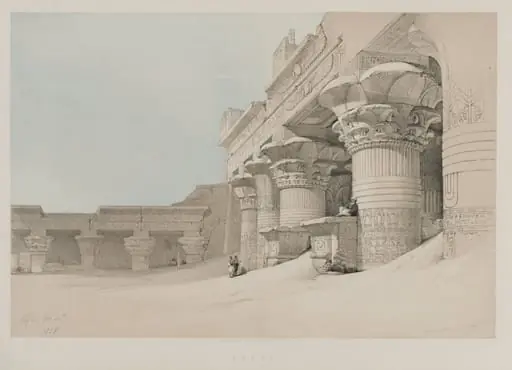 Egypt and Nubia, Volume II: Edfou
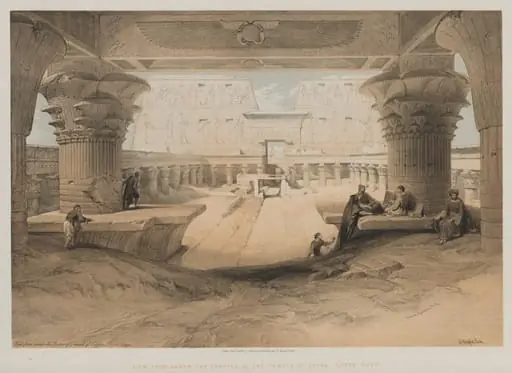 Egypt and Nubia, Volume I: View from Under the Portico of the Temple of Edfou, Upper Egypt
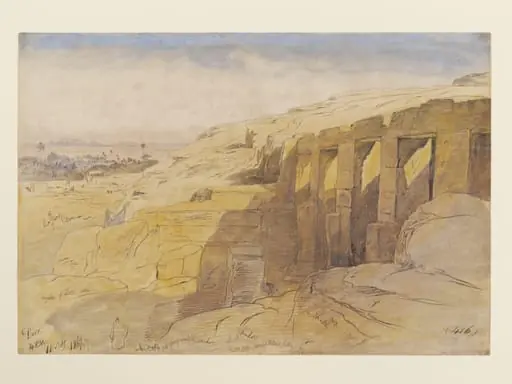 Temple at Derr, Nubia, Egypt
 Entrance to an Egyptian tomb
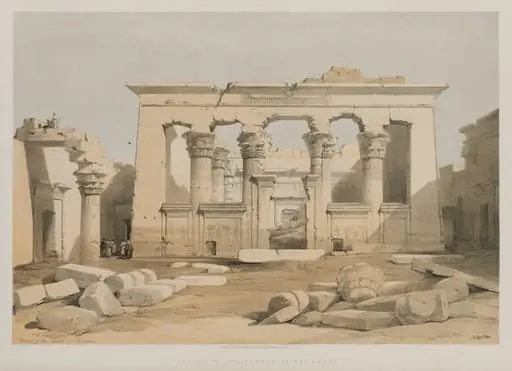 Egypt and Nubia, Volume I: Portico of the Temple of Kalabshe
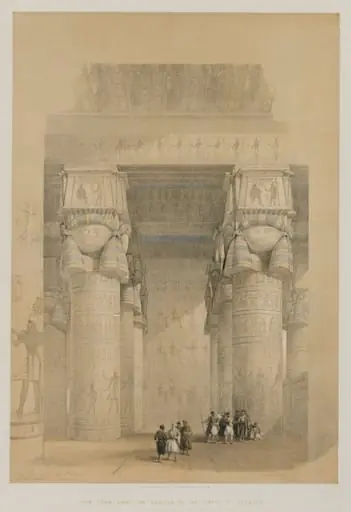 Egypt and Nubia, Volume II: View from Under the Portico of the Temple of Dendera
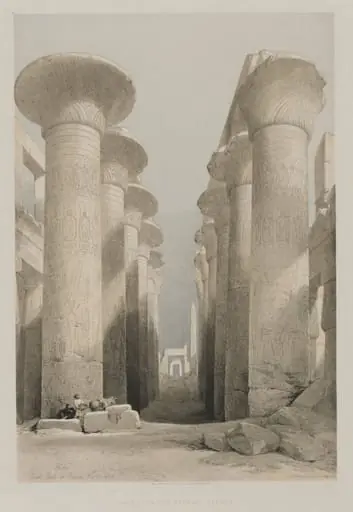 Egypt and Nubia, Volume I: Thebes, Great Hall at Karnac
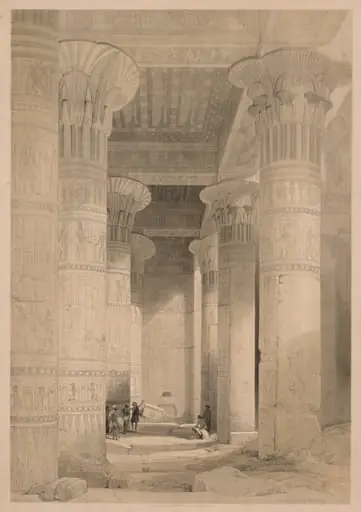 Egypt and Nubia: Volume I - Frontispiece, View under the Grand Portico, Philae
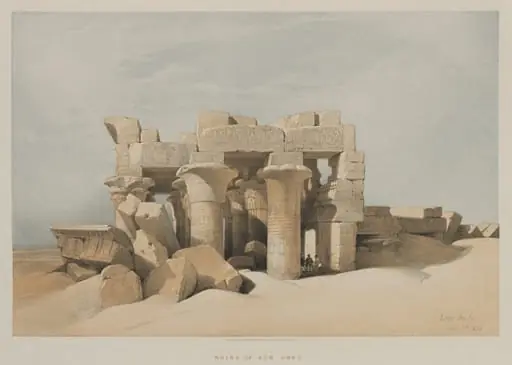 Egypt and Nubia, Volume I: Kom-Ombo