Artwork
Untitled
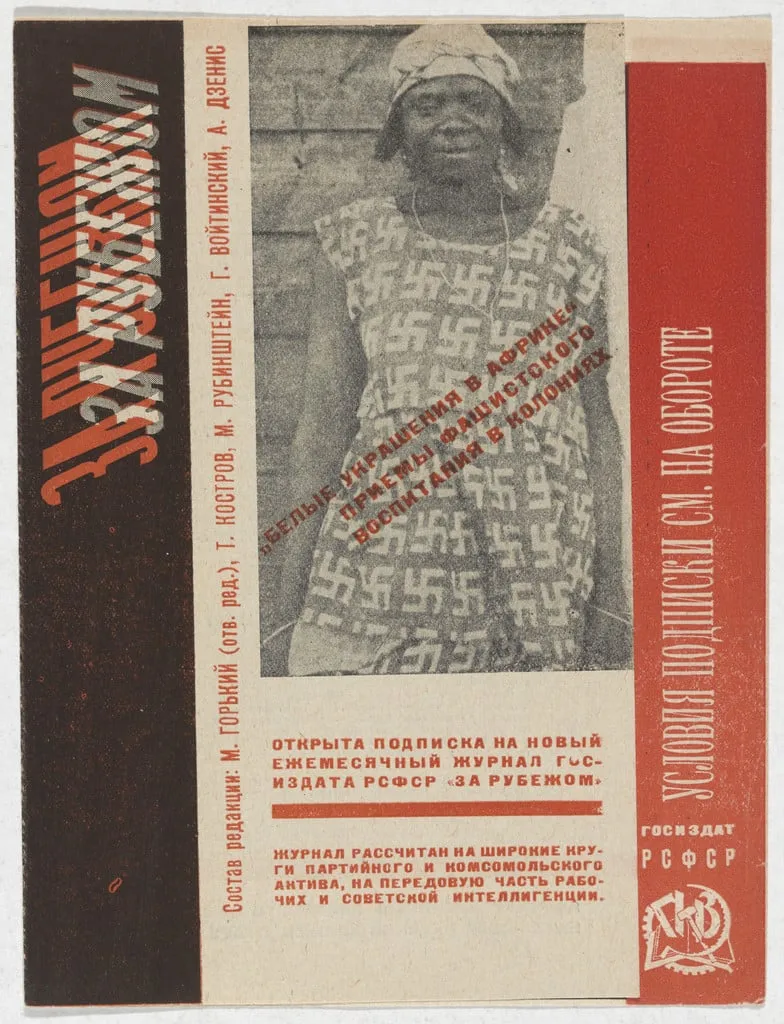
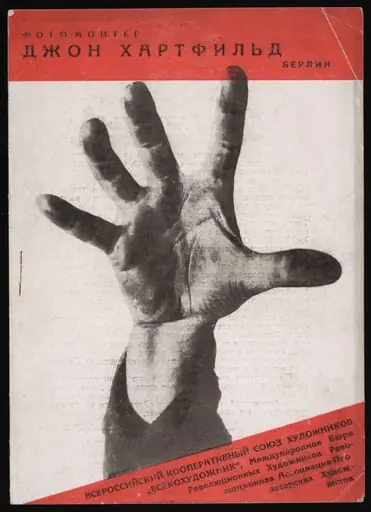
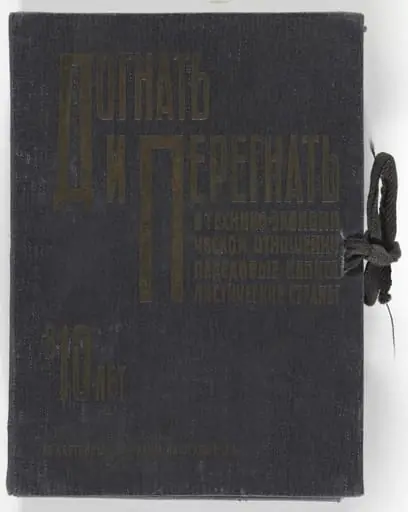
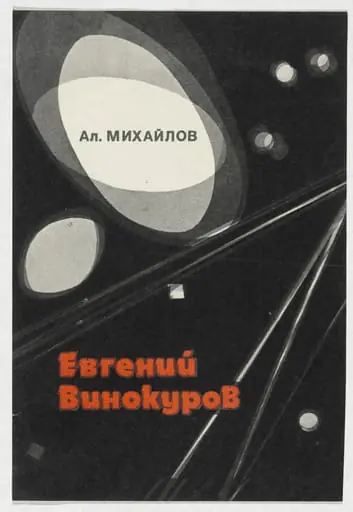
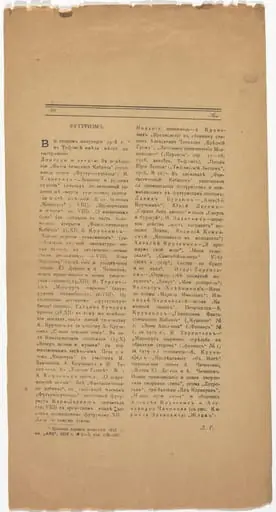
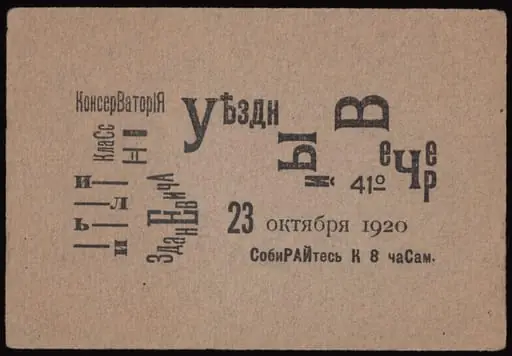
Untitled is a print by John Heartfield Varvara Stepanova. It dates from 1930 and is held in the collection of the Museum of Modern Art. Created in 1930, this letterpress pamphlet is attributed to Varvara Stepanova and John Heartfield.
About this work
Overview
The work resides in the collection of The Museum of Modern Art, where it is contextualized among politically engaged graphic works of the interwar period.
Created in 1930, this letterpress pamphlet is attributed to Varvara Stepanova and John Heartfield. It combines typographic design with photographic collage, characteristic of early 20th-century avant-garde print culture. Produced as a promotional piece, it was likely distributed to advertise a newly launched periodical.
The work resides in the collection of The Museum of Modern Art, where it is contextualized among politically engaged graphic works of the interwar period.
Subject & Meaning
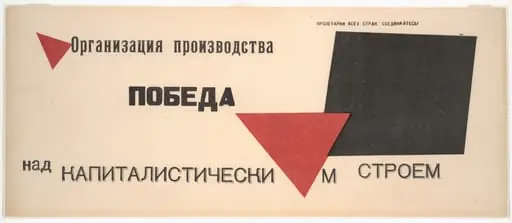
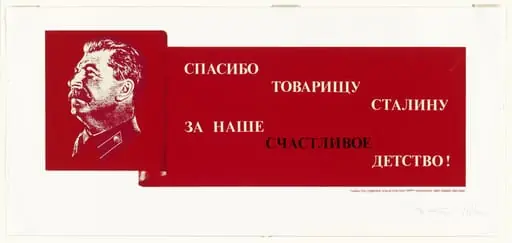
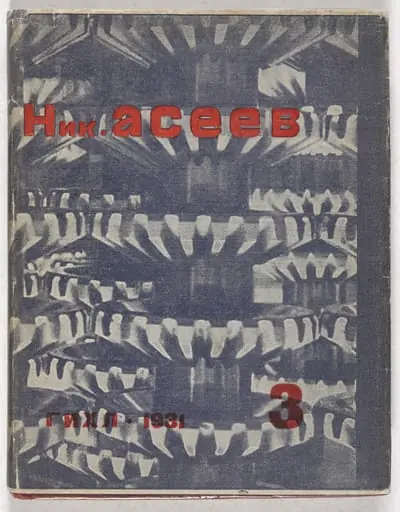
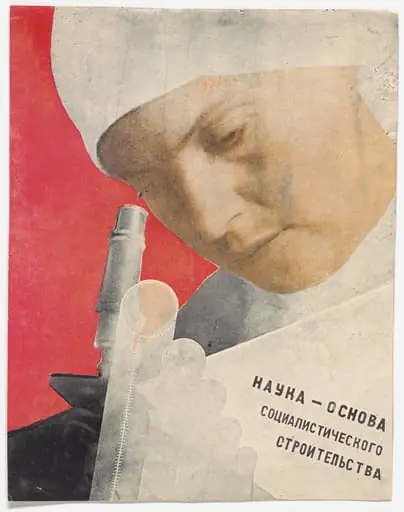
The central image depicts a figure in a headscarf and a shirt patterned with repeated Cyrillic characters, possibly forming a cryptic slogan or visual rhythm. Bold red and black text on either side, in Russian, promotes a magazine, linking visual form to ideological messaging. The shirt’s lettering blurs clothing with propaganda, suggesting the permeation of political language into everyday life. The composition reflects a deliberate fusion of aesthetics and agitation.
Technique & Style
The pamphlet employs letterpress printing with high-contrast red and black ink, emphasizing legibility and urgency. A photomechanical inset of a person is integrated into the layout, surrounded by geometric typography. The shirt’s patterned letters are not random but arranged to function as both texture and coded message.
This synthesis of photography, typography, and collage aligns with Constructivist and Dadaist strategies of reassembling mass media elements for political effect.
History & Provenance
Produced in 1930, the pamphlet emerged during a period of intense experimentation in Soviet and German graphic design. Though its original distribution context is undocumented, its survival in MoMA’s collection indicates early recognition of its formal innovation. The work’s attribution to Stepanova and Heartfield reflects their collaborative influence across borders, despite differing national contexts, Soviet Russia and Weimar Germany.
Context
This piece belongs to a broader movement where artists abandoned traditional aesthetics to serve revolutionary agendas. In the early 1930s, both Soviet and German designers used print media to mobilize public opinion. Magazines became ideological tools, and their promotional materials adopted aggressive visual languages.
The use of Cyrillic script and photomontage here reflects transnational exchanges between radical designers seeking to dismantle bourgeois visual norms.
Legacy
The pamphlet exemplifies how graphic design became a vehicle for political expression beyond advertising. Its integration of text, image, and pattern influenced later movements in protest art and activist publishing. While not widely reproduced, its presence in MoMA’s collection anchors it within the canon of 20th-century design history, recognized for its structural clarity and ideological intent rather than aesthetic novelty.
Artist & collection
Artist
John Heartfield Varvara Stepanova
John Heartfield Varvara Stepanova (1894–1958) was a Russian artist.