Artwork
Paradise Rocks—Study at Paradise, Newport, Rhode Island
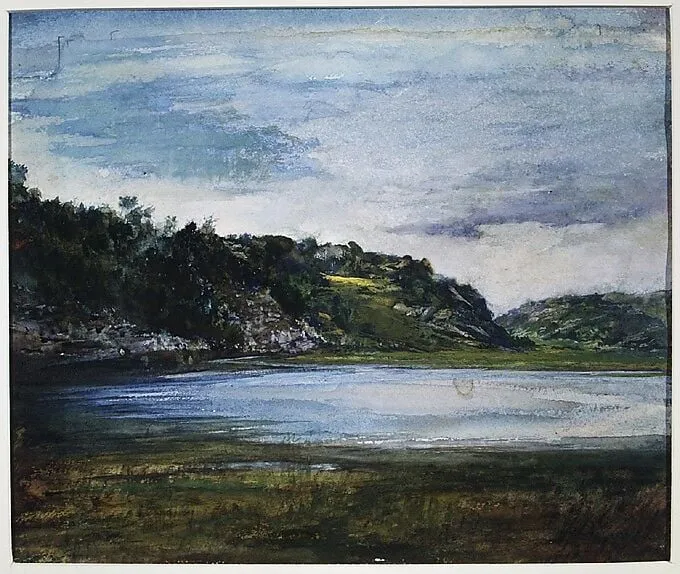
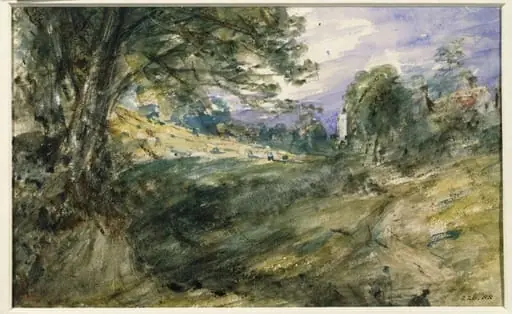
Paradise Rocks—Study at Paradise, Newport, Rhode Island is a watercolor work on paper by the American Impressionist artist John La Farge. It dates from 1884 and is held in the collection of the Metropolitan Museum of Art.
About this work
Technique & Style
8 centimeters, is consistent with a working study made on location, prioritizing rapid handling and atmospheric observation over large-scale finish.
Paradise Rocks, Study at Paradise, Newport, Rhode Island is executed in watercolor combined with gouache and gum arabic on white wove paper, a mixed water-based technique characteristic of John La Farge's experimental approach to landscape studies. The use of gouache alongside transparent watercolor would have allowed La Farge to build opaque highlights and dense passages over more fluid washes, while gum arabic functioned as a binding medium that could also be manipulated to control gloss, transparency, and the adhesion of pigment to the wove paper support. The relatively small sheet, measuring 20.3 by 23.8 centimeters, is consistent with a working study made on location, prioritizing rapid handling and atmospheric observation over large-scale finish.
As a landscape genre work, the piece reflects La Farge's interest in capturing the specific light and rocky terrain of the Newport coast through layered, translucent strokes rather than linear contour.
The combination of these materials on a modest white wove support points to a deliberately fluid, sketch-like handling suited to plein-air observation, with the gum arabic medium enabling both transparent washes and more controlled, built-up passages of gouache.
History & Provenance
The work was executed by John La Farge in 1884, as recorded by both the artist’s dated title and the Metropolitan Museum’s record of the piece’s inception year.
It entered the collection of The Metropolitan Museum of Art, New York, where it remains held. No record of a formal commission or early ownership chain is provided in the cited sources.
Context
John La Farge created Paradise Rocks, Study at Paradise, Newport, Rhode Island in 1884, a watercolor and gouache work depicting the coastal scenery of Rhode Island. The piece, measuring 20.3 cm × 23.8 cm, is housed in the Metropolitan Museum of Art and is classified within The American Wing as a landscape painting. Its reception contributed to discussions of American tonalism and the integration of Asian influences into Western landscape traditions, situating La Farge’s experimentation within broader 19th‑century artistic developments.
Scholarship on the work emphasizes its role in the evolution of American landscape art and its technical synthesis of Western and Eastern aesthetic principles, reflecting La Farge’s interdisciplinary interests and his impact on later modernist movements.
Overview
John La Farge’s 1884 watercolor study, titled Paradise Rocks, Study at Paradise, Newport, Rhode Island, captures a coastal landscape on white wove paper. Executed with a combination of watercolor, gouache, and gum arabic, the work measures a modest size and exemplifies La Farge’s interest in rendering light and atmosphere in a natural setting.
Subject & Meaning
The composition presents a shoreline where a calm body of water meets a rocky outcrop, with a cluster of trees positioned on the left edge. A cloudy sky, rendered in muted blues, hovers above, suggesting a moment of quiet observation of the sea’s interaction with land and weather.
Artist & collection

Artist
John La Farge (March 31, 1835 – November 14, 1910) was an American artist whose career spanned illustration, murals, interior design, painting, and popular books on his Asian travels and other art-related topics.

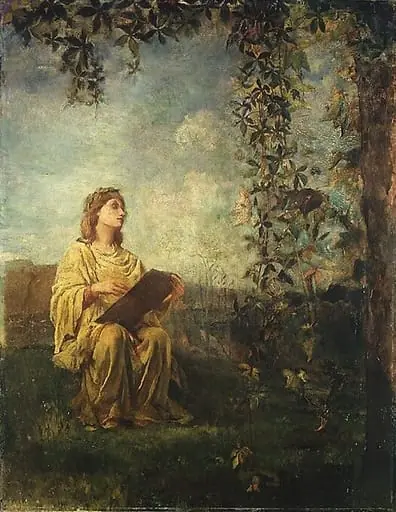 The Muse of Painting
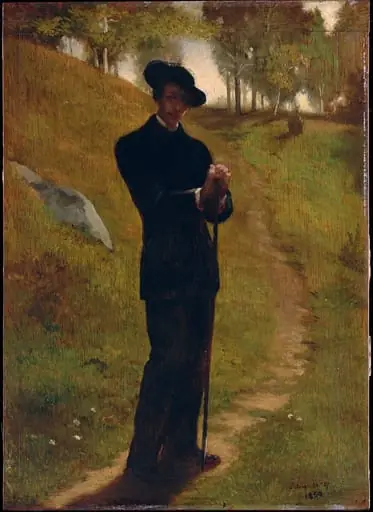 Portrait of the Painter
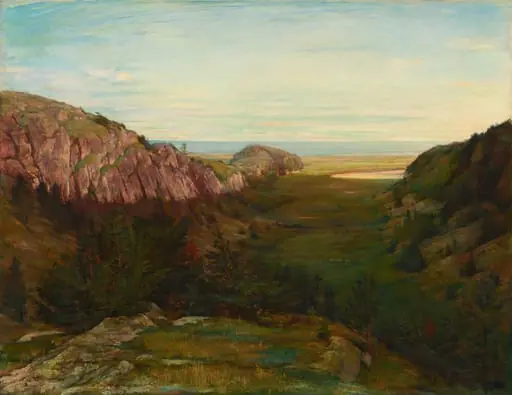 The Last Valley - Paradise Rocks
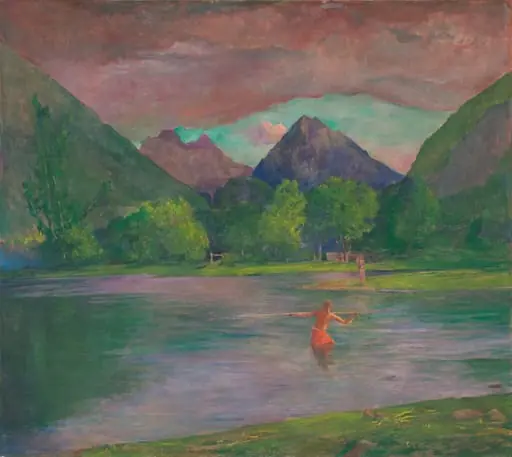 The Entrance to the Tautira River, Tahiti. Fisherman Spearing a Fish
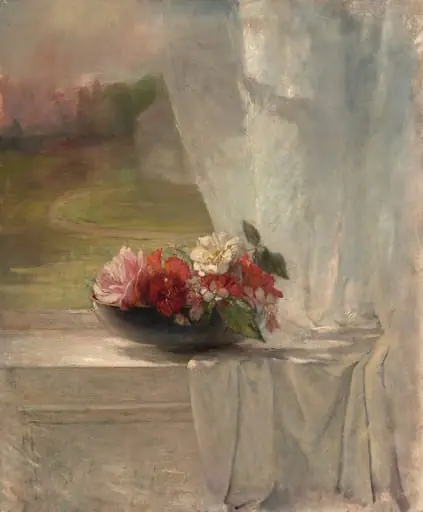 Flowers on a Window Ledge
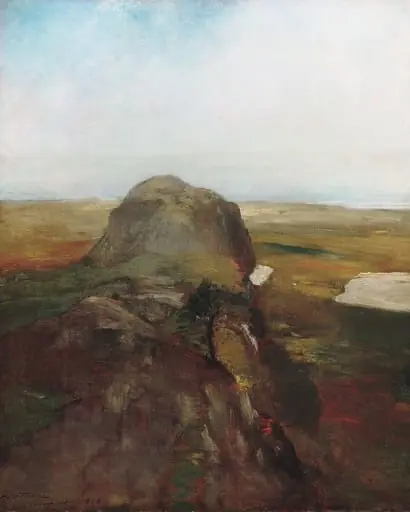 Autumn Study, View over Hanging Rock, Newport, R.I.
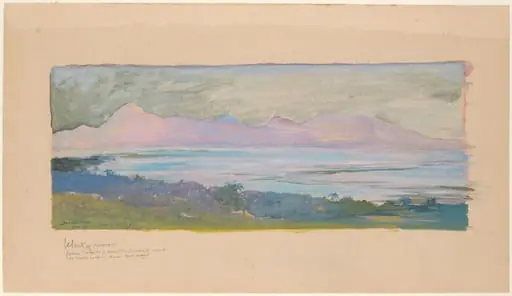 The Island of Moorea Looking across the Strait from Tahiti, January 1891
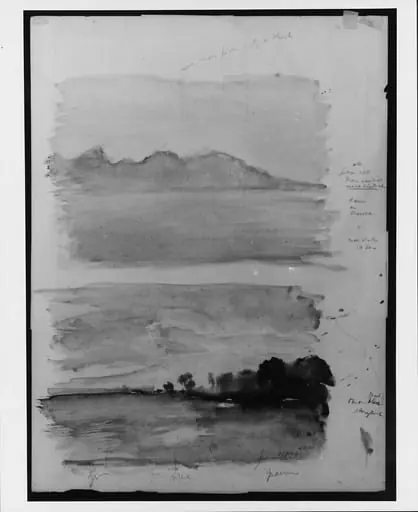 Double Study of Dawn, Moorea Seen across the Water, Tahiti
- A Mountain Tarn
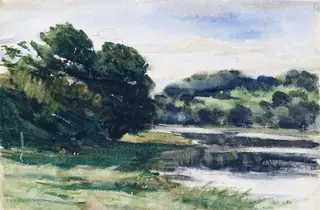 Landscape with river
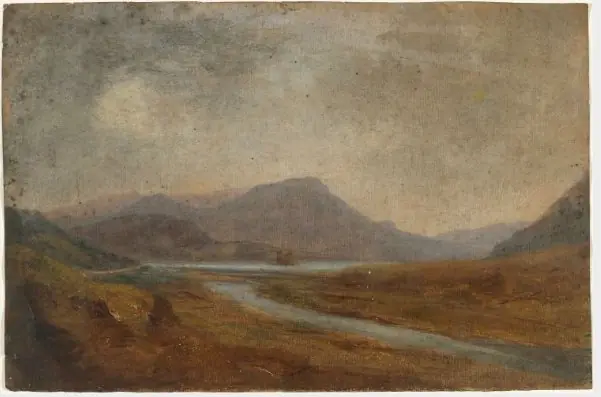 Hen's Castle, Lough Corrib, County Galway
 View across Derwentwater
 In the Wharfedale, Yorkshire
 Landscape with Trees and Water
 Glengarriff, co. Cork
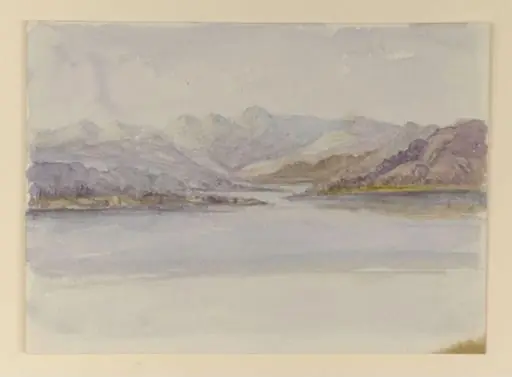 View across a lake to the Langdale Pikes
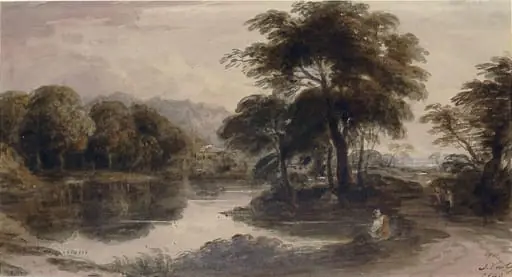 Landscape with pond
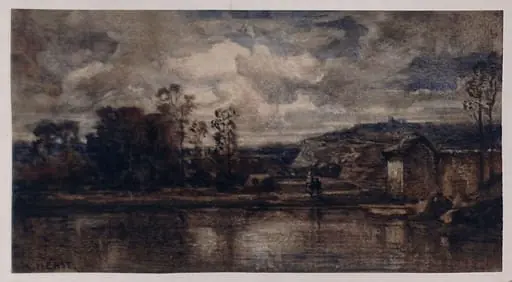 Landscape with pond
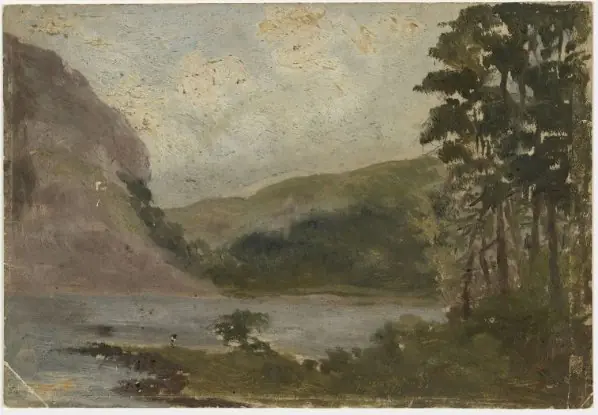 Upper Lake Glendalough
 Cottages on high ground.