Artist
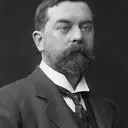
John La Farge

American, 1835–1910
John La Farge was an American American Impressionism painter. 62 works are cataloged here, principally at Metropolitan Museum of Art, most of them watercolors. John La Farge was born in New York City.
John La Farge (March 31, 1835 – November 14, 1910) was an American artist whose career spanned illustration, murals, interior design, painting, and popular books on his Asian travels and other art-related topics. La Farge made stained glass windows, mainly for churches on the American east coast, beginning with a large commission for Henry Hobson Richardson's Trinity Church in Boston in 1878, and continuing for thirty years. La Farge designed stained glass as an artist, as a specialist in color, and as a technical innovator, holding a patent granted in 1880 for superimposing panes of glass.
That patent would be key in his dispute with contemporary and rival Louis Comfort Tiffany. La Farge rented space in the Tenth Street Studio Building at its opening in 1858, and he became a longtime presence in Greenwich Village. In 1863 he was elected into the National Academy of Design; in 1877 he co-founded the Society of American Artists in frustration at the National Academy's conservatism.
In 1892 La Farge was brought on as an instructor with the Metropolitan Museum of Art Schools to provide vocational training to students in New York City. He served as president of the National Society of Mural Painters from 1899 to 1904. In 1904, he was one of the first seven artists chosen for membership in the American Academy of Arts and Letters.
Works by John La Farge
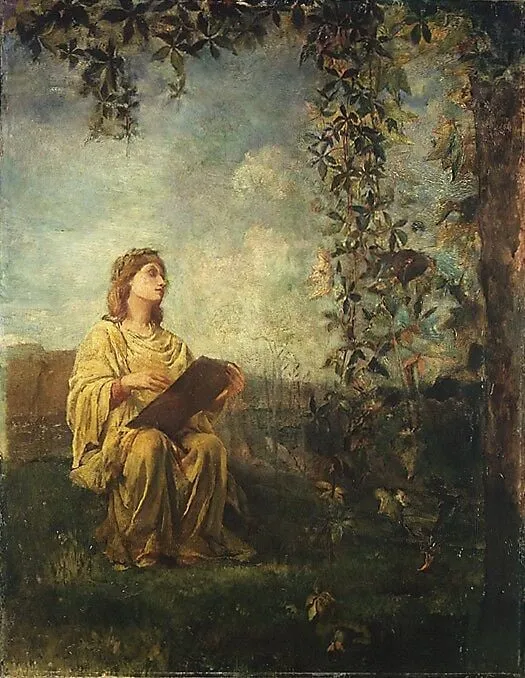 The Muse of Painting
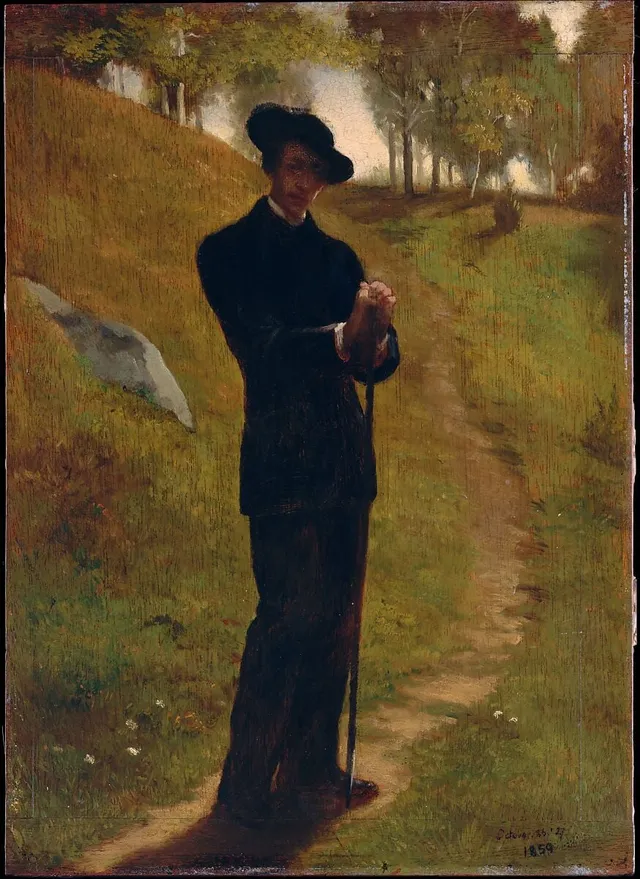 Portrait of the Painter
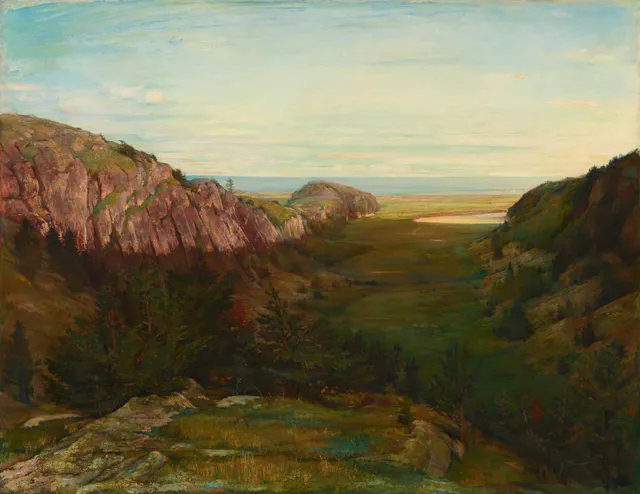 The Last Valley - Paradise Rocks
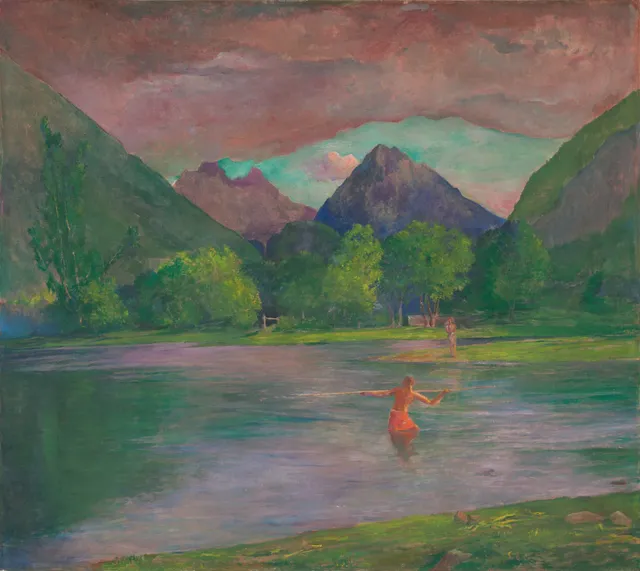 The Entrance to the Tautira River, Tahiti. Fisherman Spearing a Fish
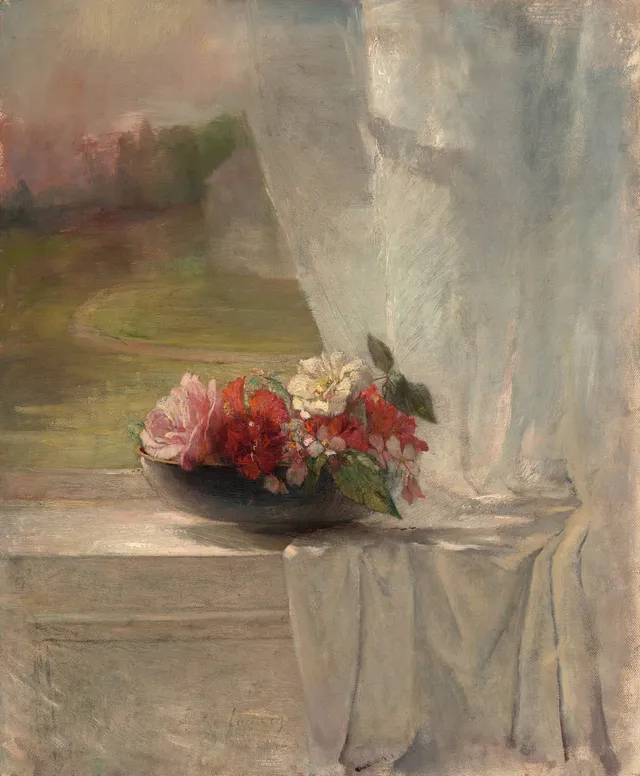 Flowers on a Window Ledge
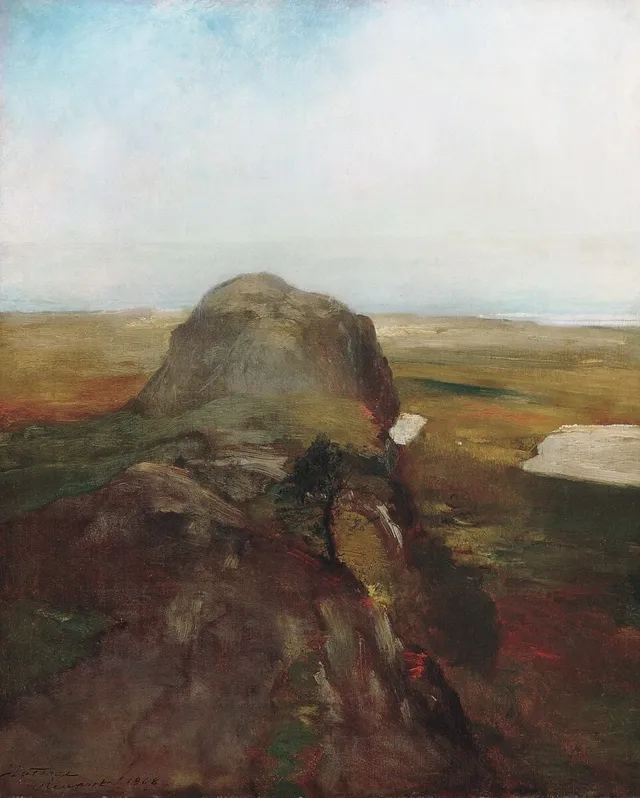 Autumn Study, View over Hanging Rock, Newport, R.I.
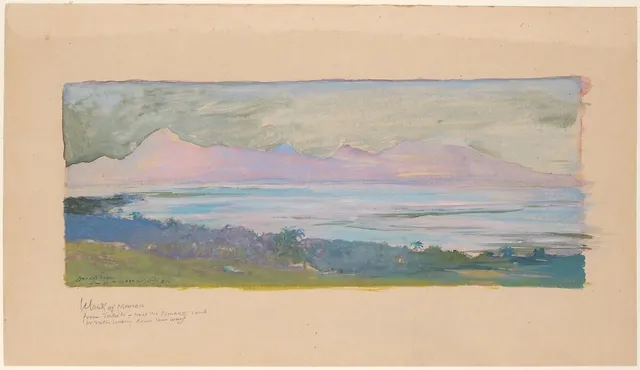 The Island of Moorea Looking across the Strait from Tahiti, January 1891
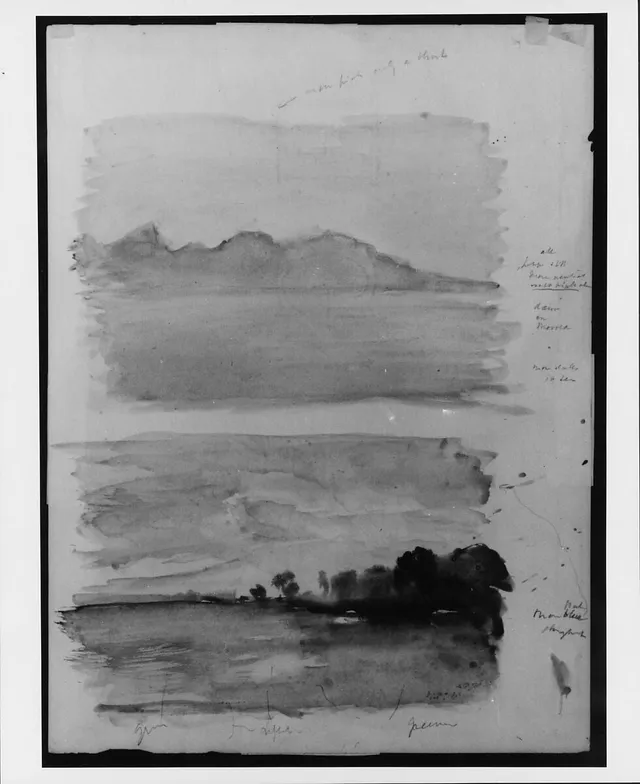 Double Study of Dawn, Moorea Seen across the Water, Tahiti
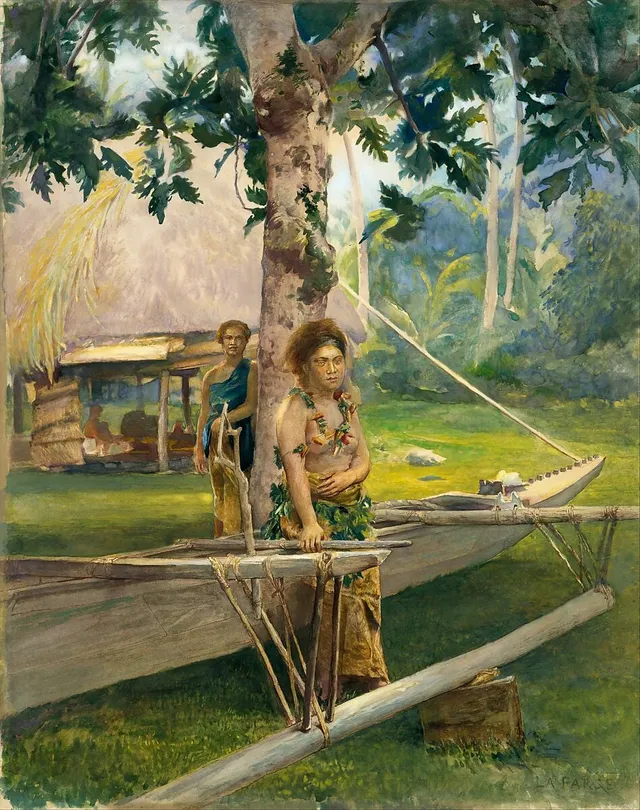 Portrait of Faase, the Taupo, or Official Virgin, of Fagaloa Bay, and Her Duenna, Samoa
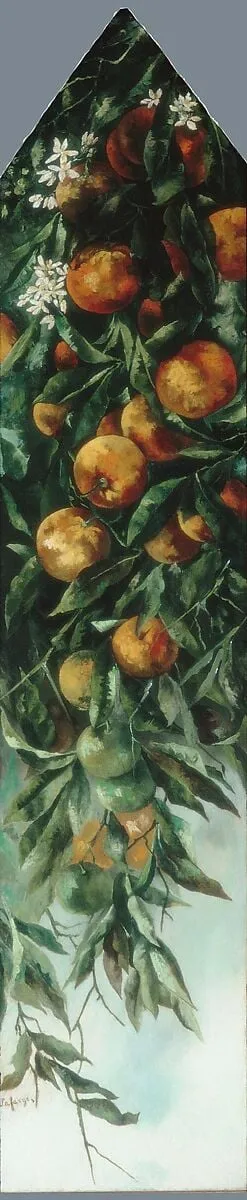 Orange Branch
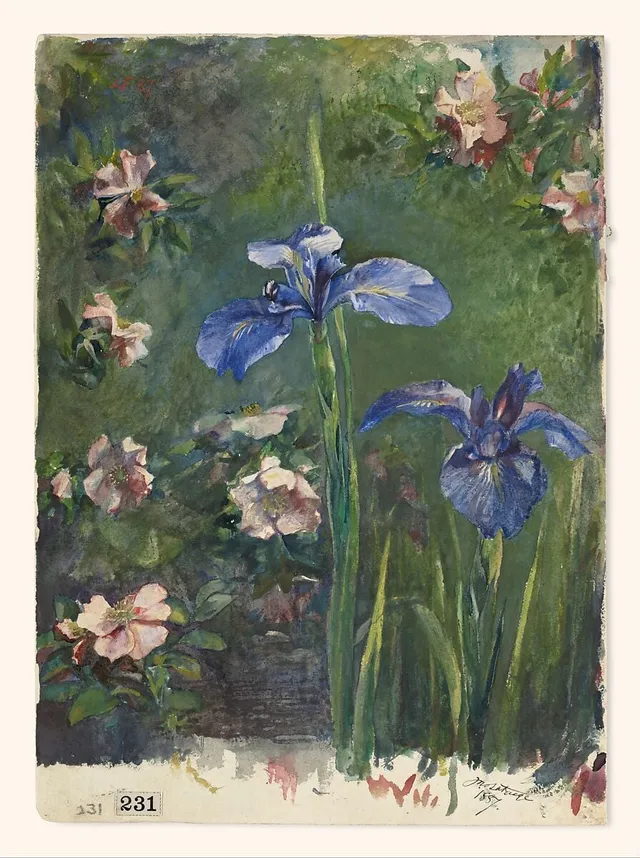 Wild Roses and Irises
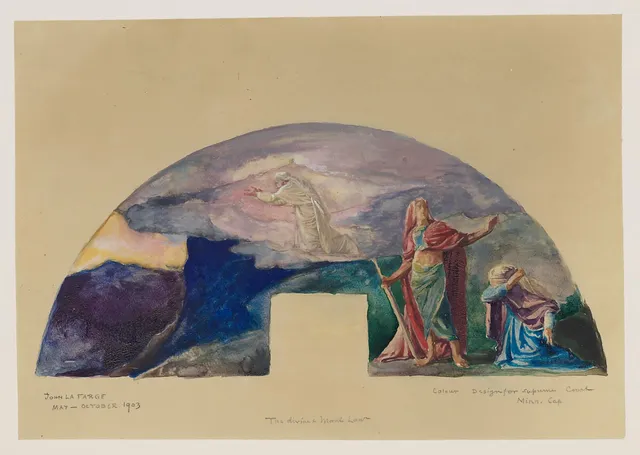 The Moral and Divine Law: Moses Receives the Law on Mount Sinai; Color Study for Mural, Supreme Court Room, Minnesota State Capitol, Saint Paul
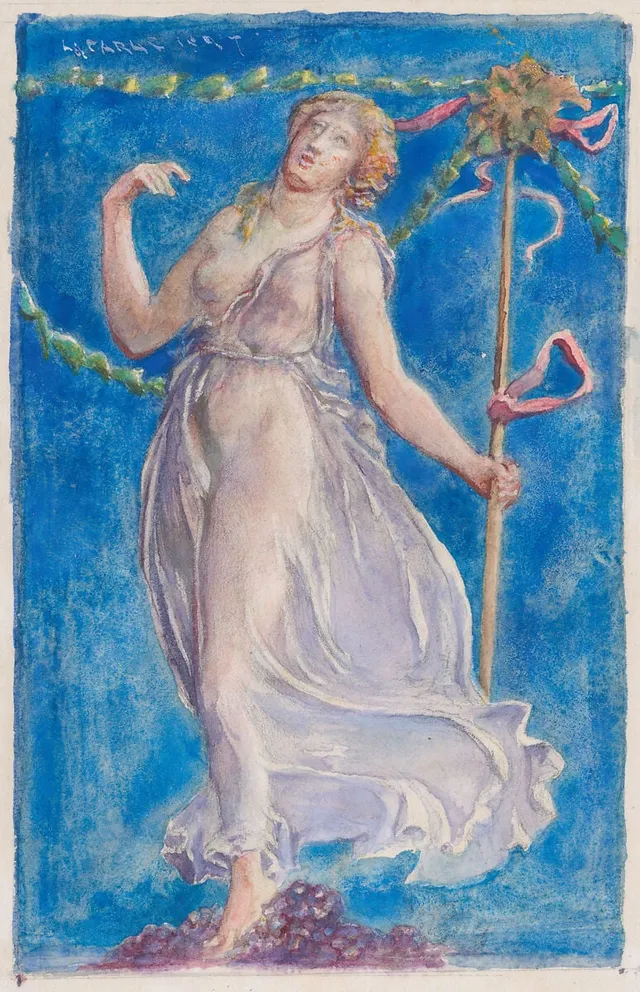 A Bacchante
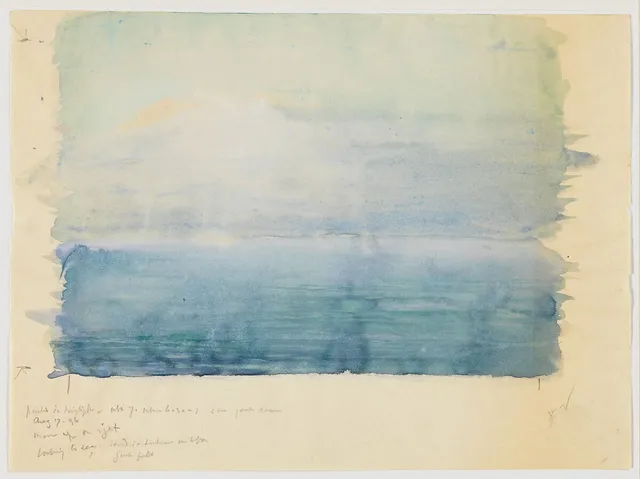 Bar Harbor, Twilight
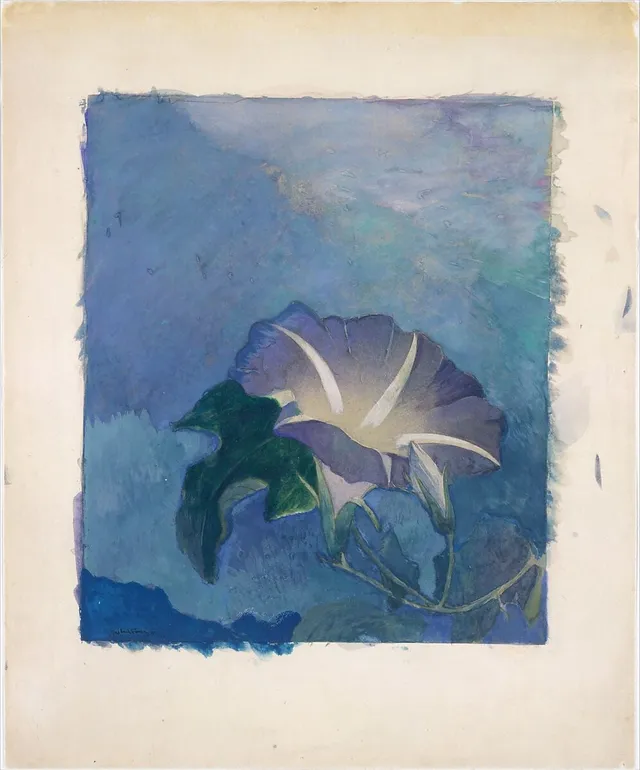 Nocturne
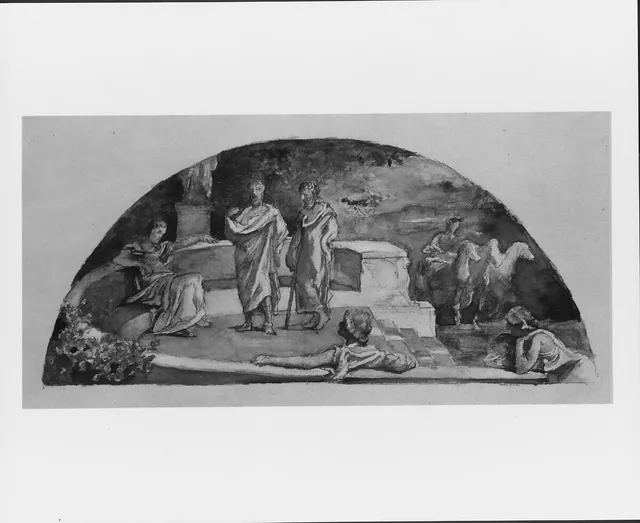 The Relation of the Individual to the State: Socrates and His Friends Discuss "The Republic," as in Plato's Account; Color Study for Mural, Supreme Court Room, Saint Paul, Minnesota State Capitol, Saint Paul
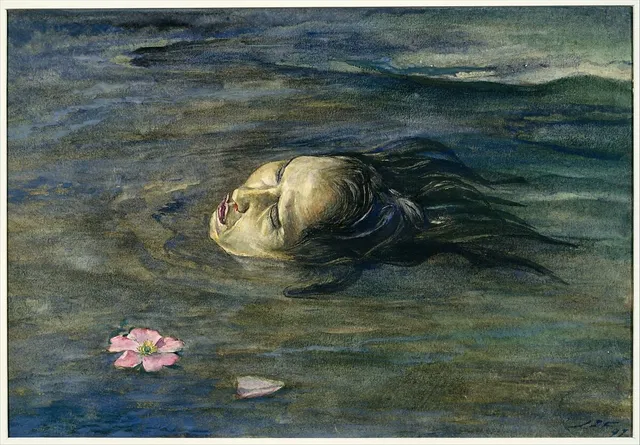 The Strange Thing Little Kiosai Saw in the River
Collections represented


- The Island of Moorea Looking across the Strait from Tahiti, January 1891
- Double Study of Dawn, Moorea Seen across the Water, Tahiti
- Portrait of Faase, the Taupo, or Official Virgin, of Fagaloa Bay, and Her Duenna, Samoa
- Orange Branch
- Wild Roses and Irises
- The Moral and Divine Law: Moses Receives the Law on Mount Sinai; Color Study for Mural, Supreme Court Room, Minnesota State Capitol, Saint Paul
- A Bacchante
- Bar Harbor, Twilight
Artists in a similar vein