Artwork
The Last Valley - Paradise Rocks
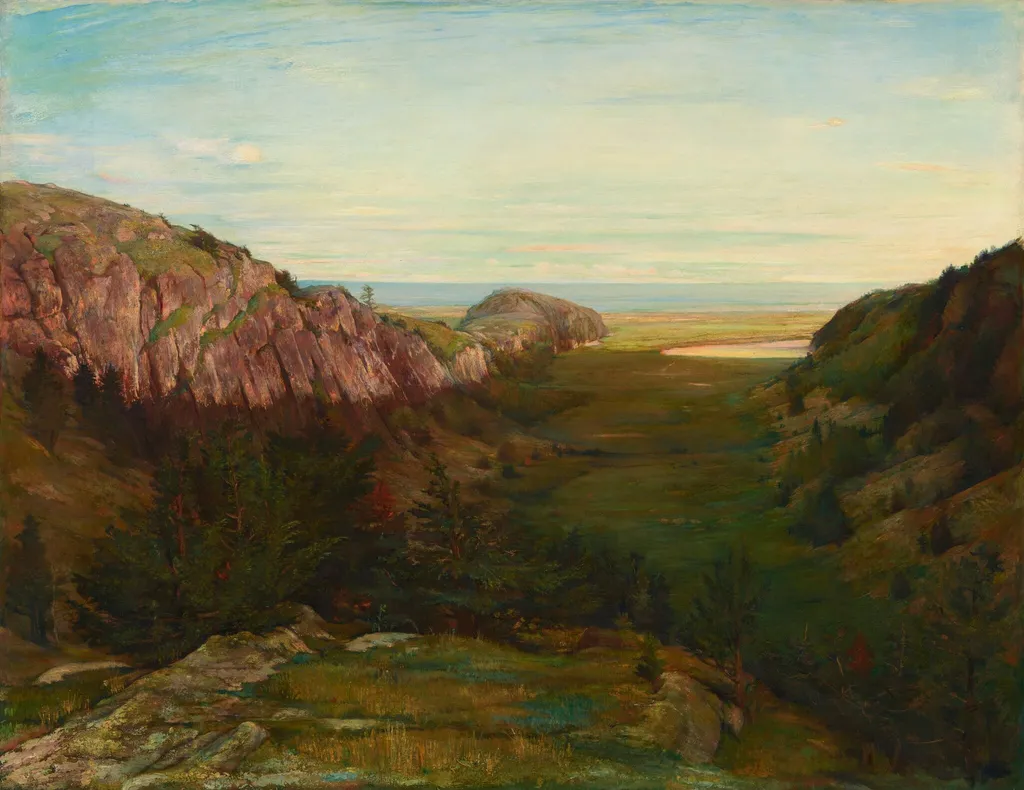
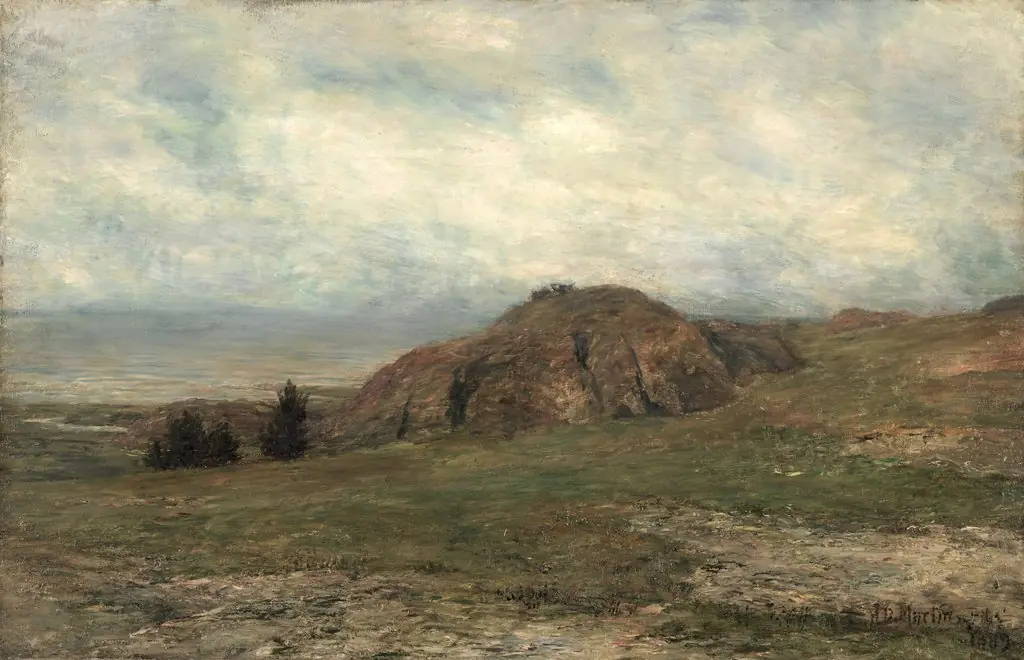
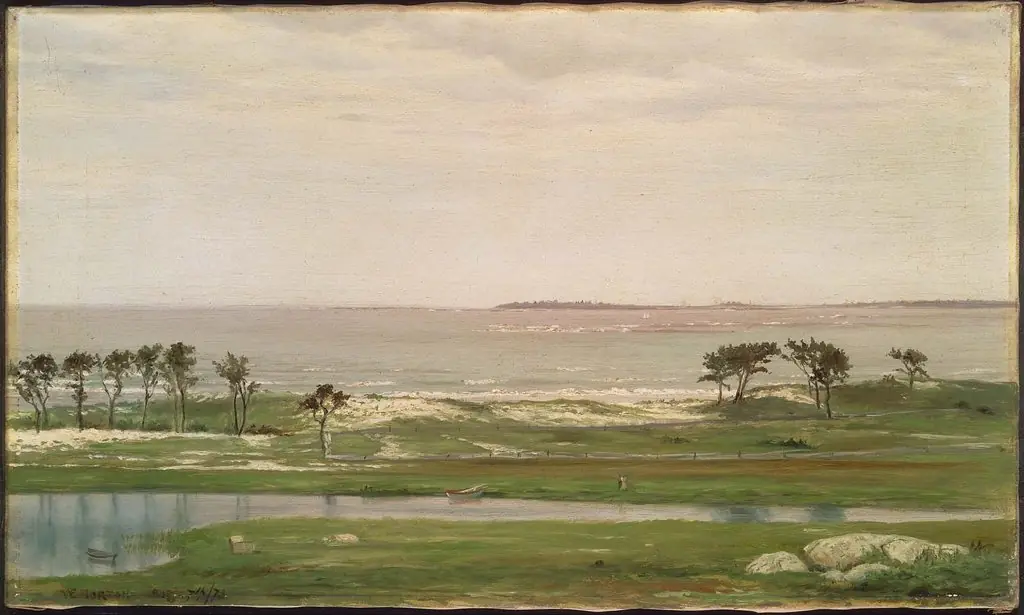
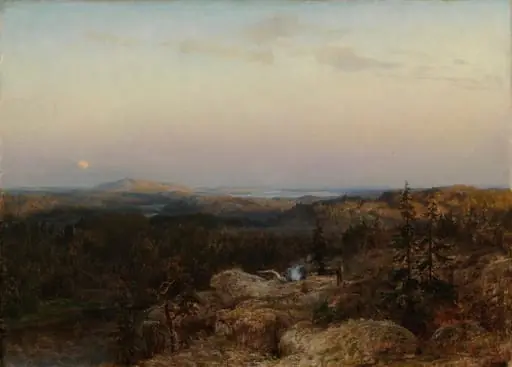
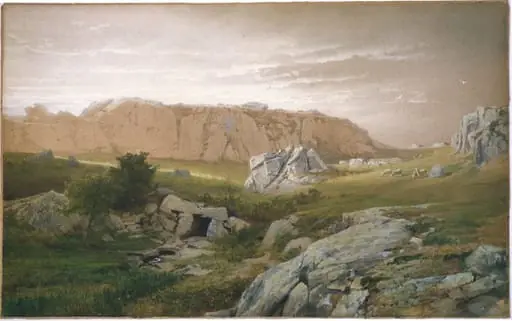
The Last Valley - Paradise Rocks is an oil painting by the American Impressionist artist John La Farge. It dates from 1868 and is held in the collection of the National Gallery of Art.
About this work
Technique & Style
The composition balances rugged topography with delicate foliage, employing a muted palette and soft tonal transitions characteristic of La Farge's style.
The work is an oil painting on canvas, measuring approximately 83.2 cm by 107.4 cm, and depicts a mountain alongside a tree, motifs that recur in John La Farge's landscape oeuvre. Executed in 1868, the piece was created using oil pigments on a stretched canvas, the standard support for the artist's mature practice. The composition balances rugged topography with delicate foliage, employing a muted palette and soft tonal transitions characteristic of La Farge's style.
Handling and condition are not detailed in the published provenance, but the painting remains in the National Gallery of Art's collection.
History & Provenance
The Last Valley – Paradise Rocks was created by John La Farge in 1868 as an oil on canvas. The painting initially remained in the artist's possession until it entered the market at his sale conducted by Pierce and Company in Boston on 19–20 November 1878, listed as lot 18. It was acquired by Alexander Agassiz of Newport and subsequently passed by descent within his family to a private collection in Boston.
The work reappeared at auction at Christie, Manson & Woods in New York on 29 November 2000, offered as lot 47, where it was purchased by Hirschl & Adler Galleries of New York on behalf of the National Gallery of Art, where it is now held.
While the sources confirm the current location and the 2000 transaction leading to its accession, they do not provide a specific inventory or accession number, nor do they list details regarding the work's exhibition history.
Overview
John La Farge completed The Last Valley - Paradise Rocks in 1868, an oil on canvas painting. This work presents a serene valley scene at twilight, characterized by a solitary mountain silhouetted against a fading sky. The composition captures the transitional light of dusk, where soft illumination touches the foreground rocks while shadows begin to deepen among the trees, creating an atmospheric and contemplative landscape.
Subject & Meaning
The painting depicts a tranquil mountain landscape, likely inspired by La Farge's travels through the White Mountains of New Hampshire. It portrays a quiet valley as day transitions to night, with a prominent peak rising in the distance. The artist emphasizes the subtle interplay of light and shadow, rendering the rugged texture of the rocks with a gentle glow, while the surrounding trees recede into deepening twilight, evoking a sense of peaceful solitude.
Own this work as a print
Artist & collection

Artist
John La Farge (March 31, 1835 – November 14, 1910) was an American artist whose career spanned illustration, murals, interior design, painting, and popular books on his Asian travels and other art-related topics.

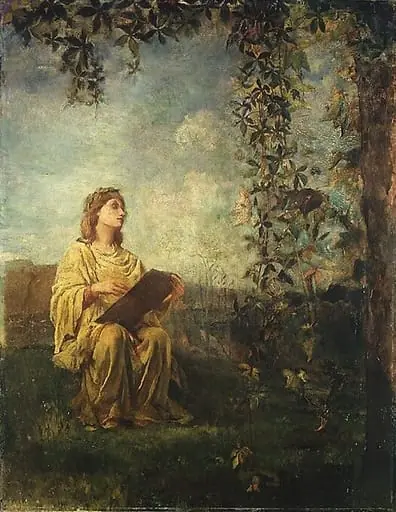 The Muse of Painting
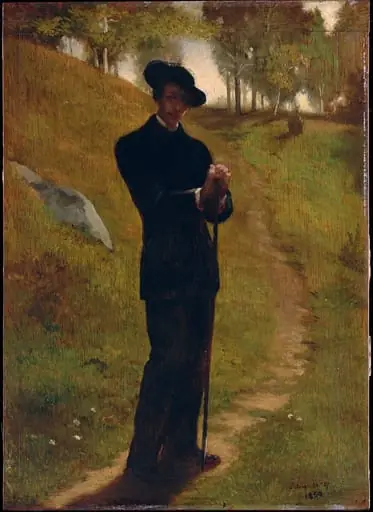 Portrait of the Painter
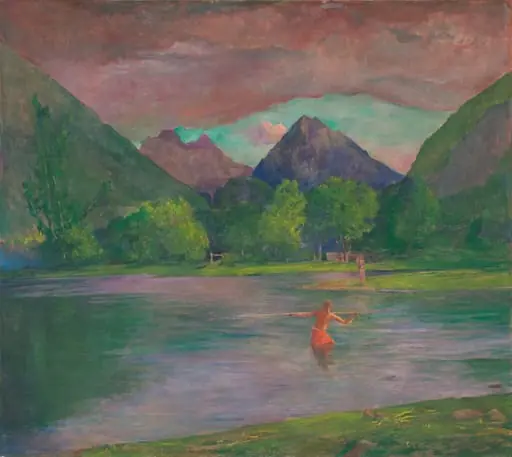 The Entrance to the Tautira River, Tahiti. Fisherman Spearing a Fish
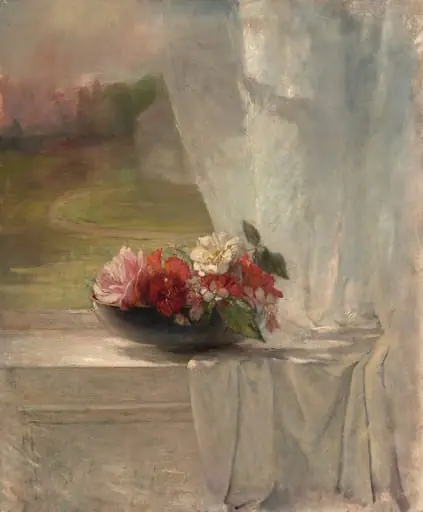 Flowers on a Window Ledge
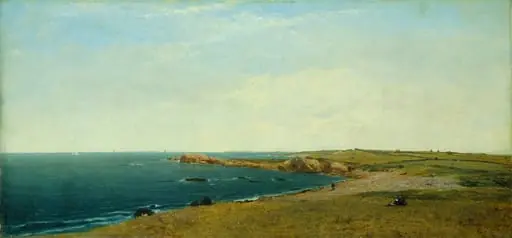
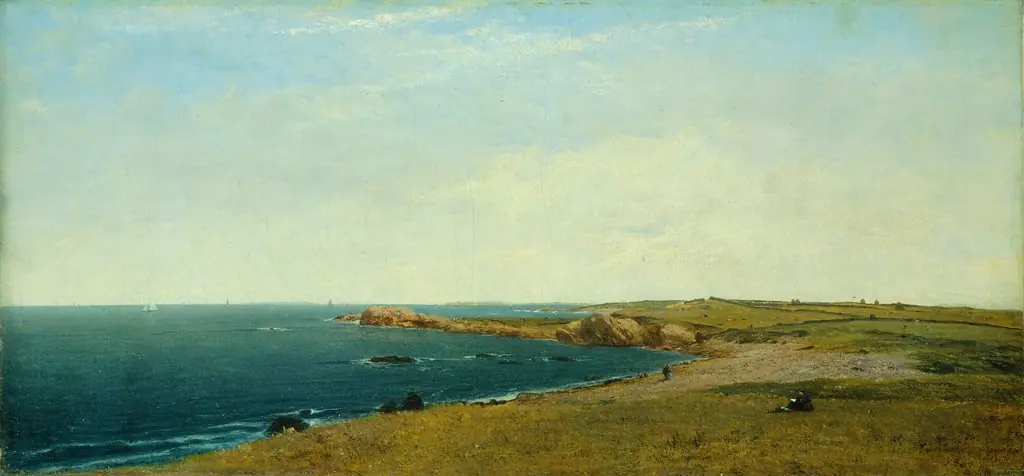
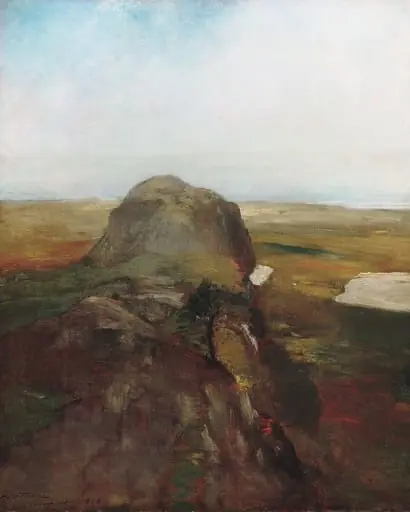 Autumn Study, View over Hanging Rock, Newport, R.I.
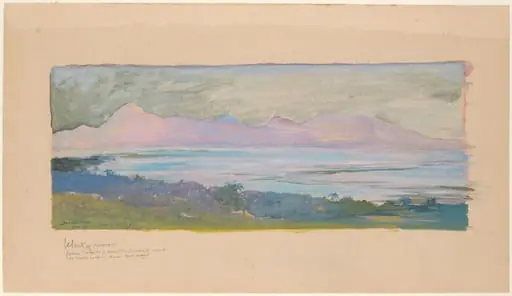 The Island of Moorea Looking across the Strait from Tahiti, January 1891
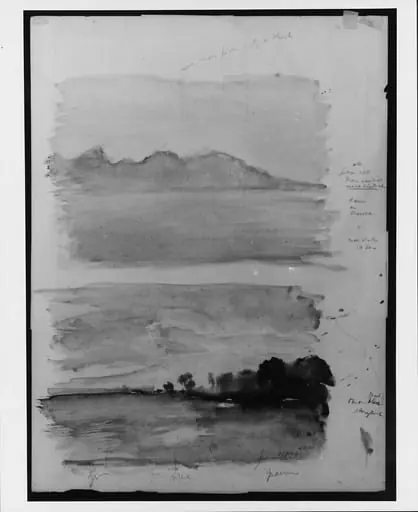 Double Study of Dawn, Moorea Seen across the Water, Tahiti
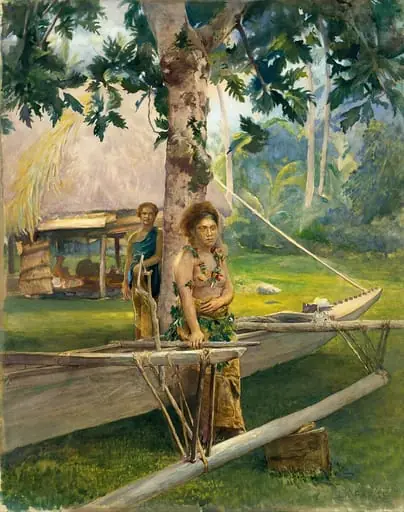 Portrait of Faase, the Taupo, or Official Virgin, of Fagaloa Bay, and Her Duenna, Samoa