Artwork
Sidings
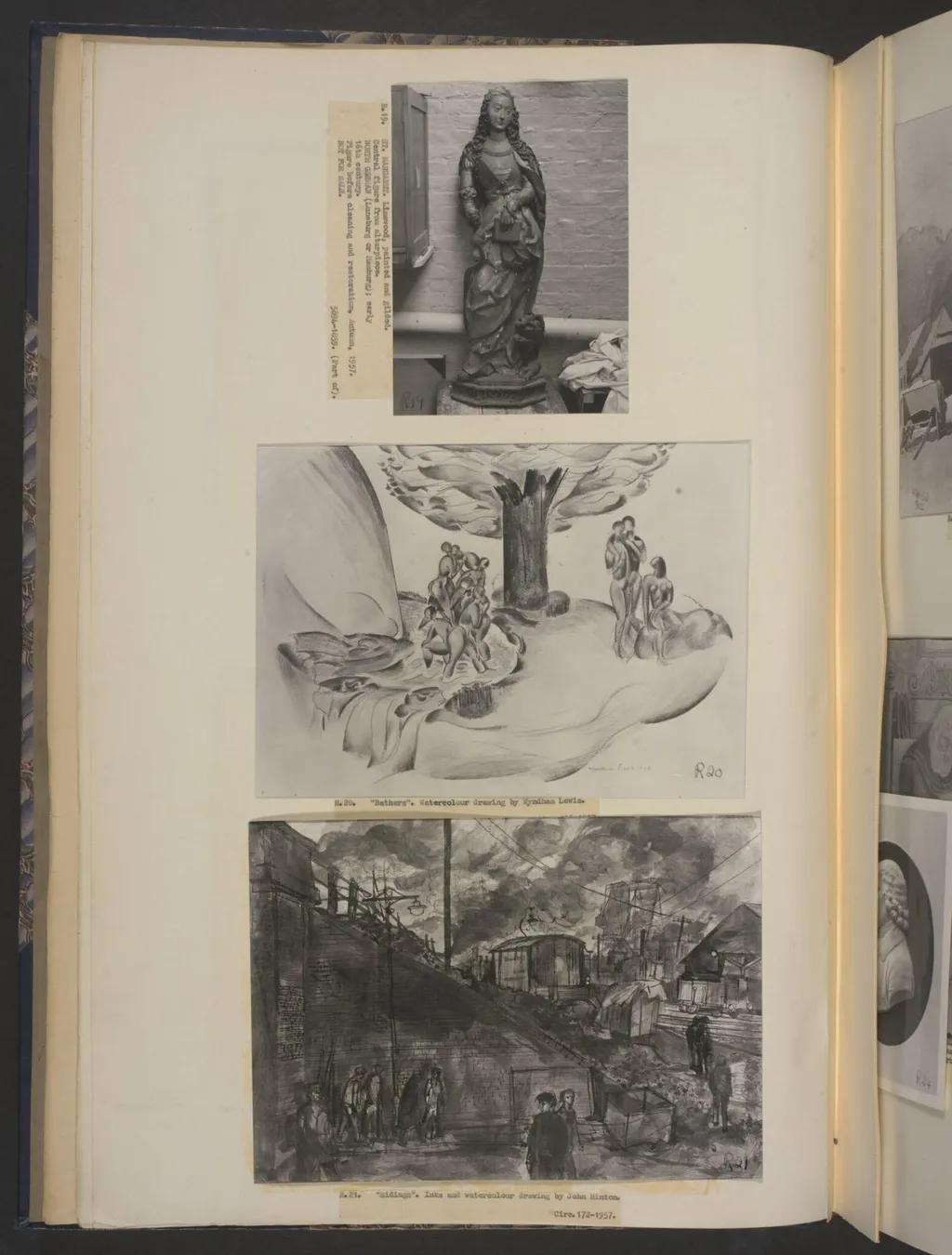
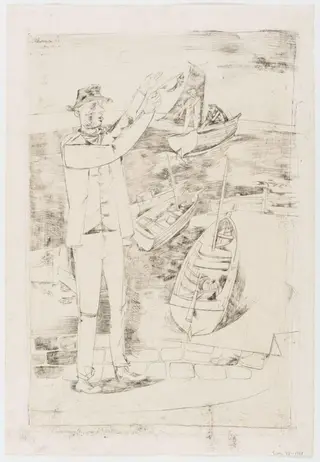
Sidings is a watercolor work on paper by the Contemporary Realist artist John Minton. It dates from 1956 and is held in the collection of the Victoria and Albert Museum.
About this work
Overview
Sidings is a 1956 watercolor by John Minton, depicting a bustling railway yard. Executed in loose, expressive brushwork, the piece captures the atmosphere of industrial labor under overcast skies. It resides in the collection of the Victoria and Albert Museum, where it exemplifies mid-20th-century British figurative painting with a focus on everyday environments.
Subject & Meaning
The scene portrays a working railway sidings, with figures scattered near tracks and distant ships in loading areas. No single narrative dominates; instead, the composition suggests the quiet rhythm of labor and transit. The presence of people amid machinery implies human endurance within industrial systems, without romanticizing or condemning the setting.
Technique & Style
Minton employed watercolor with rapid, uneven strokes to convey motion and texture. Deep shadows, rendered with concentrated pigment, contrast sharply against washed-out light areas, creating a chiaroscuro effect. The sketchy linework avoids detail, prioritizing mood over precision, and the paper’s texture enhances the sense of weathered, transient space.
History & Provenance
Painted in 1956, Sidings was acquired by the Victoria and Albert Museum shortly after its completion. It reflects Minton’s interest in postwar British industry and his engagement with social realism. The work remained in the artist’s possession until its acquisition, and has since been included in exhibitions focusing on mid-century British art.
Context
Created during a period of national infrastructure renewal, Sidings responds to Britain’s ongoing reliance on rail and port logistics. Minton, influenced by earlier realist traditions and wartime documentation, sought to portray ordinary working spaces with emotional gravity, aligning with broader cultural efforts to document the nation’s industrial identity.
Legacy
Sidings stands as a representative example of Minton’s watercolor practice, illustrating his ability to infuse mundane scenes with psychological depth. While not widely exhibited today, it continues to inform discussions on British postwar art’s engagement with labor, place, and the expressive potential of watercolor as a medium for urban observation.
Artist & collection
Artist
Francis John Minton (25 December 1917 – 20 January 1957) was an English painter, illustrator, stage designer and teacher.