Artwork
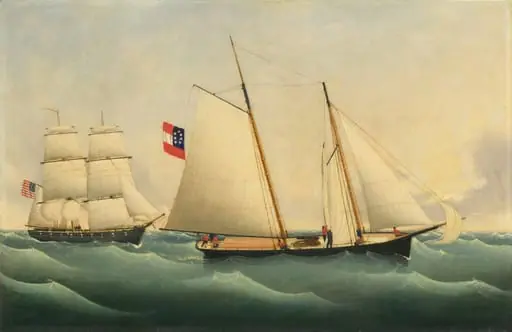
Fishermen Leaving for the Grand Banks
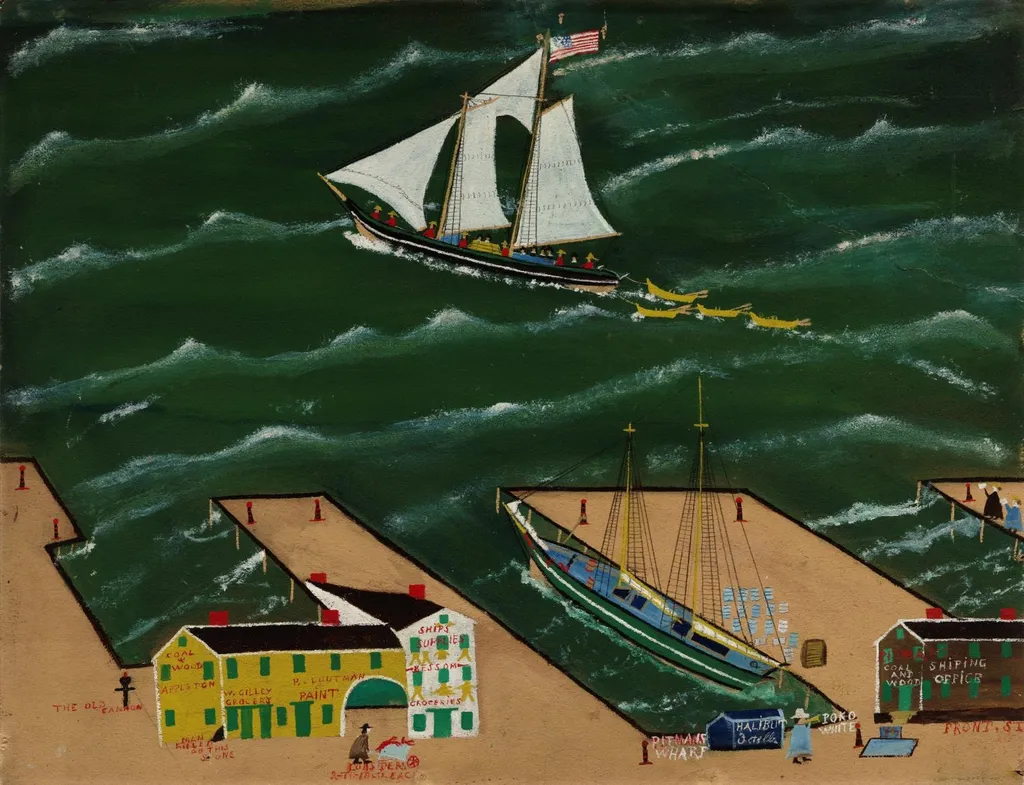
Fishermen Leaving for the Grand Banks is an unspecified painting by John Orne Johnson Frost. It dates from 1900 and is held in the collection of the Museum of Fine Arts Boston. J.
About this work
Overview
His 1900 depiction of fishermen departing for the Grand Banks captures the rhythms of 19th-century Marblehead, Massachusetts, where he lived.
J. O. J. Frost, a self-taught American folk painter, began creating art in his seventies, long after a lifetime spent in maritime commerce. His 1900 depiction of fishermen departing for the Grand Banks captures the rhythms of 19th-century Marblehead, Massachusetts, where he lived. Frost viewed his work as historical documentation rather than artistic expression, preserving the visual memory of a vanishing seafaring culture through meticulous, untrained observation.
Subject & Meaning
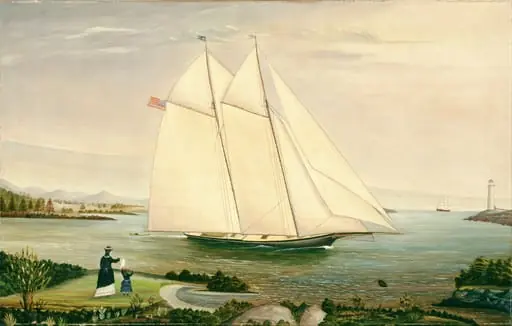
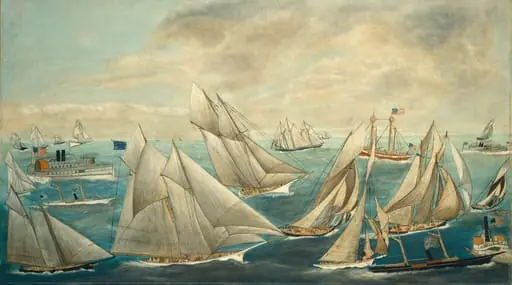
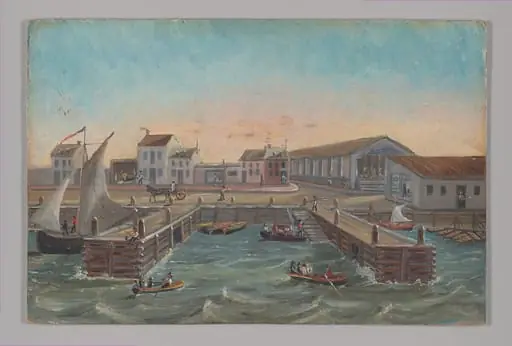
The scene portrays a busy harbor at dawn, with a large fishing vessel preparing to sail for the Grand Banks, a rich fishing ground off Newfoundland. Smaller boats shuttle supplies and crew, while figures on the dock and shoreline engage in the routines of departure. Frost emphasizes communal labor and maritime tradition, framing the voyage not as adventure but as necessary work, rooted in the economic and social fabric of coastal New England life.
Technique & Style
Frost employed flat planes of bold, unmodulated color and simplified forms, avoiding perspective conventions typical of academic painting. His compositions are crowded yet orderly, with ships and buildings arranged to guide the eye through the harbor’s activity. Though lacking chiaroscuro, his use of strong contrasts, white sails against dark water, yellow buildings against blue sky, creates visual rhythm and spatial clarity, reflecting folk traditions over learned technique.
History & Provenance
Painted around 1900, the work remained in private hands until acquired by the Museum of Fine Arts, Boston, where it is now held. Frost’s paintings were largely overlooked during his lifetime but gained recognition in the 20th century as valuable records of regional maritime history. His decision to depict scenes from the mid-1800s, decades after they occurred, underscores his intent to preserve a past he witnessed firsthand in his youth.
Context
In the mid-19th century, Marblehead was a thriving fishing port, its economy tied to cod and halibut voyages to the Grand Banks. By Frost’s time, industrialization and changing fisheries had begun to erode this way of life. His paintings, made decades later, serve as nostalgic records of a community in transition, offering insight into the tools, vessels, and social structures that defined coastal New England before mechanization transformed it.
Legacy
Frost’s work is now regarded as an important contribution to American folk art, valued for its unfiltered depiction of maritime labor and local history. Though he lacked formal training, his paintings provide historians with rare visual evidence of 19th-century port life. His legacy endures not through artistic innovation, but through the quiet authority of his documentation, each scene a testament to a world that faded with the sails.
Own this work as a print
Artist & collection
Artist
John Orne Johnson Frost (January 2, 1852 – November 3, 1928), who signed his work as J.