Artwork
Linlithgow Palace
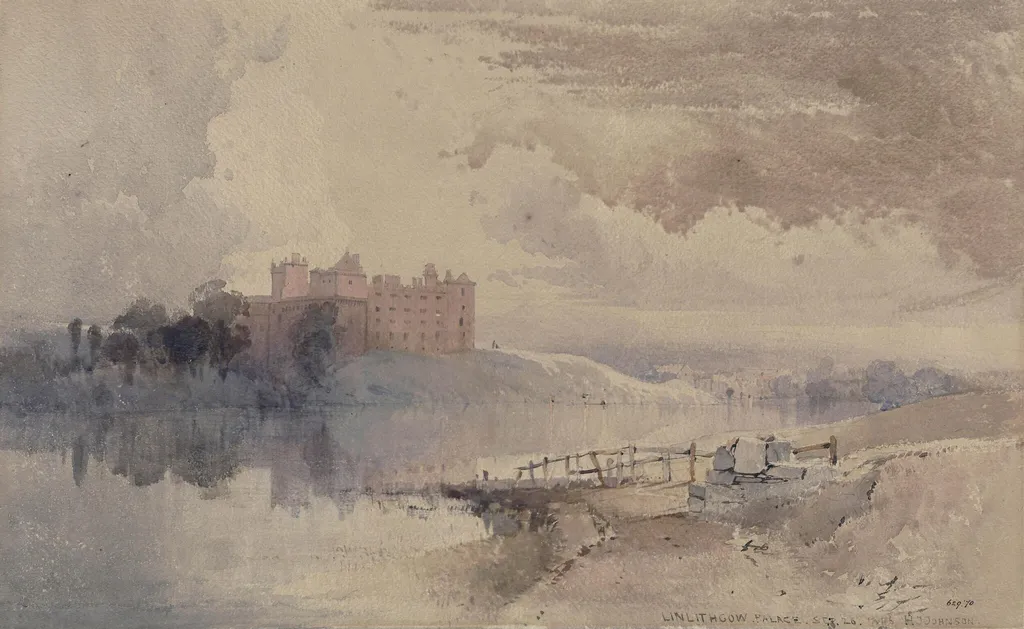
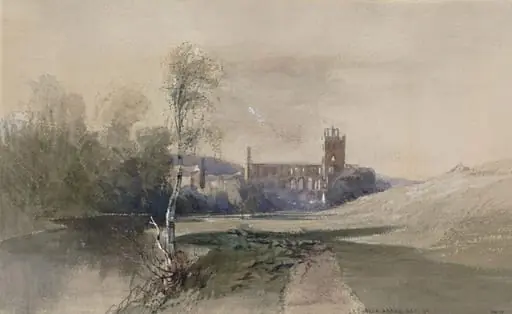
Linlithgow Palace is a watercolor work on paper by the British Romanticist artist Harry John Johnson. It dates from 1846 and is held in the collection of the Victoria and Albert Museum.
About this work
Overview
This work documents a site that served as a principal residence for Scottish monarchs during the 15th and 16th centuries before falling into disuse and ruin.
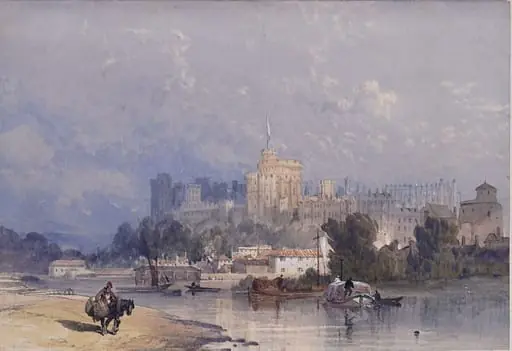
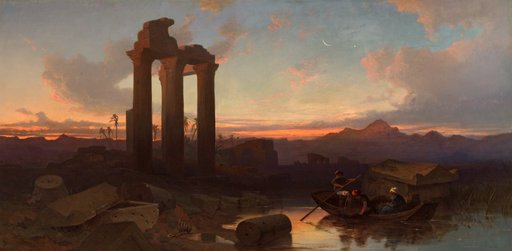
Harry John Johnson's 1846 watercolour, Linlithgow Palace, depicts the historic ruins of the former royal residence in West Lothian, Scotland. The composition centers on the substantial stone remnants of the palace, which stand prominently on a hillside adjacent to Linlithgow Loch. Johnson renders the architecture with a focus on its castle-like mass and the texture of its weathered masonry, capturing the structure after its destruction by fire in 1746.
The foreground features a wooden fence running along the water's edge, interspersed with scattered rocks and earthy terrain that lead the viewer's eye toward the main subject. Above, the sky is filled with soft, light clouds, rendered in a palette of muted pale blues, grays, and browns characteristic of the artist's mid-19th-century British style. This work documents a site that served as a principal residence for Scottish monarchs during the 15th and 16th centuries before falling into disuse and ruin.
Created during a period of growing interest in Scottish heritage and picturesque landscapes, the painting preserves the atmospheric quality of the location as it appeared in the Victorian era, balancing architectural detail with the natural surroundings of the loch.
Subject & Meaning
The work captures the ruined palace as a symbol of Scotland’s medieval heritage, emphasizing its isolation and the passage of time. By situating the building against a serene waterside, Johnson suggests a contemplative relationship between the man‑made monument and the natural landscape, inviting viewers to consider the endurance of history within a changing environment.
Technique & Style
Johnson employs rapid, loosely applied brushstrokes that convey the fleeting effects of light and atmosphere. The water’s surface mirrors the sky and the palace, creating a subtle haziness that softens architectural details. This approach, characteristic of mid‑nineteenth‑century British watercolour, prioritises tonal harmony over precise rendering, producing a dreamy, almost lyrical visual impression.
History & Provenance
Signed by the artist, the painting dates to 1846, a period when Johnson was active in documenting historic British sites. The work entered the collection of the Victoria and Albert Museum, where it remains part of the institution’s holdings of 19th‑century topographical watercolours, illustrating the era’s interest in recording national landmarks.
Artist & collection
Artist
Henry John Johnson, usually known as Harry was an English landscape and water colour painter.