Artwork
St. Mawes Castle, near Falmouth
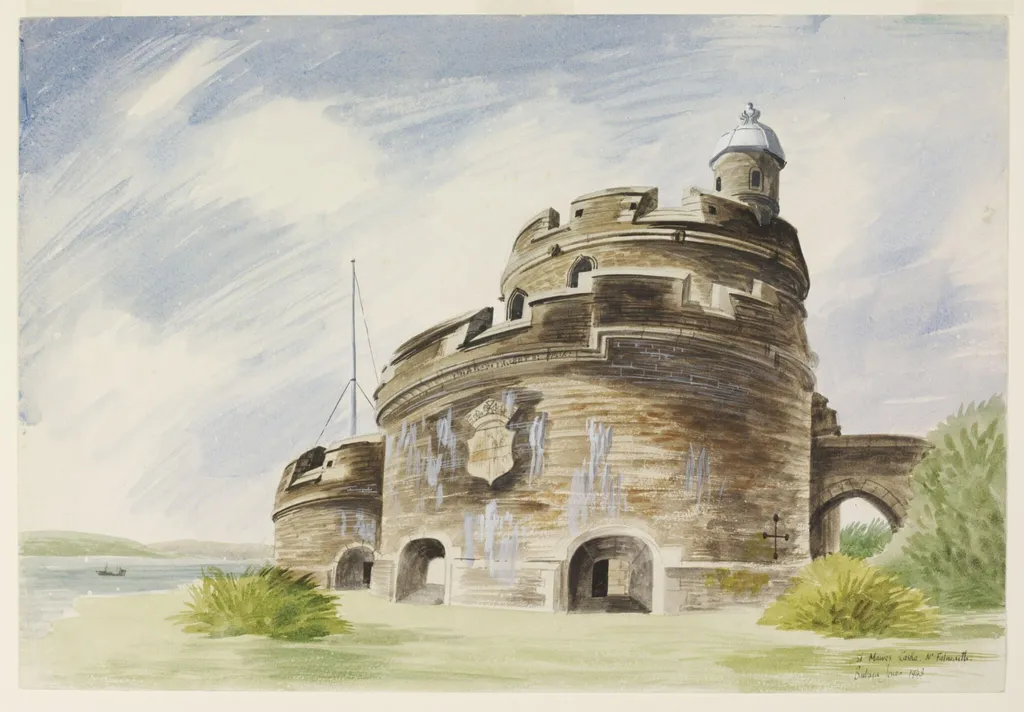
St. Mawes Castle, near Falmouth is a watercolor work on paper by the British Romanticist artist Barbara Jones. It dates from 1943 and is held in the collection of the Victoria and Albert Museum.
About this work
Overview
Mawes Castle, a Tudor fortification near Falmouth, rendered with quiet precision.
Barbara Jones created this watercolour in 1943 as part of the 'Recording Britain' initiative, a government-backed effort to document the nation’s architectural heritage during wartime. The work captures St. Mawes Castle, a Tudor fortification near Falmouth, rendered with quiet precision. Commissioned by the Committee for the Employment of Artists in Wartime, the project sought to sustain artists’ livelihoods while preserving visual records of places at risk from conflict and change.
Subject & Meaning
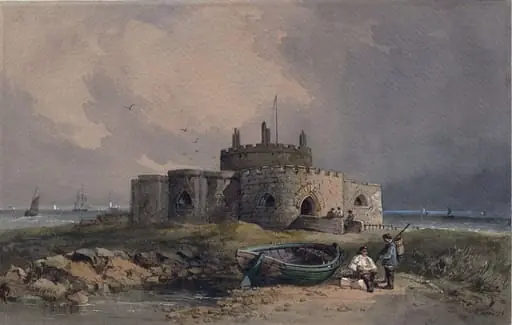
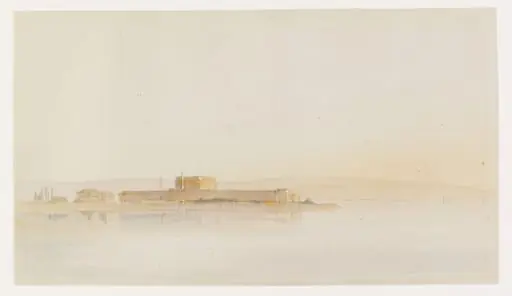
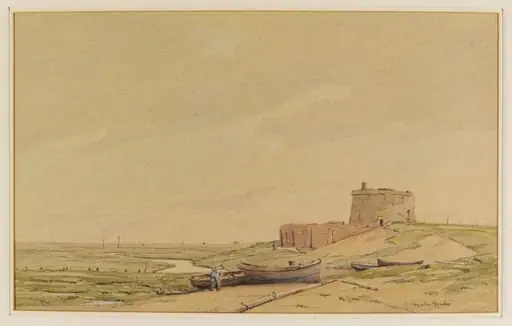
The painting focuses on the castle’s circular bastion, crowned by a domed structure, standing on a grassy promontory overlooking water. Its isolation and stillness suggest a quiet resilience. The inclusion of a single boat and undisturbed landscape conveys a sense of continuity amid national upheaval.
The scene does not emphasize military function but rather the enduring presence of the structure within its natural setting.
Technique & Style
Jones employed transparent watercolour washes to achieve a light, airy quality, allowing the paper’s texture to subtly influence the tone. Soft edges and muted earth tones define the stone walls, while delicate brushwork renders foliage and water with restraint. The sky, lightly glazed with blue and white, enhances the calm mood without dramatic contrast, reflecting the artist’s preference for understated observation over expressive intensity.
History & Provenance
The work was produced under the 'Recording Britain' project, directed by Sir Kenneth Clark, which collected over 1,500 watercolours between 1939 and 1945. It entered the Victoria and Albert Museum’s collection as part of this national archive. The project’s records indicate Jones was among the many artists commissioned to travel and document vulnerable sites, ensuring their visual memory would survive potential destruction or neglect.
Context
During the Second World War, Britain faced widespread disruption, including bombing threats to historic sites and the mobilization of rural communities. 'Recording Britain' responded to fears of cultural loss by encouraging artists to record landscapes and architecture before they vanished. Jones’s depiction of St. Mawes, far from active conflict zones, reflects a broader interest in quiet, enduring places as symbols of national identity.
Legacy
The watercolour remains part of the 'Recording Britain' archive at the Victoria and Albert Museum, where it contributes to ongoing scholarship on wartime art and cultural preservation. Jones’s approach, attentive, unembellished, and grounded in observation, aligns with the project’s ethos. The work continues to be referenced in studies of 20th-century British landscape art and the role of art in times of national crisis.
Artist & collection
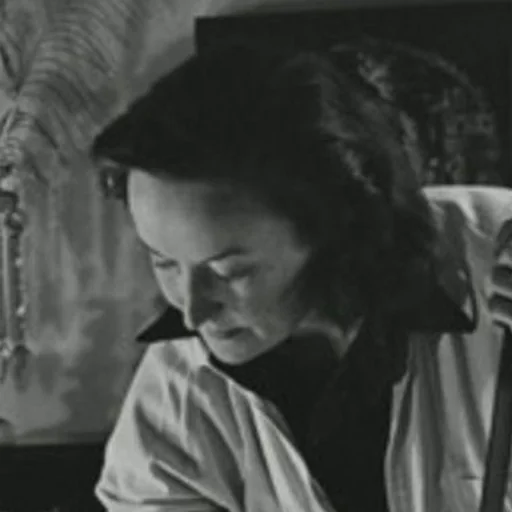
Artist
Barbara Mildred Jones (25 December 1912 – 28 August 1978) was an English artist, writer and mural painter. She is known for curating the exhibition Black Eyes and Lemonade (1951) and her book The Unsophisticated Arts (1951).

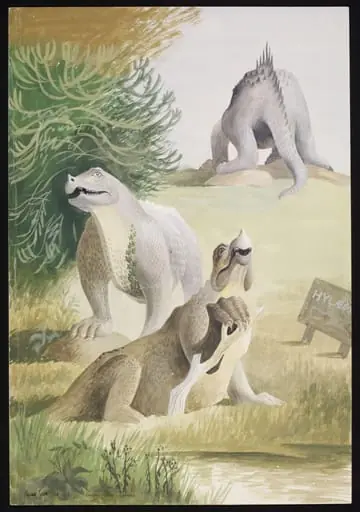 Crystal Palace Gardens, Sydenham, Kent
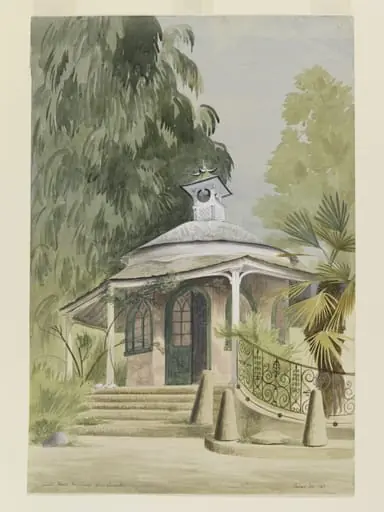 Summer House, Marlborough House, Falmouth
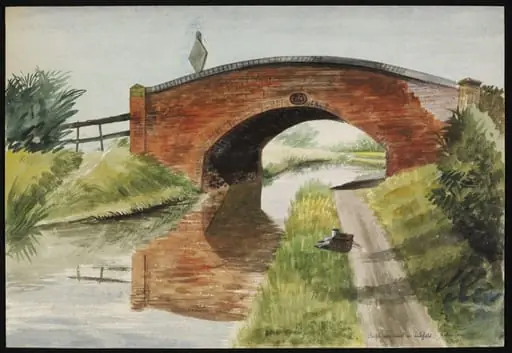 Bridge over Canal, near Litchfield
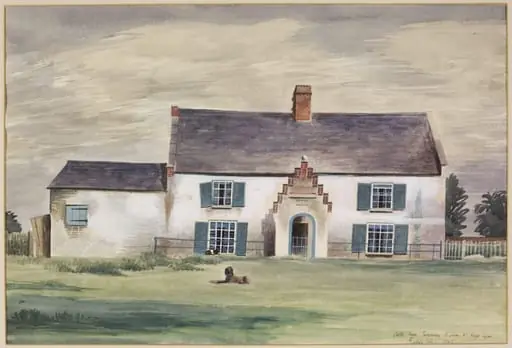 Castle Farm, Terrington St John, near King's Lynn
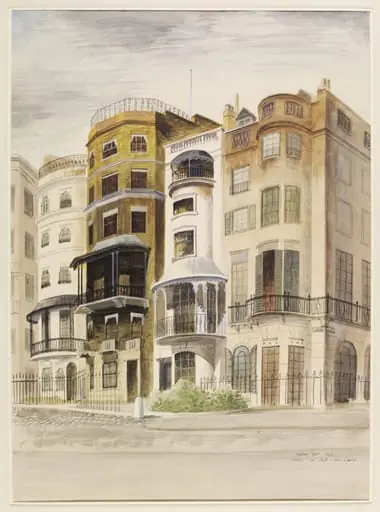 93 to 97 Park Lane, W.1.
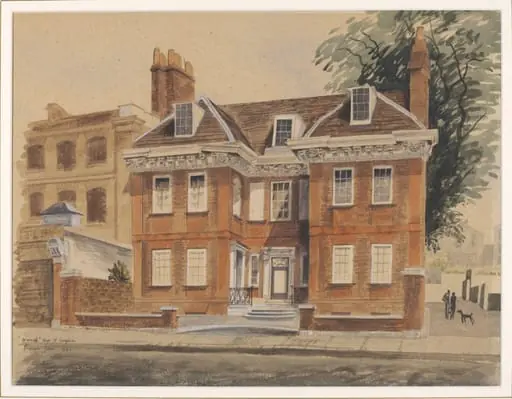 "Wrencote," High Street, Croydon
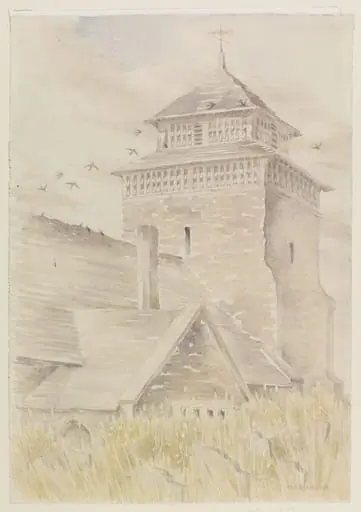
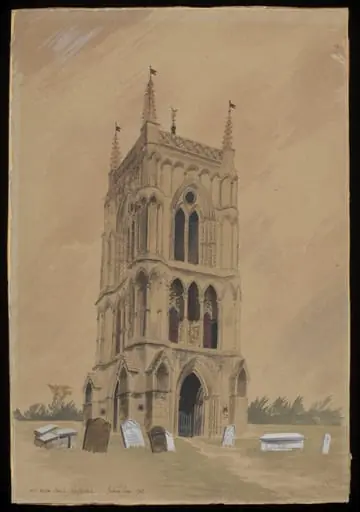 The bell tower, St. Mary's Church, West Walton near Wisbech
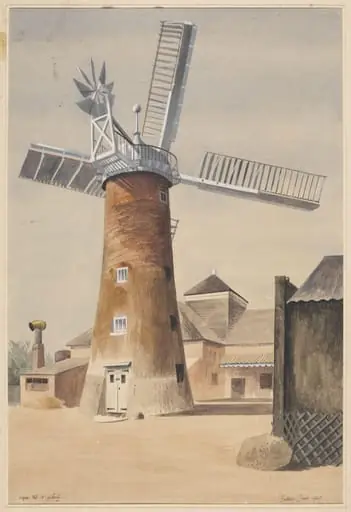 The Mill, Walpole Highway, near Wisbech