Artwork
Anna Maria van Schurman
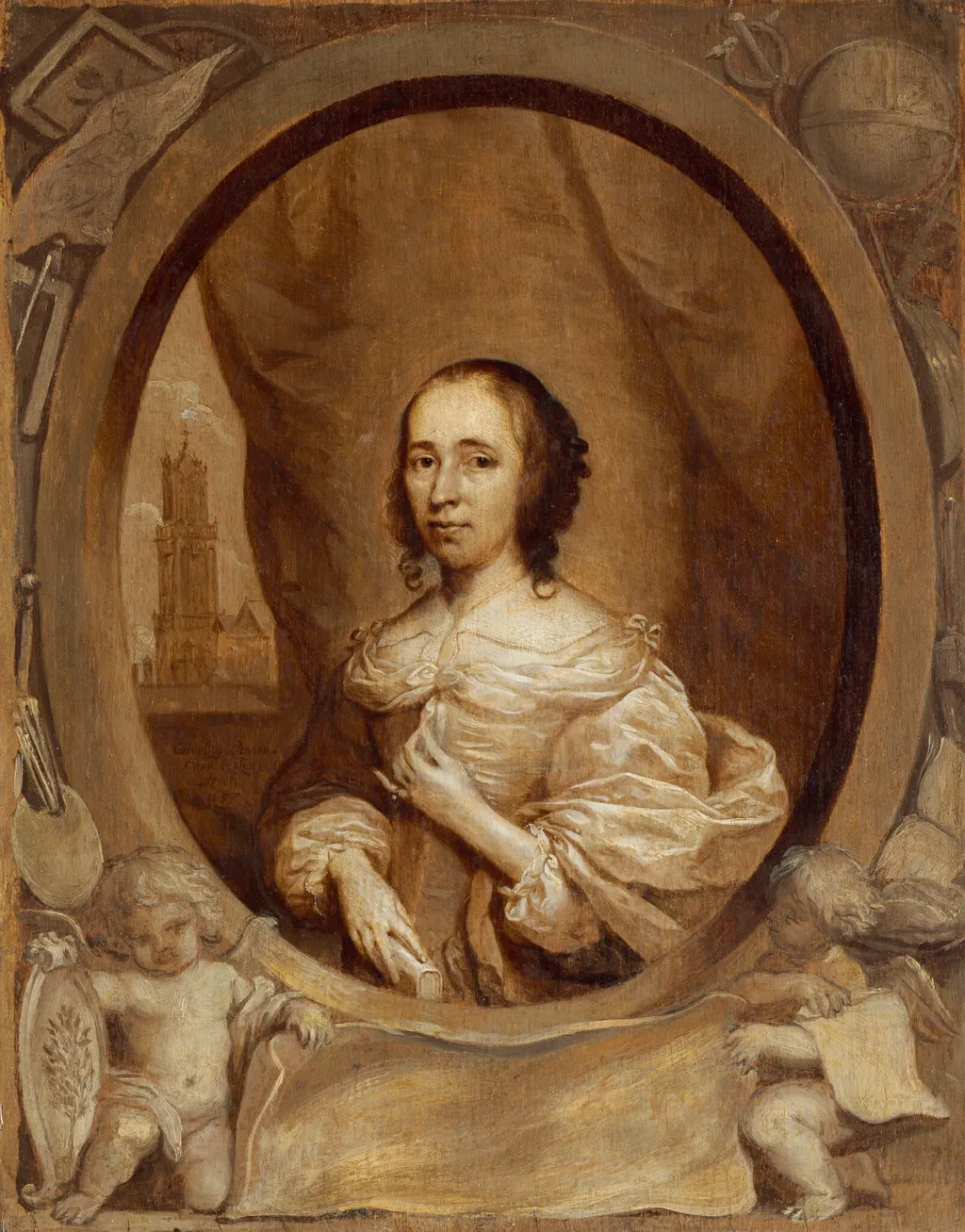
Anna Maria van Schurman is an oil painting by the Baroque artist Cornelis Jonson van Ceulen. It dates from 1657 and is held in the collection of the National Gallery of Art.
- Inscription
- Inscribed:center left, below the cathedral, in the portrait medallion: Cornelius Ionson / Van Ceulen / fecit / 1657
About this work
Technique & Style
Cornelis Jonson van Ceulen's 1657 portrait of Anna Maria van Schurman is rendered in oil on a wooden panel support, measuring 31 cm in height and 24.
Cornelis Jonson van Ceulen's 1657 portrait of Anna Maria van Schurman is rendered in oil on a wooden panel support, measuring 31 cm in height and 24.4 cm in width. The handling is restrained and precise, characteristic of the artist's portrait practice: the sitter's face is modeled with subtle, smooth transitions in tone to convey volume and presence, while the dark background and simple costume suppress extraneous detail. The three-quarter pose, softly lit to highlight facial features and the lace collar, aligns with contemporary Dutch portrait conventions. No later conservation reports are cited, and the painting's condition is not described in the cited sources.
History & Provenance
Cornelis Jonson van Ceulen created this oil-on-panel portrait of Anna Maria van Schurman in 1657. The artwork's documented provenance begins with the Amsterdam art dealer Clement de Jonghe, whose estate sold it in February 1679. It subsequently passed to Jan Six of Amsterdam, appearing in his estate sale in April 1702, and later belonged to Joan de Vries, who sold it in The Hague in October 1738.
By 1854, Reverend John Fuller Russell owned the painting in Middlesex; it was sold at his estate sale at Christie's in April 1885. Ralph Brocklebank acquired it for his Cheshire estate by 1904, and it was sold at his Christie's estate sale in July 1922. Joseph Fuller Feder of New York then acquired the panel, which passed by inheritance to his wife Edith Mosler Feder and later to their grandson Joseph F. McCrindle, who gifted it to the National Gallery of Art in Washington, D.C., in 2002.
The painting entered the National Gallery of Art's collection as McCrindle's 2002 gift. No exhibition history is mentioned in the cited sources.
Context
The 1657 portrait of Anna Maria van Schurman by Cornelis Jonson van Ceulen has been traced through several documented sales, from Clement de Jonghe's estate in 1679 to the collection of Ralph Brocklebank, and finally to the National Gallery of Art via the inheritance of Joseph F. McCrindle in 2002. Scholars such as Gerard Hoet (1752) and Gustav Waagen (1854) recorded the work in early catalogues, highlighting its significance as an example of Dutch Golden Age portraiture and as a rare depiction of an educated female subject. The painting's inclusion in the National Gallery of Art's catalogue underscores its relevance to scholarship on gender and artistic representation in seventeenth-century Holland.
Legacy
The 1657 oil portrait of Anna Maria van Schurman passed through several distinguished owners, beginning with Clement de Jonghe and Jan Six, and later collectors such as Ralph Brocklebank, before reaching the National Gallery of Art in Washington, D.C. Its documented provenance, recorded by scholars including Gustav Waagen, underscores a continuous appreciation of the work as a rare visual record of an educated seventeenth-century woman. The painting's presence in a public collection and its citation in studies of early modern portraiture have reinforced van Schurman's reputation as a pioneering intellectual, shaping later interpretations of women's artistic representation.
Overview
Painted in 1657 by Cornelis Jonson van Ceulen, this oil-on-panel portrait depicts Anna Maria van Schurman, a distinguished Dutch scholar and artist renowned for her defense of female education. The composition presents the sitter seated at a table, surrounded by books and papers that signify her intellectual pursuits. Van Schurman gazes intently at her work, embodying the focus of a dedicated humanist.
The portrait serves as a visual testament to her extraordinary erudition; she was a polyglot proficient in fourteen languages, including Latin, Ancient Greek, and Biblical Hebrew, and is historically noted as the first woman to unofficially attend a Dutch university. By including scholarly attributes rather than traditional domestic symbols, van Ceulen highlights her identity as a classical scholar, poet, and philosopher. Created late in the artist's career, the work aligns with the Dutch Golden Age tradition of depicting learned individuals, yet it is distinct for celebrating a woman's public intellectual authority.
The painting captures the essence of a figure who excelled in art, music, and literature, solidifying her legacy as a pioneer for women's education in the seventeenth century.
Subject & Meaning
The portrait centers on Anna Maria van Schurman, a prominent intellectual of the 17th century renowned for her erudition. She is depicted at a table, engrossed in her work with books and papers, a visual testament to her scholarly pursuits. This portrayal emphasizes her identity as a learned individual, reflecting the high regard she held for education and intellectual engagement.
Own this work as a print
Artist & collection


- Portrait of Elisabeth van Bebber (1643-1704)
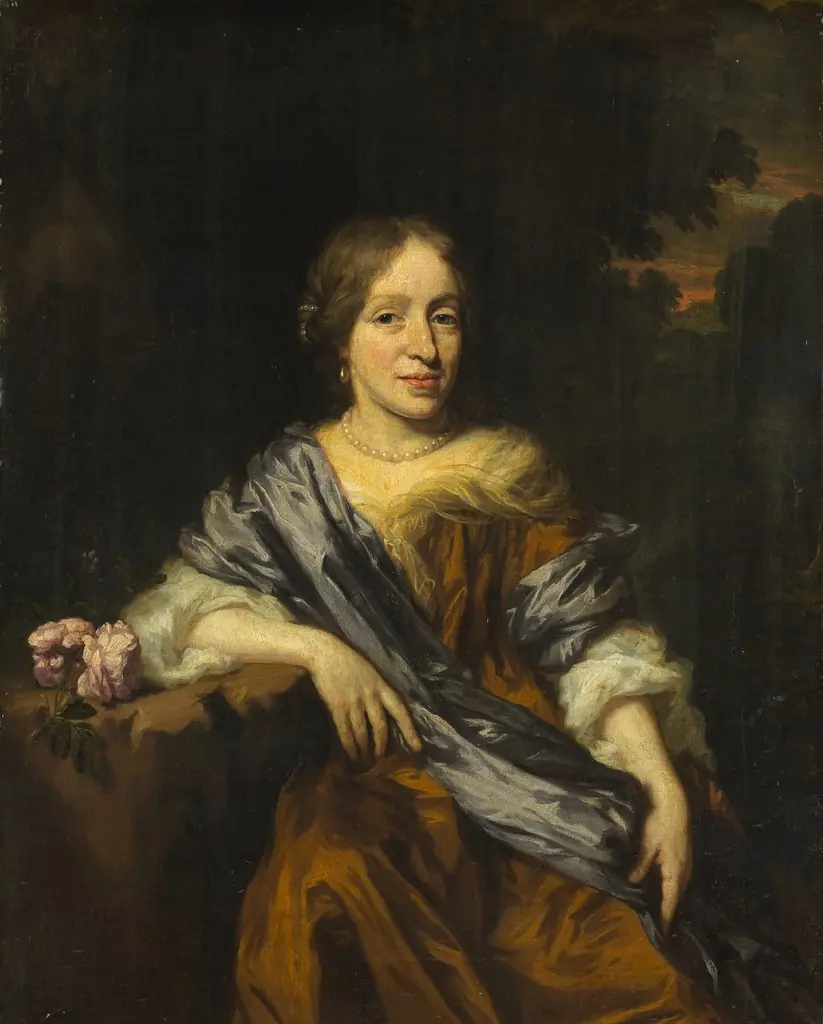 Portrait of Catharina Pottey (1641-1718), sister of Willem and Sara Pottey
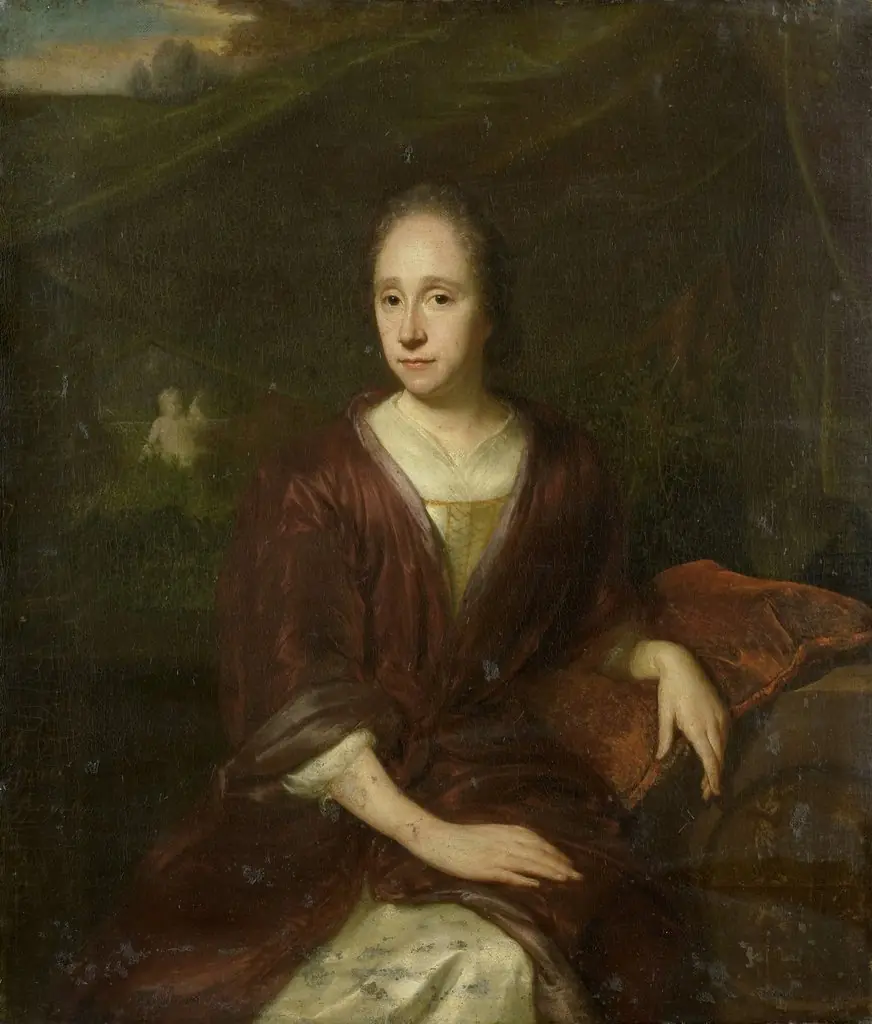 Portrait of Margaretha Nelis (1652-17050, second wife of Casparus Commelin
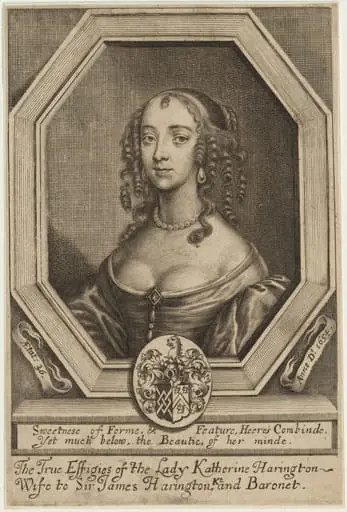 Lady Katherine Harrington
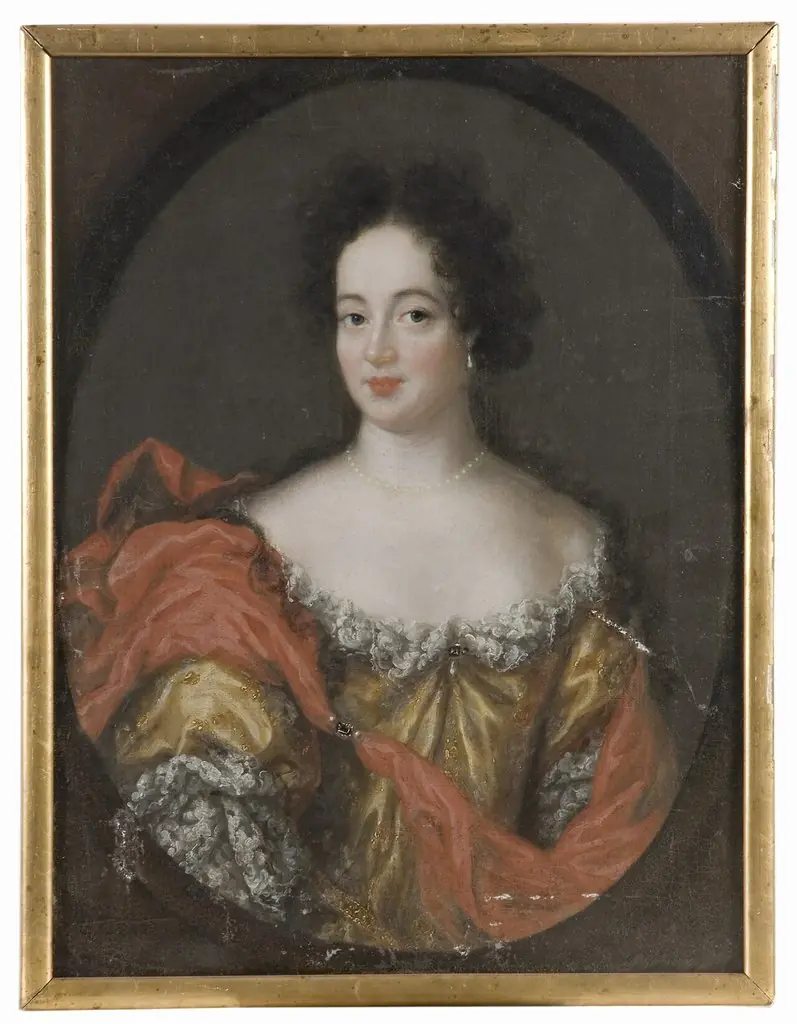 Agnes Wrangel, levnadsdata okända, möjligen hovfröken hos riksänkedrottning Hedvig Eleonora
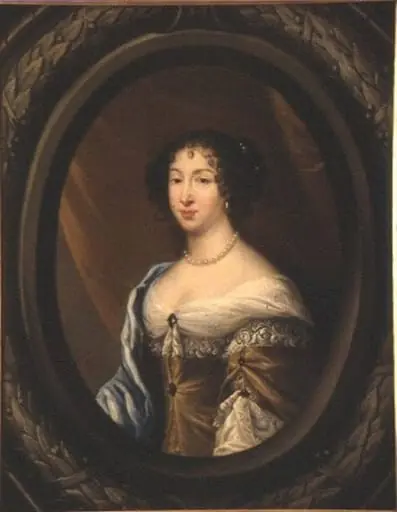 Porträtt av Hedvig Eleonora
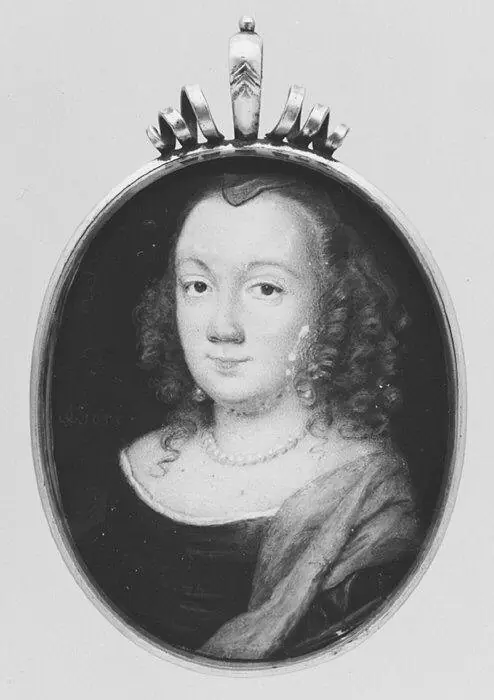 Portrait of a Woman, Said to Be Lucy Percy (1600?–1660), Countess of Carlisle
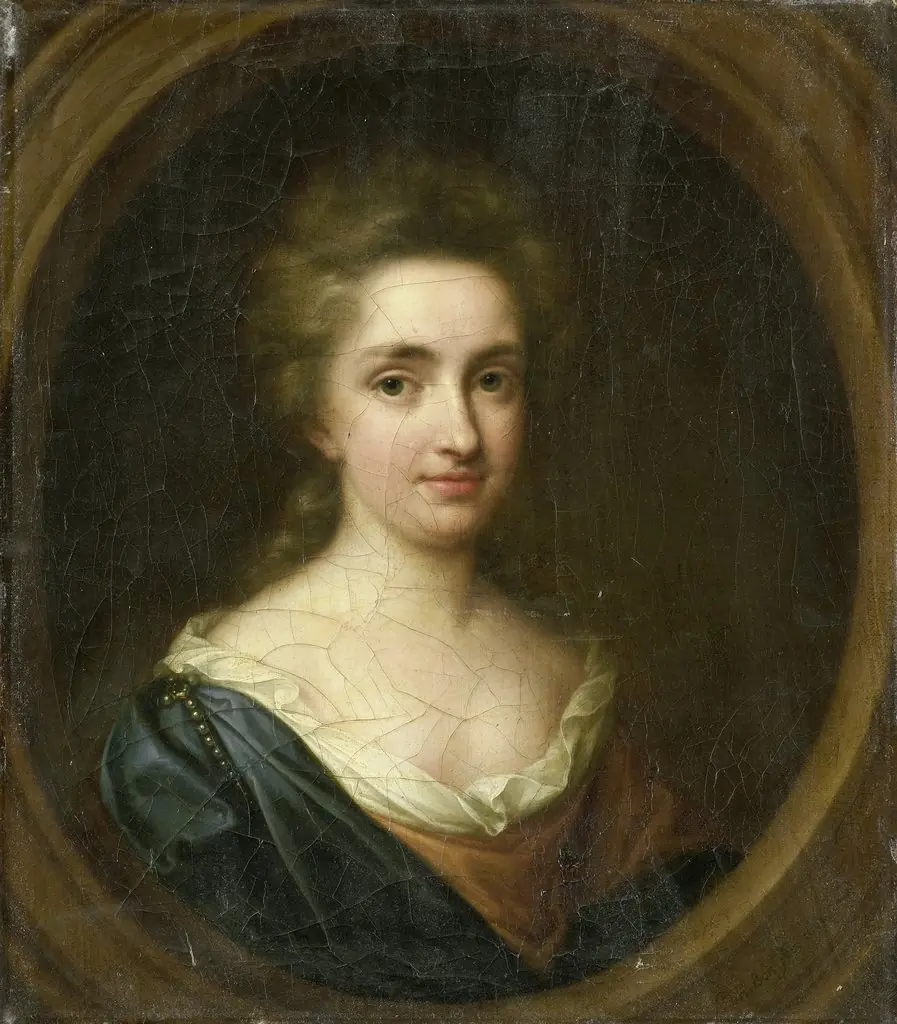 Portrait of Johanna van Citters (1672-1740), sister of Anna van Citters
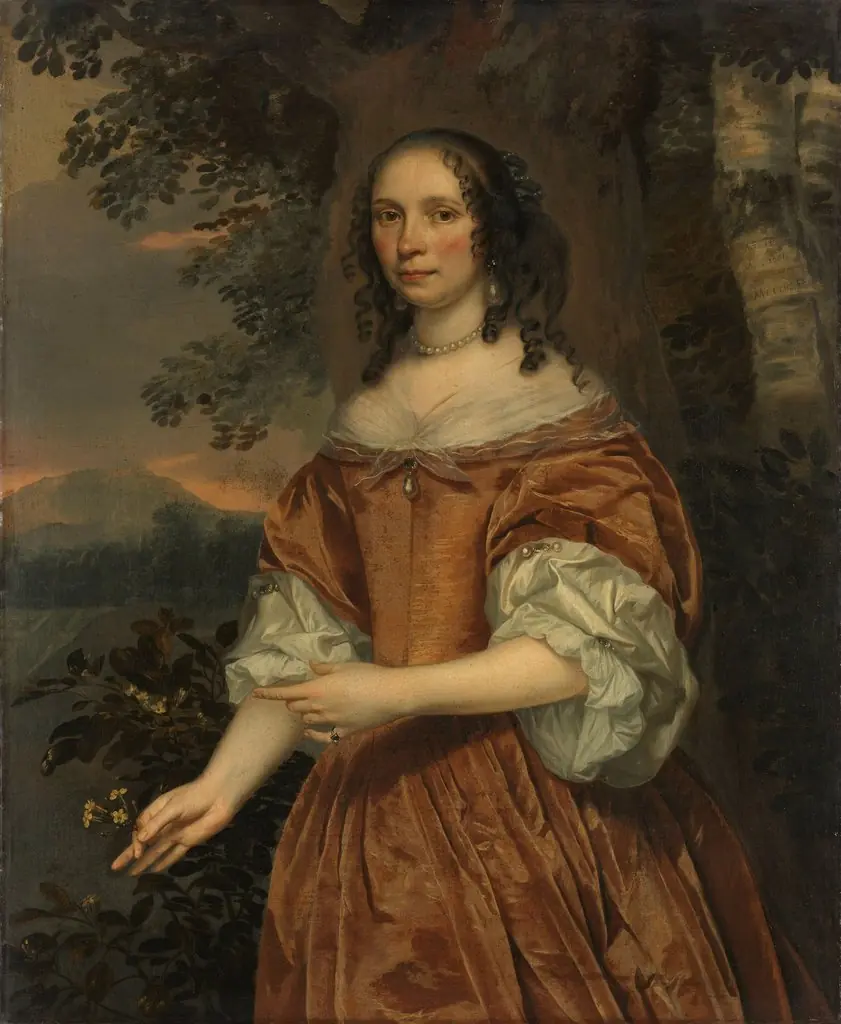 Portrait of Maria de Witte Françoisdr (b 1616). Wife of Johan van Beaumont
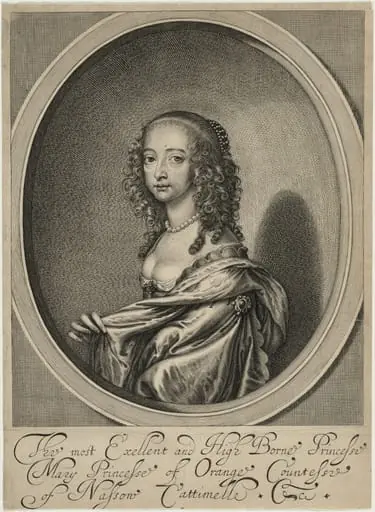 Mary, Princess of Orange
 Unbekannte Dame
 Marguerite Lemon