Artwork
Landscape of the Ocean and the Sea
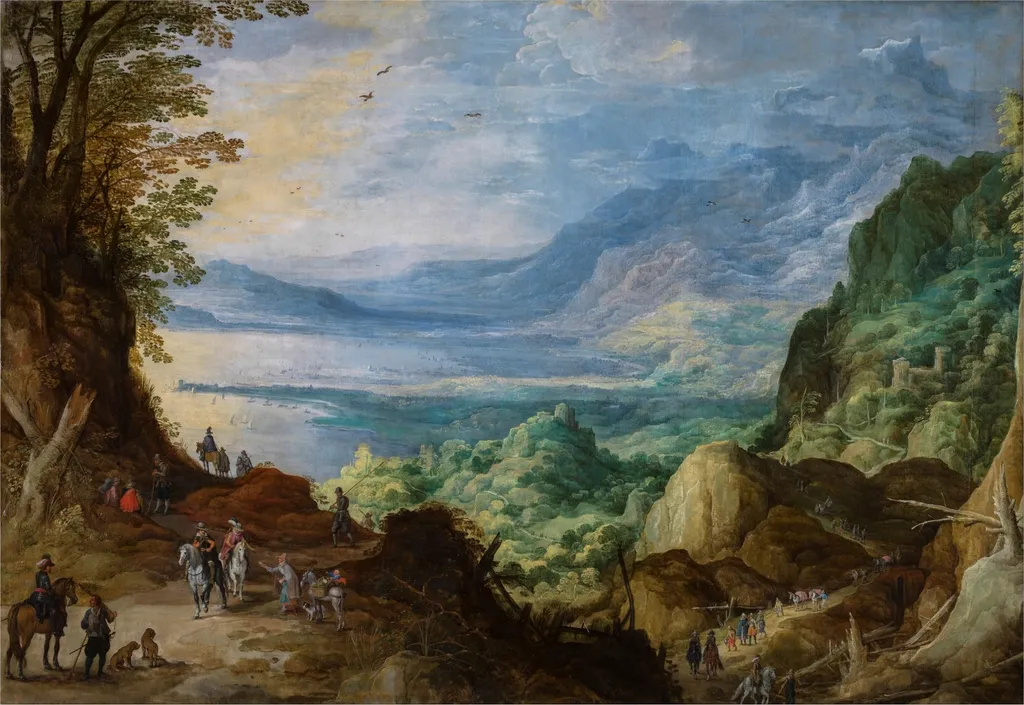
Landscape of the Ocean and the Sea is an oil painting by the Flemish Baroque painting artist Joos de Momper the Younger. It dates from 1623 and is held in the collection of the Museo del Prado.
About this work
Subject & Meaning
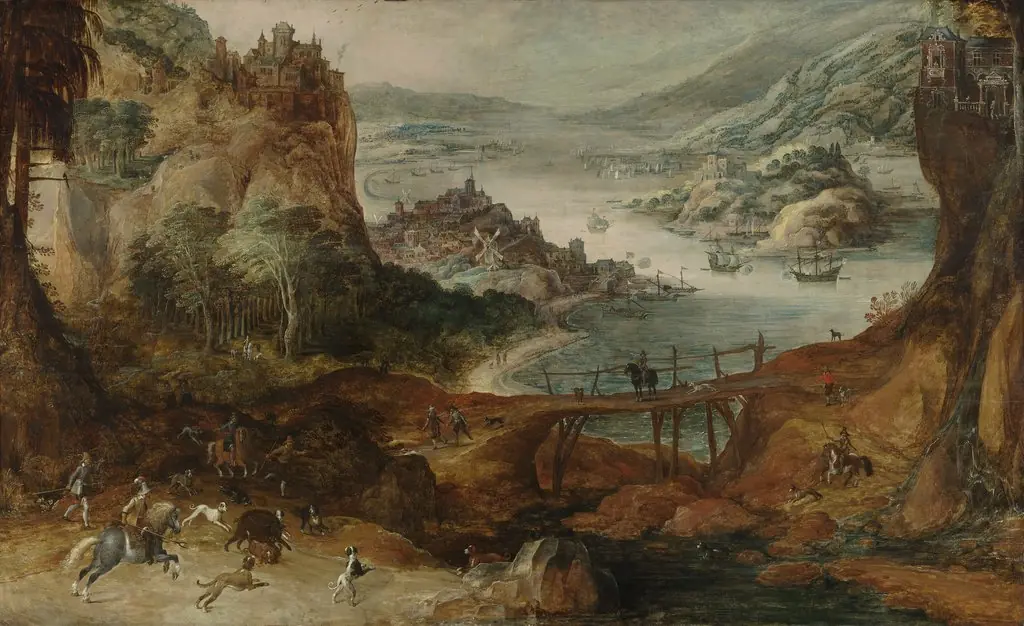
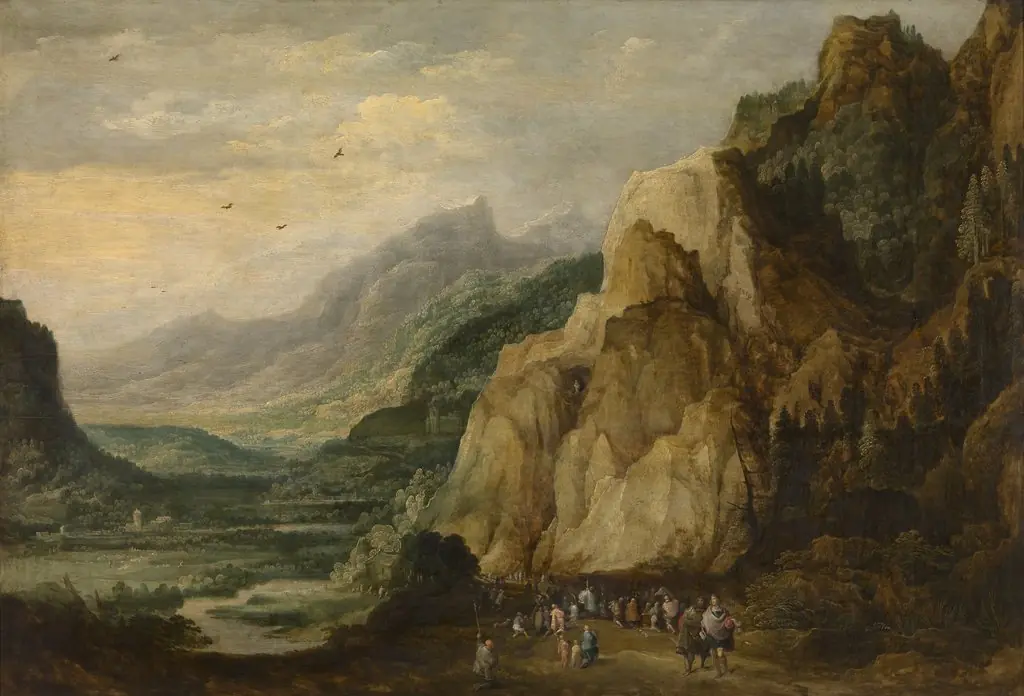
These include hunters with game, beggars, and mounted riders, who perform quotidian activities within a panoramic view of a gulf and ocean beyond.
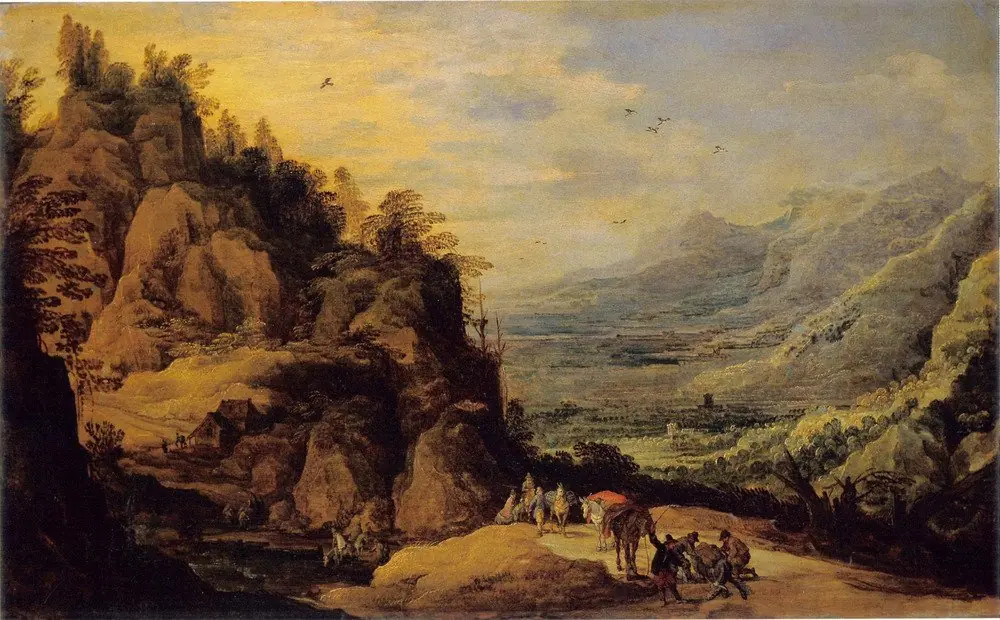
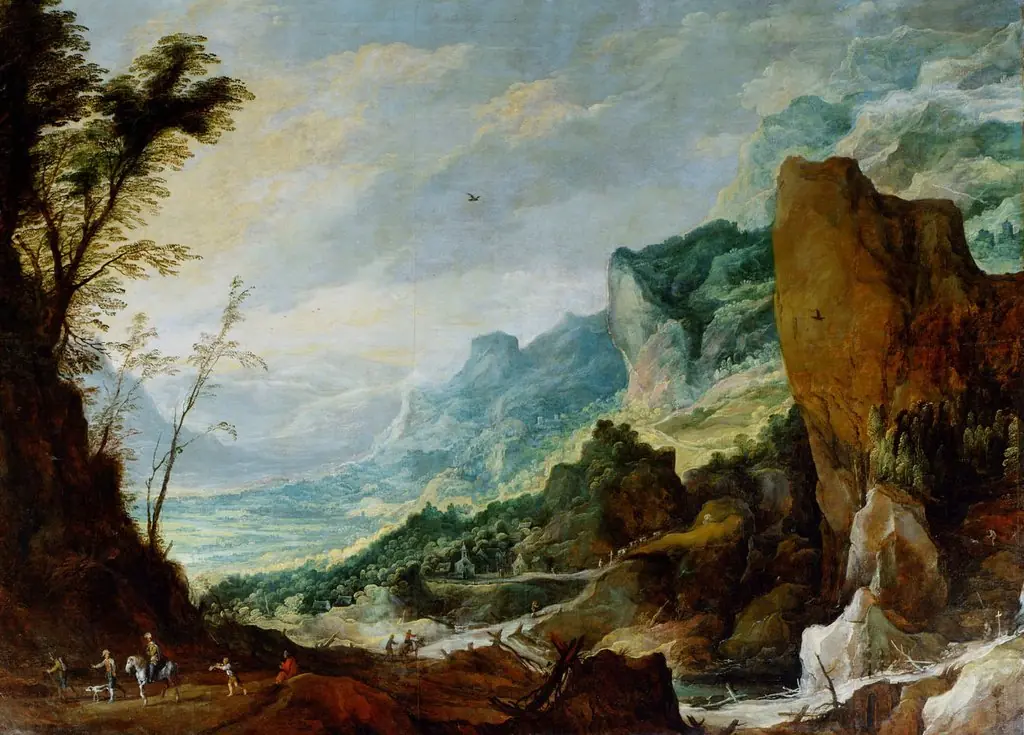
The painting depicts a sweeping coastal landscape where towering, fantastical mountains dissolve into a distant sea, framed by a high horizon that isolates small-scale figures in the foreground. These include hunters with game, beggars, and mounted riders, who perform quotidian activities within a panoramic view of a gulf and ocean beyond. The composition synthesizes Netherlandish traditions with an imaginative, elevated topography that contrasts with the flatness of Flanders, aligning with Baroque Flemish taste for the picturesque exoticism of mountainous and maritime scenes.
The elevated viewpoint and the reduction of human activity to anecdotal scale echo the influence of Pieter Bruegel the Elder's world landscapes, while the overall effect conveys a cultivated fantasy of nature's grandeur rather than a topographically accurate record.
Technique & Style
Landscape of the Ocean and the Sea is executed in oil paint on a canvas support. Created in 1623, the work measures 174 cm in height and 256 cm in width. Stylistically, it exemplifies the Baroque Flemish tradition of creating large-scale, fantastical landscapes that diverge from the flat topography of Flanders in favor of imaginary, mountainous terrains and exotic coastlines.
The composition features a high horizon line, a compositional device attributed to the influence of Pieter Bruegel the Elder. De Momper employs a stock model where reduced figures, such as hunters and riders, occupy the foreground to contrast with the extensive, melding views of mountains and the ocean in the background.
History & Provenance
Landscape of the Ocean and the Sea is an oil-on-canvas work by the Flemish painter Joos de Momper the Younger, dated 1623. The painting has belonged to the Spanish Royal Collection since at least the beginning of the eighteenth century; in 1700 it was recorded at the Buen Retiro Palace in Madrid. It subsequently entered the Museo del Prado in Madrid, where it remains today under inventory number 1602.
Context
Landscape of the Ocean and the Sea (1623) is an oil‑on‑canvas work measuring 174 × 256 cm, held in the Museo del Prado and documented in the Spanish Royal Collection since the early 18th century, having been displayed at the Buen Retiro Palace in 1700. The composition combines an expansive, imagined mountain‑sea vista with diminutive figures engaged in everyday acts, a motif typical of Joos de Momper the Younger's oeuvre. De Momper, a leading Flemish Baroque landscapist, favored fantastical topography and exotic settings, distinguishing his imaginative vistas from the more naturalistic approaches of his contemporaries; his high horizon and recurring model figures reflect the influence of Pieter Bruegel the Elder.
Contemporary scholarship emphasizes the painting's role in illustrating the market demand for imaginative landscapes among elite patrons and its significance within the evolution of Flemish landscape painting.
Legacy
Later scholars view Joos de Momper's Landscape of the Ocean and the Sea as a hallmark of imaginative Flemish scenery, noted for its high horizon and fantastical mountain‑sea fusion that echoed Pieter Bruegel's influence. The work entered the Spanish Royal Collection in the early 18th century, was displayed at the Buen Retiro Palace, and has remained in the Museo del Prado ever since. Its status as a prized royal piece contributed to de Momper's reputation as a master of invented landscape, a trait that shaped 17th‑century landscape patronage. Contemporary catalogues and exhibition histories repeatedly reference the painting when discussing the evolution of European landscape art.
Overview
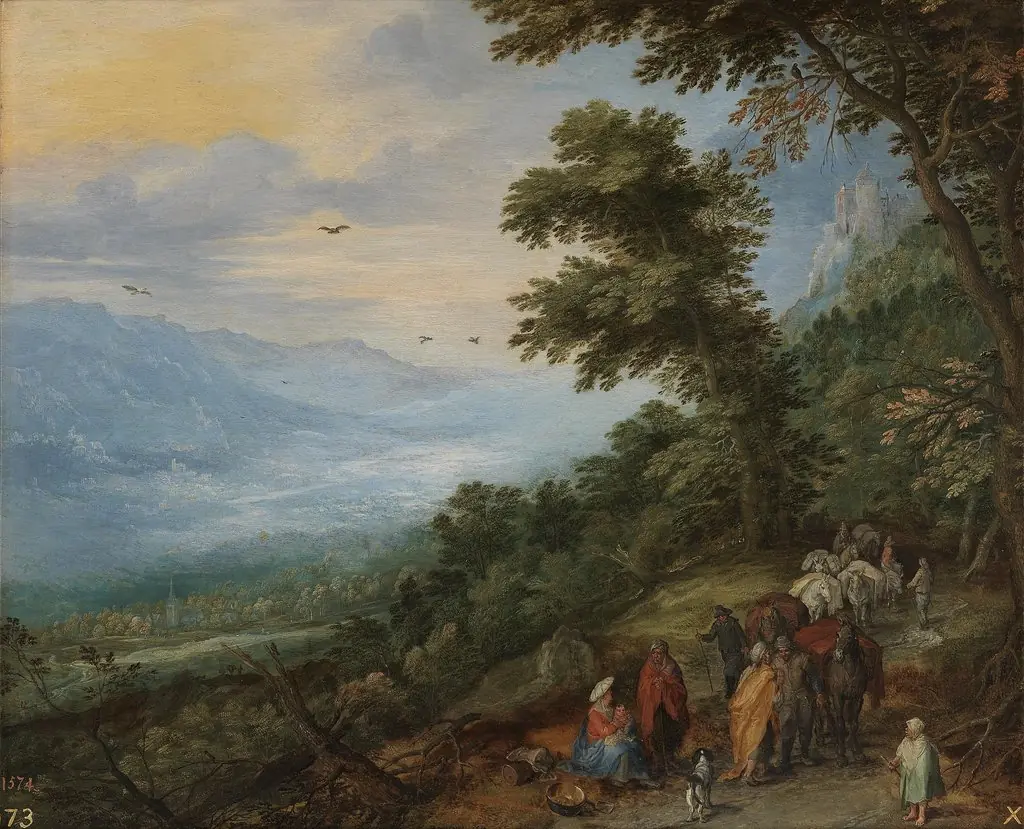
Landscape of the Ocean and the Sea, executed in 1623 by the Flemish painter Joos de Momper the Younger, is an oil-on-canvas work that exemplifies the artist's mature style of panoramic mountainous vistas. The composition features a deep, atmospheric recession typical of Momper's landscapes, where a vast ocean and sea stretch into the background beneath a dynamic sky. In the foreground, a dirt path winds through a rugged terrain of rocks and trees, populated by a group of travelers.
These figures include individuals on horseback and others walking or standing, accompanied by a dog, which animates the scene without disrupting its overall tranquility. Painted during the early 1620s, this work reflects Momper's continued exploration of imaginary landscapes that blend observed natural elements with idealized, monumental geography. The painting is currently held in the collection of the Museo del Prado in Madrid.
It stands as a significant example of early 17th-century Flemish landscape painting, demonstrating the artist's skill in organizing complex spatial relationships and his enduring influence on the genre.
Own this work as a print
Artist & collection
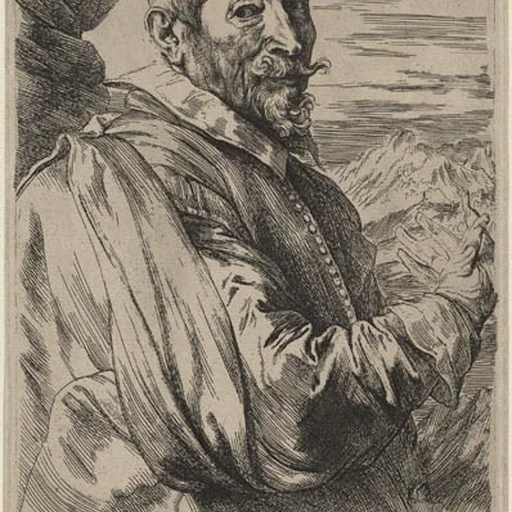
Artist
Joos de Momper the Younger or Joost de Momper the Younger (c. 1564 – 5 February 1635) was a Flemish landscape painter active in Antwerp between the late 16th century and the early 17th century. Brueghel's influence is…