Artwork
Polyhymnia
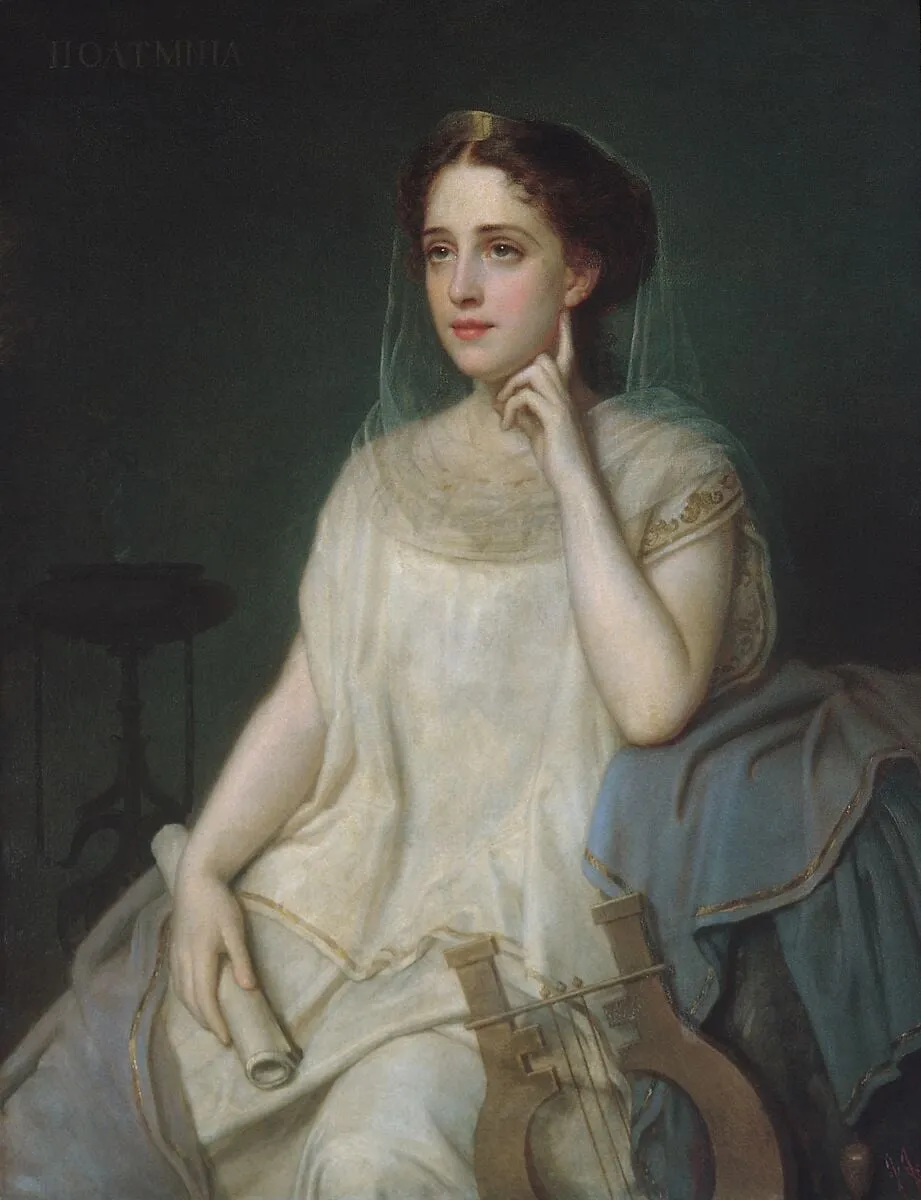
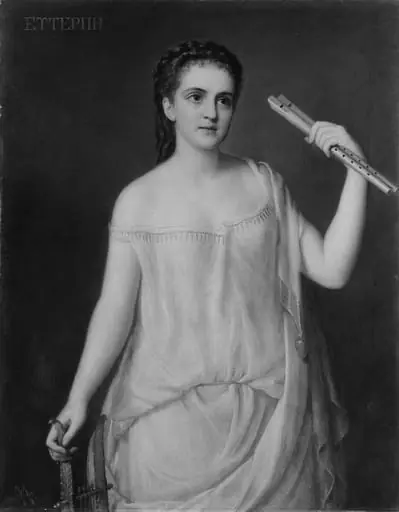
Polyhymnia is an oil painting by the Impressionist artist Joseph Fagnani. It dates from 1869 and is held in the collection of the Metropolitan Museum of Art.
About this work
If you like quiet portraits of women with stories, look up other muses in The Metropolitan Museum of Art.
A woman in a white robe sits on a cloud, holding a scroll. Her head tilts slightly, eyes looking past us. Gold stars dot the dark sky behind her.
This is Polyhymnia, the muse of sacred poetry. Fagnani painted her in 1869, when most American artists still looked to Europe for inspiration. The scroll she holds is blank, maybe waiting for words, maybe already full of them.
If you like quiet portraits of women with stories, look up other muses in The Metropolitan Museum of Art.
Subject & Meaning
Polyhymnia, painted by Joseph Fagnani in 1869, depicts a Muse in the form of a woman, drawing on the classical iconography of the nine Muses of Greek mythology. Polyhymnia is traditionally the Muse of sacred hymns and eloquence, and her portrayal here embodies the nineteenth-century revival of antique themes, in which artists reimagined mythological figures as idealized female subjects.
The work belongs to the genre of portraiture, suggesting that Fagnani treated the mythological subject with the dignity and individual presence typically reserved for portrait subjects, rather than as a purely allegorical figure. Held in the Metropolitan Museum of Art, the painting reflects the era's interest in linking classical learning with contemporary artistic practice.
Technique & Style
Executed in oil on canvas in 1869, the painting stands at 110.5 cm in height and 83.8 cm in width. Fagnani renders the draped figure with smooth, blended modelling that emphasizes the soft fall of fabric across the body and the delicate contours of the face and arms.
The subdued palette and restrained chiaroscuro lend a quiet monumentality, focusing attention on the contemplative mood and the iconographic attributes of the Muse, gesture and drapery, rather than dramatic incident.
History & Provenance
The oil-on-canvas portrait titled Polyhymnia was created by Joseph Fagnani in 1869 and depicts a female figure identified as a Muse. It is part of the collection of the Metropolitan Museum of Art, where it is classified within The American Wing, and measures 110.5 cm in height by 83.8 cm in width. No specific inventory or accession number is provided in the available sources, nor do the supplied records mention any exhibition history for the work beyond its presence in the museum's collection.
Overview
Joseph Fagnani’s 1869 oil on canvas, titled Polyhymnia, presents a solitary female figure seated upon a cloud. She wears a white robe, holds a scroll, and gazes beyond the viewer while a dark sky studded with gold stars forms the backdrop. The work belongs to the American Wing collection.
Artist & collection


 Portrait of Sofia Apraxina
 Portrait of Princess Anna Nikolayevna Golitsyna (?)
 Juliette Récamier
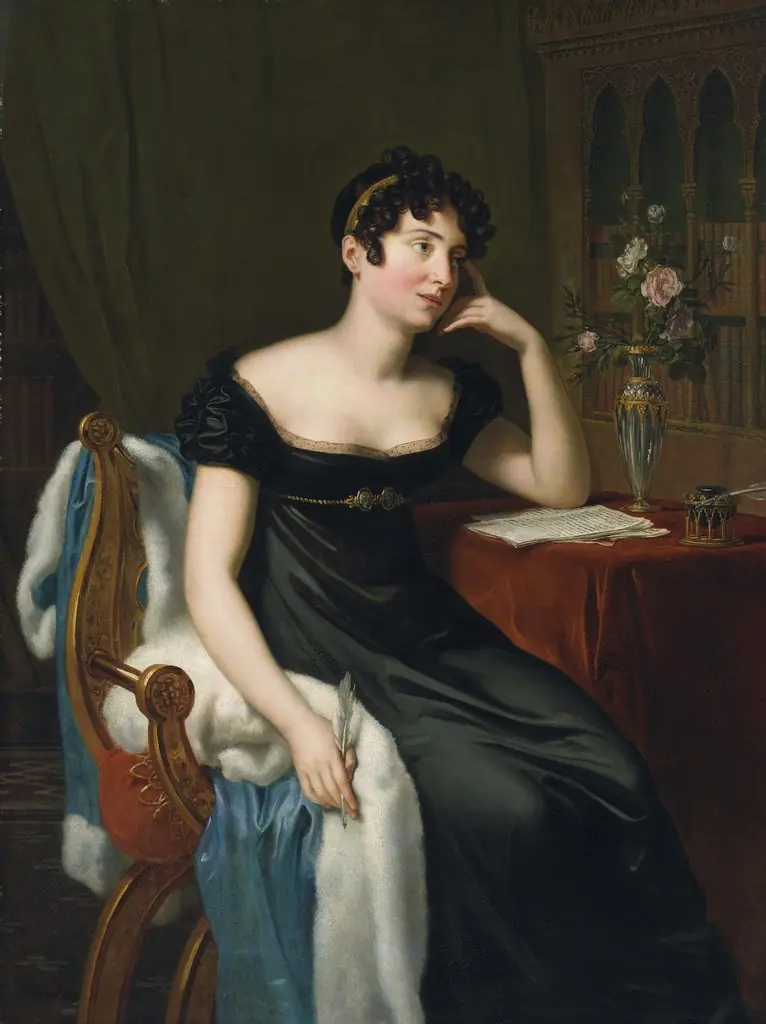 Portrait of Lady Morgan (Sydney Owenson) (1776-1859), Writer
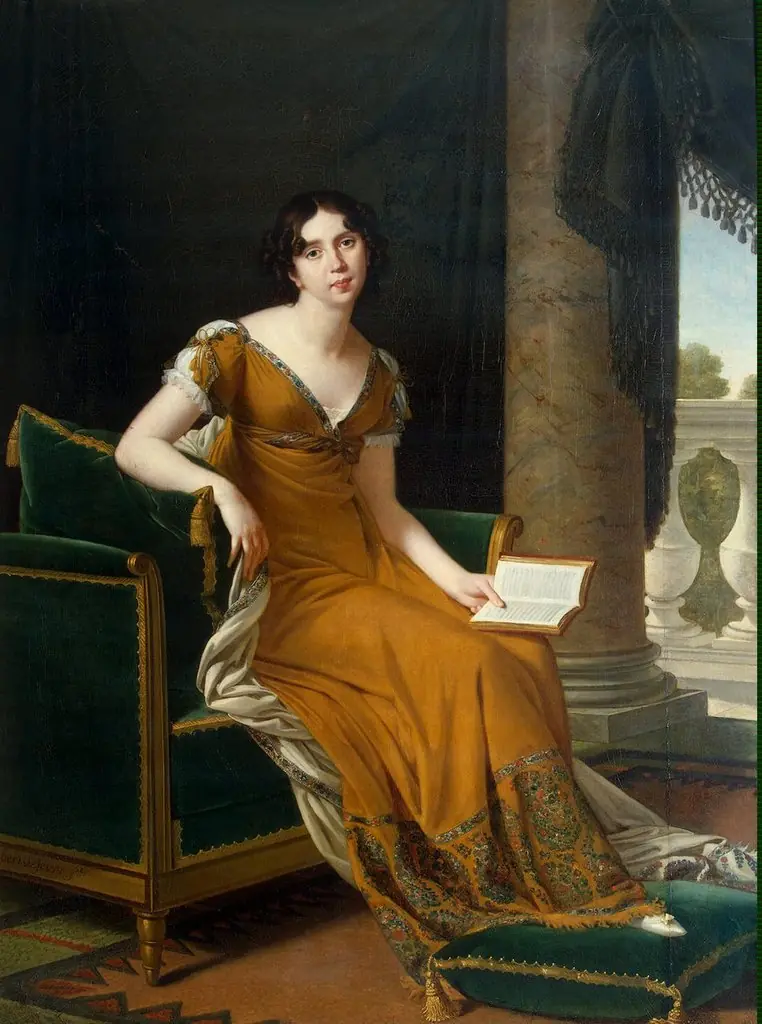 Portrait of Elisabeth Demidova
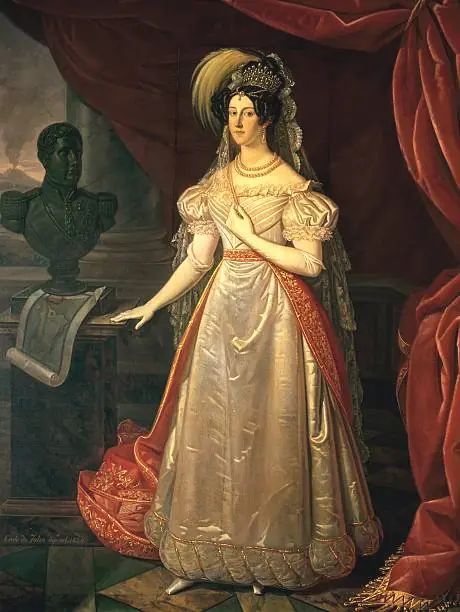 Maria Cristina of Savoy (1812-1836), queen of the Two Sicilies
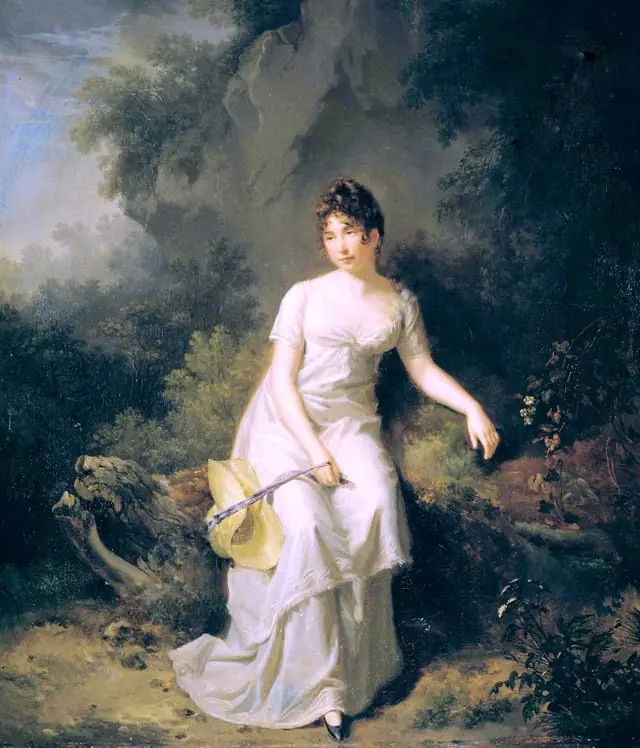 Ekaterina Golovkina (Naryshkina)
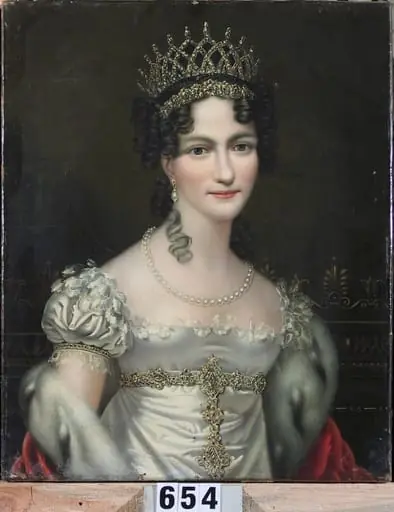 Carolina Augusta, soția împăratului austriac Franz I
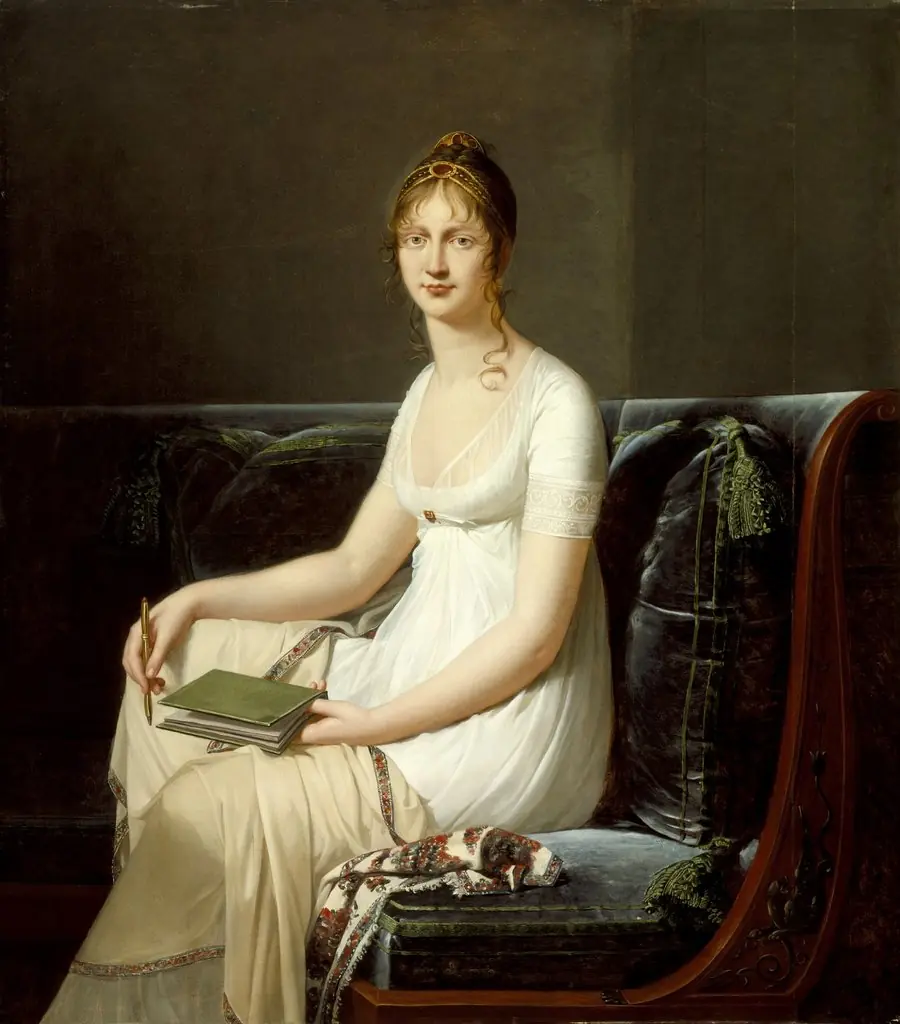 Portrait of a Woman Holding a Pencil and a Drawing Book
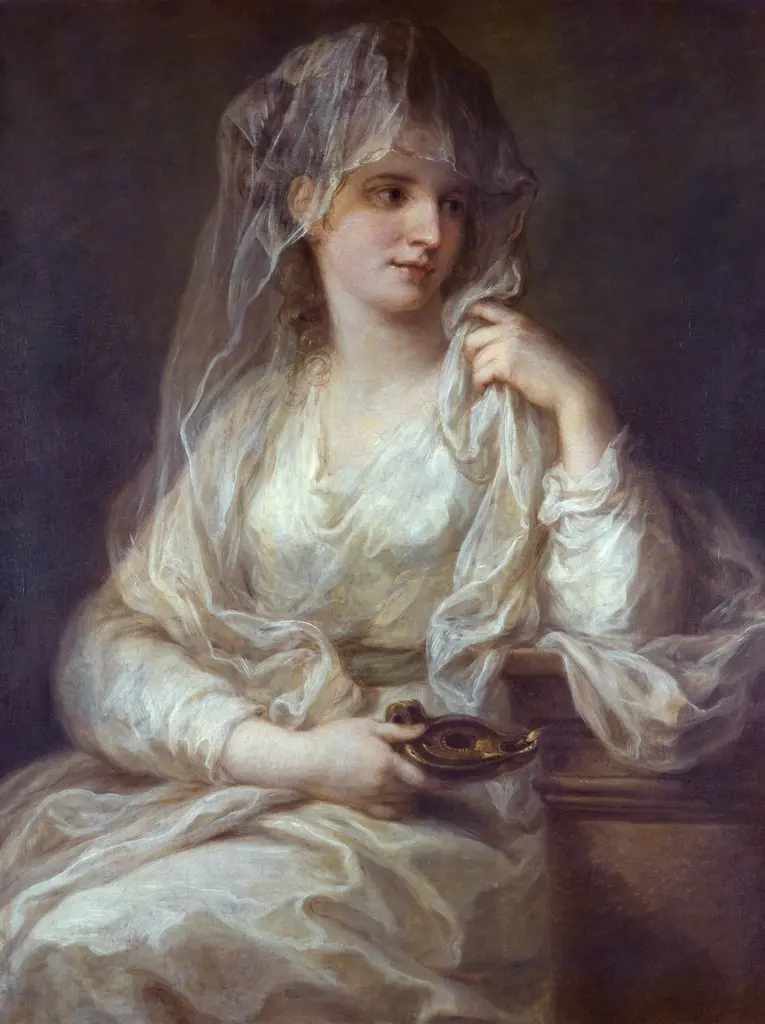 Portrait of a lady as Vestal Virgin