Artwork
Thalia
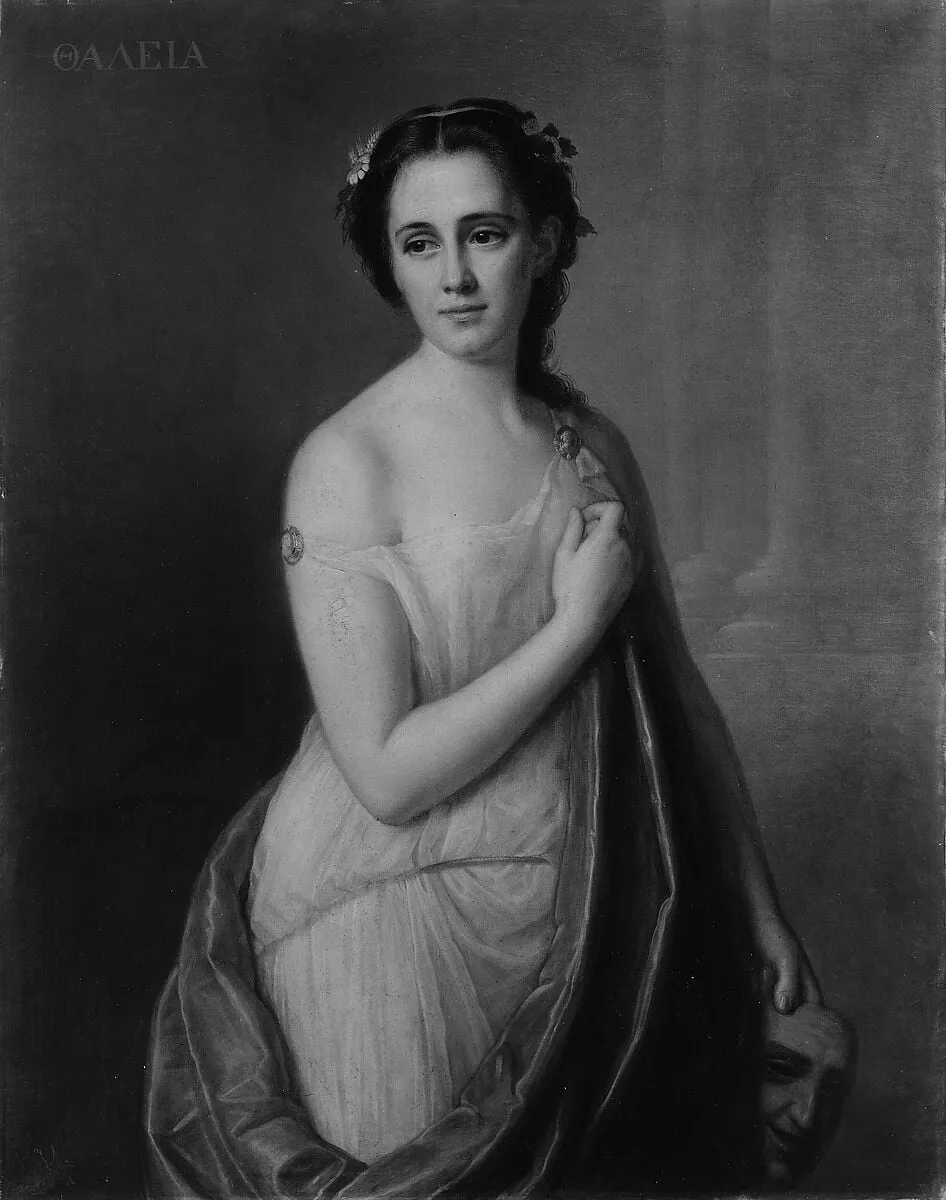
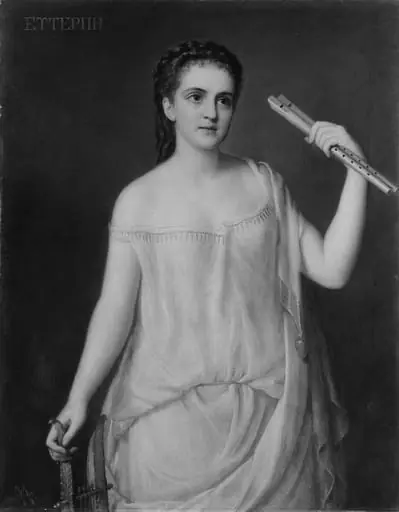
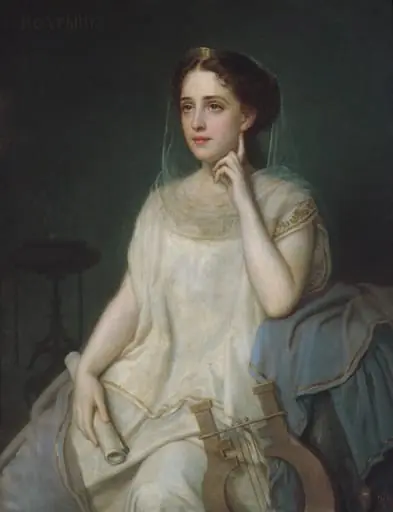
Thalia is an oil painting by the Impressionist artist Joseph Fagnani. It dates from 1869 and is held in the collection of the Metropolitan Museum of Art.
About this work
Here, she’s not in a grand mythological scene, just a quiet room, almost like a portrait of a real person.
You see a young woman in a white dress, holding a comedy mask in one hand and a scroll in the other. She looks straight at you, calm and a little serious.
This is Thalia, the Greek muse of comedy. Fagnani painted her in America in 1869, when most artists still looked to Europe for inspiration. Here, she’s not in a grand mythological scene, just a quiet room, almost like a portrait of a real person.
If you like this kind of quiet, thoughtful portrait, look up other paintings of muses.
Subject & Meaning
Joseph Fagnani's 1869 oil painting depicts Thalia, identified as a Muse and a woman. As a portrait, the work focuses on the figure of this specific mythological entity rather than a narrative scene. The subject represents one of the nine Muses of Greek mythology, traditionally associated with comedy and idyllic poetry, though the specific attributes or symbolic objects held by the figure in this composition are not detailed in the available records. The piece serves as a personification of the artistic inspiration linked to Thalia's domain.
Technique & Style
Joseph Fagnani's Thalia, executed in 1869, is an oil painting on canvas. The work measures 110.5 cm in height and 83.8 cm in width. Classified as a portrait within the genre of the muse, the piece depicts a woman in the guise of Thalia. The medium consists of oil paint applied to a canvas support, a standard technique for 19th-century portraiture.
History & Provenance
Thalia was painted by Joseph Fagnani in 1869, executed in oil on canvas. The work entered the Metropolitan Museum of Art's collection and is housed in the American Wing, where it is classified as a portrait depicting a muse and a woman. No further information on commission, prior ownership, or chain of custody is documented in the available sources.
Overview
Joseph Fagnani's 1869 oil on canvas painting, "Thalia," presents the Greek muse of comedy. This work, part of the American Wing collection, depicts a young woman in a white dress, holding the traditional attributes of a comedy mask and a scroll. Her gaze is directed outward, engaging the viewer with a calm and somewhat serious expression, offering a direct and contemplative interpretation of the mythological figure.
Context
Created in America during 1869, "Thalia" emerged at a time when many American artists still predominantly drew inspiration from European artistic traditions. Fagnani's approach diverges from typical grand mythological compositions, opting instead for a more subdued and personalized depiction. This choice positions the classical subject within a more accessible, almost genre-like context, reflecting a subtle shift in artistic focus within the burgeoning American art scene.
Artist & collection



![A Study from Life [and] Study for Angel Releasing Saint Peter from Prison, by Washington Allston](https://artifactworldgallery.com/img/washington-allston--a-study-from-life-and-study-for-angel-releasing-saint-peter--13db111bb86c178e-w320.webp)