Artwork
Euterpe
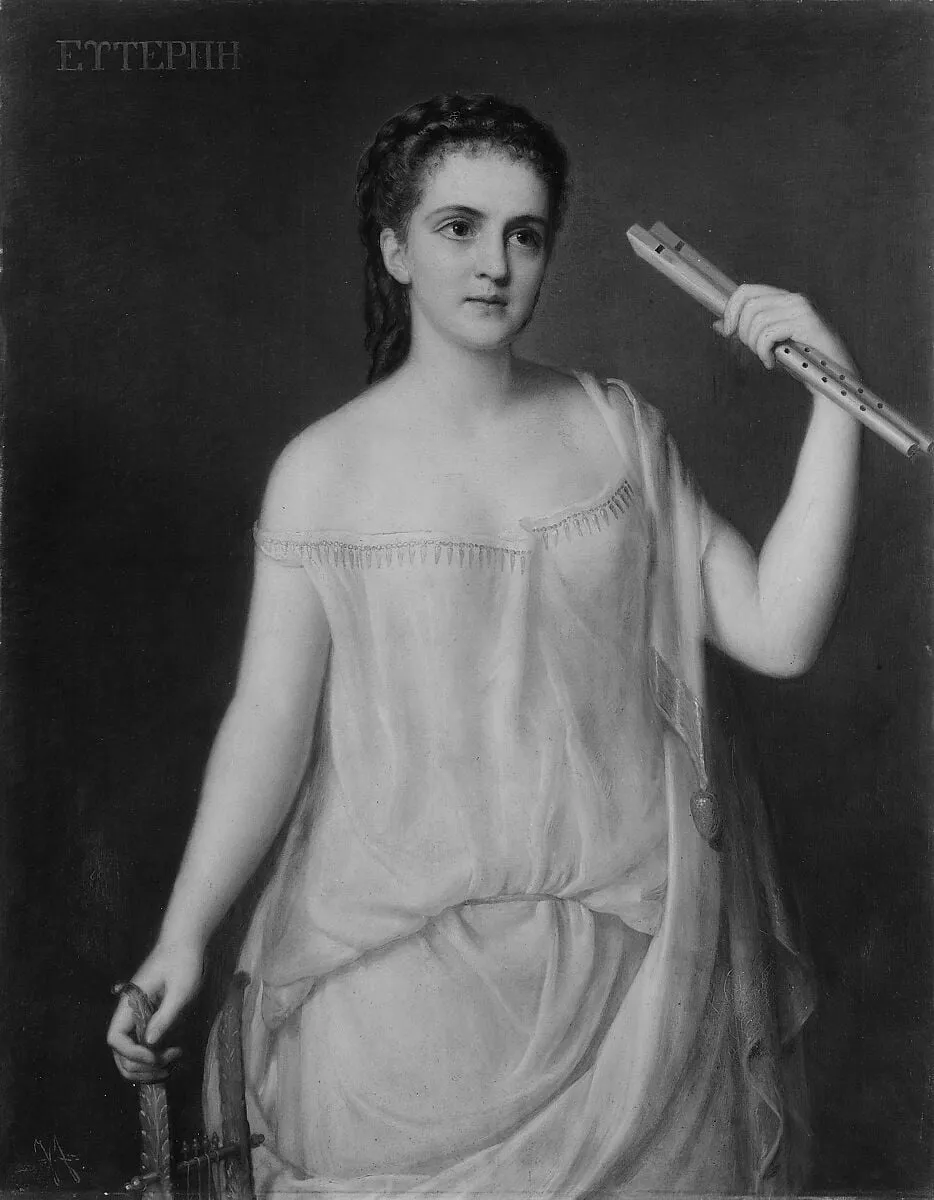
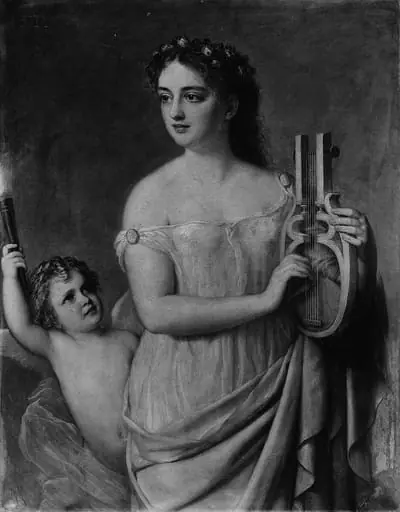
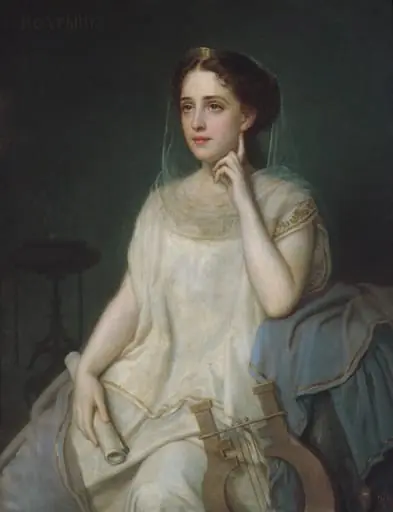
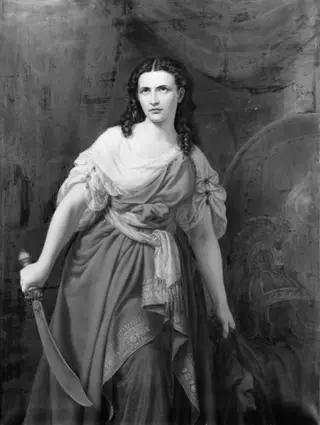
Euterpe is an oil painting by the Impressionist artist Joseph Fagnani. It dates from 1869 and is held in the collection of the Metropolitan Museum of Art.
- Accession no.
- 74.46
- Credit line
- Gift of an Association of Ladies and Gentlemen, 1874
About this work
Fagnani painted her in 1869, when most American artists still looked to Europe for inspiration.
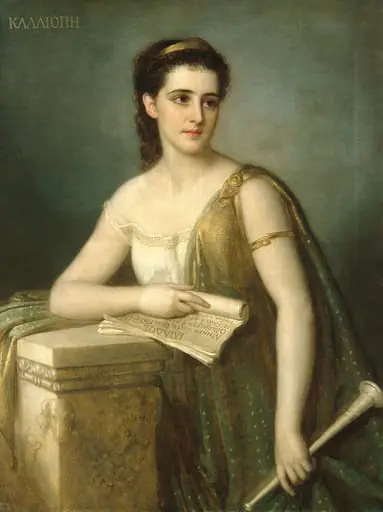
A woman in a white gown sits on a stone bench, holding a flute and a wreath of flowers. Soft light glows on her face and the folds of her dress.
This is Euterpe, the muse of music in Greek myth. Fagnani painted her in 1869, when most American artists still looked to Europe for inspiration. Here, she’s calm and real, not a distant goddess, just a woman lost in thought. The flowers in her lap feel like a quiet nod to spring or creativity.
If you like how she feels both timeless and ordinary, look up other paintings of muses.
Subject & Meaning
Euterpe by Joseph Fagnani depicts a Muse in the form of a woman, drawing on the classical mythological tradition that identified Euterpe as the Muse of music and lyric poetry. As a figure drawn from Greco-Roman mythology, she embodies the artistic inspiration associated with song in the ancient canon of the nine Muses.
The choice of a single female figure representing a Muse situates the work within the nineteenth-century European and American tradition of history painting that revived antique subjects, presenting the mythological character as an idealized woman rather than through narrative action. By isolating the Muse as the sole subject, Fagnani emphasizes contemplation of the figure herself as a personification of artistic inspiration rather than illustrating a specific mythological episode.
Technique & Style
Joseph Fagnani executed Euterpe as an oil painting on canvas, employing the conventional oil paint medium applied to a stretched canvas support typical of mid-nineteenth-century American works. The piece belongs to the mythological genre and is categorized within The American Wing, reflecting its thematic focus on a Muse figure. Stylistically, the work exemplifies the academic approach to mythological subjects prevalent in 19th-century American art.
History & Provenance
The painting Euterpe by Joseph Fagnani is dated 1869. It depicts Euterpe, the Muse of music and lyric poetry in Greek mythology. The canvas measures 110.5 cm in height and 83.8 cm in width and is executed in oil on canvas.
The work has been held by the Metropolitan Museum of Art, where it is classified under The American Wing.
Overview
Joseph Fagnani’s 1869 oil on canvas presents Euterpe, the Greek muse of music, seated on a stone bench. The figure is rendered in a white gown, clutching a flute and a floral wreath, bathed in gentle illumination that highlights the softness of her features and the drapery.
Context
Euterpe belongs to a broader tradition of muse representations popular in the 1800s, serving both as allegorical symbols of the arts and as studies of the female form. Fagnani’s interpretation aligns with contemporary interests in merging classical mythology with domestic, relatable settings.
Artist & collection


![A Study from Life [and] Study for Angel Releasing Saint Peter from Prison, by Washington Allston](https://artifactworldgallery.com/img/washington-allston--a-study-from-life-and-study-for-angel-releasing-saint-peter--13db111bb86c178e-w320.webp)