Artwork
Erato
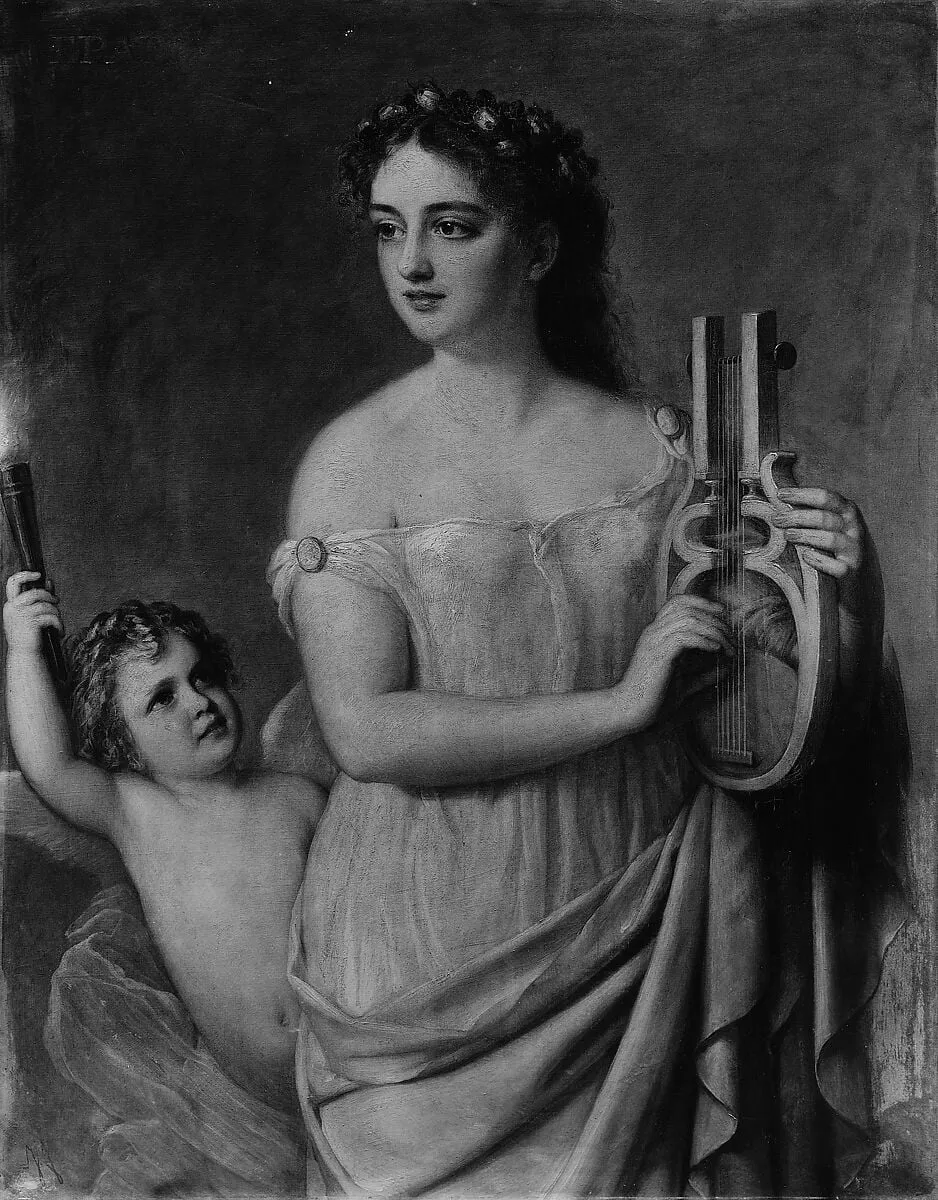
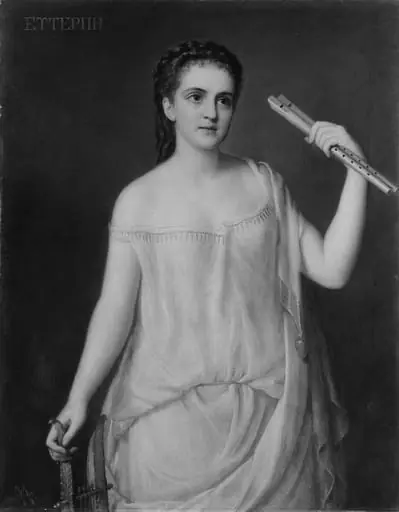
Erato is an oil painting by the Impressionist artist Joseph Fagnani. It dates from 1869 and is held in the collection of the Metropolitan Museum of Art.
About this work
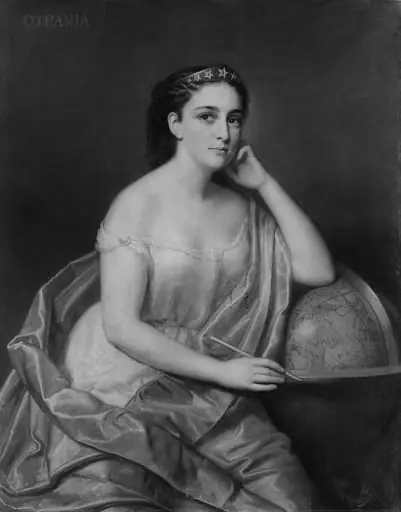
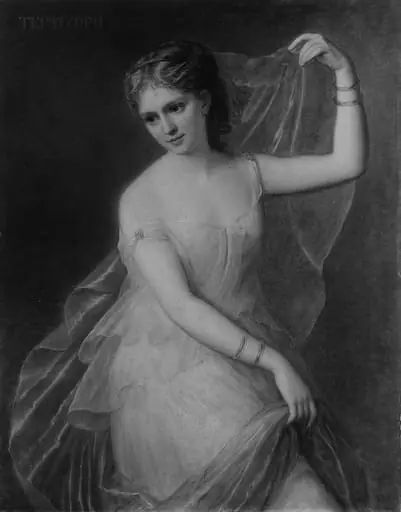
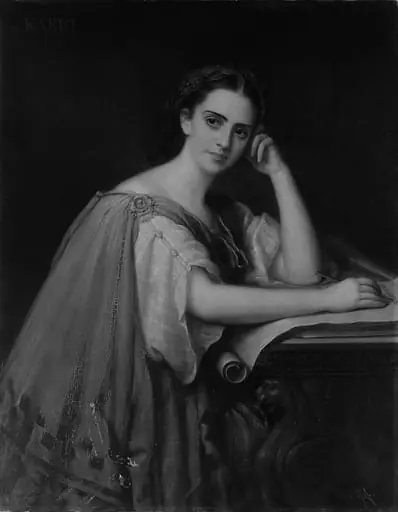
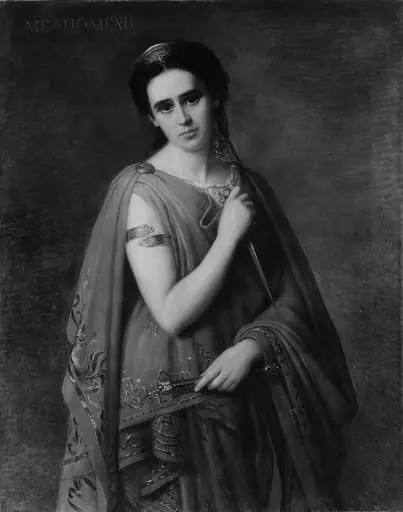
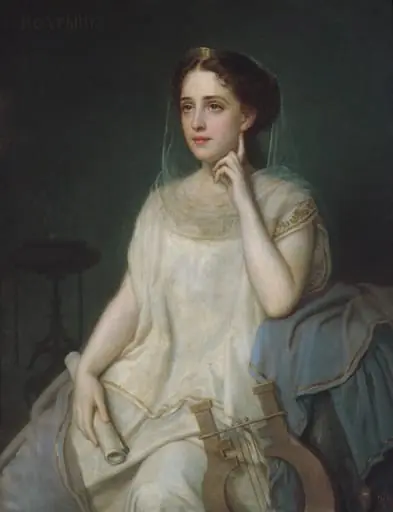
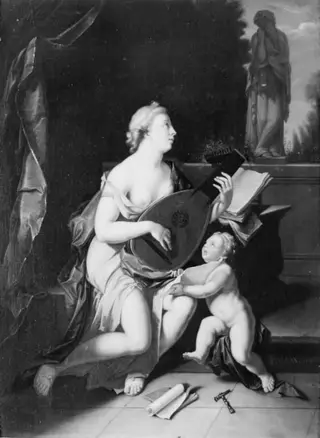
Erato, the muse of love poetry, sits on a cloud in a flowing white dress, holding a lyre as a small cupid points at a scroll of Greek letters. The background glows soft gold. Fagnani painted her in 1869, when American artists often drew on ancient myth, the lyre and cupid marking her as a symbol of creativity and romance.
Subject & Meaning
The inclusion of Cupid reinforces the work's thematic focus on romantic inspiration, aligning with the muse's specific role in classical mythology.
Joseph Fagnani's 1869 oil painting Erato depicts the titular Muse of lyric poetry, presented as a female figure accompanied by Cupid. The composition prominently features a lyre, the traditional attribute of Erato, which symbolizes her domain over love poetry and song. The inclusion of Cupid reinforces the work's thematic focus on romantic inspiration, aligning with the muse's specific role in classical mythology.
Although classified under religious art in museum records, the iconography draws directly from Greco-Roman tradition, representing the divine source of artistic creativity in matters of the heart. The visual narrative centers on the interaction between the woman, the child deity, and the musical instrument to convey this allegorical meaning.
Technique & Style
Erato is executed in oil on canvas, a standard medium for mid-to-late nineteenth-century academic painting. The work measures 110.5 by 83.8 centimeters, an upright format suited to a single half-length figure composition. Its religious genre classification, combined with the depiction of a Muse with a lyre alongside Cupid, places the handling within the academic tradition of idealized figure painting, where smooth finish, careful modeling of flesh tones, and clear narrative iconography are emphasized.
The canvas support and oil medium allow for the layered glazing and refined surface treatment typical of this stylistic approach.
History & Provenance
The painting Erato was created by Joseph Fagnani in 1869, as indicated by both the artist’s records and the work’s catalogue entry. It depicts the muse Erato alongside Cupid and a lyre, aligning with the iconography typical of allegorical representations of poetry and music. The work entered the collection of the Metropolitan Museum of Art, where it has been housed since acquisition.
No documented commission or preparatory materials have been traced in the sources, and the painting’s creation history prior to its museum accession remains unrecorded.
Overview
Joseph Fagnani's "Erato," painted in 1869, is an oil on canvas work housed within the American Wing. The painting portrays Erato, the classical muse of love poetry, surrounded by symbolic elements. This piece reflects a common artistic practice of its era, where American painters frequently engaged with mythological themes to explore concepts of creativity and human emotion.
Context
Created in 1869, "Erato" exemplifies a prevalent artistic trend among American painters during the latter half of the 19th century. Artists often turned to ancient Greek and Roman myths as a rich source of subject matter, using these narratives to explore universal human experiences and allegorical themes. Fagnani’s depiction of a classical muse aligns with this broader cultural and artistic engagement with antiquity.
Artist & collection