Artwork
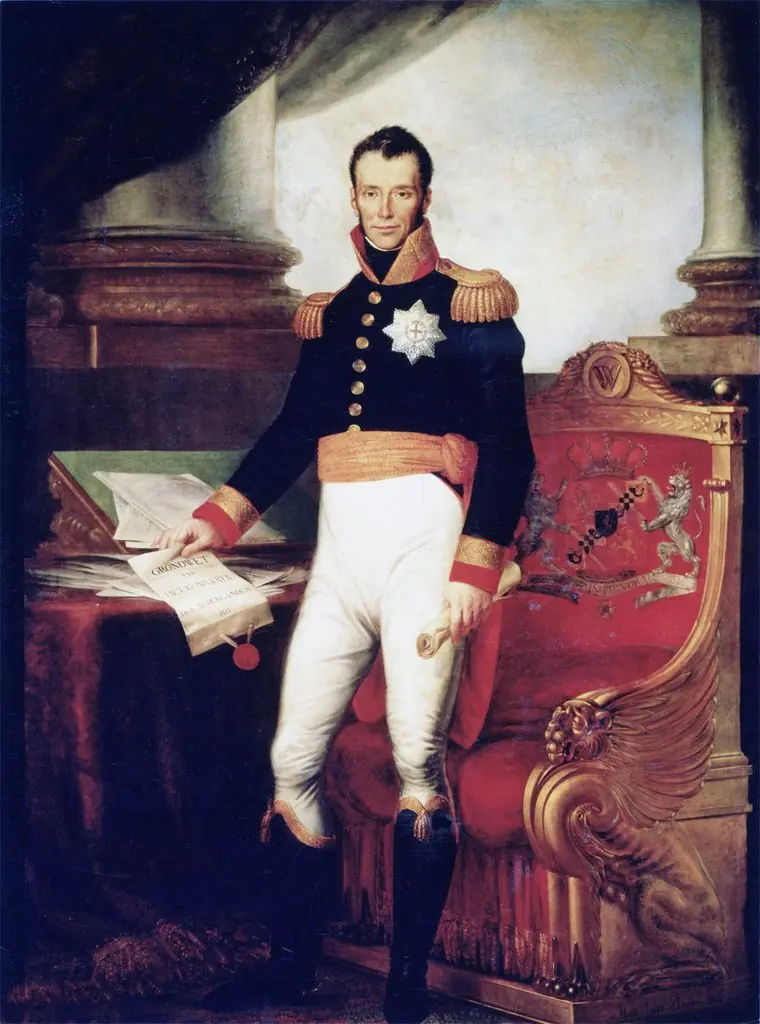
Portrait of William I, King of the Netherlands
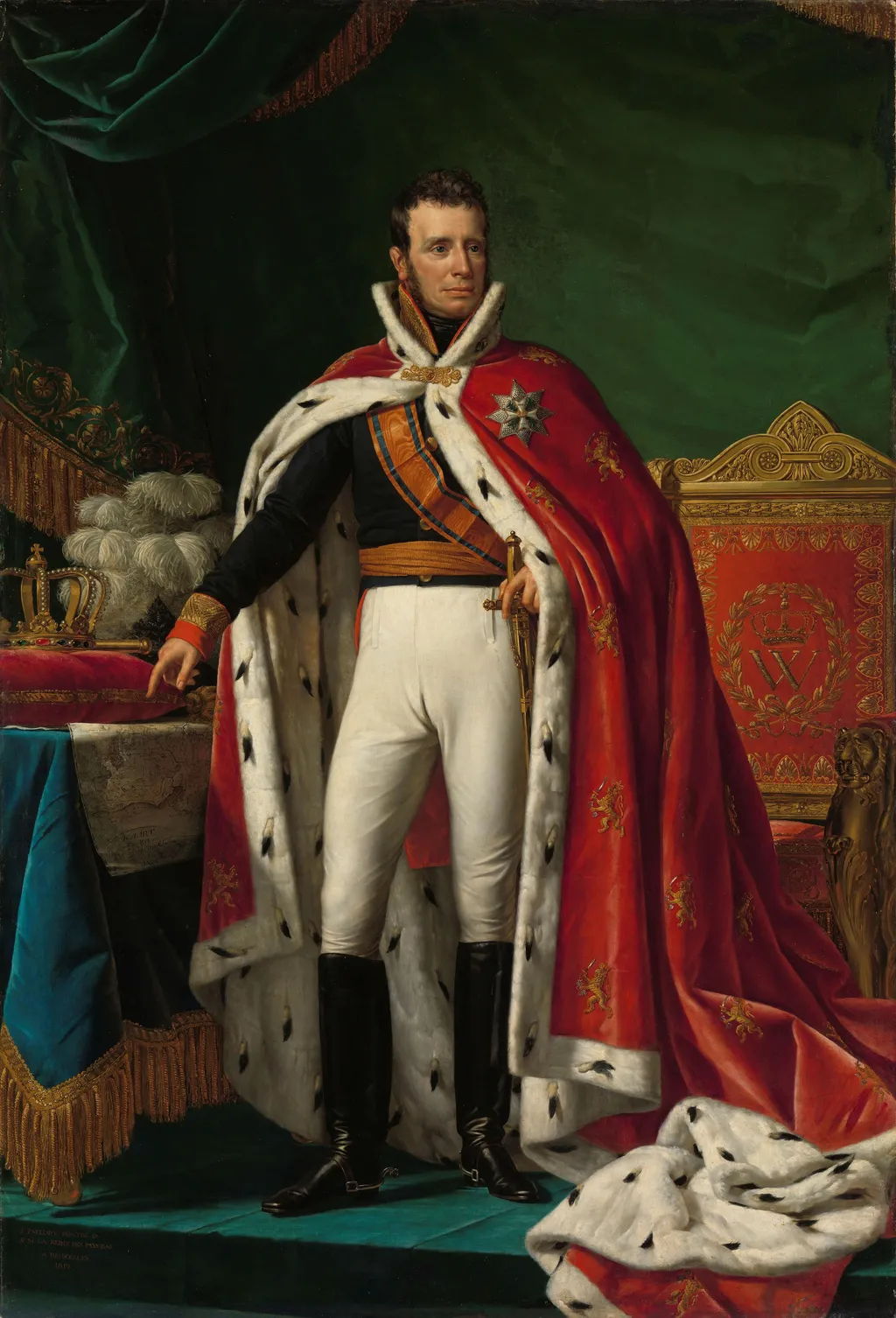
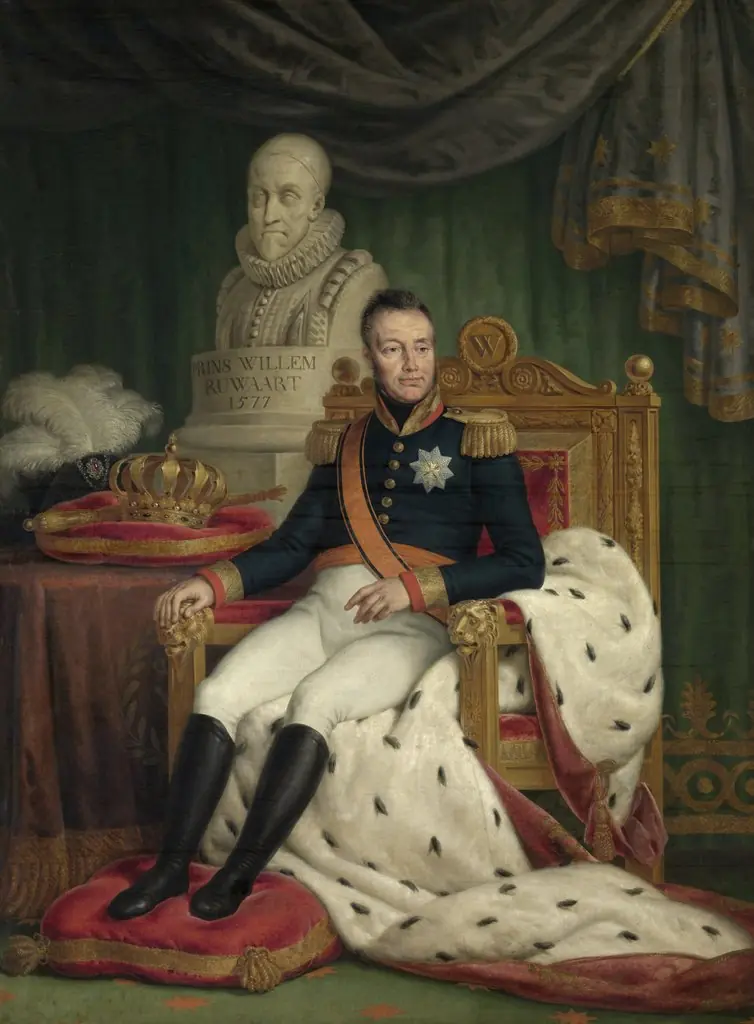
Portrait of William I, King of the Netherlands is an oil painting by the Neoclassicist artist Joseph Paelinck. It dates from 1819 and is held in the collection of the Rijksmuseum.
About this work
Subject & Meaning
Portrait of William I shows the king at full length, dressed in a general’s uniform, an ermine‑lined robe and the Military Order of William, while he points to a map of Java, then part of the Dutch East Indies. The uniform and order highlight his military rank and honors, the ermine robe signals his royal status, and the gesture toward the map underscores his sovereignty over overseas territories. Painted in Brussels after his return from exile in 1813, the work celebrates the restoration of the monarchy following the Napoleonic Wars; it was originally housed in the Hall of Waterloo, a setting that evokes the recent victory over Napoleon.
Technique & Style
The full-length portrait is executed in oil on canvas, a medium typical of early 19th-century European portraiture.
The full-length portrait is executed in oil on canvas, a medium typical of early 19th-century European portraiture. Joseph Paelinck renders William I in a general’s uniform trimmed with ermine fur, a detail emphasized in contemporary descriptions, and he gestures toward a map of Java, symbolizing the king’s colonial administration. The composition combines formal regal iconography with a naturalistic rendering of the sitter’s features, reflecting the academic style Paelinck adopted under Jacques-Louis David’s influence.
The painting measures 227 cm by 155.5 cm and was created in Brussels in 1819 before entering the Rijksmuseum’s collection.
History & Provenance
The Portrait of William I, King of the Netherlands was painted by Joseph Paelinck in 1819 as a full-length portrait of the Dutch monarch. It was created in Brussels after William I returned to power in 1813 and was installed in the Governor's Palace in Amsterdam, remaining there until 1830 when the Belgian Revolution prompted its transfer to the Rijksmuseum in Amsterdam, where it is now housed in the Hall of Waterloo.
The work was commissioned to commemorate William I's restoration to the throne and his role in the post-Napoleonic political order. Paelinck, a pupil of Jacques-Louis David, produced this piece shortly before his earlier 1817 portrait of the king, now in the Rhode Island School of Design Museum. The painting measures 227 cm in height and 155.5 cm in width, executed in oil on canvas.
Throughout its history, the portrait has been part of the Rijksmuseum's collection, specifically displayed in the Hall of Waterloo, reflecting its significance within the institution's holdings of Dutch royal imagery.
The Portrait of William I, King of the Netherlands, painted by Joseph Paelinck in 1819, is part of the Rijksmuseum's collection under inventory number SK-A-1184. It was originally displayed in the Governor's Palace in Batavia from 1821 and has been exhibited in the Rijksmuseum's Hall of Waterloo. The work was created in Brussels and portrays the king in full uniform, holding a map of Java.
Context
Joseph Paelinck painted Portrait of William I, King of the Netherlands in 1819, depicting the monarch in full-length uniform with ermine lining and pointing to a map of Java, a composition documented in Rijksmuseum records and described in scholarly literature on the work.
The painting emerged during a pivotal period of European political transformation, reflecting the post-Napoleonic reconfiguration of power that placed William I at the head of a newly formed United Kingdom of the Netherlands.
Paelinck's artistic training under Jacques-Louis David in exile informed his neoclassical approach, situating this portrait within the broader trajectory of Belgian and Dutch portraiture in the early nineteenth century.
Legacy
Painted in 1819 by Joseph Paelinck, an oil on canvas portrait of William I was displayed in the Governor's Palace in Batavia (Java) from 1821, underscoring its role in representing Dutch royal and colonial authority. The work later entered the Rijksmuseum in Amsterdam, where it remains part of the museum's collection and continues to be shown as an example of early nineteenth‑century portraiture and of Paelinck's training under Jacques‑Louis David. Its enduring presence in a major national collection contributes to the visual legacy of William I and to the assessment of Paelinck's artistic output.
Overview
Joseph Paelinck’s 1819 oil portrait presents William I, monarch of the United Kingdom of the Netherlands, in a full‑length pose. Executed in Brussels, the work now belongs to the Rijksmuseum in Amsterdam. It captures the king in military dress, emphasizing his authority during a period when his realm encompassed present‑day Netherlands, Belgium and Luxembourg.
Own this work as a print
Artist & collection