Artwork
Virgil's Tomb by Moonlight, with Silius Italicus Declaiming
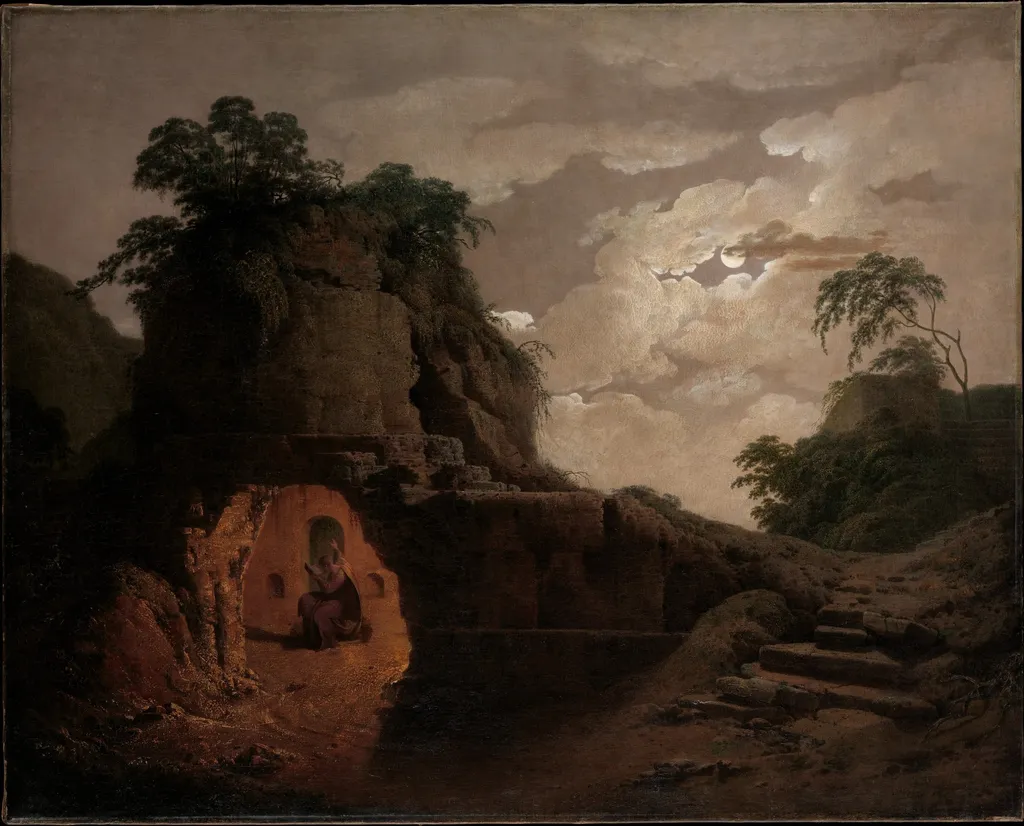
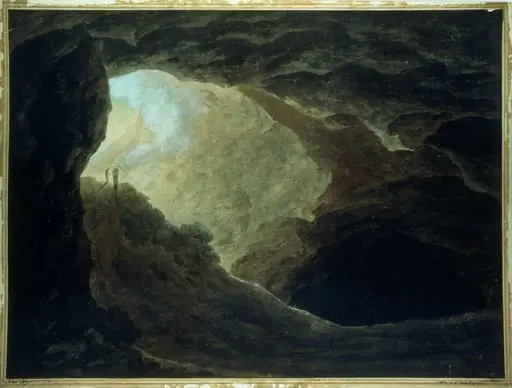
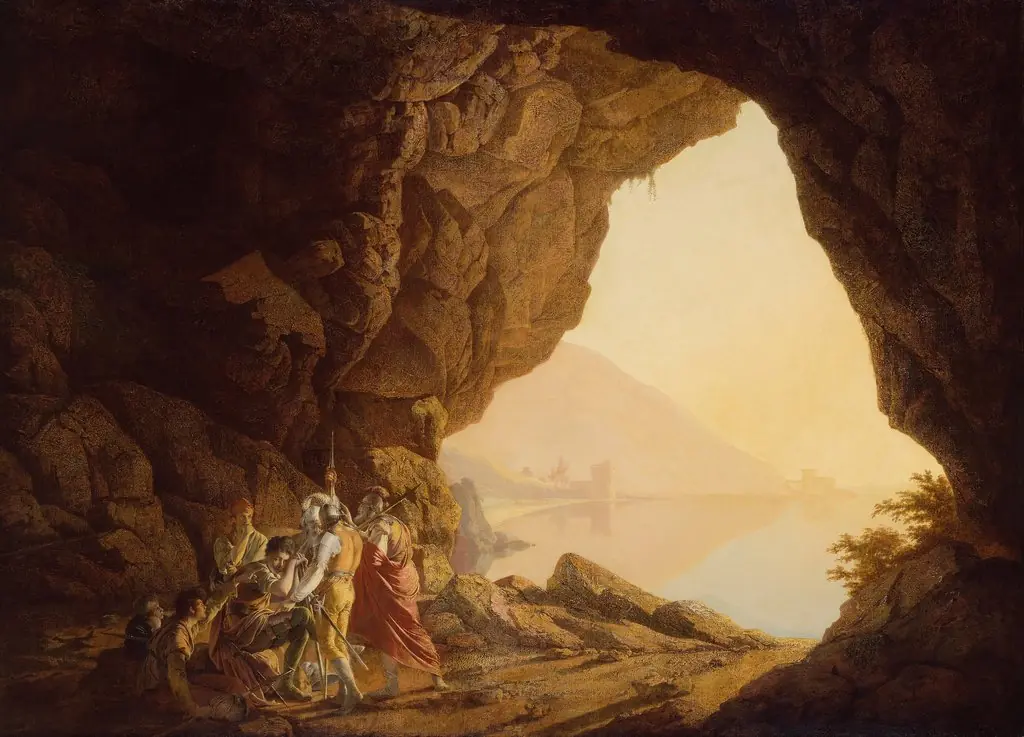
Virgil's Tomb by Moonlight, with Silius Italicus Declaiming is an oil painting by the Neoclassicist artist Joseph Wright of Derby. It dates from 1790 and is held in the collection of the Metropolitan Museum of Art.
About this work
Subject & Meaning
The painting depicts the ancient Roman poet Virgil's tomb illuminated by moonlight, accompanied by the figure of Silius Italicus, another Roman poet, shown declaiming verse at the site. The nocturnal setting frames the ruined tomb as a monument to literary legacy, with the moonlit landscape evoking the Romantic sensibility of melancholy and reverence for classical antiquity. The inclusion of Silius Italicus reciting at Virgil's grave symbolizes the transmission of poetic tradition across generations, while the moonlit atmosphere lends the scene a contemplative, elegiac tone.
Technique & Style
Stylistically, the painting aligns with Wright's characteristic chiaroscuro, blending topographical detail with a poetic evocation of antiquity and melancholy.
Painted in oil on canvas in 1790, the work employs a restricted nocturnal palette dominated by deep blues and blacks, with localized highlights on the tomb and figures to create dramatic contrast. Wright's handling emphasizes smooth transitions in the sky and foliage, while the rocky forms around the tomb are rendered with textural impasto that conveys solidity and age. The composition is structured around a low horizon, directing attention upward to the luminous moonlit sky and the silhouetted tomb, framed by overarching trees.
Stylistically, the painting aligns with Wright's characteristic chiaroscuro, blending topographical detail with a poetic evocation of antiquity and melancholy.
History & Provenance
Joseph Wright of Derby created the oil-on-canvas painting Virgil's Tomb by Moonlight, with Silius Italicus Declaiming in 1790. The work measures 101.6 cm in height and 127 cm in width. While the specific commission details are not recorded in the available sources, the piece was executed during Wright's mature period.
The painting currently resides in the collection of the Metropolitan Museum of Art in New York, where it is cataloged as part of the museum's holdings of oil paintings on canvas.
Context
Joseph Wright of Derby painted Virgil's Tomb by Moonlight, with Silius Italicus Declaiming in 1790 (101.6 × 127 cm), oil on canvas. It portrays a moonlit tomb, a tree, a man and the Moon, drawing on the literary legacy of Virgil and the Roman poet Silius Italicus. The painting is part of the Metropolitan Museum of Art's collection, illustrating the artist's engagement with classical subjects within the broader corpus of 18th-century British art.
Overview
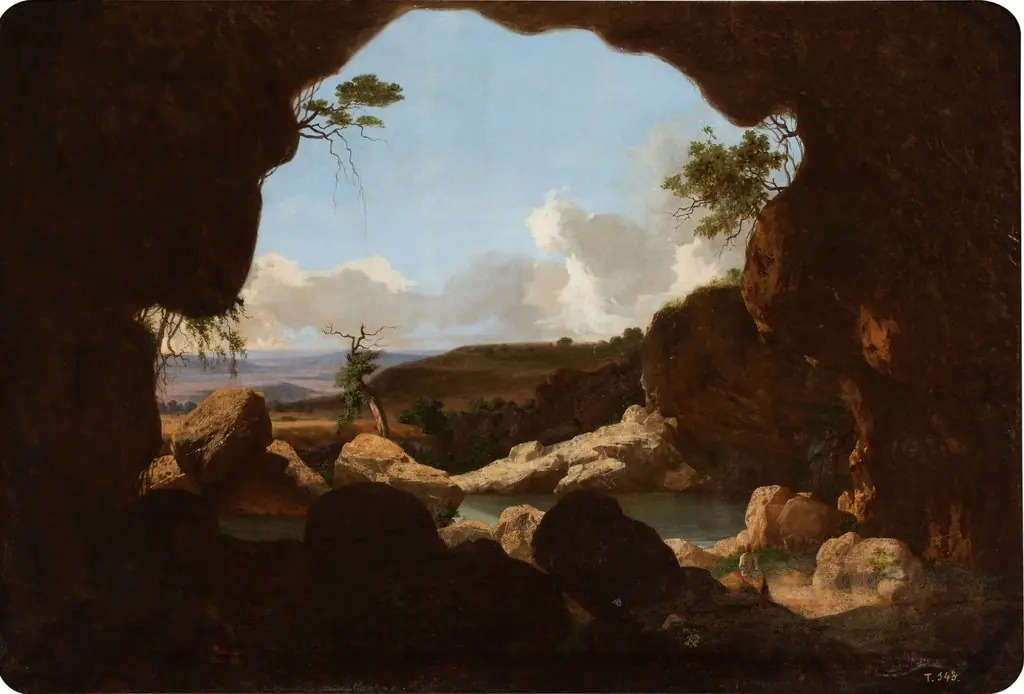
Joseph Wright's oil painting, Virgil's Tomb by Moonlight, with Silius Italicus Declaiming, dates from 1790. This nocturnal scene captures a figure within a cave-like tomb, engaged in reading or recitation, set against a moonlit landscape. The work is part of the collection at The Metropolitan Museum of Art, showcasing Wright's characteristic interest in dramatic illumination and classical themes.

Own this work as a print
Artist & collection

Artist
Joseph Wright (3 September 1734 – 29 August 1797), styled Joseph Wright of Derby, was an English painter who specialised in portrait painting and landscape art.