Artwork
Augustus Fielding Hawkins
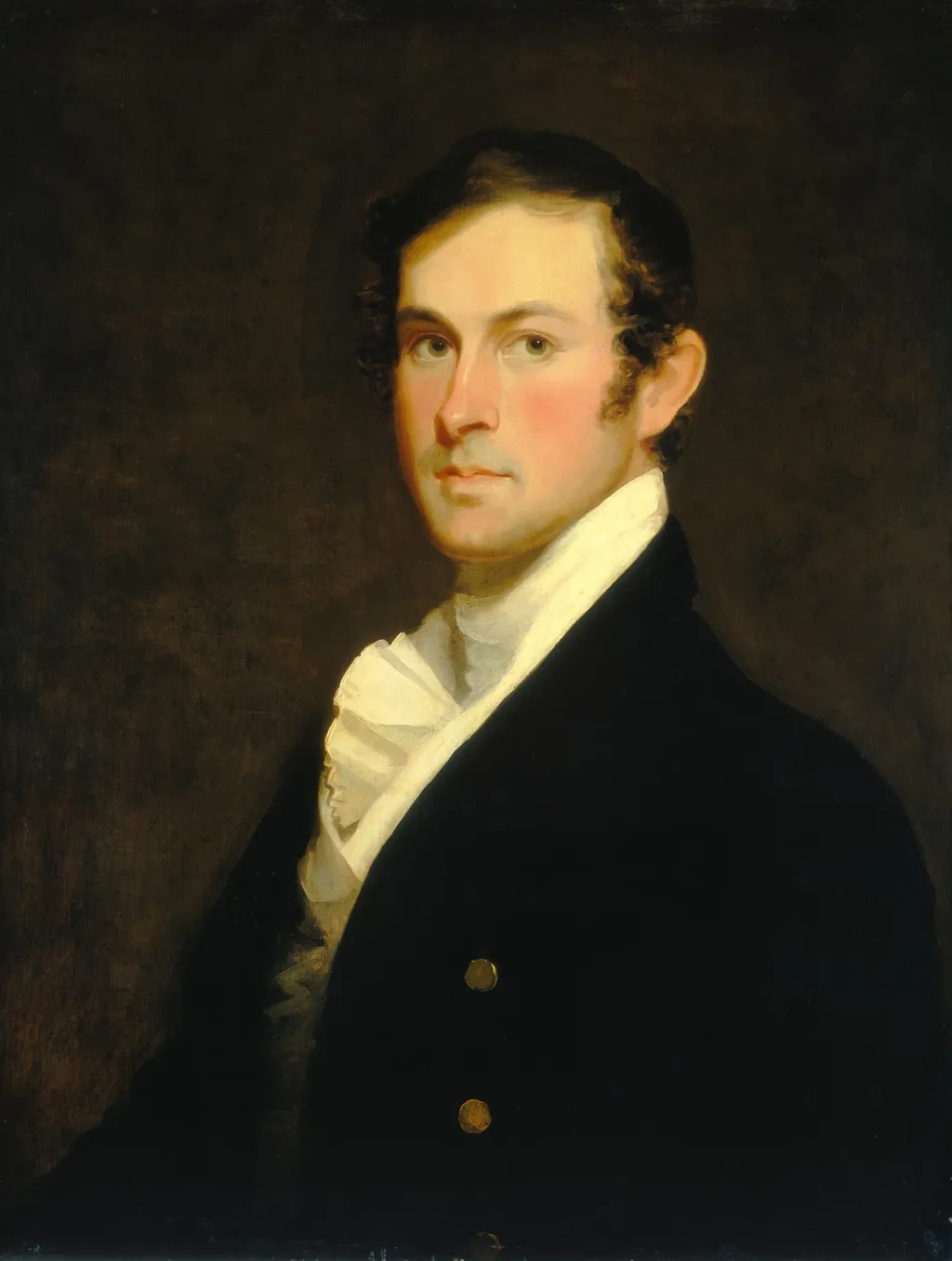
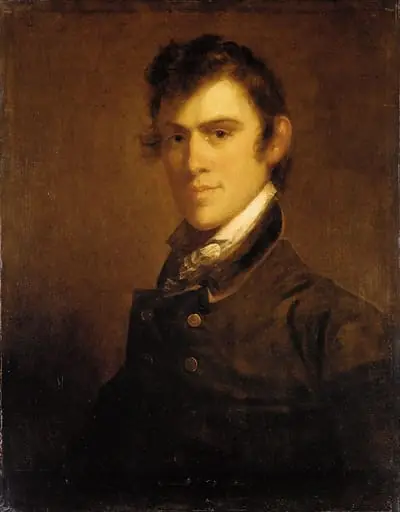
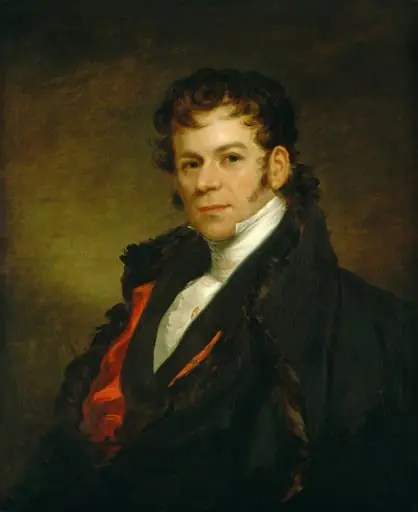
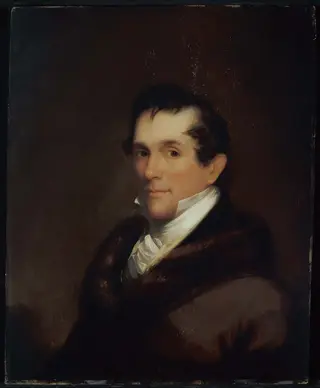
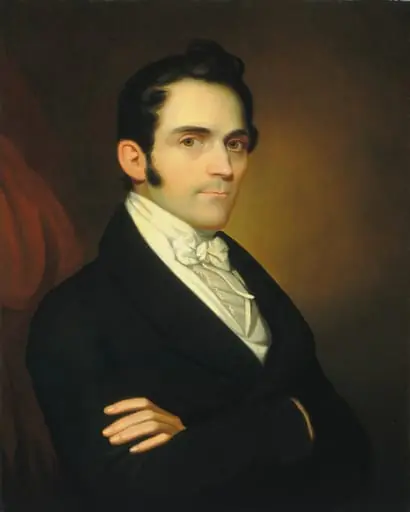
Augustus Fielding Hawkins is an oil painting by the American Folk Art artist Matthew Harris Jouett. It dates from 1820 and is held in the collection of the National Gallery of Art.
About this work
Technique & Style
Matthew Harris Jouett renders the sitter with smooth, blended brushwork and careful modeling of light and shadow to convey three-dimensional form.
The portrait employs oil paint on a wood panel support, a common medium for early American portraits. Matthew Harris Jouett renders the sitter with smooth, blended brushwork and careful modeling of light and shadow to convey three-dimensional form. The composition emphasizes Augustus Fielding Hawkins’ dignified presence through restrained yet precise handling, with attention to facial detail and the texture of his clothing. The wood panel’s stability has preserved the work well, though minor craquelure may indicate age-related movement.
Stylistically, the painting adheres to neoclassical portrait conventions, evident in the sitter’s calm, frontal pose and the subdued palette. The restrained brushwork and emphasis on clarity over painterly flourish align with early 19th-century American portraiture.
History & Provenance
Created in 1820 by Matthew Harris Jouett, the oil-on-wood portrait of Augustus Fielding Hawkins remained within the sitter's family for nearly a century. Although legal title stayed with the direct descendants, physical possession passed to the sitter's niece, Mary Leavy, likely around 1905 following the death of Augustus's son, Strother Hawkins. The portrait was subsequently held by Mary's daughter, Lizzie Leavy, before being returned to the rightful owner, Harriot Leavy Hawkins, in 1917.
On March 22, 1920, Harriot sold the work to New York dealer Thomas B. Clarke. It entered the Clarke estate and was sold through M. Knoedler & Co. on January 29, 1936, to the A. W. Mellon Educational and Charitable Trust in Pittsburgh. The painting was finally gifted to the National Gallery of Art in 1942.
The portrait of Augustus Fielding Hawkins is held in the collection of the National Gallery of Art in Washington, D.C., specifically within the Andrew W. Mellon collection. The work was transferred to the museum as a gift in 1942, having previously been acquired by the A. W. Mellon Educational and Charitable Trust in January 1936 from the estate of Thomas B. Clarke. Prior to the Clarke sale, the painting had been sold to Clarke by the sitter's descendants in March 1920.
The provided sources detail this provenance chain but contain no information regarding specific exhibition history or accession inventory numbers.
Overview
This oil on wood portrait, created around 1820 by Matthew Harris Jouett, depicts Augustus Fielding Hawkins. The subject is presented in formal attire, his gaze direct and expression serious, conveying an atmosphere of quiet contemplation. Jouett's work captures a sense of the sitter's presence through its focused composition and rendering, establishing a dignified portrayal of the individual.
Subject & Meaning
The portrait features Augustus Fielding Hawkins, dressed in a dark jacket adorned with gold buttons, paired with a white shirt, high collar, and cravat. His dark, neatly styled hair frames a face with a direct, serious gaze. This formal presentation, combined with the subject's contemplative expression, suggests a portrayal emphasizing dignity and introspection, characteristic of early 19th-century portraiture.
Own this work as a print
Artist & collection
Artist
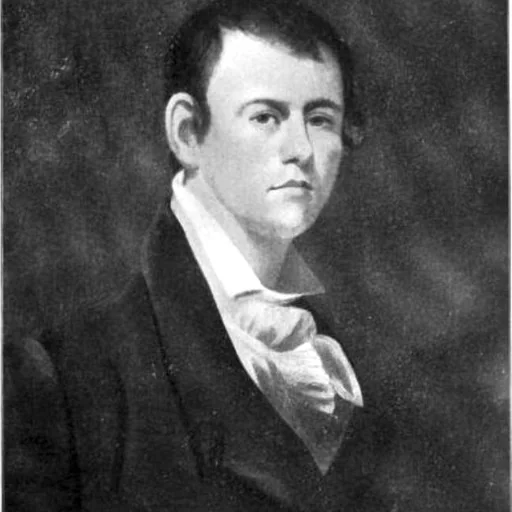
Matthew Harris Jouett (Mercer County, Kentucky, 22 April 1788 – Lexington, Kentucky, 10 August 1827) was a noted American portrait painter, famous for painting portraits including Thomas Jefferson, George Rogers Clark and Lafayette.