Artwork
The Assumption of the Virgin
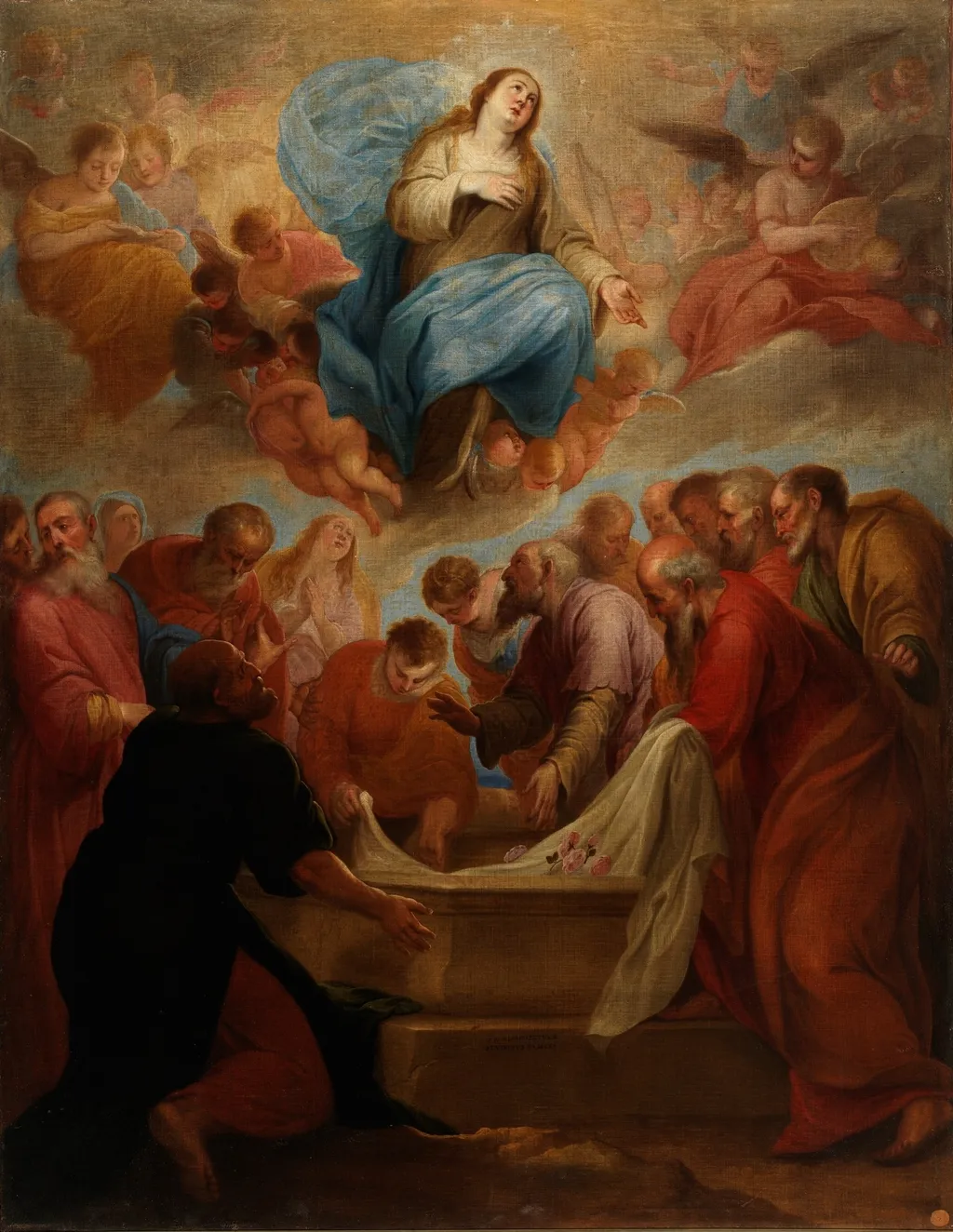
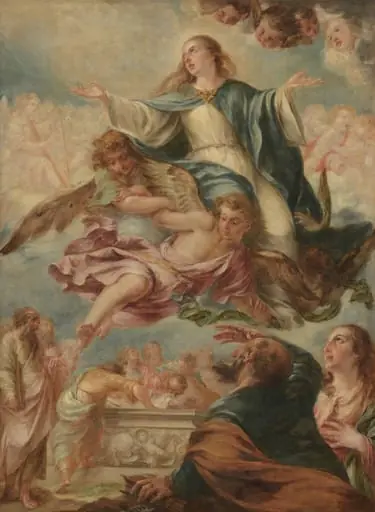
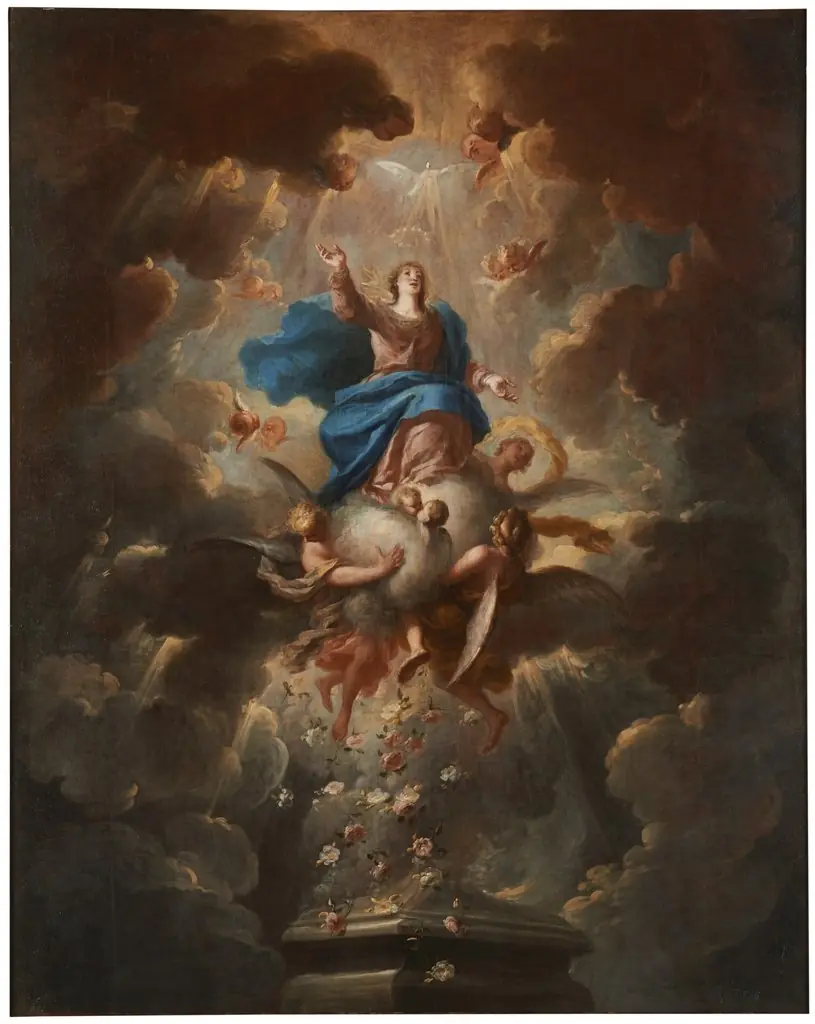
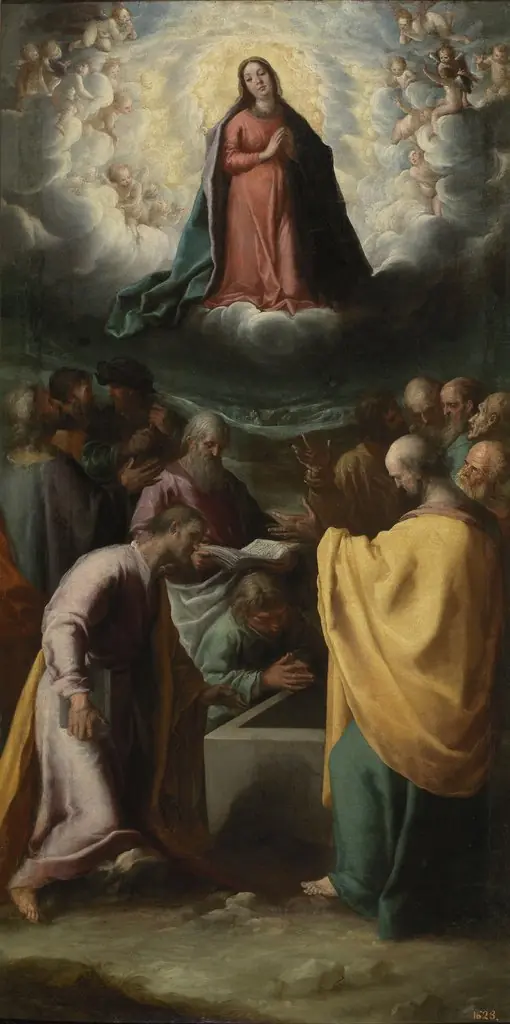
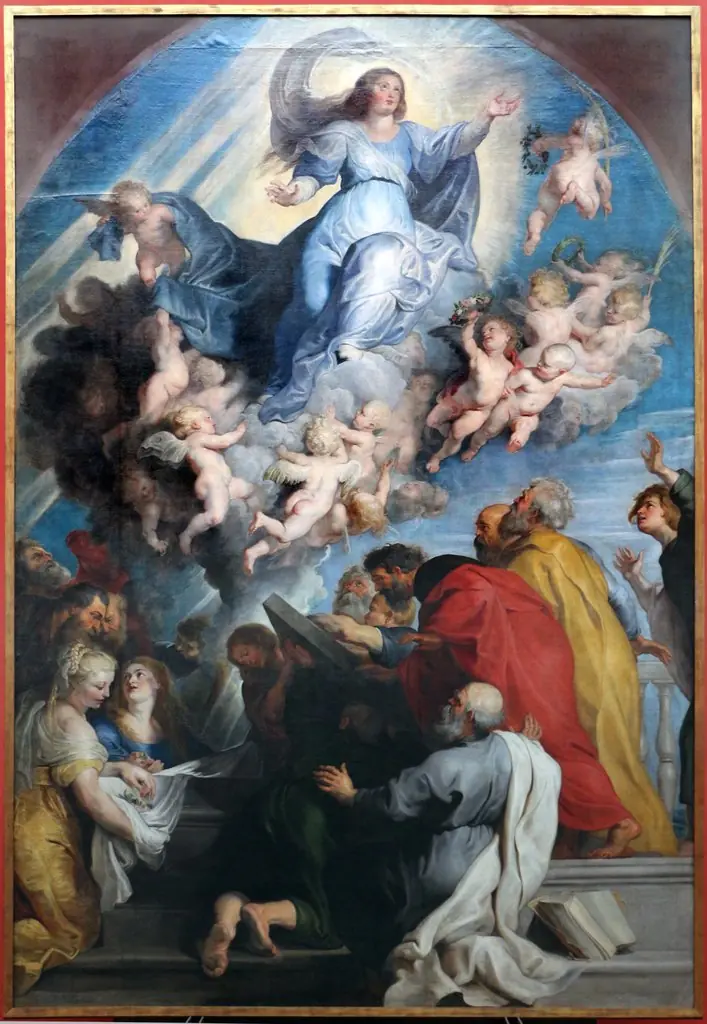
The Assumption of the Virgin is an oil painting by the Early Baroque Italian artist Juan de Alfaro y Gamez. It dates from 1668 and is held in the collection of the Museo del Prado.
About this work
Subject & Meaning
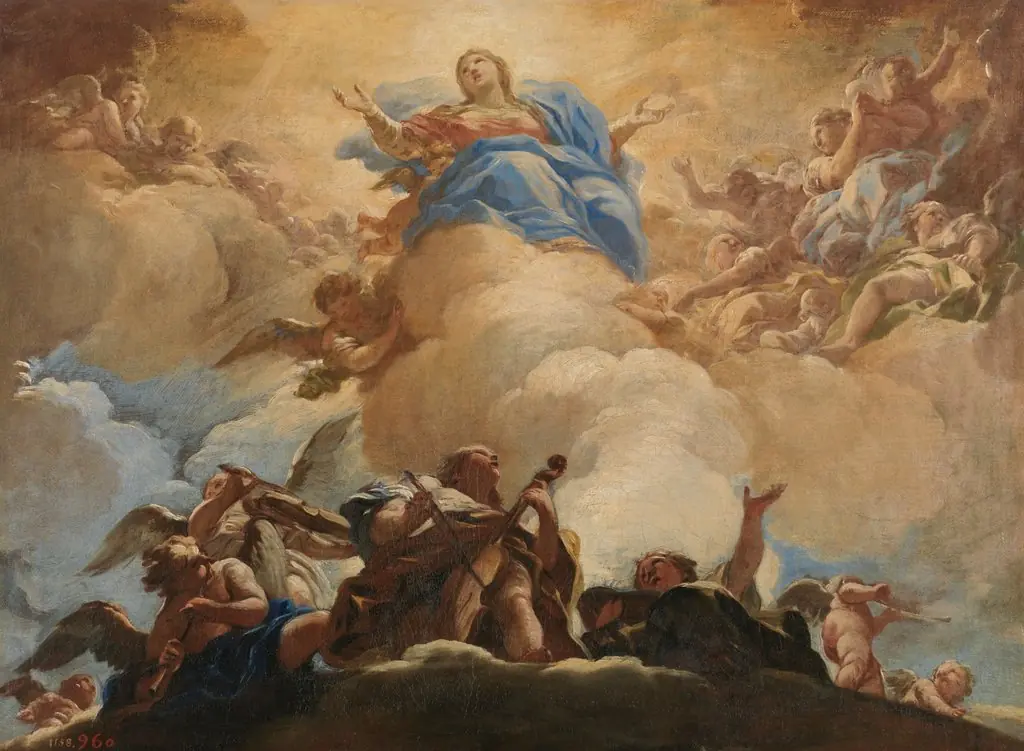
The composition includes musical instruments such as a lute and violin, underscoring the heavenly celebration.
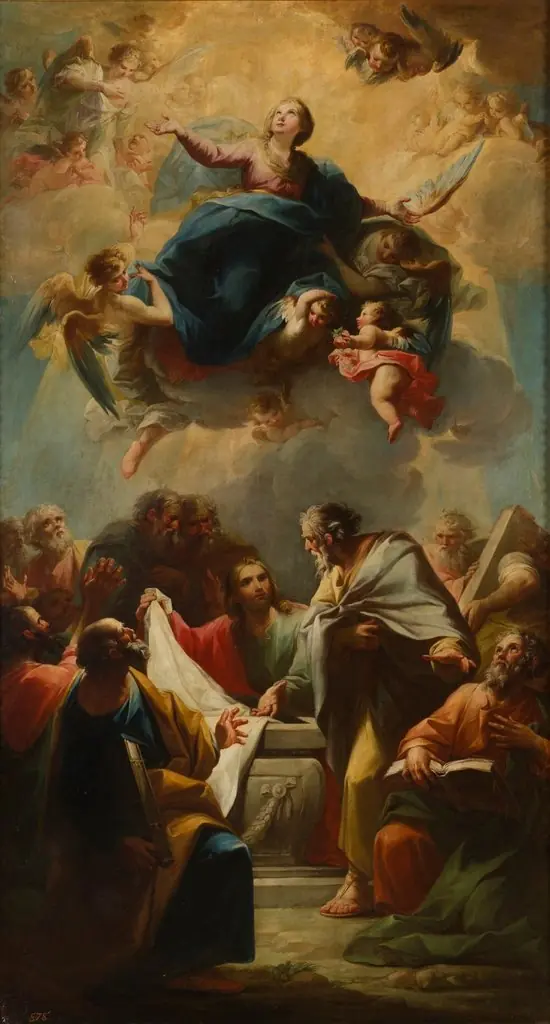
The painting shows the Virgin Mary being assumed into heaven, surrounded by clouds and angels, a common theme in Counter-Reformation religious art that emphasizes divine elevation and triumph. The composition includes musical instruments such as a lute and violin, underscoring the heavenly celebration. The work belongs to the religious genre and was created in 1668 for display in the Church of Saint Jerome the Royal, reflecting its devotional purpose and symbolic focus on the Assumption of Mary.
History & Provenance
The Assumption of the Virgin was created by Juan de Alfaro y Gamez in 1668, executed in oil paint on canvas. The work was associated with the Church of Saint Jerome the Royal, where it was held in the collection. It subsequently entered the holdings of the Museo de la Trinidad and is now part of the Museo del Prado collection.
The painting measures 186 cm in height and 145 cm in width.
The Assumption of the Virgin is displayed at the Museo del Prado, where it is catalogued under inventory number P00968. Its exhibition record includes a presentation at the Prado in 1668 and a subsequent display in the museum’s religious art gallery in 1995.
Overview
The Assumption of the Virgin is a 1668 oil painting by Spanish Baroque artist Juan de Alfaro y Gámez, characterized by its religious theme and early Baroque Italian stylistic influences.
Technique & Style
Alfaro y Gámez employed chiaroscuro to create dramatic contrast between the light, cloudy sky and the darker, warmly colored figures on the ground, drawing the viewer’s eye to the central figure through the vibrant blue of her robe.
Context
Reflecting Alfaro y Gámez’s exposure to European masters (through copying works by Titian, Rubens, and Van Dyck with Velázquez), the piece blends Spanish Baroque elements with broader early Baroque Italian influences.
Legacy
While specific lasting impacts of The Assumption of the Virgin on subsequent art movements are not prominently documented, it remains a notable example of 17th-century Spanish Baroque religious art within the Prado’s holdings.
Own this work as a print
Artist & collection
Artist
Juan de Alfaro y Gámez (1643–1680) was a Spanish painter of the Baroque. He was born at Córdoba. He was first a pupil of Antonio del Castillo, but finished his studies at Madrid under Velázquez, whose manner he…