Artwork
The Assumption of the Virgin
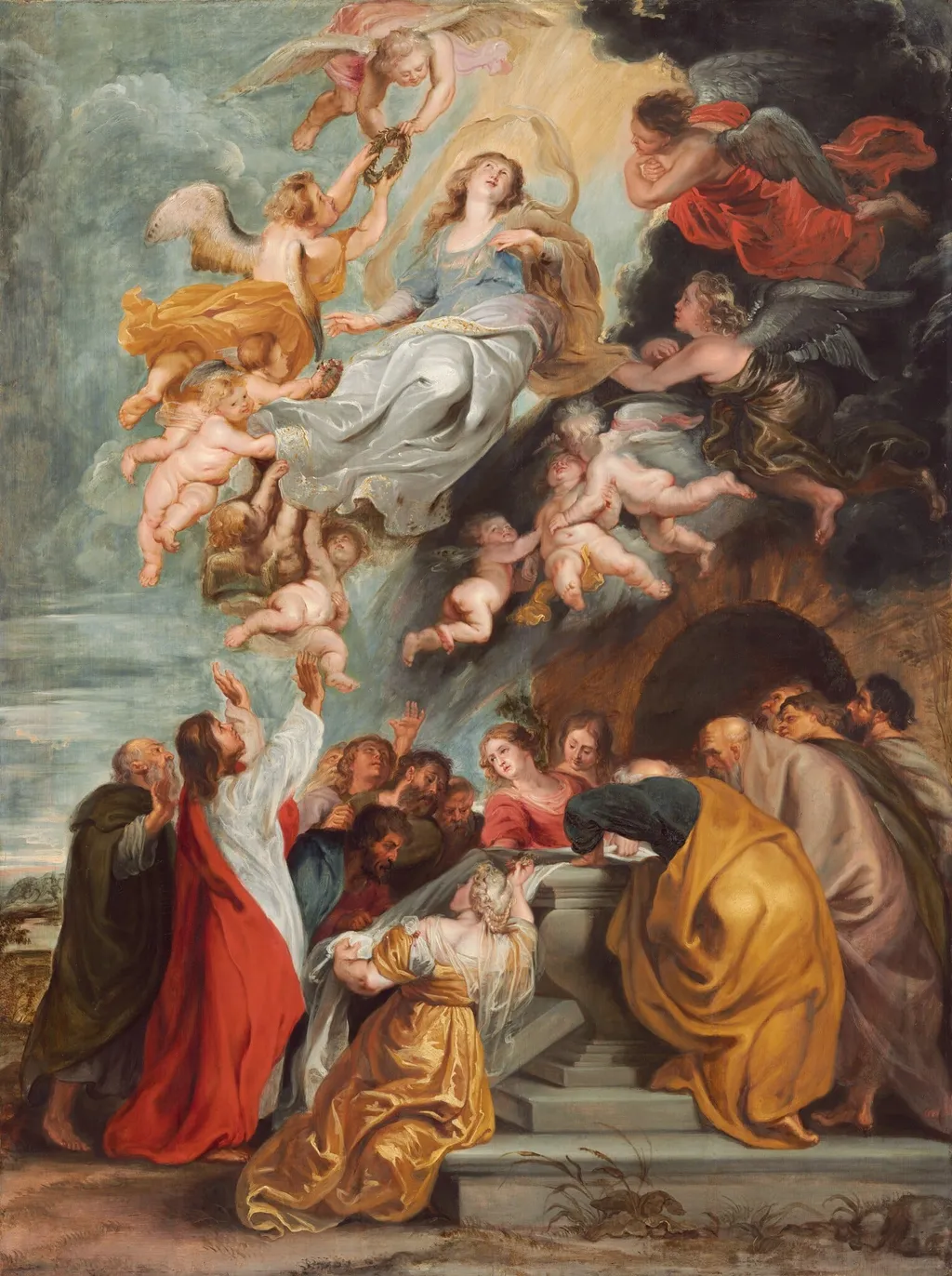
The Assumption of the Virgin is an oil painting by the Baroque artist Studio of Sir Peter Paul Rubens. It dates from 1624 and is held in the collection of the National Gallery of Art.
About this work
Subject & Meaning
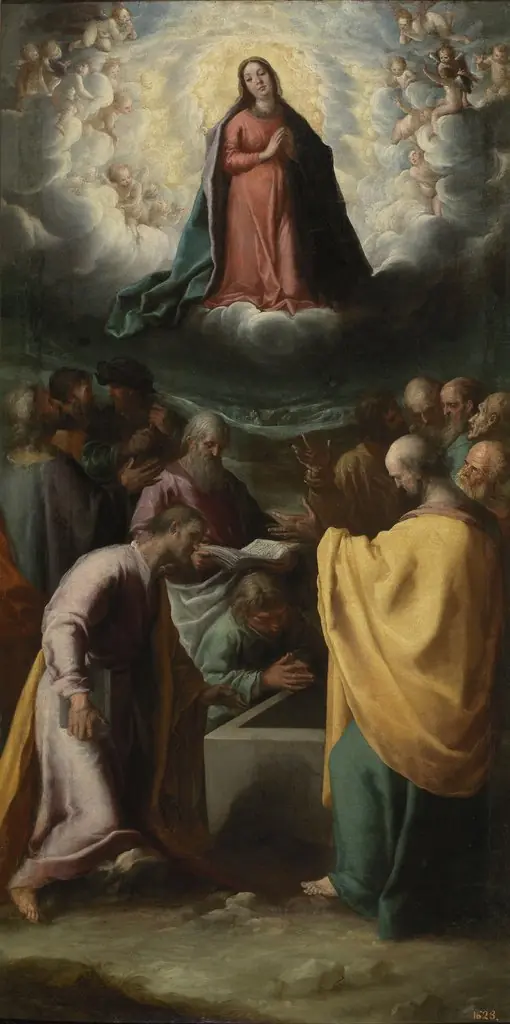
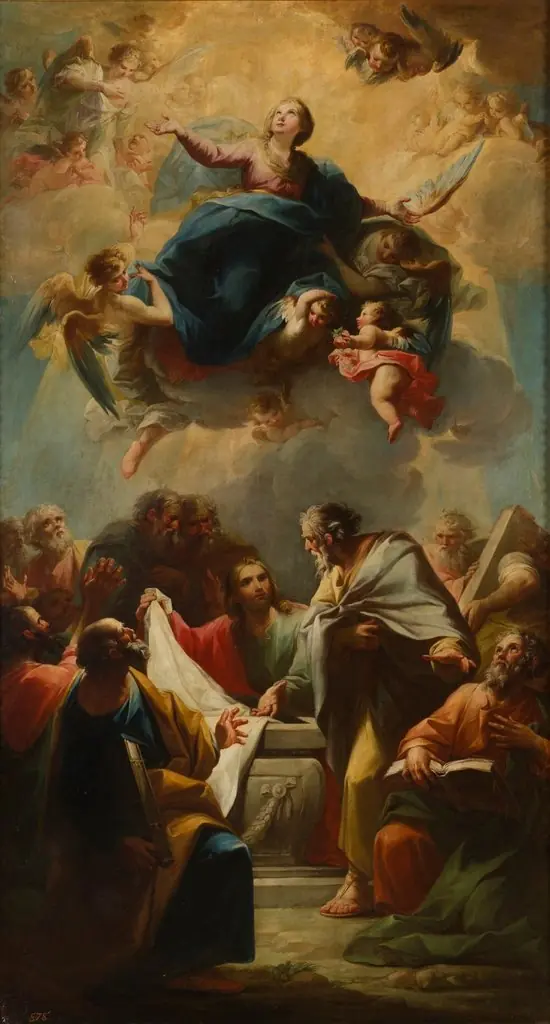
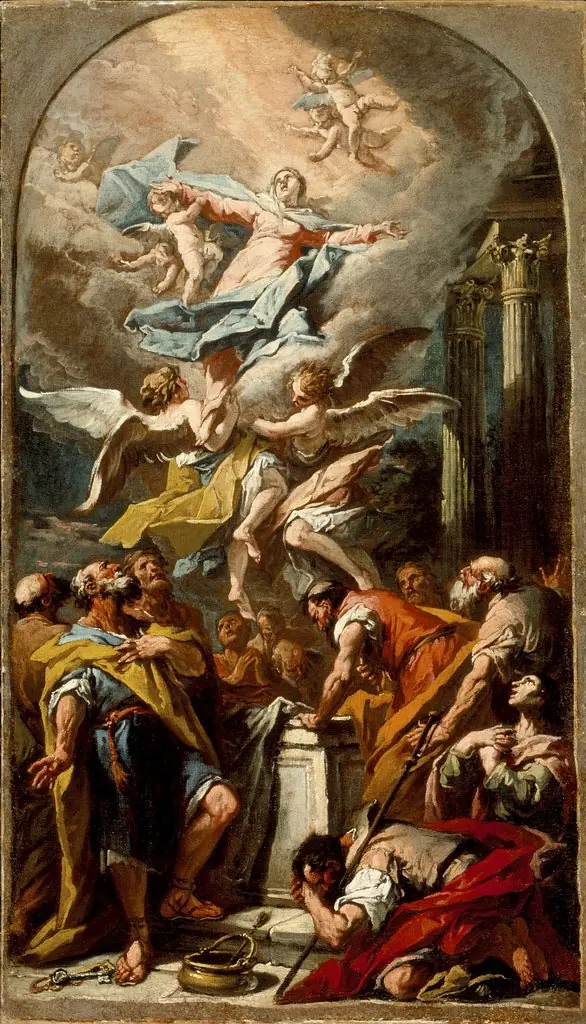
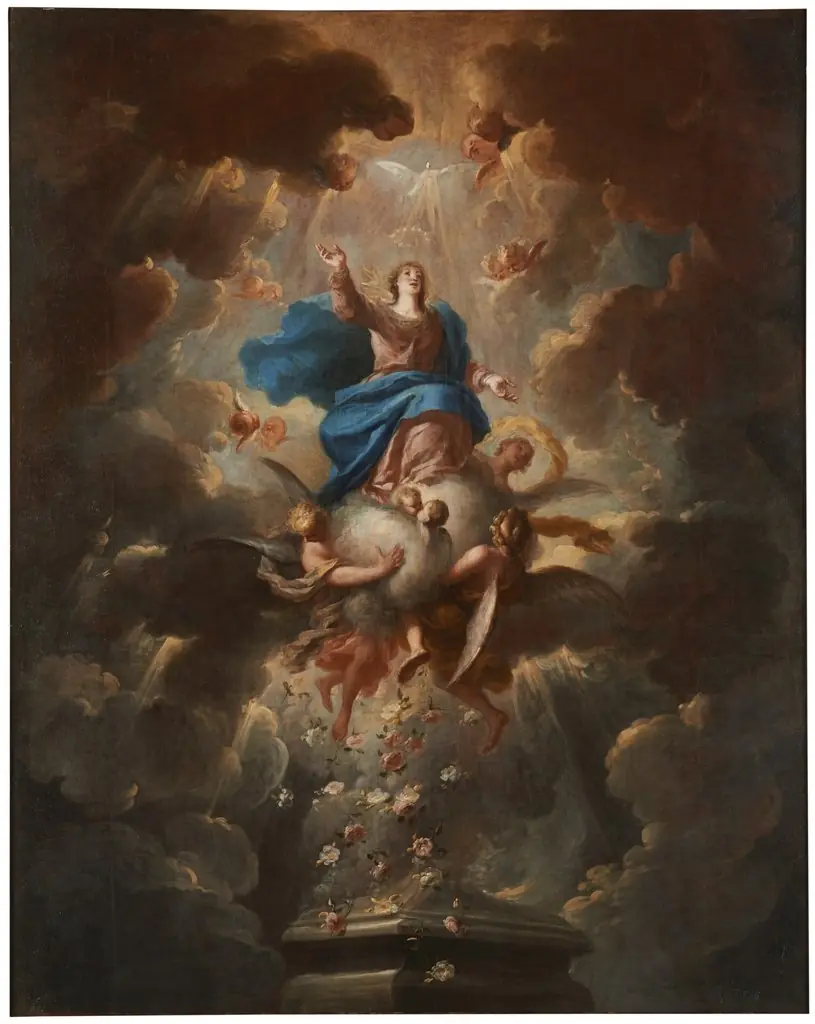
The painting depicts the Assumption of the Virgin, a subject in Christian iconography illustrating the bodily taking up of Mary into heaven at the end of her earthly life. The scene typically centers on Mary surrounded by a radiant light, often flanked by apostles below and angels above, conveying themes of divine glory and intercession. The composition emphasizes vertical ascension, with upward gazes and outstretched arms directing attention to Mary’s elevation, symbolizing her sinless purity and role as Queen of Heaven.
The use of light and celestial figures underscores the miraculous and transcendent nature of the event, reflecting Counter-Reformation emphasis on Marian veneration and doctrinal affirmation of her bodily assumption.
Technique & Style
Kress Foundation as a modello for the altarpiece in the Cathedral of Antwerp, indicating it served as a preparatory oil sketch on panel for a larger commission.
The Assumption of the Virgin is executed in oil on panel, a support and medium consistent with early seventeenth-century Flemish practice. According to the National Gallery of Art's catalogue entry, the work is classified as a painting and dated 1625. Wikidata records the materials as oil paint on panel, with dimensions of 123.5 by 92 centimeters.
The painting is described in the 1952 bill of sale from Frederick Mont to the Samuel H. Kress Foundation as a modello for the altarpiece in the Cathedral of Antwerp, indicating it served as a preparatory oil sketch on panel for a larger commission. No condition report or detailed handling notes are provided in the available sources.
History & Provenance
The Assumption of the Virgin, an oil on panel painting dated 1625, is attributed to an anonymous artist working in the circle of Peter Paul Rubens. It first appears in the 1857 catalogue of R.P. Nichols in London and later in the collection of the Misses Weiss at Langton Castle, Worcestershire, by 1950. In January 1952 the work was sold by Frederick Mont to the Samuel H. Kress Foundation, which later gifted it to the National Gallery of Art in 1961.
Contemporary records describe the composition as a modello for an altarpiece intended for the Cathedral of Antwerp, linking its creation to a specific ecclesiastical commission.
The painting is currently held in the collection of the National Gallery of Art in Washington, D.C., as part of the Samuel H. Kress Collection. Its provenance traces back to R.P. Nichols in London by 1857, followed by ownership by the Misses Weiss at Langton Castle, Worcestershire, by 1950. In January 1952, the work was sold by Frederick Mont, Inc. of New York to the Samuel H. Kress Foundation.
It was subsequently gifted to the National Gallery of Art in 1961. Regarding exhibition history, the piece was included in a loan exhibition of works attributed to Peter Paul Rubens organized by Wildenstein & Co. in London in 1950, where it was noted as originating from the Langton Castle collection.
Context
The 1625 oil‑on‑panel work commonly called The Assumption of the Virgin portrays the Ascension of Mary and is classified as a religious painting. Provenance records show it originated in the collection of R.P. Nichols by 1857, passed to Misses Weiss by 1950, and was sold by Frederick Mont to the Samuel H. Kress Foundation in January 1952 before being gifted to the National Gallery of Art in 1961. The piece is regarded as a preparatory modello for the altarpiece in Antwerp Cathedral, a connection that has shaped scholarly discussions of Rubens’s workshop practice and the development of Baroque compositional strategies. Attribution remains debated, with some catalogues linking the work to the circle of Sir Peter Paul Rubens.
Overview
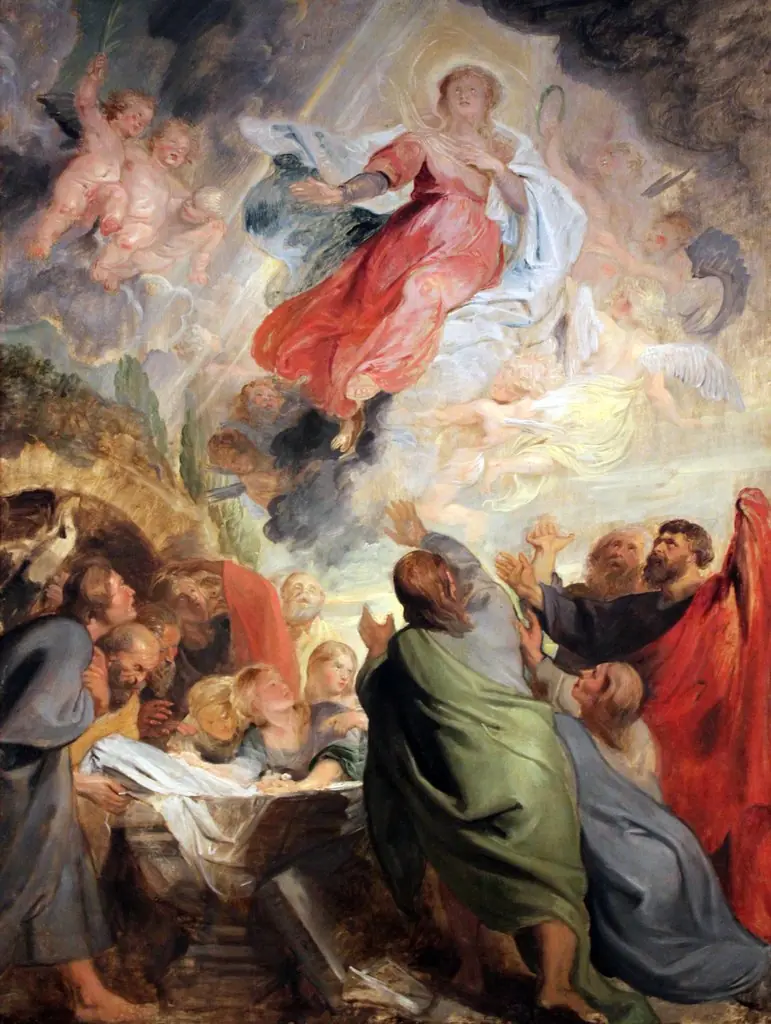
This oil on panel painting, The Assumption of the Virgin, presents the Virgin Mary's celestial ascent, enveloped by a dynamic swirl of angels and clouds. The artist strategically layers figures, from earthly observers below to cherubim above, creating a powerful sense of upward motion. Mary's vivid red robe stands out against the luminous gold drapery, drawing the viewer's eye. This significant work is housed within the collection of the National Gallery of Art in Washington.
Artist & collection



- The Assumption of the Virgin
 The Assumption of the Virgin
 The Assumption of the Virgin
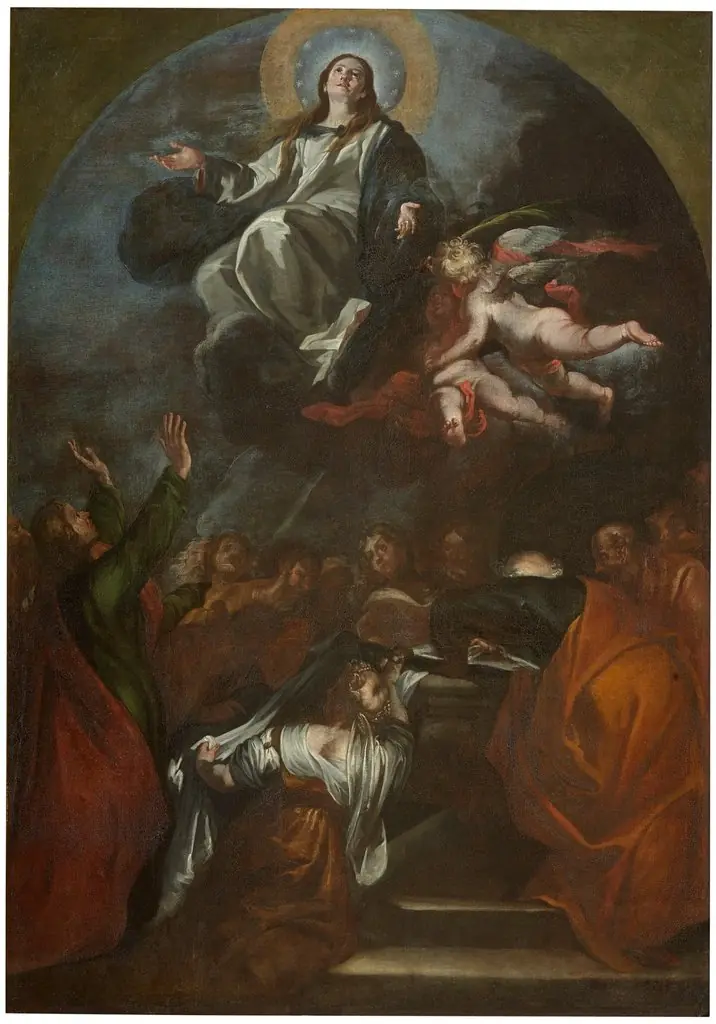 The Assumption of the Virgin
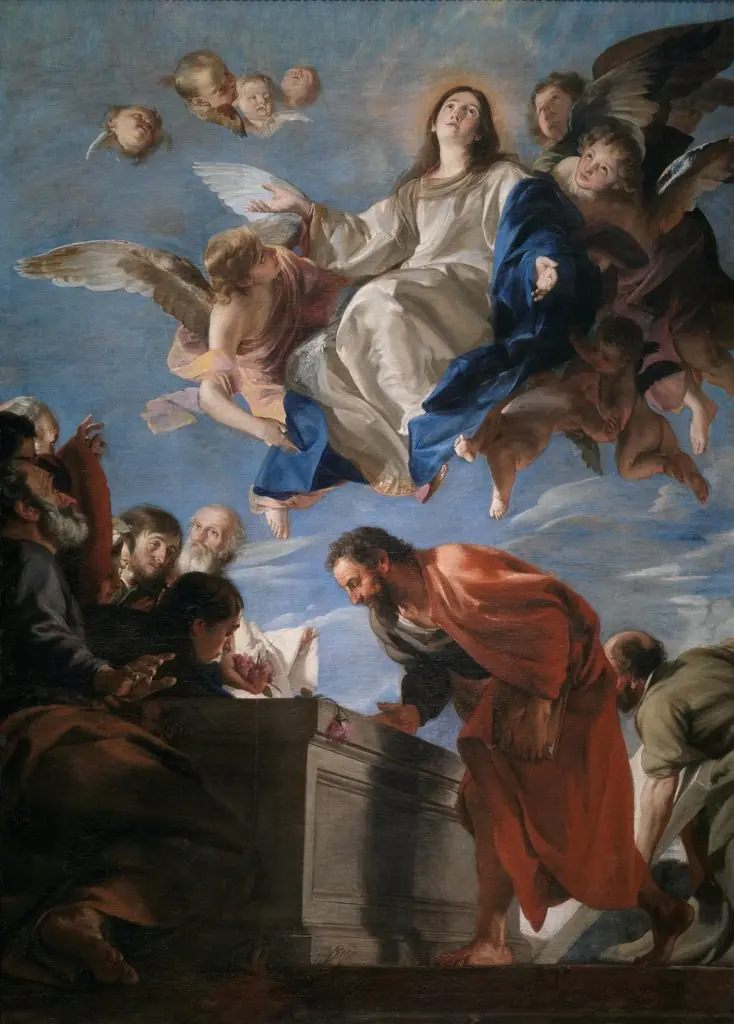 The Assumption of the Virgin
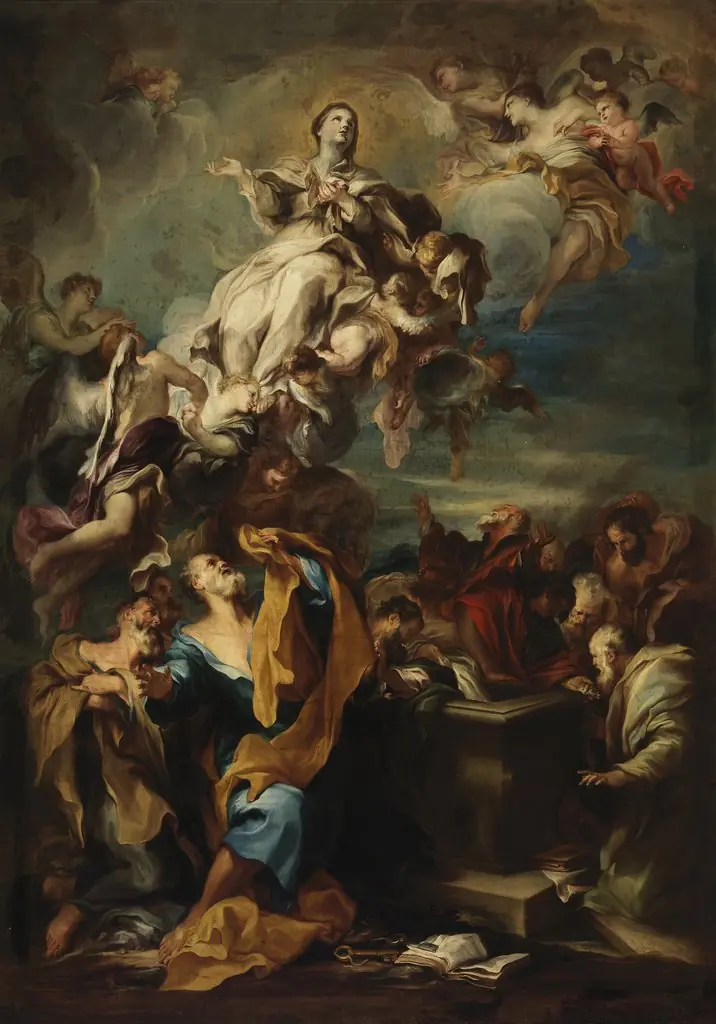 The Assumption of the Virgin
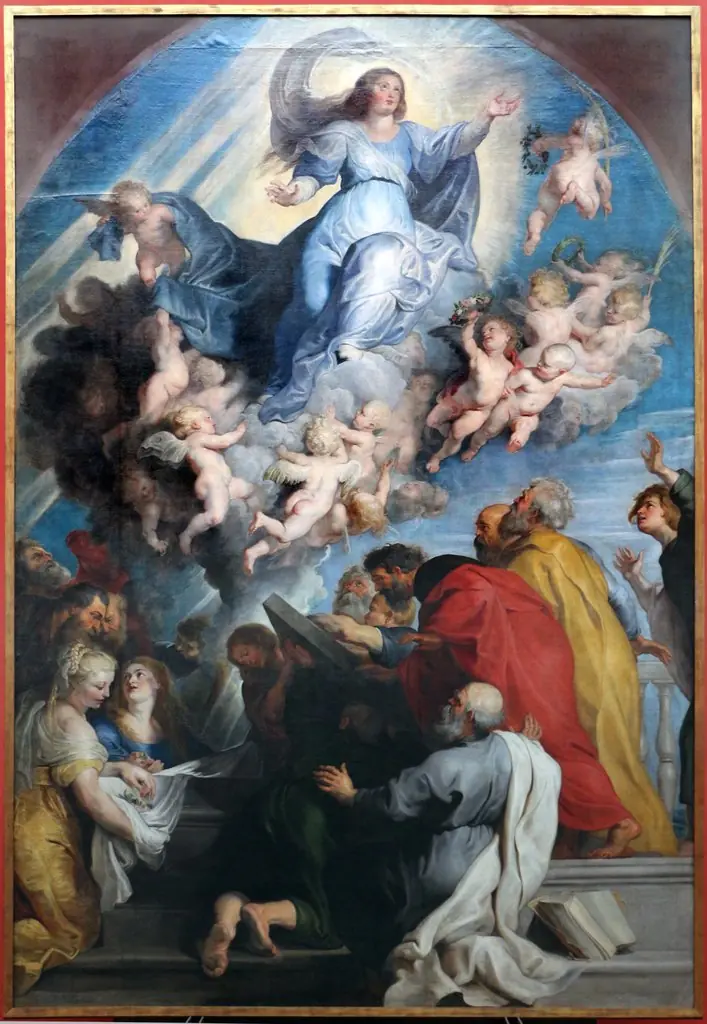 The assumption of the Virgin
 The Assumption of the Virgin
 The Assumption of the Virgin
 The Assumption of the Virgin
 The Assumption of the Virgin