Artwork
The Assumption of the Virgin
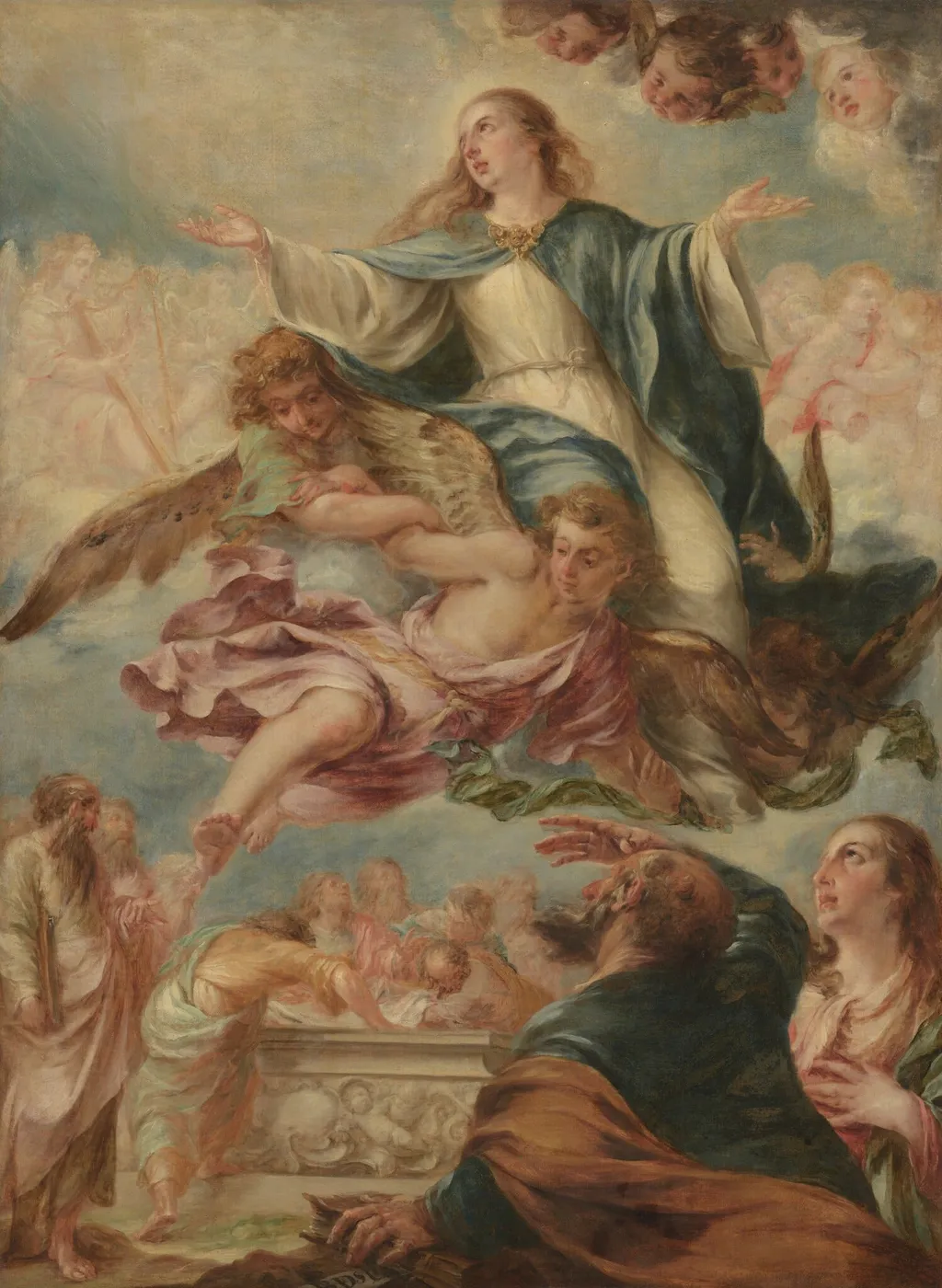
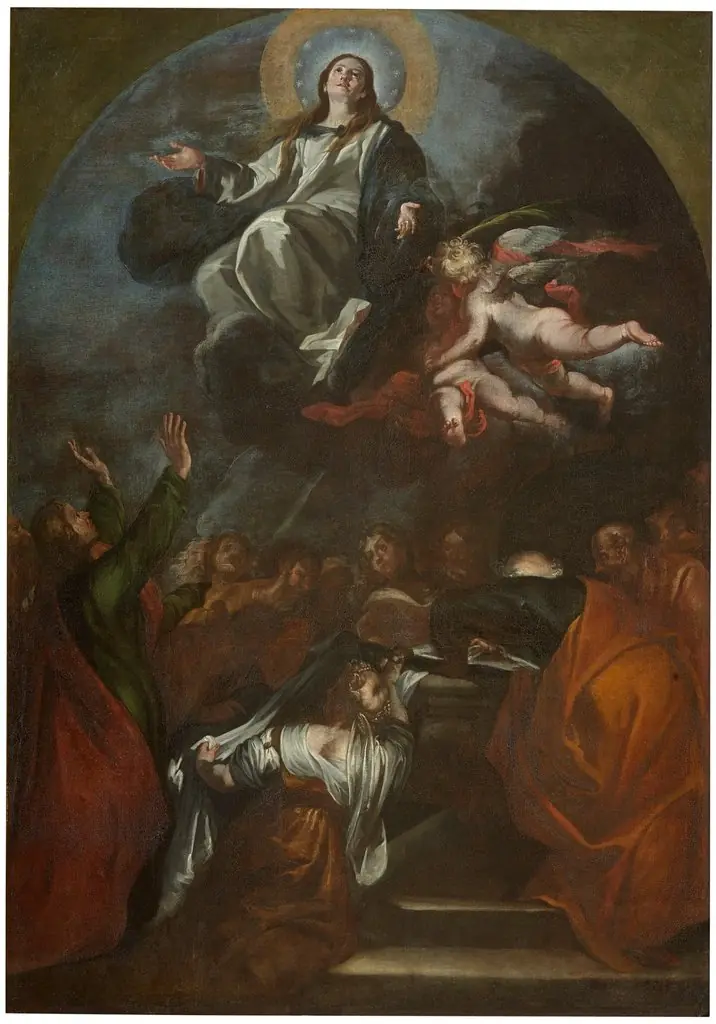
The Assumption of the Virgin is an oil painting by the Baroque artist Juan de Valdés Leal. It dates from 1659 and is held in the collection of the National Gallery of Art.
- Inscription
- Inscribed:lower center, beneath hand of Saint Peter: BALDS LEA (BAL in ligature)
About this work
Subject & Meaning
As a work of religious art created in 1659 by Juan de Valdés Leal, the composition illustrates this specific biblical and theological event.
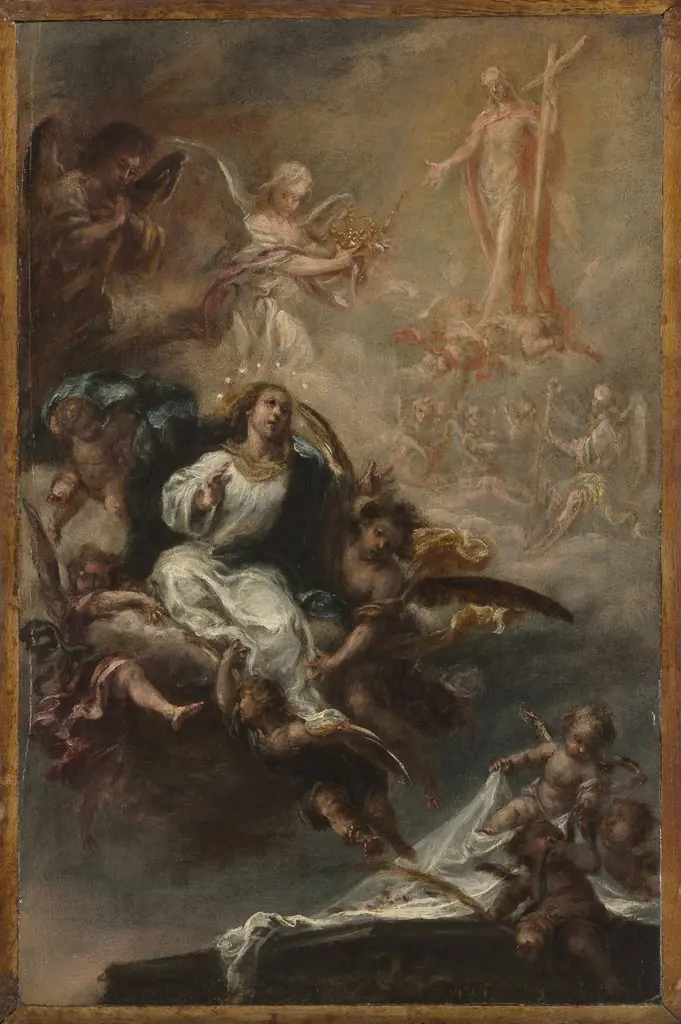
The painting depicts the Assumption of Mary, a central religious subject in which the Virgin Mary is taken up into heaven. As a work of religious art created in 1659 by Juan de Valdés Leal, the composition illustrates this specific biblical and theological event. The main subject is explicitly identified as the Assumption of Mary, focusing on the moment of her bodily ascent.
While the provided sources confirm the narrative theme and its classification within religious genre painting, they do not elaborate on specific symbolic attributes, iconographic details, or deeper theological interpretations beyond the identification of the event itself.
Technique & Style
The Assumption of the Virgin is an oil painting on canvas created in 1659. The work measures 215.1 cm in height and 156.3 cm in width. It portrays the biblical event of the Virgin’s assumption into heaven and belongs to the religious genre.
The painting was executed by Juan de Valdés Leal and later entered the National Gallery of Art in Washington, D.C., through the Samuel H. Kress Foundation gift in 1961. Its support is canvas, and the medium consists of oil paint applied to that support. No explicit information about its handling or current condition is provided in the sources.
History & Provenance
The Assumption of the Virgin is held in the permanent collection of the National Gallery of Art in Washington, D.C., where it is part of the Samuel H. Kress Collection. The work entered the museum as a gift from the Kress Foundation in 1961, having been purchased by the foundation in New York on February 8, 1955. Prior to its acquisition by the Kress Foundation, the painting passed through several notable hands, including Dr. Carvalho at Château Villandry near Tours and the Marquise de Landolfo Carcano in Paris, whose estate sale occurred in 1912.
During the French occupation of Seville in 1810, the canvas was removed to the Alcázar in that city. The provided sources detail this provenance and current location but do not record any specific exhibition history for the work.
Context
The Assumption of the Virgin, painted by Juan de Valdés Leal in 1659, exemplifies the intense Counter‑Reformation devotion found in Spanish Baroque art. Scholars note its dramatic composition and its role within the artist’s broader output of religious canvases, while analyses of its provenance trace its removal from Seville’s Alcázar in 1810, subsequent ownership by the Marquis de Landolfo Carcano, and acquisition by the Samuel H. Kress Foundation in 1955. Art historical commentary highlights the discrepancy between earlier catalogued dimensions and the work’s present measurements, a point underscored by Eisler and confirmed by later studies.
The painting’s inclusion in the Kress Collection has ensured its visibility in American museums, and it remains a referenced example in discussions of 17th‑century Spanish iconography.
Overview
Juan de Valdés Leal's painting, The Assumption of the Virgin, created around 1659, is an oil on canvas work. This religious composition portrays the Virgin Mary being elevated to heaven. The artist employs a dynamic arrangement to convey the miraculous event, featuring both celestial and earthly figures.
Own this work as a print
Artist & collection