Artwork
The Calling of Saint Matthew
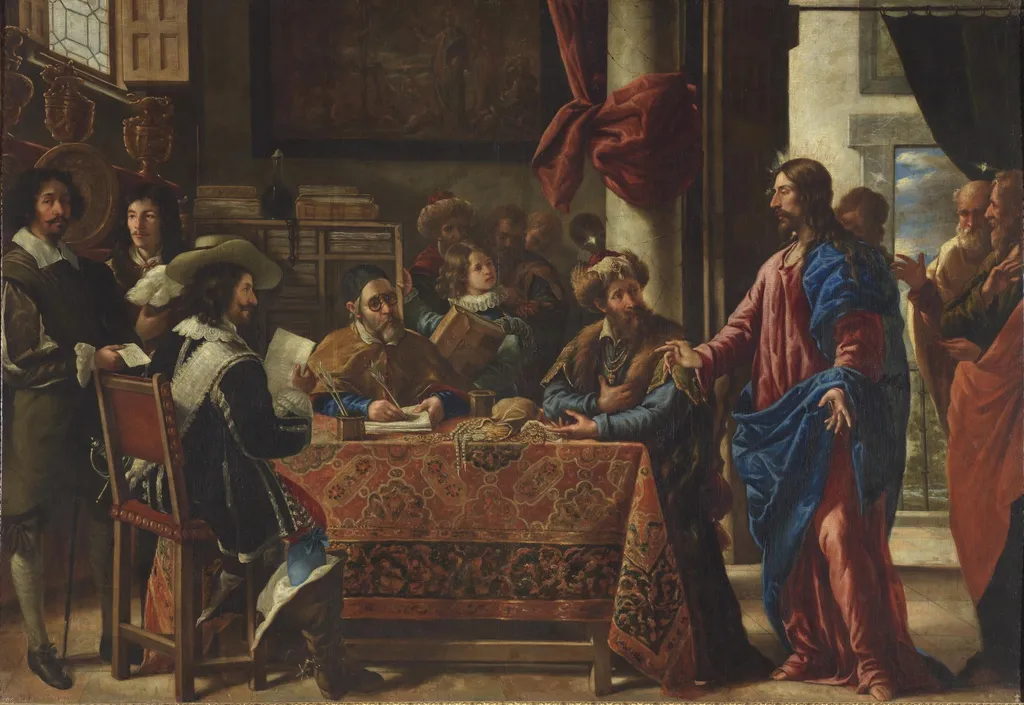
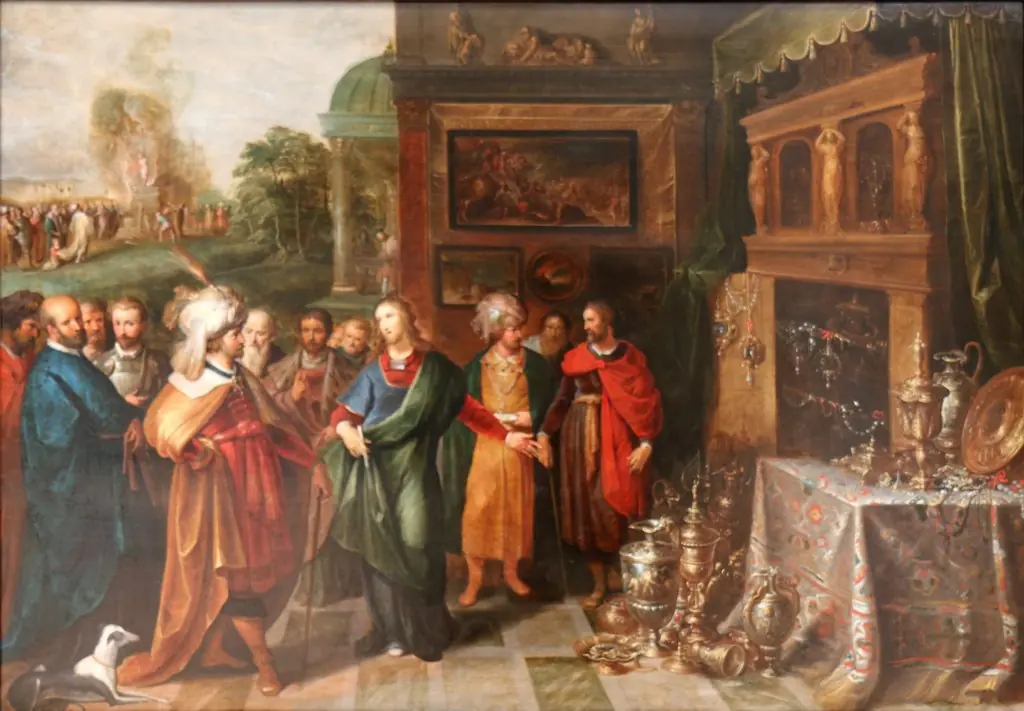
The Calling of Saint Matthew is an oil painting by the Early Baroque Italian artist Juan de Pareja. It dates from 1661 and is held in the collection of the Museo del Prado.
About this work
Juan de Pareja painted this scene in oil on canvas in 1661. It shows the moment Jesus calls a tax collector to leave his old life behind. The painting lives at the Museo del Prado in Madrid.
Pareja was once enslaved by Diego Velázquez. This work helped shape his reputation as an artist after he gained freedom.
Check out Caravaggio’s version of the scene next.
Subject & Meaning
He contrasts his own lighter-toned features with a secondary Black figure above Matthew, underscoring his emancipated identity.
The work depicts the New Testament episode in which Jesus summons Levi, a tax collector immersed in material wealth, to follow him, transforming him into the apostle Matthew. Pareja renders the scene in a tavern-like interior where Levi, seated among coins, pearls, and ledgers, reacts with astonished surprise before accepting the call.
Pareja situates himself at the table’s left edge, dressed as a gentleman with a sword to signal his new status as a freedman, and includes a signed inscription to assert artistic authorship. He contrasts his own lighter-toned features with a secondary Black figure above Matthew, underscoring his emancipated identity. The composition divides the space along a marble column: on the right, Jesus and his barefoot disciples embody the spiritual realm, marked by a white halo and divine light; on the left, opulent dress and worldly goods represent the material life from which conversion occurs.
A small painting of Moses and the Brazen Serpent on the wall may allude to liberation narratives, resonating with Pareja’s own trajectory from bondage to artistic freedom.
Technique & Style
Executed in 1661, this work is an oil painting on canvas measuring 225 by 325 centimeters. The composition is structurally divided by a marble column that separates the spiritual realm on the right from the material world on the left. Jesus and his disciples are depicted barefoot in simple clothing, distinguished by a white halo and divine light, contrasting with the opulent attire and luxurious objects surrounding the tax collectors.
The artist employs a self-portrait positioned at the far left, where he appears as a nobleman holding a sword with distinctly Europeanized facial features and lighter skin tone. This figure gazes directly at the viewer, differing from the other characters, while an inscription bearing the artist's signature and date asserts his authorship. A secondary painting of Moses and the Bronze Serpent is visible on the rear wall, adding symbolic depth to the scene.
History & Provenance
The Calling of Saint Matthew is an oil painting on canvas created by Juan de Pareja in 1661. The work was executed eleven years after the artist gained his freedom from slavery under Diego Velázquez. While the specific commission details are not recorded in the provided sources, the painting reflects Pareja's independent career development following his manumission.
The composition includes a self-portrait of the artist and bears an inscription with his signed name and the date 1661, asserting his authorship. The work is currently held by the Museo del Prado in Madrid. Historical ownership records indicate the painting was once part of the Spanish royal collection, having been owned by monarchs including Philip V, Elisabeth Farnese, Charles III, and Ferdinand VII before entering the museum's collection.
The Calling of Saint Matthew by Juan de Pareja is held in the collection of the Museo del Prado in Madrid, Spain. Historical records indicate the painting was once owned by Spanish monarchs Philip V, Elisabeth Farnese, Charles III, and Ferdinand VII, and was associated with royal sites including the Royal Palace of Aranjuez and the Royal Palace of La Granja de San Ildefonso.
While the work's creation in 1661 and its significance within Pareja's oeuvre are well-documented, the provided sources do not contain specific details regarding its inventory accession numbers or a chronological list of public exhibitions.
Context
The Calling of Saint Matthew marks a pivotal moment in the reevaluation of Juan de Pareja’s career and the broader recognition of Afro-Hispanic artists in 17th-century Spain. Long overshadowed by his association with Velázquez, the painting has only recently been studied for its independent significance, particularly in relation to Pareja’s identity as a freedman and artist.
Scholars emphasize how Pareja uses the composition to assert his status and artistic agency. His inclusion of a self-portrait, depicted with Europeanized features and holding a sword, signals a deliberate departure from racialized stereotypes of the era, positioning himself as a nobleman and free creator rather than a former slave. The painting’s division between material and spiritual realms further underscores Pareja’s thematic engagement with transformation, paralleling Matthew’s conversion with his own emancipation.
Recent scholarship situates the work within transatlantic slavery studies and the rediscovery of Pareja’s oeuvre, challenging earlier critical neglect that framed the painting primarily as a product of Velázquez’s influence.
Legacy
The legacy of Juan de Pareja’s The Calling of Saint Matthew has shifted markedly in recent scholarship, moving from relative obscurity to renewed critical attention. For much of art history, Pareja’s contributions were overshadowed by his prior enslavement to Diego Velázquez and framed primarily through their relationship rather than as an independent masterpiece.
In the past decade, growing interest in transatlantic slavery studies and reassessments of Velázquez’s portrait of Pareja have catalyzed a reevaluation of the painting’s significance. Scholars now emphasize its cultural resonance as a work by an Afro-Hispanic artist asserting professional identity in 17th-century Spain, positioning Pareja as a key figure in Spanish Baroque art beyond his association with Velázquez.
Overview
Juan de Pareja’s 1661 oil on canvas, titled The Calling of Saint Matthew, is part of the Museo del Prado’s collection in Madrid. The work captures the biblical episode in which Jesus summons the tax collector Levi, prompting his conversion into the apostle Matthew. Executed after Pareja’s emancipation, the painting marks a significant moment in his artistic career.
Own this work as a print
Artist & collection
Artist
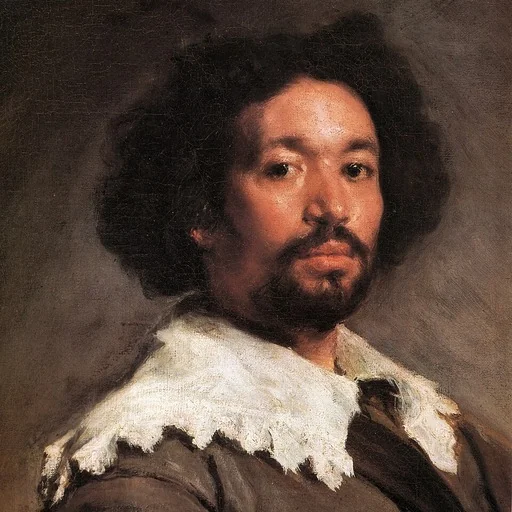
Juan de Pareja (c. 1606 – c. 1670) was a Spanish painter. Born enslaved, he is known primarily as a member of the household and workshop of painter Diego Velázquez, who freed him in 1650. His 1661 work The Calling of…