Artwork
The last supper
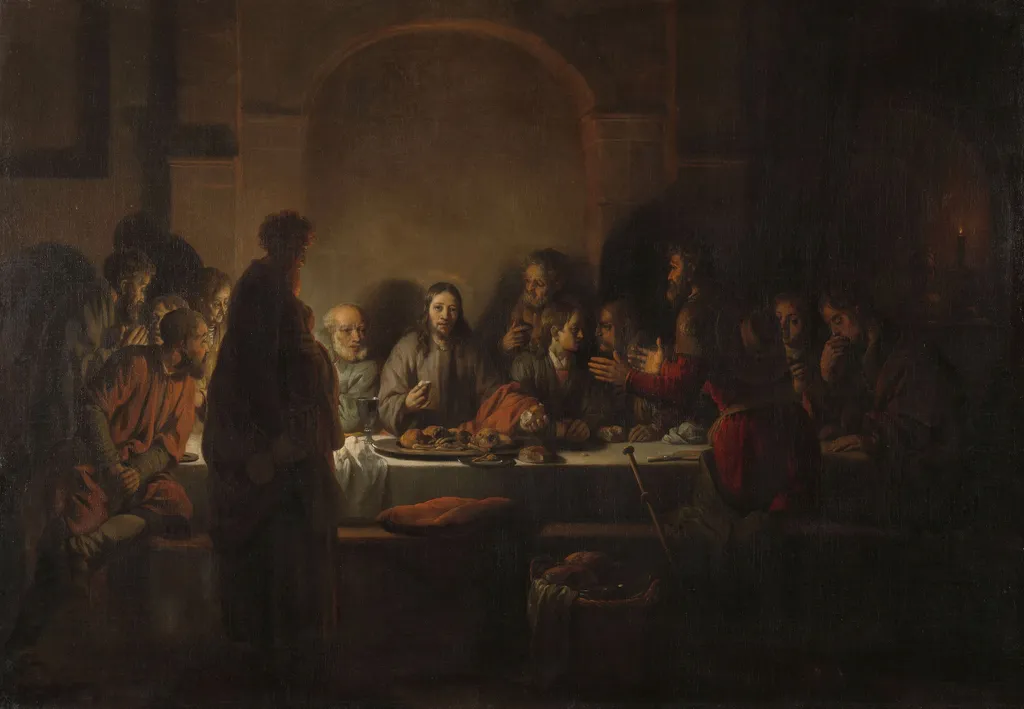
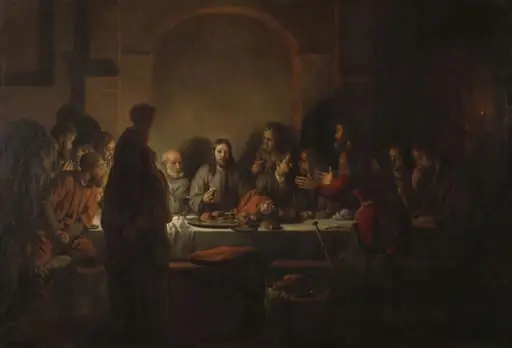
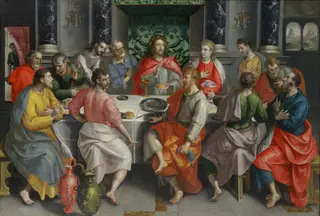
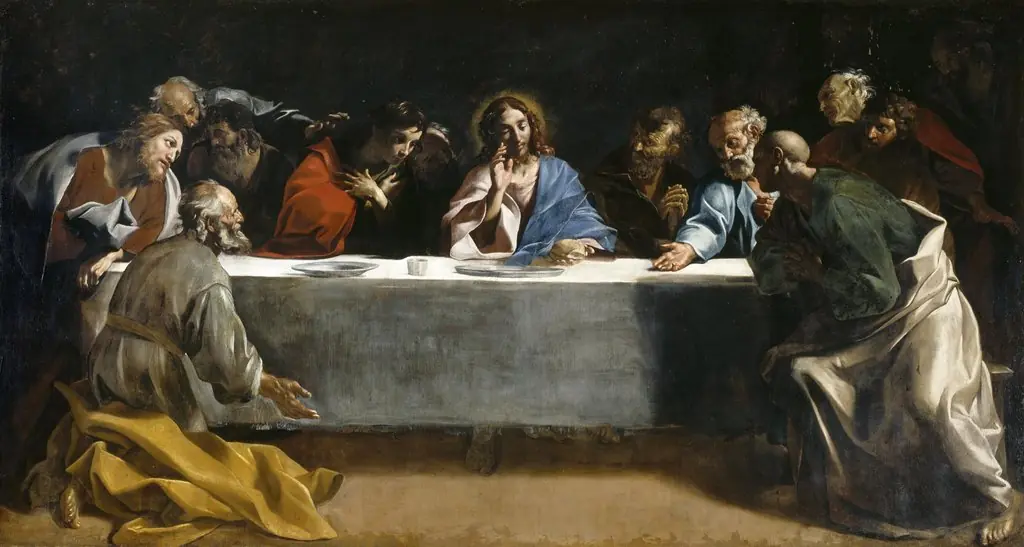
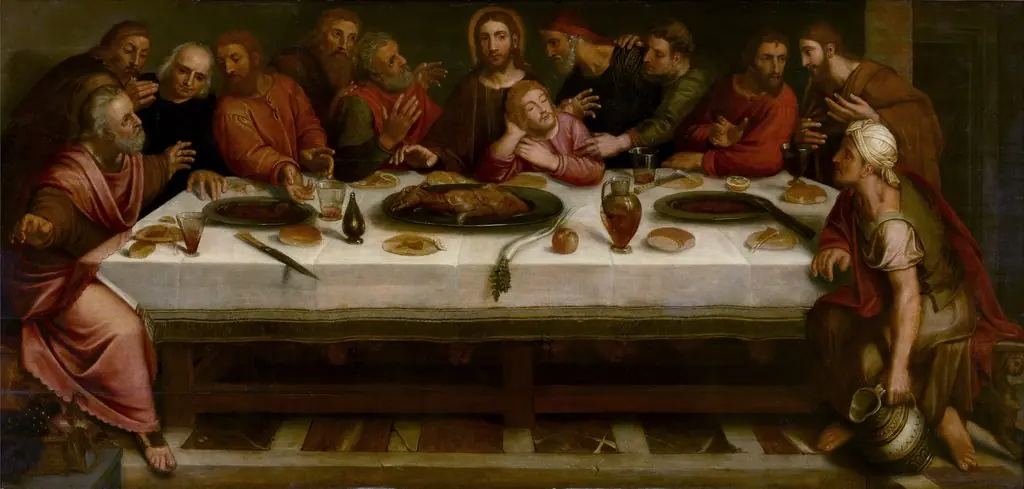
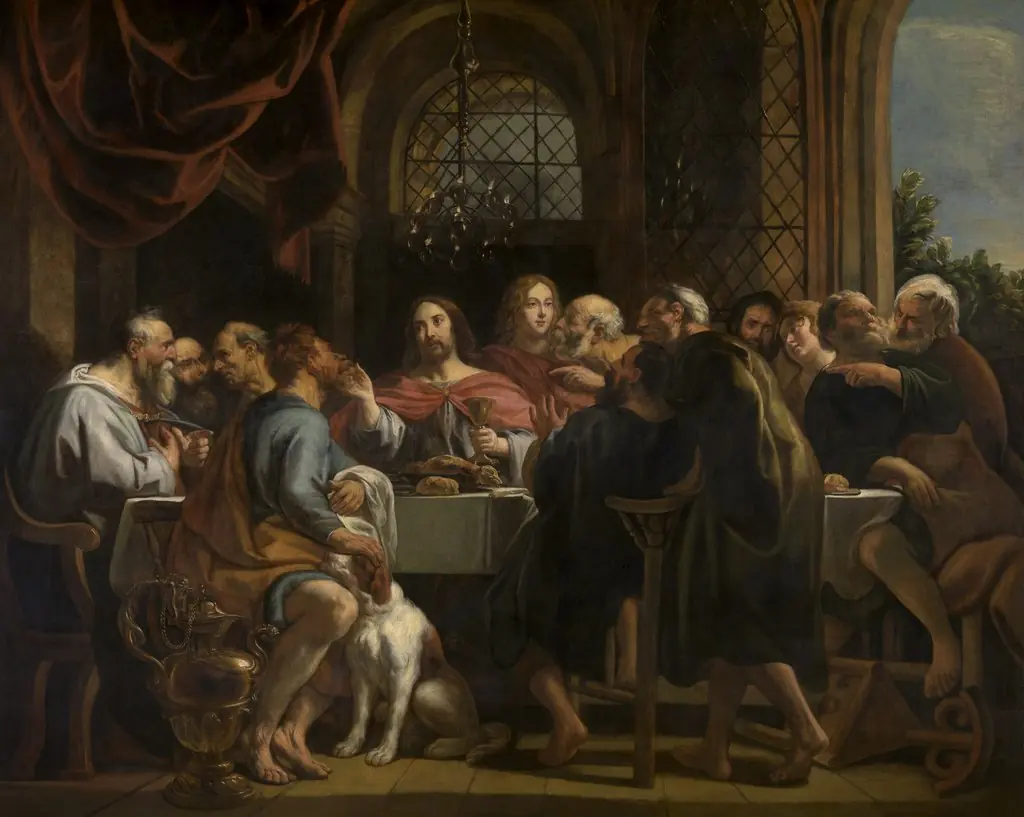
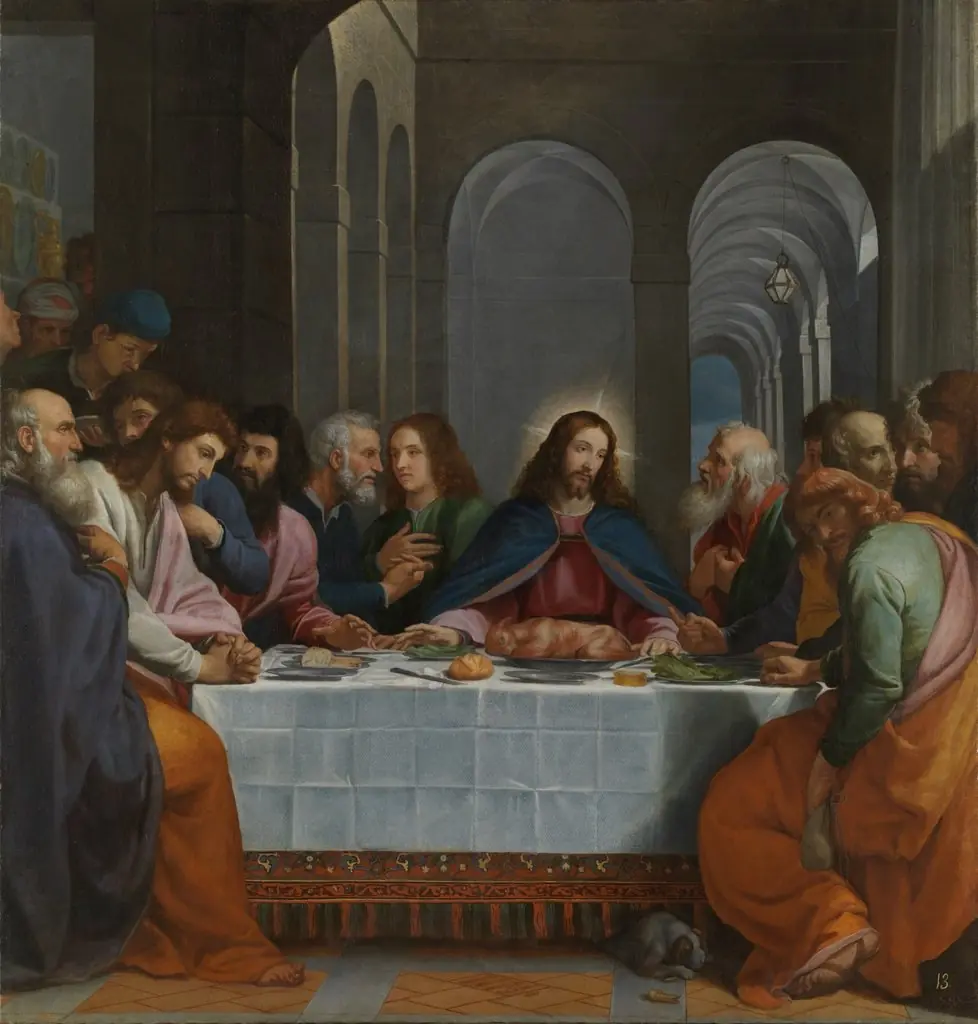
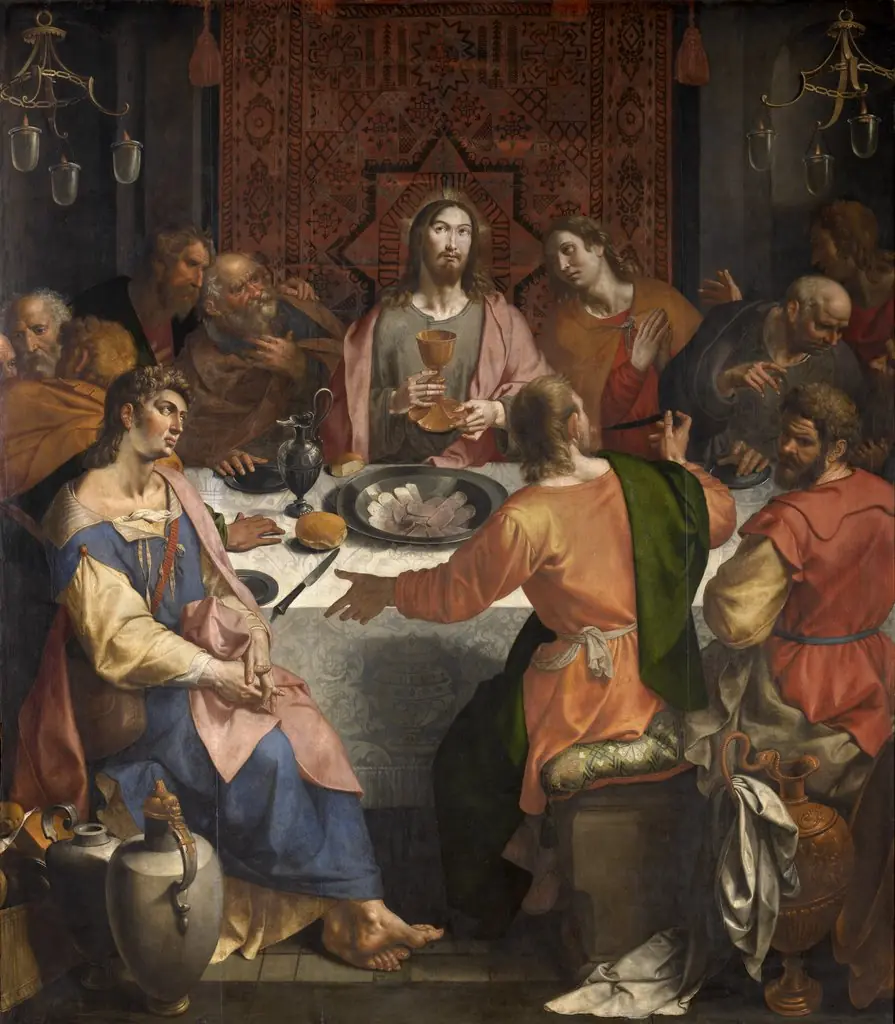
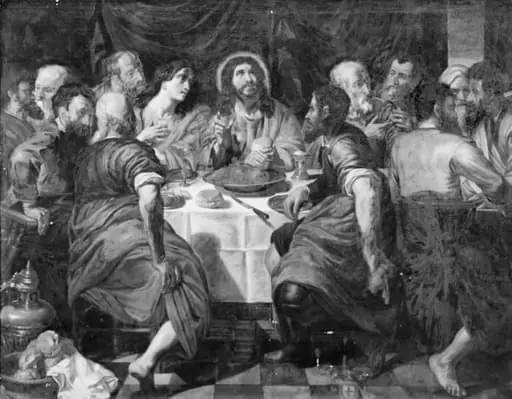
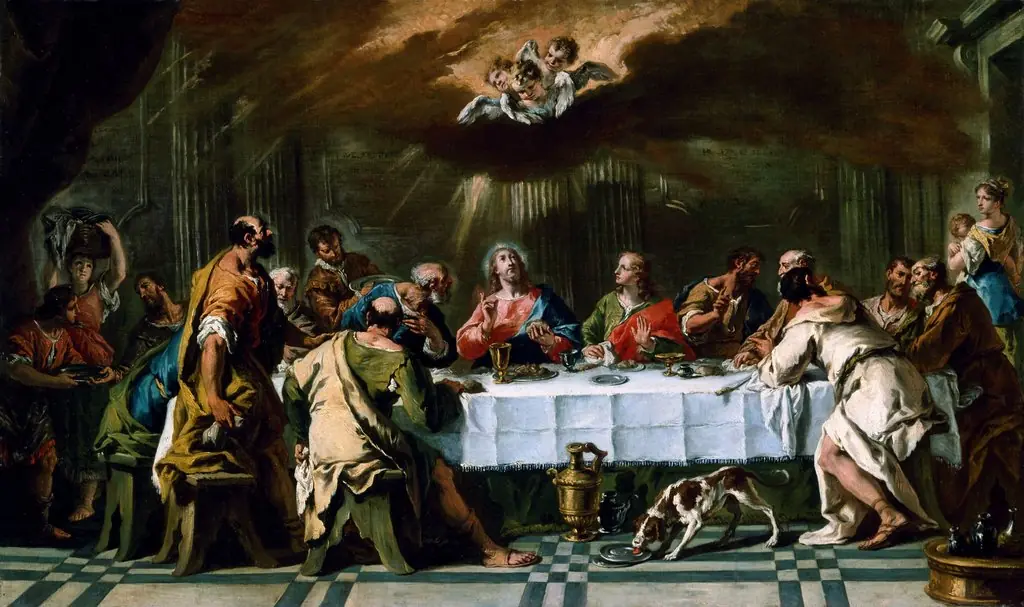
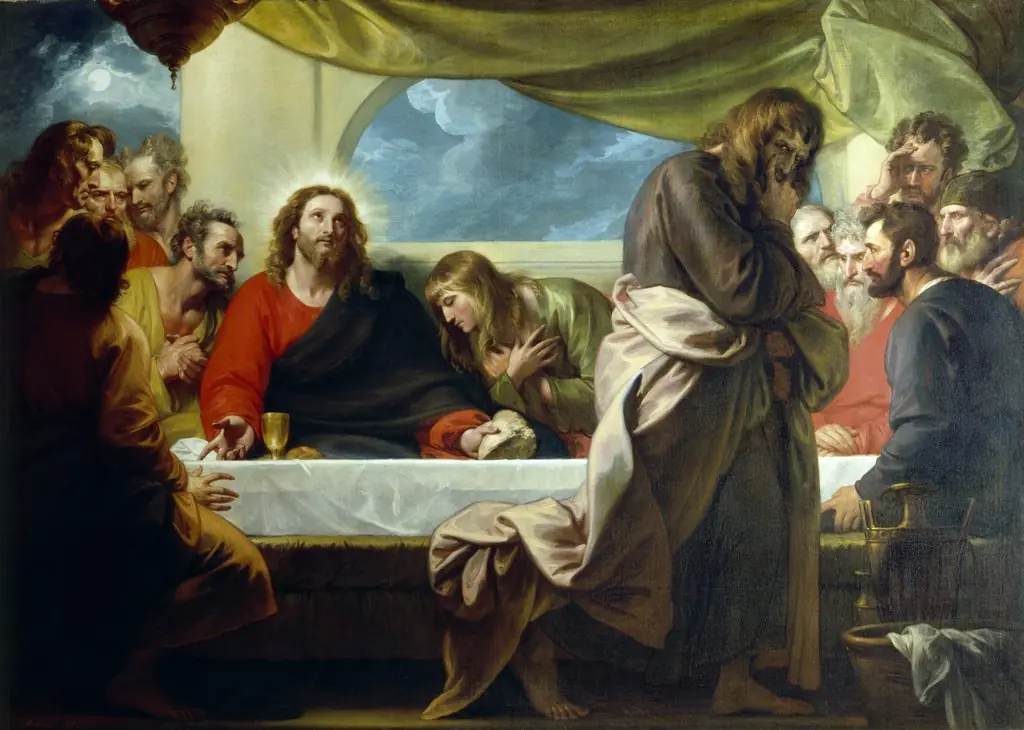
The last supper is an oil painting by the Dutch Golden Age artist Gerbrand van den Eeckhout. It dates from 1664 and is held in the collection of the Rijksmuseum.
About this work
Subject & Meaning
Jesus does not look at Judas but gazes outward, beyond the frame, his sorrowful expression and extended bread serving as a direct address to the spectator.
The painting depicts the Last Supper, the final meal of Jesus with his twelve apostles before his Passion, as narrated in the Gospels (John 13:20-31). Jesus sits at a table parallel to the picture plane, surrounded by the apostles. He holds a piece of bread, having just dipped it into a silver chalice, an allusion to his announcement that one of the apostles will betray him.
The iconography draws on medieval and Renaissance tradition, notably in its treatment of Judas Iscariot. Identifiable by his reddish hair and beard, Judas stands at left in backlight, clutching a purse. He has already risen from his seat, suggesting his imminent departure after receiving the bread.
This empty seat motif carries theological weight: Judas embodies human weakness, and his vacant place invites the viewer to reflect on personal faith and the impossibility of perfect virtue.
Several elements strengthen the connection between painted space and the viewer's world. Jesus does not look at Judas but gazes outward, beyond the frame, his sorrowful expression and extended bread serving as a direct address to the spectator. This gesture may allude either to Christ's sacrifice or to the Eucharist.
Technique & Style
Gerbrand van den Eeckhout executed this work in 1664 using oil paint on a canvas support. The painting measures 100 cm in height and 142 cm in width. Stylistically, the composition adheres to traditional Dutch seventeenth-century conventions for the subject, notably depicting Judas Iscariote standing and preparing to depart while holding a money bag.
The arrangement features a table parallel to the picture plane, with Jesus positioned centrally among the twelve apostles. A distinctive formal element is the empty stool in the foreground, topped with a cushion, which marks the traitor's vacant seat. Unlike many contemporary interpretations where Jesus interacts solely with figures within the frame, here he gazes directly outward toward the viewer while offering a piece of bread, creating an immediate spatial connection between the sacred scene and the observer.
History & Provenance
Gerbrand van den Eeckhout executed this oil on canvas depiction of the Last Supper in 1664. The work is currently held in the collection of the Rijksmuseum in Amsterdam. While the painting belongs to a series of biblical themes the artist produced in the early 1660s, specific details regarding its original commission remain unknown.
Historical records do not identify the patron or their religious convictions, despite the artwork containing iconographic elements associated with both Catholic and Protestant traditions. Scholars have suggested that certain drawings attributed to Rembrandt, specifically a Last Supper study in the Louvre and a Christ among his Disciples sheet in Berlin, may actually serve as preparatory works for this 1664 canvas.
Context
Gerbrand van den Eeckhout’s 1664 Last Supper situates the artist within the Dutch biblical painting tradition of the mid-seventeenth century, a period marked by renewed interest in narrative religious scenes. The composition draws on earlier Netherlandish models, such as Nicolaes de Bruyn’s 1618 engraving and Pieter Pourbus’s 1548 panel, where Judas’s departure is emphasized by an empty seat, a motif that underscores the moral stakes of betrayal and human frailty.
The painting’s iconography also reflects broader theological concerns of the era. By placing an empty, cushioned seat at the table’s edge and rendering Jesus’ gaze outward toward the viewer, Van den Eeckhout invites reflection on the Eucharist and the spectator’s own moral accountability. This strategy aligns with Counter-Reformation and Protestant visual rhetoric, which used biblical narratives to prompt introspection and penitence.
The work’s inclusion of Catholic motifs, such as the haloed Christ and the pilgrim’s garb of James the Greater, complicates its confessional context, suggesting either a mixed audience or an artist working across traditions in cosmopolitan Amsterdam.
Overview
Gerbrand van den Eeckhout's The Last Supper (1664) is a religious painting executed in oil paint, characteristic of the Dutch Golden Age movement. It is currently part of the Rijksmuseum's collection.
Legacy
While specific lasting impacts of The Last Supper on art history are not broadly highlighted, it remains a notable example of Eeckhout's contribution to the Dutch Golden Age's religious art.
Own this work as a print
Artist & collection
Artist
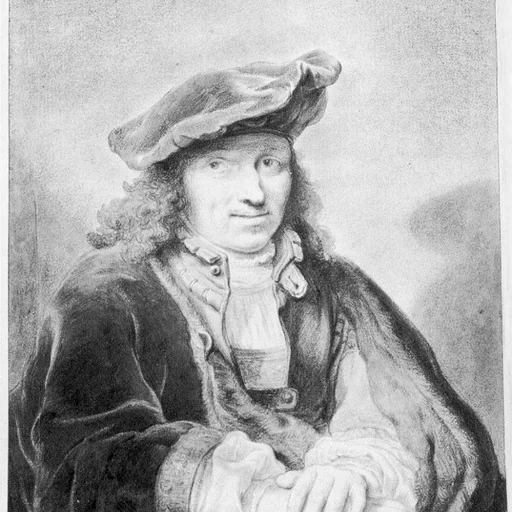
Gerbrand van den Eeckhout (19 August 1621 – 29 September 1674) was a Dutch Golden Age painter and a favourite student of Rembrandt. He was also an etcher, an amateur poet, a collector and an adviser on art.