Artwork
St John the Baptist in the Prison
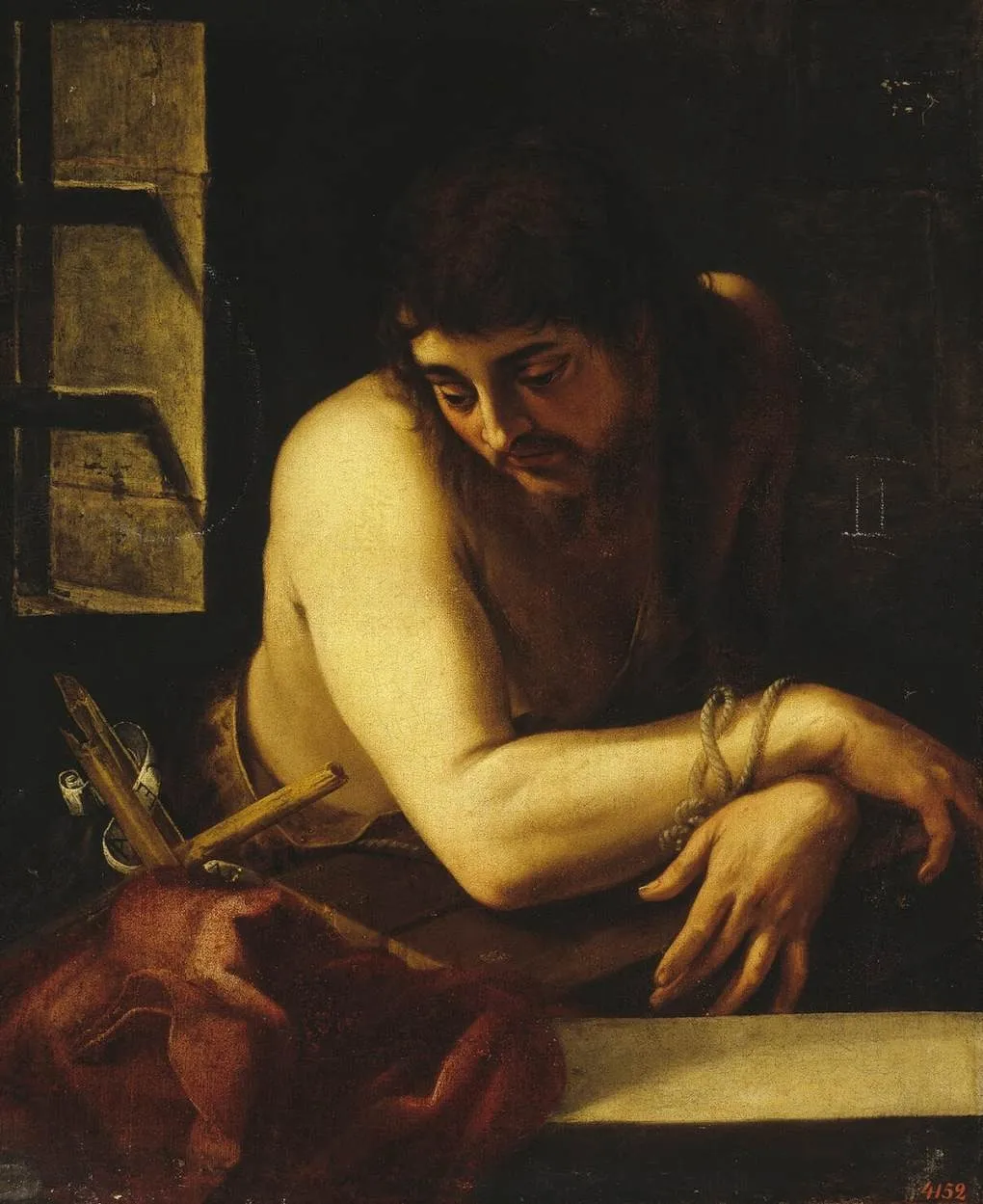
St John the Baptist in the Prison is an oil painting by the Mannerist artist Juan Fernández Navarrete. It dates from 1567 and is held in the collection of the Hermitage Museum.
About this work
Overview
St John the Baptist in the Prison is an oil painting on canvas by the Spanish Renaissance artist Juan Fernández Navarrete, dated to 1567.
St John the Baptist in the Prison is an oil painting on canvas by the Spanish Renaissance artist Juan Fernández Navarrete, dated to 1567. Measuring 80 by 72 centimetres, the work depicts the solitary figure of the Baptist confined in a dark cell, illuminated by a narrow shaft of light from a barred window. The painting is held in the collection of the Hermitage Museum in St. Petersburg, where it is identified by inventory number 4152. Painted during Navarrete's tenure as court painter to King Philip II of Spain, the work exemplifies the artist's mastery of dramatic chiaroscuro and his ability to convey profound spiritual contemplation through restrained composition. It stands as one of the most compelling treatments of this subject in sixteenth-century Spanish art, demonstrating the influence of Venetian colourism on Spanish religious painting while addressing themes of faith, doubt, and martyrdom that resonated deeply within the Counter-Reformation context.
Subject & Meaning
The painting depicts John the Baptist in the final period of his imprisonment by Herod Antipas, a subject drawn from the Gospel of Matthew (11:2-11). The Baptist sits bare-shouldered in a cramped cell, his muscular arms crossed on a stone ledge as his head bows in contemplation. To his left, a small latticed window admits a narrow beam of light that casts geometric shadows across the wall, creating a visual metaphor for the limited spiritual illumination available to him in his confinement. Below the window rests a cross-shaped arrangement of reeds or sticks and a rolled scroll upon a crumpled deep red cloth. The reed cross alludes to the instrument of his future martyrdom and his prophetic mission, while the red cloth symbolises the blood of that martyrdom. A rope wrapped around his right wrist signifies his bondage and, by extension, the submission of the disciple to divine will. The figure's downward gaze and introspective posture suggest a moment of prayer and questioning, capturing the biblical episode in which John sent his disciples to ask Jesus whether he was indeed the awaited Messiah. The stripped-down setting, with its overwhelming darkness punctuated by concentrated light, strips the scene to its essential spiritual drama and invites reflection on faith tested by adversity.
Technique & Style
Navarrete executed the work in oil on canvas, employing a technique that demonstrates his absorption of Venetian painterly methods, particularly those of Titian, whose use of colour he had studied during his Italian sojourn. The surface displays smooth, polished brushwork with subtle gradations of light and shadow on the flesh, hallmarks of the oil medium handled with exceptional control. The palette is restricted but resonant: warm flesh tones and deep browns are set against a single rich red and near-black shadows, creating a tonal unity that heightens the emotional intensity. Light falls dramatically from the left, modelling the figure's shoulder, arms, and hands while allowing the background to recede into obscurity. This pronounced chiaroscuro creates a sense of spatial depth and psychological focus that draws the viewer into the cell's confined space. The composition is notably austere, with relatively few details, which concentrates attention on the figure's physical and emotional state. The handling of paint in the skin tones and the drapery shows particular sophistication, with the red cloth rendered in crumpled folds that demonstrate Navarrete's attention to textural variation. The overall effect combines the colouristic warmth of Venetian influence with the devotional directness characteristic of Spanish Renaissance painting.
History & Provenance
The painting is dated to 1567, during the period when Navarrete served as court painter to King Philip II of Spain, a position he accepted after Titian proved too old and Tintoretto and Veronese refused to relocate to Spain. The work's provenance before its acquisition by the Hermitage Museum is not fully documented in the available sources, though its presence in the Hermitage collection indicates it entered the Russian imperial collections, likely during the eighteenth or nineteenth century when the museum actively acquired Western European paintings. The Hermitage Museum in St. Petersburg remains its current location, where it is accessible to the public as part of one of the world's most significant holdings of European art. The painting bears the inventory number 4152, visible in red in the lower right corner. Its relatively small scale, at 80 by 72 centimetres, suggests it may have been intended for private devotion rather than large-scale altarpiece display, though no specific commission record has been identified in the available sources.
Context
Navarrete's career was shaped by the particular demands of the Spanish court and the religious climate of Philip II's reign. Having travelled to Italy as a young man to study the techniques of the great Venetian masters, Navarrete brought back to Spain a sophisticated understanding of colour and oil painting that he applied to subjects of Catholic devotion. His position as pintor del rey placed him at the centre of Spanish artistic patronage during the construction of the Escorial, though this particular work's intimate scale suggests a different function than the palace's grand decorative schemes. The painting belongs to a broader tradition of depicting the imprisoned Baptist that gained particular resonance in Counter-Reformation Spain, where the saint served as a model of faith under persecution and a symbol of resistance against oppression. Critical commentary has emphasised the work's psychological penetration and its capacity to engage viewers in spiritual reflection. The painting's attribution to Navarrete is secure, and it is consistently identified in scholarly and museum contexts as a key work from his mature period, bridging the influence of Italian Renaissance colourism and the emerging tendencies of Spanish Baroque naturalism.
Legacy
St John the Baptist in the Prison has maintained its reputation as one of Navarrete's most affecting works, continuing to attract critical and devotional attention centuries after its creation. The painting's afterlife has been notably shaped by its use in liturgical and educational contexts, particularly during the season of Advent, when its themes of waiting, doubt, and hope in darkness have made it a focal point for meditation. Modern viewers and commentators have found in its sparse composition and concentrated emotional register a timeless engagement with questions of faith tested by circumstance. The work's presence in the Hermitage Museum has ensured its visibility within the canon of European painting, though its relatively modest dimensions and single-figure focus distinguish it from the more monumental productions of Navarrete's Italian contemporaries. The painting has been reproduced and discussed in art historical literature as an exemplar of Spanish Renaissance devotional painting, demonstrating how the absorption of Italian techniques could serve distinctly Spanish religious sensibilities. Its enduring power lies in its capacity to communicate profound spiritual states through formal restraint, a quality that has allowed it to transcend its original historical moment and continue to prompt reflection on the nature of faith, suffering, and hope.
Artist & collection
Artist
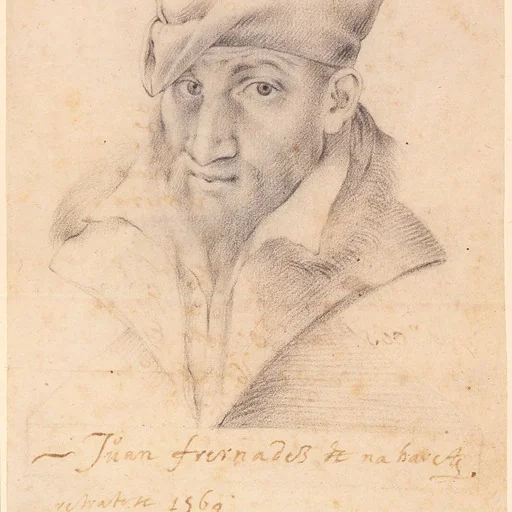
Juan Fernández Navarrete (1526 – 28 March 1579), or "de Navarrete", called El Mudo (The Mute), was a Spanish Mannerist painter, born at Logroño.

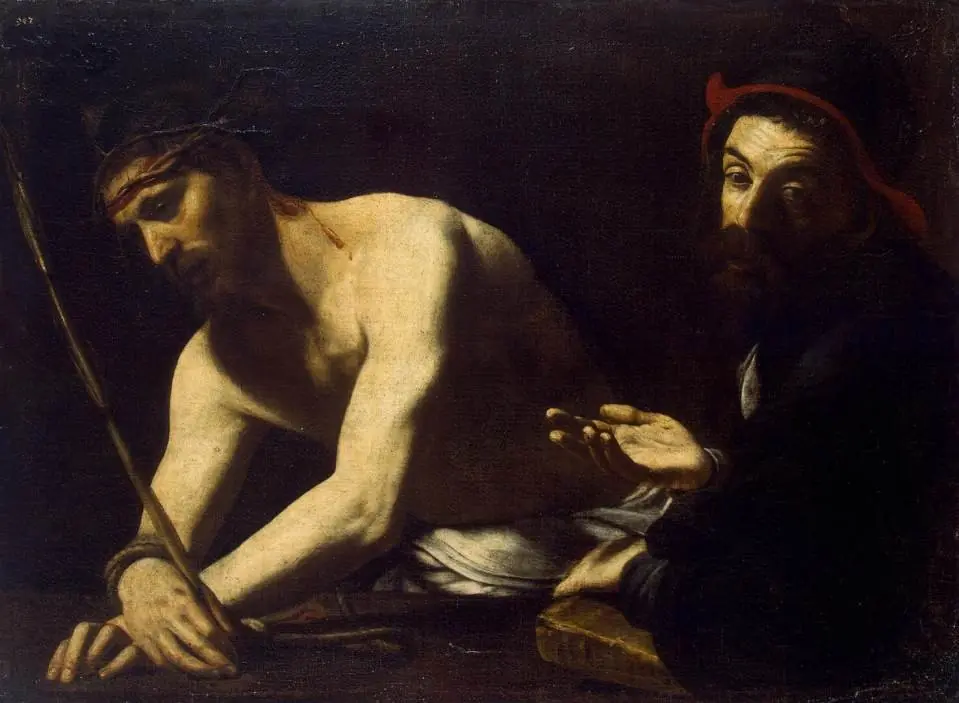 Christ and Caiaphas
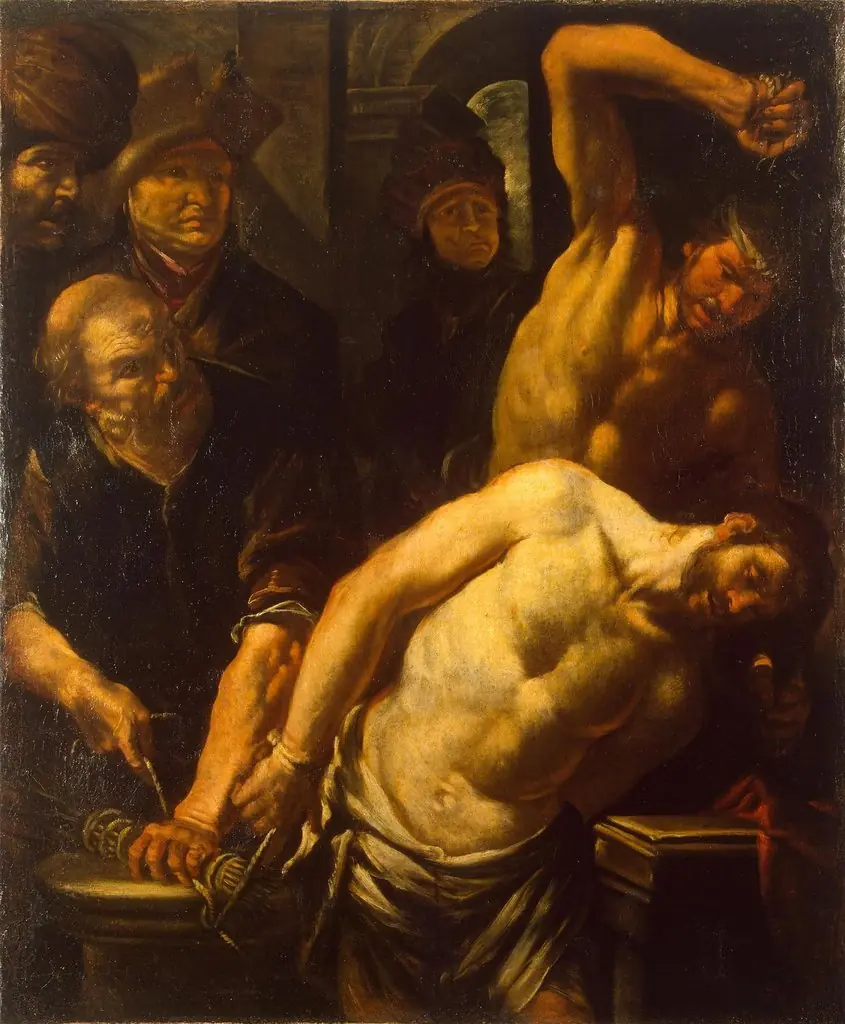 Mocking of Christ
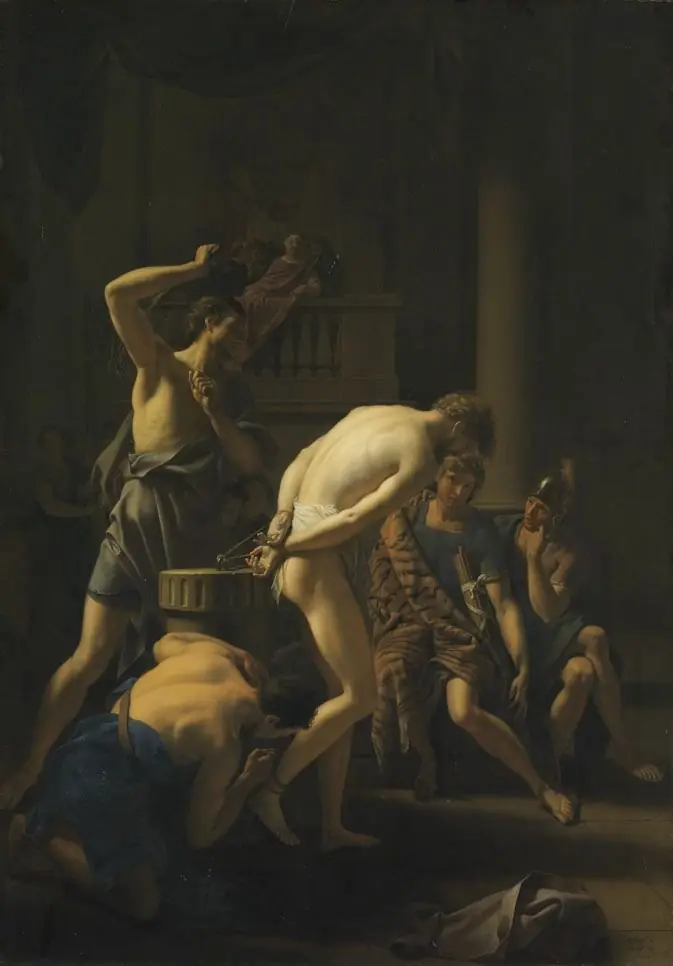 Flagellation of Christ
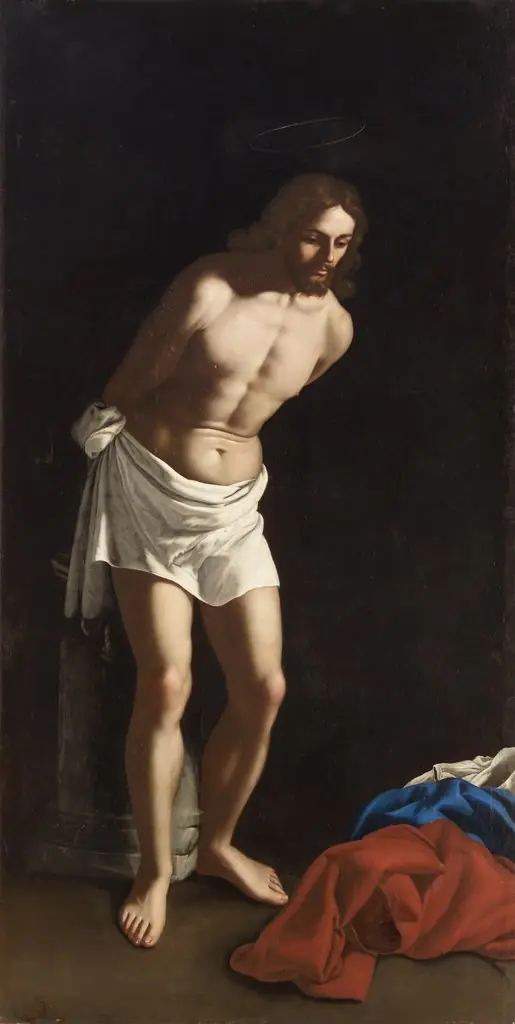 Christ at the Scourge Column
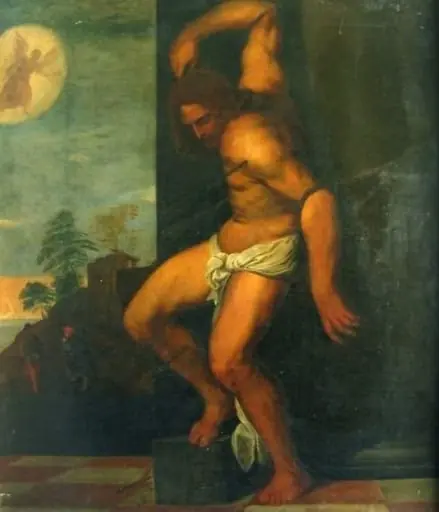 Sfântul Sebastian
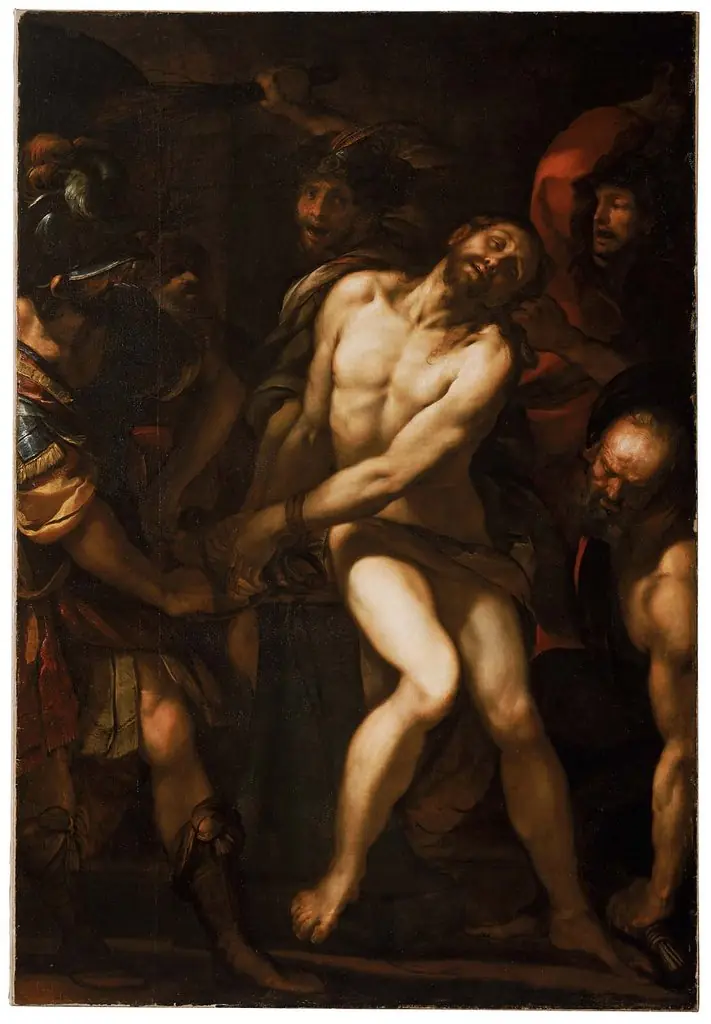 The Scourging of Christ
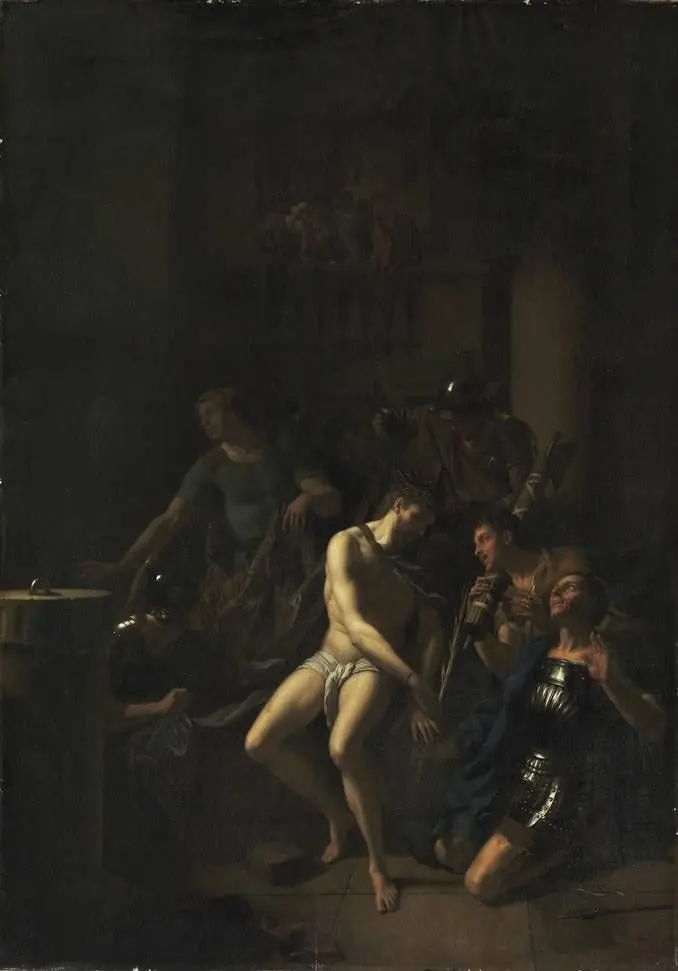 The mocking and crowning with thorns of Christ
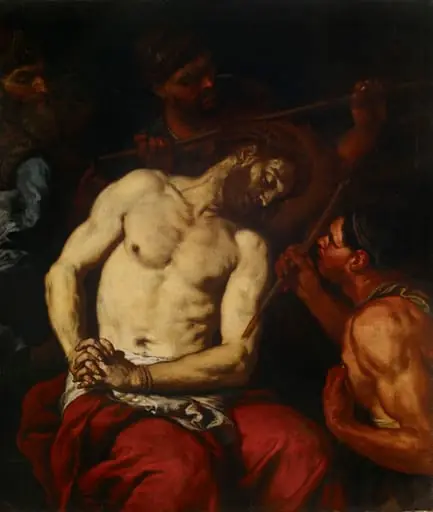 Orjantappurakruunaus
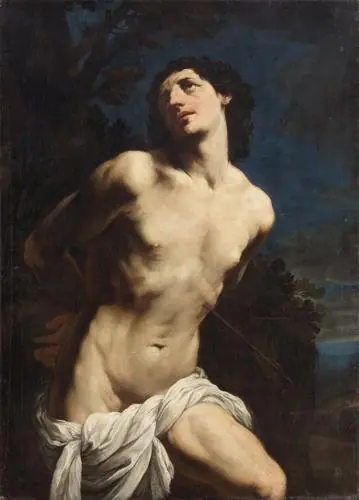 Hl. Sebastian
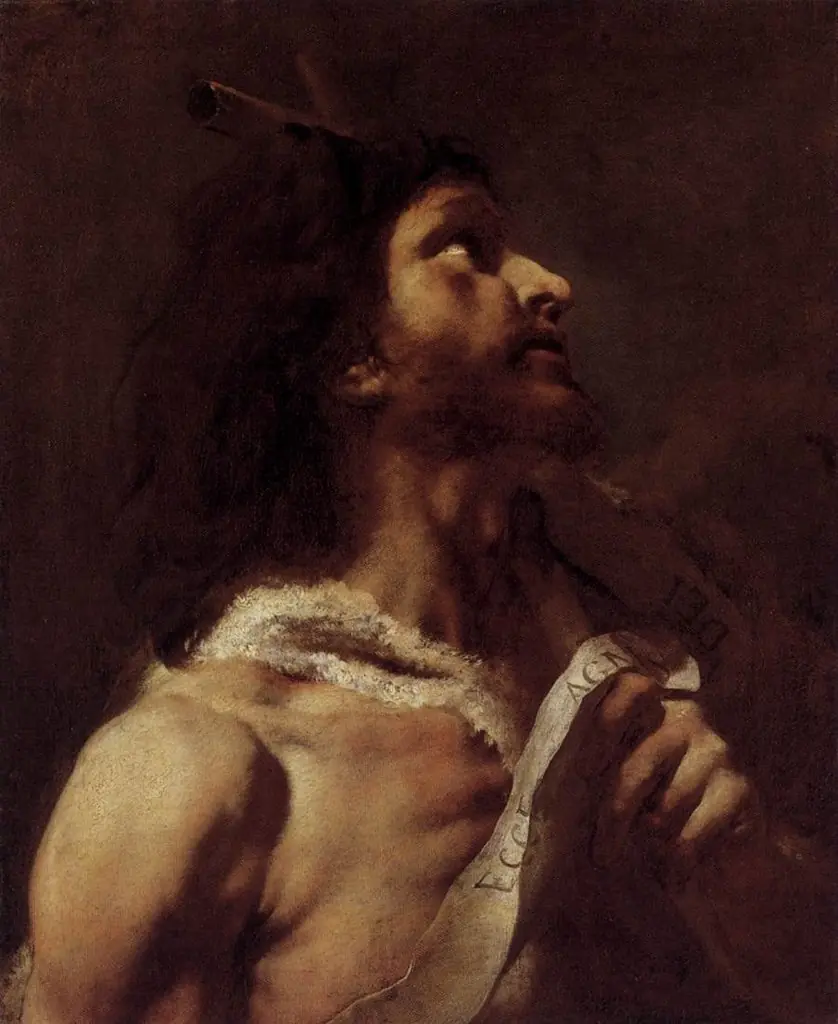 Johannes der Täufer
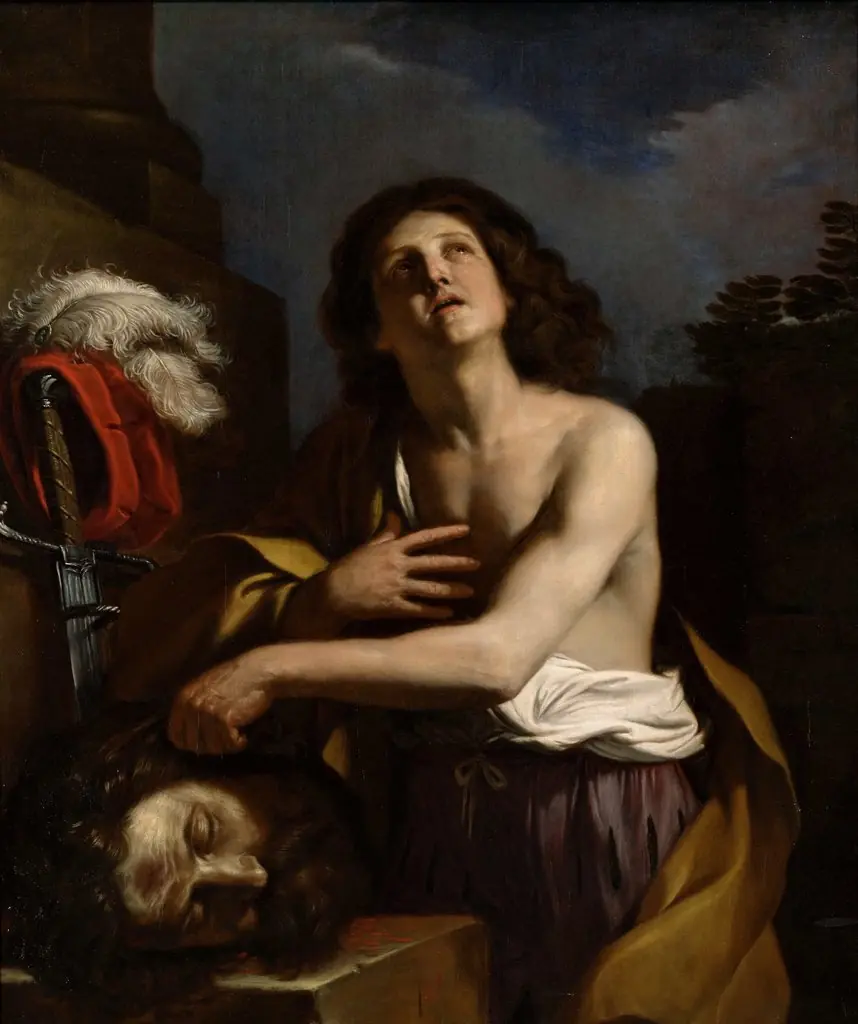 David with the Head of Goliath
- Saint John the Baptist Visited in Prison by Salome