Artwork
Saint John the Baptist Visited in Prison by Salome
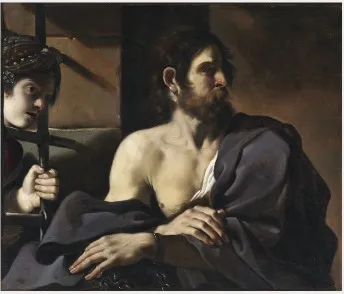
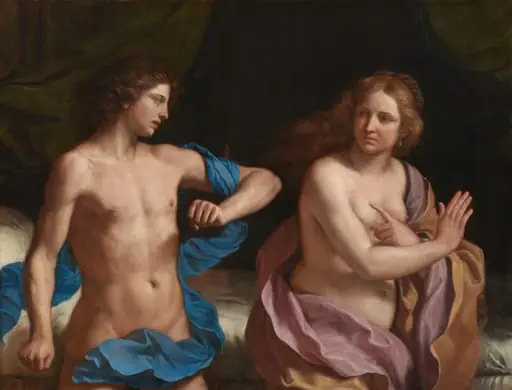
Saint John the Baptist Visited in Prison by Salome is an oil painting by the Early Baroque Italian artist Guercino. It dates from 1625 and is held in the collection of the National Gallery of Ireland.
About this work
Overview
An autograph version of the composition, measuring 78 by 100 centimeters, is held in a private collection in New York.
Saint John the Baptist Visited in Prison by Salome is a religious oil painting on canvas created by the Italian Baroque artist Giovanni Francesco Barbieri, known as Guercino, around 1625. Measuring 86.2 by 99.3 centimeters, the work depicts an apocryphal encounter between the imprisoned saint and the princess Salome. The painting is distinguished by its dramatic chiaroscuro and its psychologically complex narrative, which assigns Salome an autonomous, curious gaze directed at the imprisoned holy man. It currently resides in the National Gallery of Ireland in Dublin, accessioned as NGI.4649, having been presented by Sir Denis Mahon to the British Fund for the National Gallery of Ireland in 2008. An autograph version of the composition, measuring 78 by 100 centimeters, is held in a private collection in New York.
Subject & Meaning
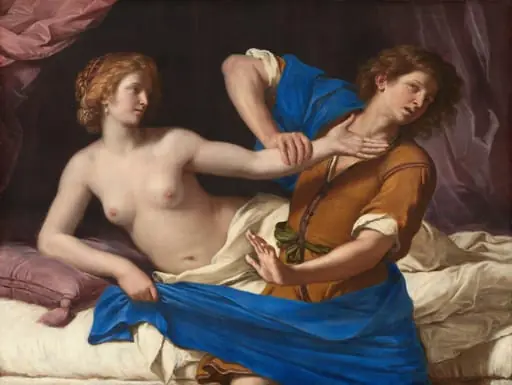
The painting visualizes an episode absent from biblical texts, imagining a prison visit where Salome interacts directly with John the Baptist. In the New Testament, Salome is a passive figure who demands the saint's head at her mother's behest, but Guercino assigns her independent agency and a position of power. She leans through the bars of the cell, her gaze fixed on the chained saint, while John deliberately turns his head away, refusing visual contact. For over two centuries, the subject confounded critics, who misidentified the scene as Joseph and Potiphar's Wife or an allegory of Christian Charity. The Flemish painter Abram Brueghel came close by describing a similar scene as John tempted in prison by a woman, though his dimensions did not match the surviving canvases. Erwin Panofsky finally resolved the iconographic debate by identifying the figures correctly. Panofsky noted that the erotic tension between Salome and John the Baptist, often thought to be a nineteenth-century invention popularized by Oscar Wilde and Richard Strauss, actually stems from a marginal, non-canonical tradition that Guercino tapped into centuries earlier.
Technique & Style
Guercino rendered the scene with a strong, single light source emanating from a tall candle held by Salome, creating deep chiaroscuro. The palette is dominated by deep browns and blacks in the background, which isolate the two figures and contrast with the pale flesh tones and the rich blue drapery wrapped around the saint's lower body and shoulder. The brushwork features smooth blending on the skin, while the fabrics display more textured handling. The sculptural conception of the Baptist, who stands with his arms crossed and his profile sharply defined against the dark void, lends the image a monumental effect. The setting is a dimly confined, bare prison cell indicated by the dark vertical and horizontal metal bars behind the princess. The work marks a stylistic transition from Guercino's early, dramatically naturalistic manner toward the idealized, classical equilibrium of his later career.
History & Provenance
The Dublin version's documented history begins in 1844, when Mrs. Jameson recorded it in the collection of Henry Petty-Fitzmaurice, the 3rd Marquess of Lansdowne, who acquired it from Lord Radstock. The painting was noted by William Hazlitt and published in The Art-Union in 1847. After the Lansdowne heirs sold the work in 1930, Denis Mahon purchased it in 1964. Mahon initially dated it to late 1622 or early 1623 based on stylistic comparisons with the Burial and Glory of Saint Petronilla. However, the subsequent emergence of the New York version at a Sotheby's auction in London on April 8, 1981, prompted scholars to revise the Dublin painting's date to the 1624 to 1626 period. Two early documentary references exist: a 1621 codicil in the will of Stefano Scaruffi mentions a Saint John with Herodias given by Guercino, and a 1647 will of Bishop Paolo Coccapani cites a Saint John in Prison by the artist. Because the Dublin canvas can only be securely traced to 1844, it remains uncertain whether it corresponds to either of these earlier mentions. A 1799 counterproof engraving by Damiano Penati bears the inscription Guercino pinx, but provides no provenance details. Mahon ultimately gifted the painting to the British Fund for the National Gallery of Ireland in 2008.
Context
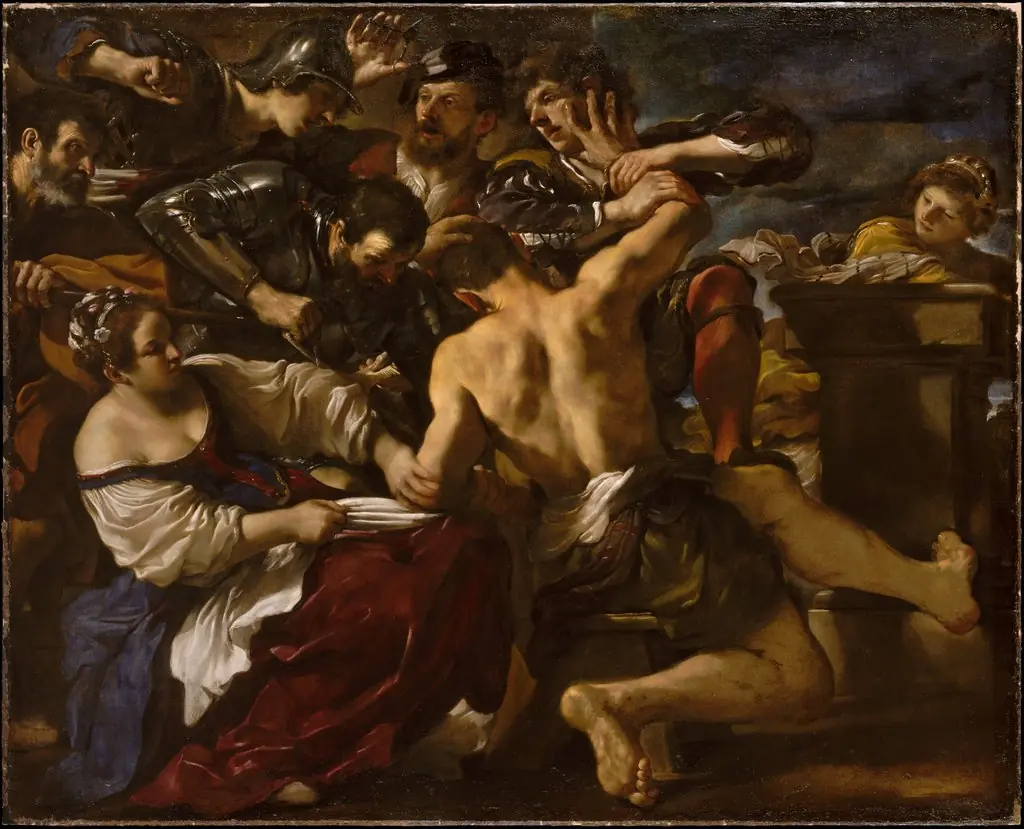
Giovanni Francesco Barbieri, nicknamed Guercino due to his cross-eyed condition, was an Italian Baroque painter active in Cento, Bologna, and Rome. Mainly self-taught and briefly an apprentice to Benedetto Gennari, he gained the admiration of Ludovico Carracci. His early works, such as the Samson Seized by Philistines and Elijah Fed by Ravens, display a starkly naturalistic Caravaggesque style characterized by prominent chiaroscuro and tumultuous conception. Guercino spent productive years in Rome from 1621 to 1623 under Pope Gregory XV, painting the Aurora fresco and the Saint Petronilla Altarpiece before returning to Cento following the pope's death. The Dublin painting reflects this transitional moment in his career. After the death of his rival Guido Reni in 1642, Guercino moved to Bologna, where his style evolved to feature greater luminosity and classical clarity, taking over Reni's role as the city's leading painter of sacred subjects.
Artist & collection
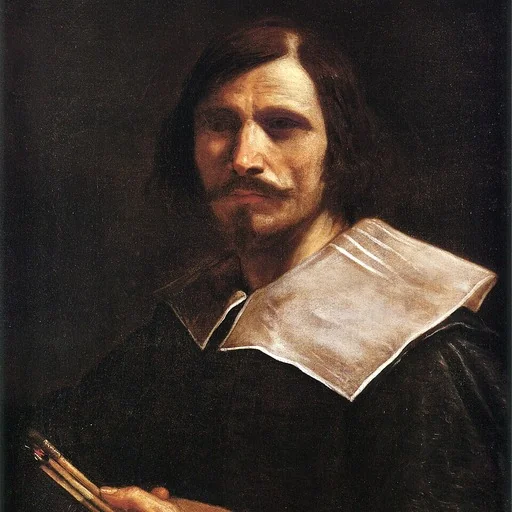
Artist
Giovanni Francesco Barbieri (8 February 1591 – 22 December 1666), better known as (il) Guercino (Italian pronunciation: ), was an Italian Baroque painter and draftsman from Cento in the Emilia region, who was active in Rome and Bologna.